
How Do You Know Chicken Breast Is Off? Key Signs
You can tell if chicken breast is off by checking its color, smell, texture, and storage history. Fresh chicken looks pale pink, smells mild, and feels moist, not slimy or sticky.
If the chicken breast has a strong odor, strange discoloration, or a tacky surface, throw it out.
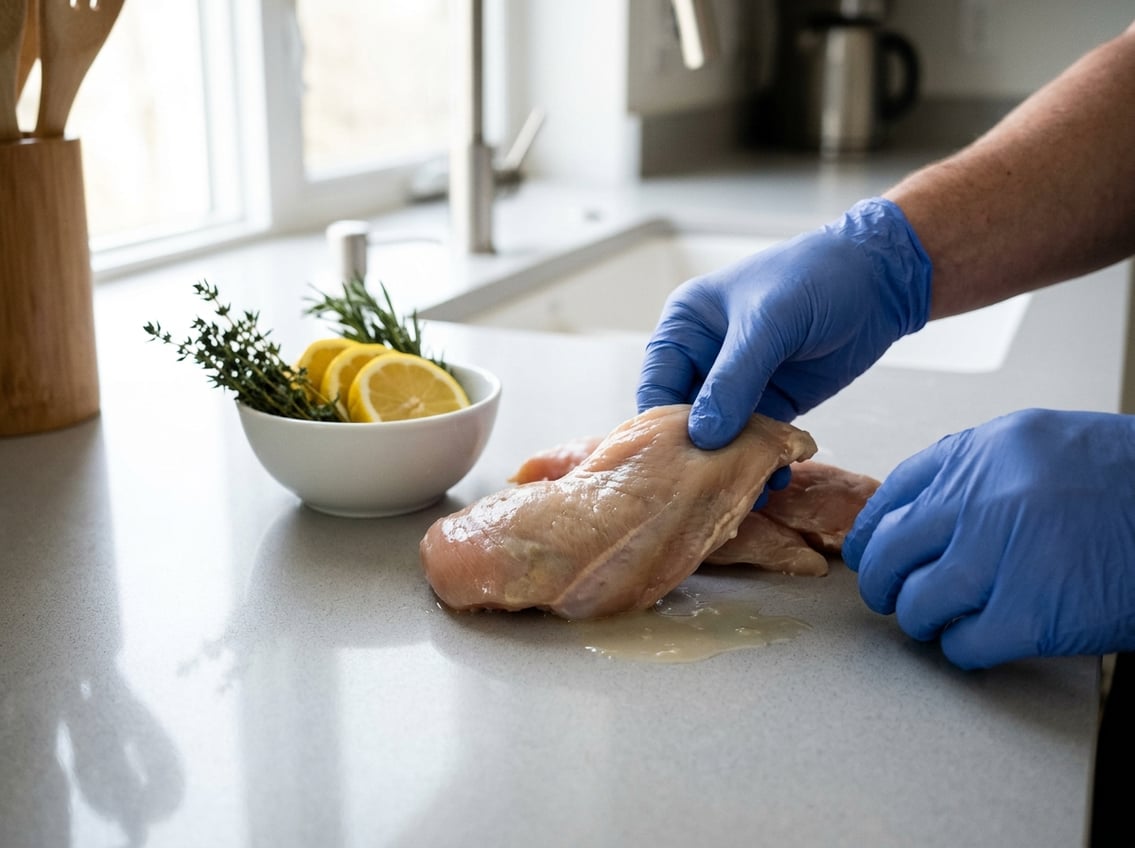
Food safety matters because spoiled poultry can cause illness fast. The USDA advises cooking chicken to 165°F and refrigerating raw chicken for only 1 to 2 days.
When you know the warning signs, you can make a safer call without guessing.
Immediate Signs Chicken Breast Should Be Thrown Out
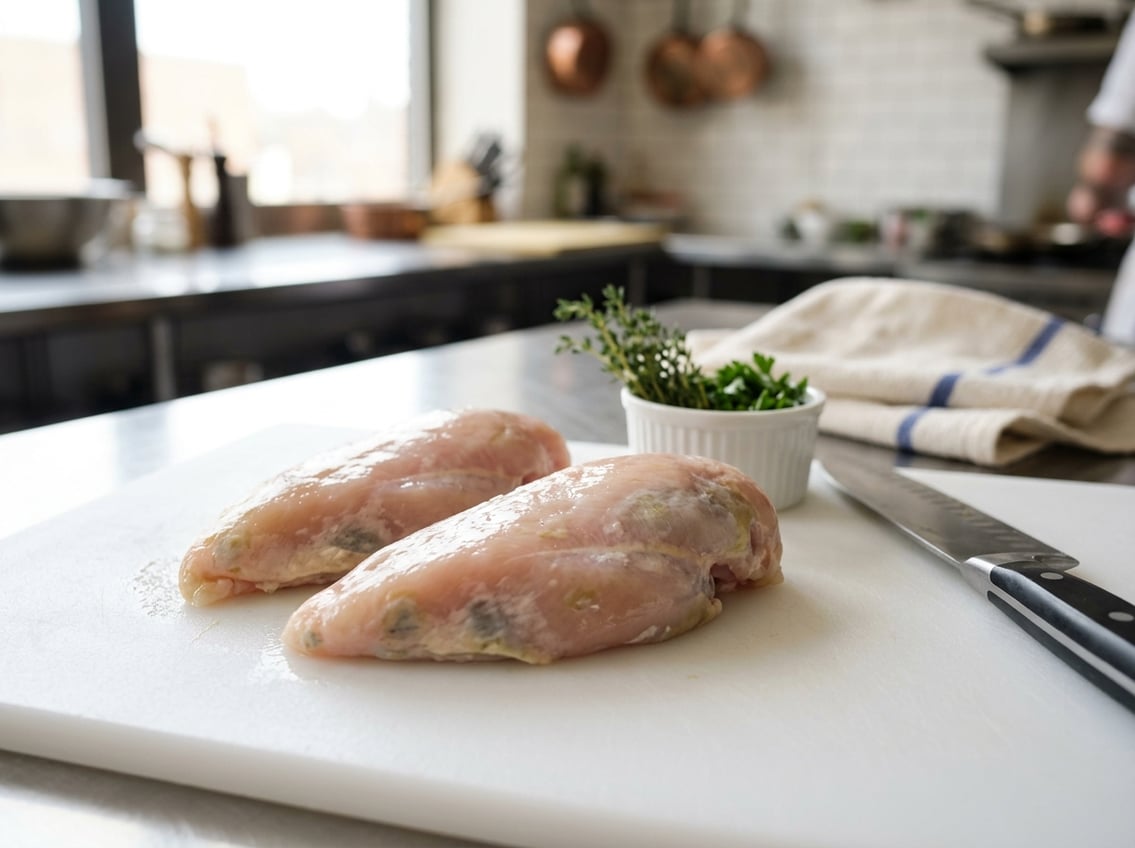
Use your senses to judge spoiled chicken quickly. Look closely, smell carefully, and feel the surface only if the meat still seems safe to handle.
Color Changes That Signal Spoilage
Fresh raw chicken breast is usually pale pink with white fat. If it turns gray, green, yellow, or brown, take that as a warning sign, especially if the color change spreads across the surface.
A little color variation from packaging or freezing can happen. Strong discoloration means you should discard it.
Bad Smells, Including Sour, Sulfur, or Ammonia Notes
Fresh chicken should smell mild or nearly neutral. If you notice a sour, rotten, sulfur-like, or ammonia smell, the meat is likely spoiled.
Unpleasant odors are one of the clearest signs that bacteria have started breaking down the meat. If the smell is noticeable when you open the package, do not cook it.
Slimy, Sticky, or Tacky Texture
Raw chicken breast should feel moist and firm, not slippery. A slimy, sticky, or tacky surface is a sign of spoilage, especially if the meat feels unusually soft.
If your fingers leave an imprint or the surface feels coated, that is a bad sign. A thin natural sheen is different from a sticky film.
What to Check for Raw, Cooked, and Frozen Chicken Breast
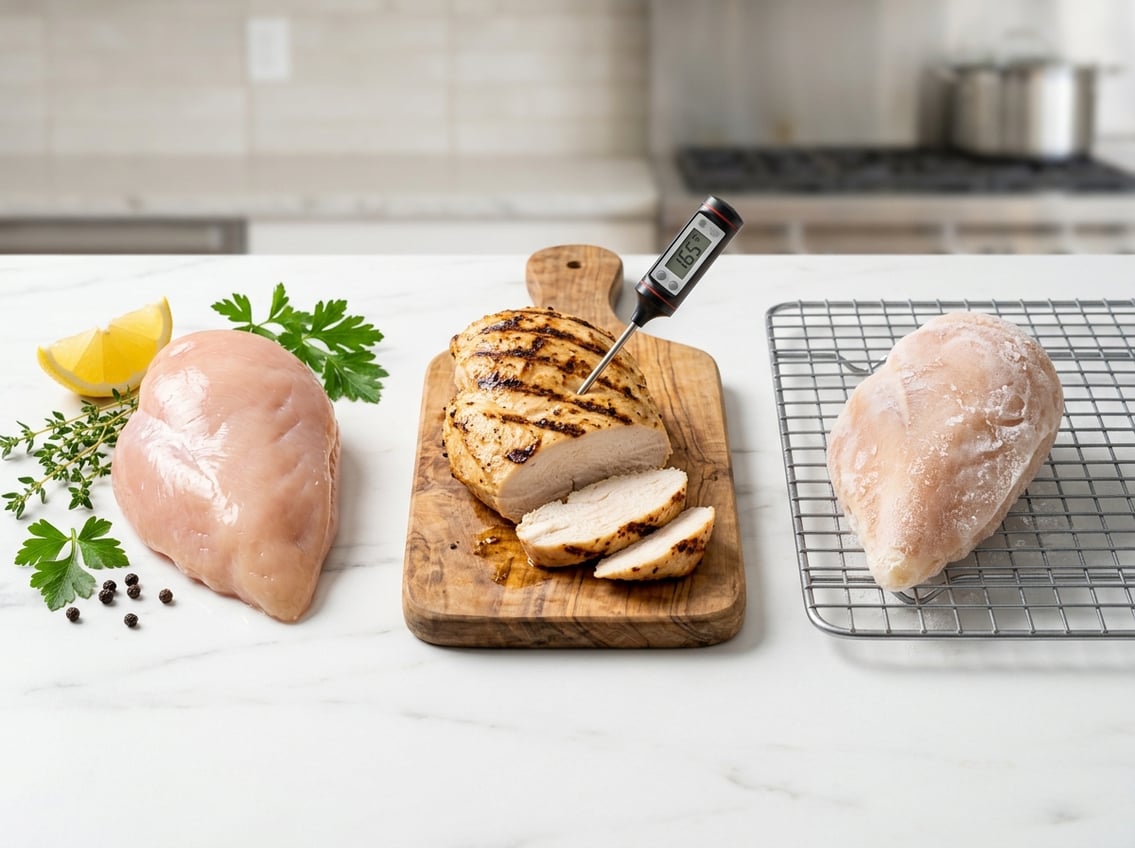
Raw, cooked, and frozen chicken each have different warning signs. Judge them by both appearance and storage conditions.
Raw Chicken Breast Red Flags
Raw chicken breast should be pale, moist, and smell clean or faint. If it looks dull, gray, green, or yellow, or feels sticky, it is likely off.
Packaging liquid alone does not prove spoilage. The bigger red flags are odor, color change, and a slimy texture together.
Cooked Chicken Breast Warning Signs
Cooked chicken should keep a normal poultry smell and a firm texture. If it smells sour, looks dull or greenish, or feels slimy, throw it away.
Watch for mold, unusual moisture, or a bad taste in leftover chicken that has sat too long. Cooked chicken that has been refrigerated for more than 3 to 4 days is risky, even if it still looks fine.
Frozen Chicken Breast, Ice Buildup, and Freezer Burn
Frozen chicken can stay safe for a long time if you keep it frozen the whole time. Ice crystals and freezer burn can hurt texture and flavor, but they do not always mean the meat is unsafe.
Watch for torn packaging, heavy frost buildup, gray patches, or dried-out edges. If frozen chicken thawed and then sat warm, treat it like fresh chicken that may have spoiled.
When Dates and Storage History Matter More Than Looks
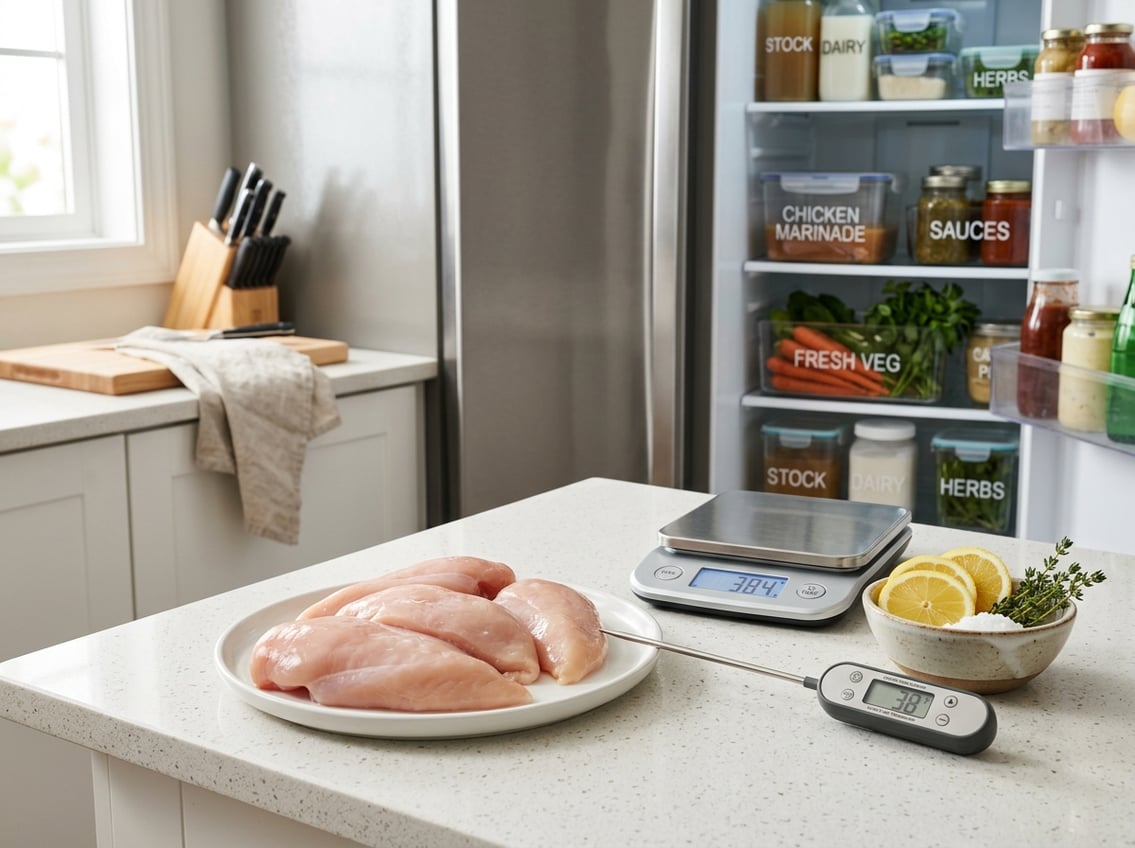
Chicken can look normal and still be unsafe if you store it poorly or keep it too long. Dates and temperature history give you important clues.
How Long Chicken Breast Lasts in the Fridge
Raw chicken breast is usually safe in the fridge for 1 to 2 days at 40°F or below. After that, bacteria can grow fast, even if the chicken still looks fresh.
Cooked chicken lasts longer, usually 3 to 4 days in the refrigerator. If you do not remember when it was cooked, use that timeline as a hard limit.
What Sell-By and Use-By Dates Really Mean
Sell-by and use-by dates are mainly for quality, not a guarantee of safety. The package date can help you judge freshness, but storage time at home matters more.
If you bought chicken near the sell-by date and left it in the fridge for several days, the printed date does not protect you.
Storage Mistakes That Speed Up Spoilage
Chicken spoils faster when it sits above 40°F, stays in the car too long, or is left on the counter to thaw. Cross-contamination also matters, since dirty hands, cutting boards, and utensils can spread bacteria.
Store raw chicken on the lowest fridge shelf, sealed, and away from ready-to-eat foods. Raw chicken breast must be cooked or frozen within 1 to 2 days.
Safe Judgment Calls When You Are Not Fully Sure

Some changes are not always a sign of spoilage. Lean toward caution when the smell, texture, or storage history does not feel right.
Normal Changes That Do Not Always Mean It Is Unsafe
Chicken can lose a little color from vacuum packaging or freezing. Frozen meat can have ice crystals.
Slight drying on the surface can happen too. These changes do not always mean the chicken is bad by themselves.
The key is whether several warning signs show up together, especially odor plus sliminess or discoloration.
Why Taste Testing Is Risky
Do not taste chicken to check if it is spoiled. A small bite can still expose you to bacteria that can make you sick.
Food poisoning from chicken can cause nausea, vomiting, diarrhea, and stomach cramps. Since bad chicken is not worth that risk, tasting it is a poor way to judge safety.
When in Doubt, Throw It Out
If you are unsure, discard the chicken.
That is the safest choice when the smell is off or the texture feels wrong.
If the storage time is unclear, throw it out and use a fresh package instead.


