
When Baking Chicken Breast Do You Cover It? Best Method
When you bake chicken breast, you should often cover it at the start if you want more moisture. Uncover it near the end if you want better color.
This approach helps you get baked chicken that is juicy inside and appealing on the outside.
The best method is usually to start covered and finish uncovered, especially for lean chicken breast. This keeps steam in the pan early, then lets the surface dry enough to brown near the end.
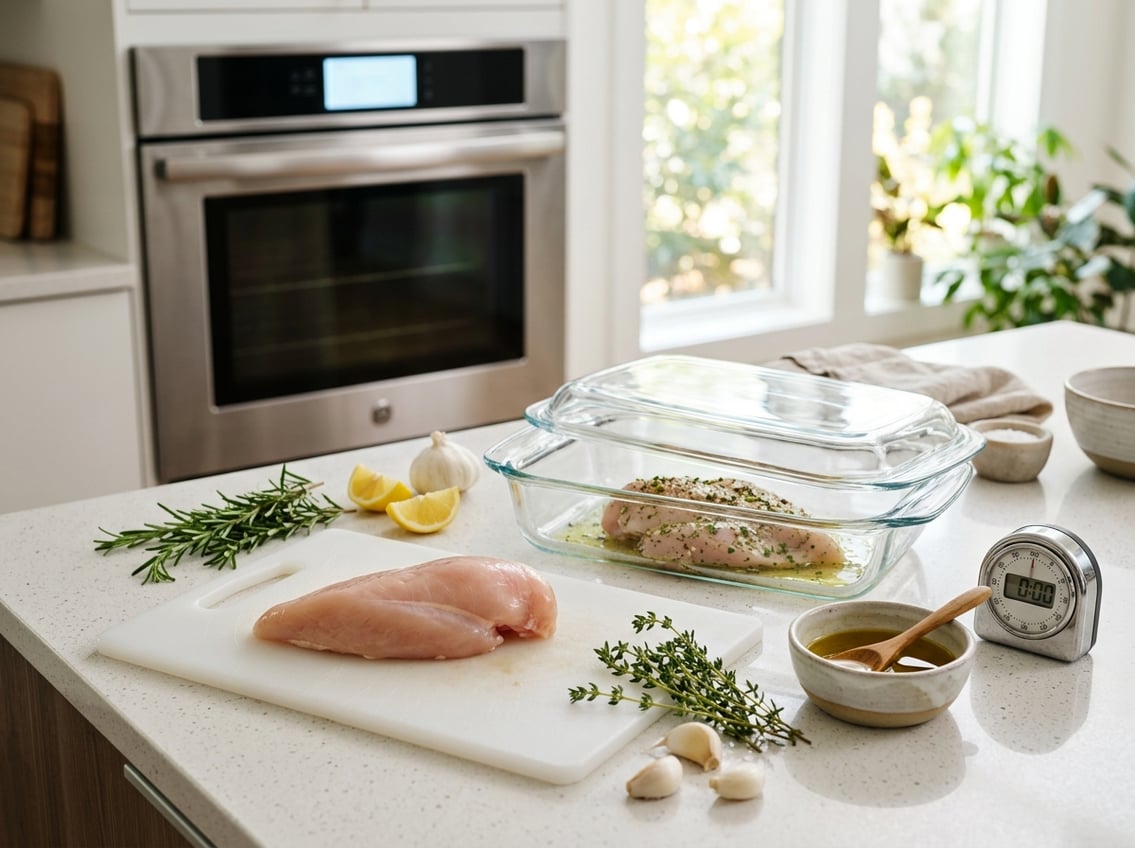
What works best still depends on your pan and the thickness of the chicken. Your preference for a softer texture or a more browned top also matters.
You can get good results with baking chicken covered or uncovered, as long as you match the method to the cut and finish with the right internal temperature.
Covered Vs. Uncovered: What Works Best
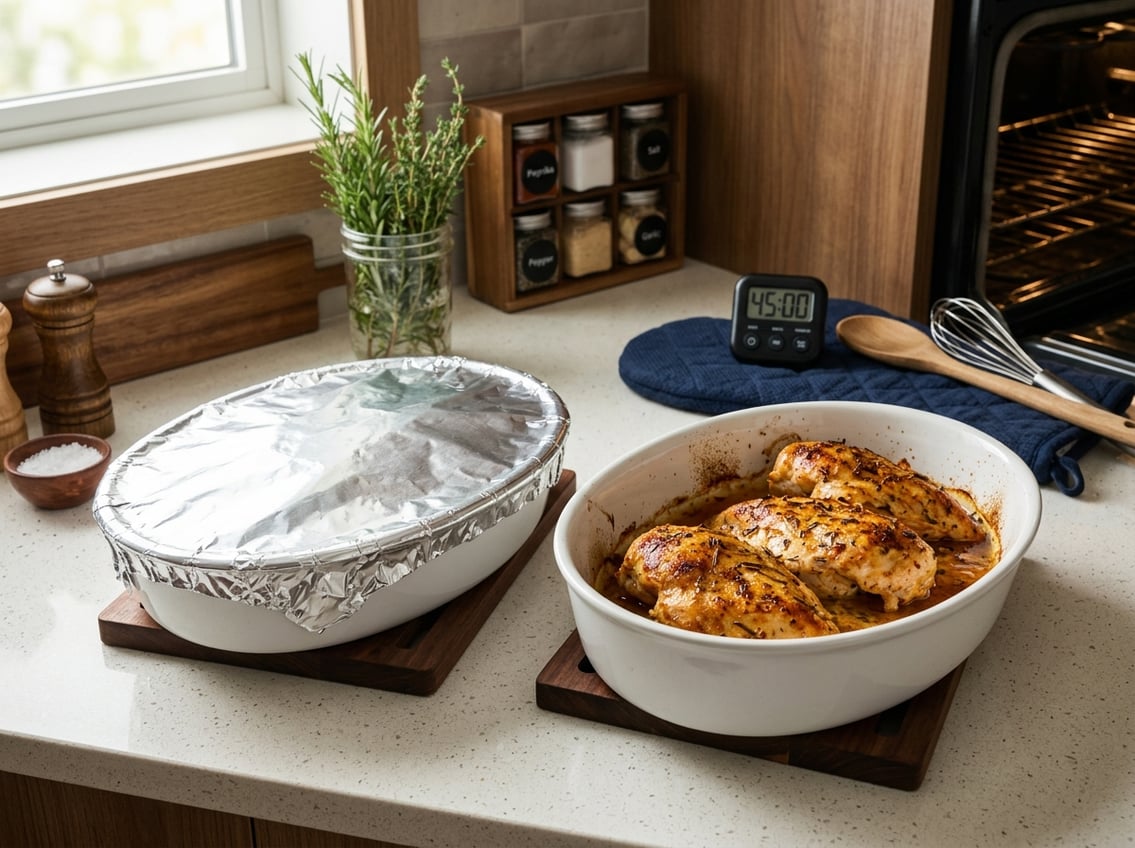
When you cover chicken while baking, you trap steam and slow surface drying. Baking chicken uncovered lets the top dry faster and brown more easily.
The right choice depends on what you want from the final baked chicken. Moisture and tenderness favor one method, while color and browning favor the other.
When Covering Helps Keep Chicken Breast Juicy
Cover chicken breast when baking if the pieces are lean, thin, or likely to cook fast. A lid, foil, or a tight tent helps keep moisture in the pan and reduces the chance of dry chicken breast.
This method works well with plain chicken breast, sauced chicken, and dishes with a little broth or marinade. A covered pan can also help the meat cook more evenly, which helps when the pieces are not the same size.
When Uncovered Baking Gives Better Browning
Bake chicken uncovered when you want a golden top or lightly crisp edges. Air circulation helps the surface dry, which supports browning and better texture.
This method works well if the chicken has skin, oil, seasoning, or a sauce that benefits from caramelizing. It also helps keep the finish from turning soft or steamy.
Why a Start-Covered, Finish-Uncovered Method Often Wins
A two-step method often gives the best balance. Cover the chicken during the first part to hold in moisture, then remove the cover near the end so the surface can brown.
This works especially well for chicken breast, since breast meat dries out more easily than darker cuts. You get more control if you want baked chicken that stays juicy without looking pale.
How to Choose the Right Method for Your Pan
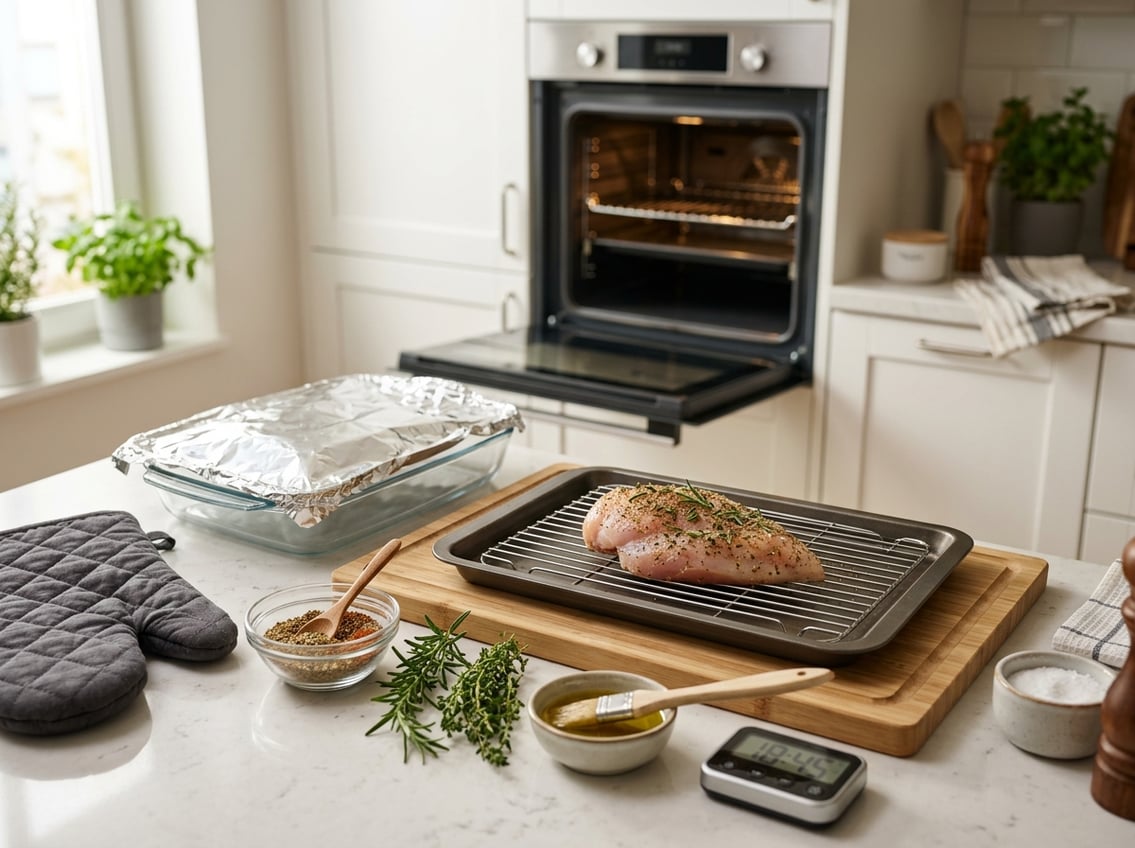
Your pan changes how fast heat and steam move around the chicken. A covered dish holds moisture better, while a wide open sheet pan promotes faster evaporation and browning.
The cut of chicken, oven heat, and any added sauce also matter. These details can make baking chicken covered the better choice in one recipe and baking chicken uncovered the better choice in another.
Boneless Vs. Bone-In and Skinless Vs. Skin-On Pieces
Boneless, skinless chicken breast dries out fastest, so cover chicken when baking if you want extra protection. Bone-in pieces usually stay juicier, and skin-on pieces gain more from uncovered baking because the skin can crisp.
If you cook skinless pieces in a shallow pan, they may benefit from a short covered phase. Roasting skin-on chicken in a roomy pan works better uncovered for better texture.
How Thickness, Oven Temperature, and Sauce Change the Decision
Thicker chicken breast needs more time in the oven, so covering can help keep the outside from drying before the center is done. Thinner pieces often cook quickly enough that uncovered baking is fine.
Higher oven temperatures favor browning, which makes uncovered baking more useful. Sauced chicken is different, since the sauce can protect the surface and keep it from drying too fast.
Foil, Lid, Parchment, and Tent Methods Compared
Foil gives you a loose, easy cover and works well for most home ovens. A lid creates a tighter seal and traps more steam, which can help if you want softer chicken.
Parchment is lighter and less sealed, so it gives some protection without locking in as much moisture. A foil tent sits above the chicken and slows browning without pressing the top, which can help if you want a gentler finish.
How to Bake Chicken Breast Without Drying It Out
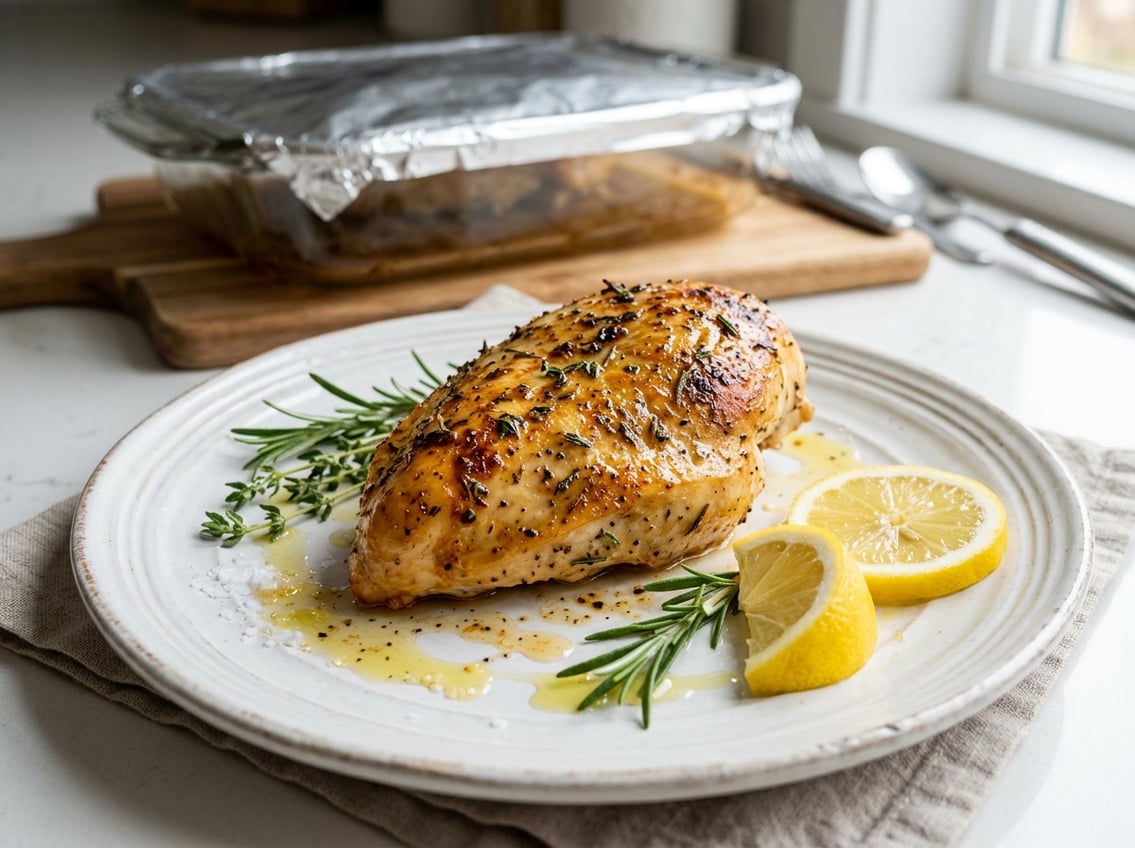
Dry chicken breast usually happens from too much heat, too long in the oven, or not enough moisture control. You can prevent that by using the right bake time, watching the temperature, and letting the meat rest after baking.
A covered start helps, especially when you want baked chicken that stays moist. Carryover heat keeps cooking the meat after it leaves the oven.
Best Timing and Temperature Ranges
A moderate oven around 350°F to 375°F works well for covered baking. A hotter oven is often used for uncovered chicken breast when you want more browning.
Thicker pieces need more time than thin pieces, so size matters as much as the recipe. Start with enough heat to cook the chicken through, then finish based on color and texture.
For a more detailed comparison of methods, covered or uncovered chicken breast baking can guide your choice.
Why You Should Use a Meat Thermometer
Use a meat thermometer because time alone is not reliable. Chicken breast can look done on the outside before the center reaches a safe temperature.
Check the thickest part of the meat and aim for 165°F. That is the clearest way to avoid both undercooked chicken and overcooked chicken breast.
Resting, Carryover Cooking, and Final Texture Tips
Let the chicken rest for a few minutes after baking. During this time, the internal temperature can rise a little, and the juices settle back into the meat.
If you want a better final texture, avoid slicing too soon. Resting, checking the temperature, and choosing whether to cover the chicken breast when baking can help you achieve more reliable results.


