
How to Keep Chicken Breast From Getting Tough Fast
You can keep chicken breast from getting tough by controlling moisture, heat, and timing. Chicken breast is lean, so it dries out faster than fattier cuts.
If you season it well, cook it to the right internal temperature, and let it rest, you can get a tender chicken breast instead of a tough or chewy one.
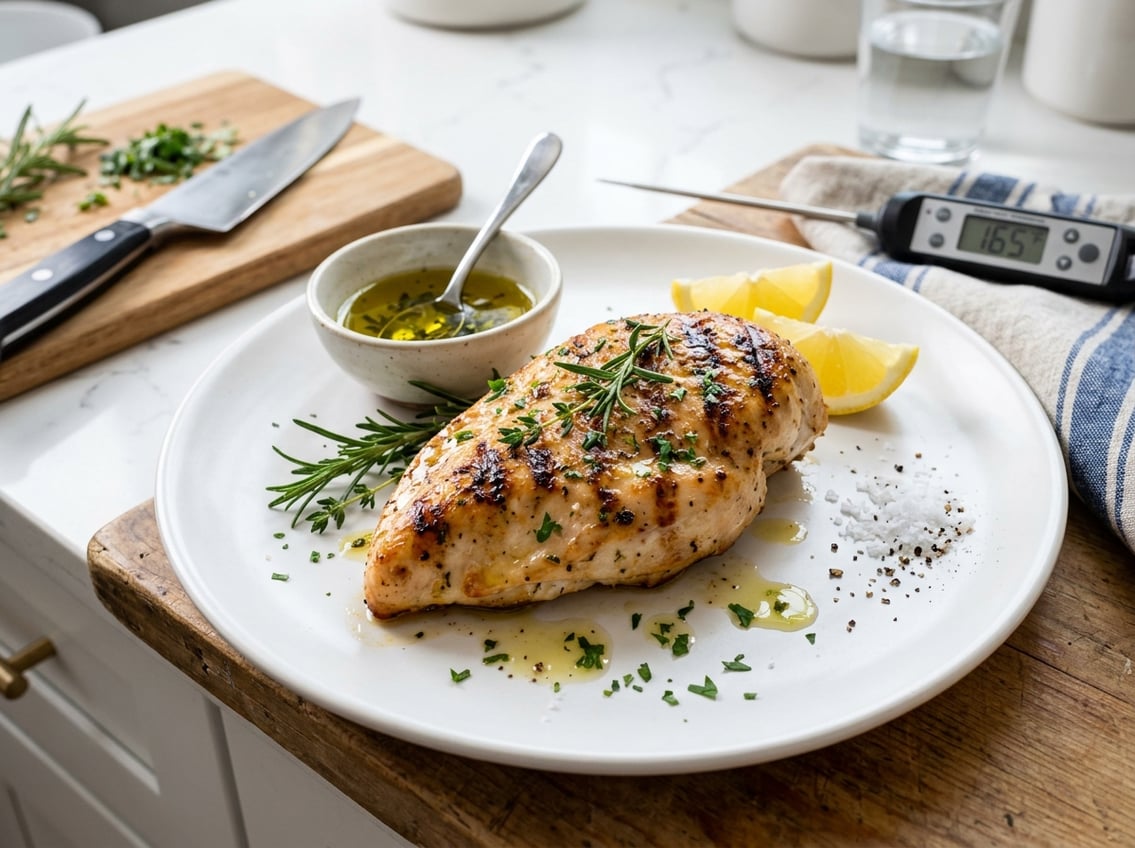
You do not need complicated steps. Small changes before and during cooking make a clear difference in a juicy chicken breast.
The same rules also help when you cook boneless pieces, frozen chicken breasts, or thicker cuts that are easy to overcook.
What Makes Chicken Breast Turn Dry or Chewy
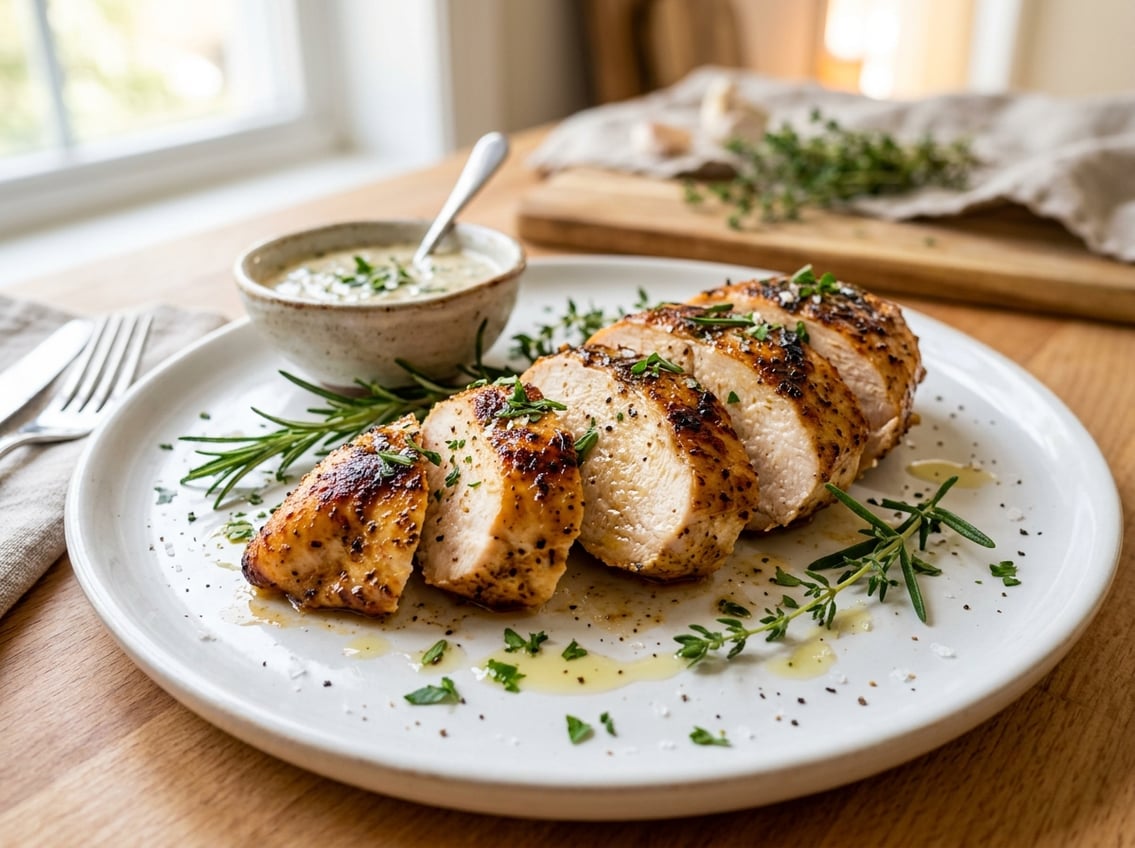
Chicken breast turns tough when moisture leaves the meat faster than it can stay inside. Heat, thickness, and resting time all affect whether you get juicy or overcooked chicken.
Why Overcooking Tightens Lean Meat
Chicken breast is very lean, so it has little fat to protect it. When you cook it too long, the muscle fibers tighten and push out moisture.
A recent guide on chicken breast toughness from Cooknight points to overcooking as one of the most common causes.
How Uneven Thickness Causes Mixed Results
A thick end and a thin end do not finish at the same time. The thin part may be done while the thicker part is still catching up, so you may keep cooking the whole piece and dry out the thinner area.
That is one reason a chicken breast can seem tender in one bite and chewy in the next.
Why High Heat Can Create Tough Texture
Very high heat can brown the outside fast while the center keeps cooking. If you stay at that heat too long, the outside can dry before the inside is ready.
That makes the surface taste firm and the center less juicy.
How Resting Affects Juiciness
Resting gives the juices time to settle after cooking. If you cut too soon, the moisture runs out onto the board instead of staying in the meat.
A short rest helps you keep a juicy chicken breast and reduces the chance of dry chicken at the table.
Prep Steps That Protect Moisture Before Cooking
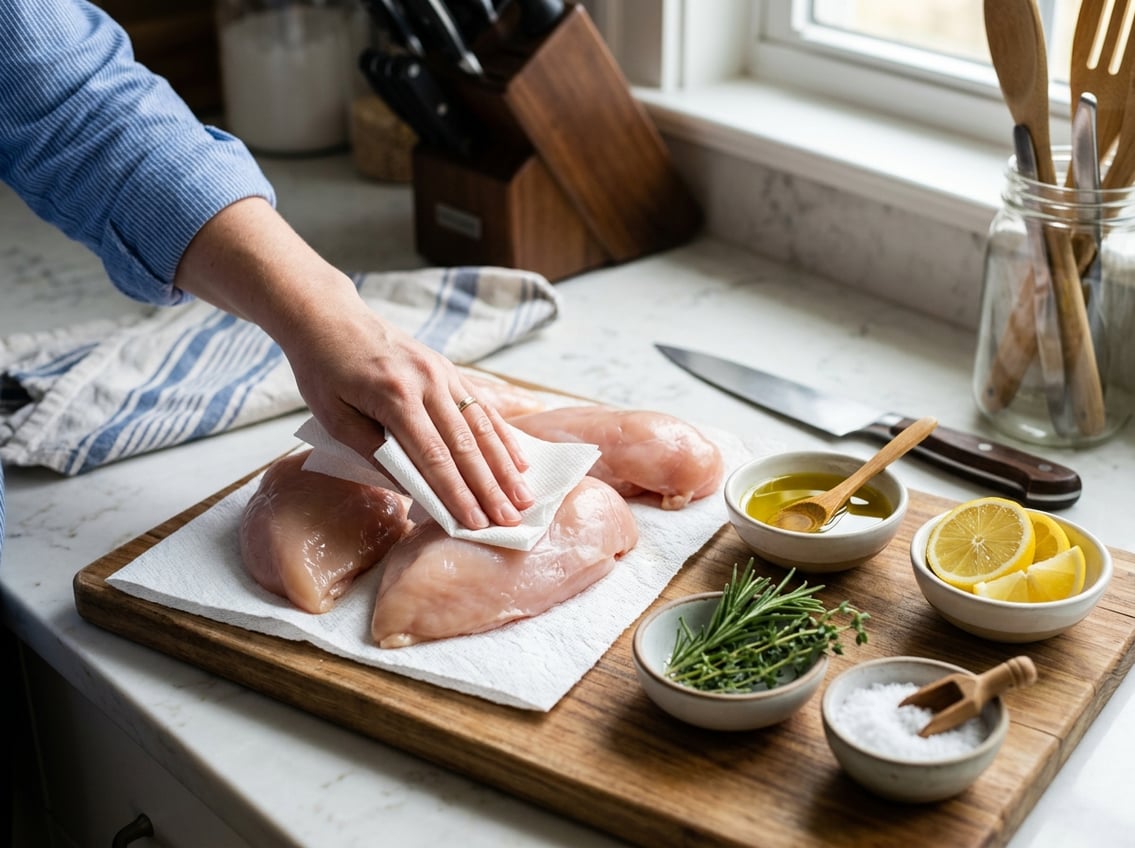
Your prep work has a big effect on tenderness. The right cut, a little salt, even thickness, and proper handling all help a tender chicken breast stay moist in the pan, oven, or on the grill.
When to Choose Boneless Chicken Breasts or Other Cuts
Boneless chicken breasts are easy to cook and slice, so they work well for weeknight meals. Bone-in pieces can stay moister during cooking, since the bone helps slow heat transfer.
If you want the easiest path to juicy chicken breast, pick pieces that are similar in size and shape.
How Dry Brining Improves Tenderness
Dry brining means salting the chicken and letting it rest before cooking. The salt helps the meat hold onto moisture and seasons it through the whole piece.
According to Cooknight, this step can make chicken breast more tender and flavorful.
Best Practices for Marinating Chicken Breast
Marinating chicken breast can add flavor and help the surface stay moist. Use a marinade with oil, salt, and a mild acid such as lemon juice, vinegar, or yogurt.
Keep the time sensible, since very long marinating in strong acid can make the texture odd instead of tender.
Why Pounding Helps Boneless Pieces Cook Evenly
Pounding boneless chicken breasts to an even thickness helps them cook at the same rate. That reduces the chance that one end turns dry while the other is still catching up.
Use gentle pressure so you flatten the meat, not tear it.
What to Know About Frozen Chicken Breasts
You can cook frozen chicken breasts well if you thaw them safely first. Cooking from frozen is harder to manage because the outside can overcook before the center is done.
If you are short on time, use a safe thawing method so you have more control over texture.
Cooking Techniques That Keep the Center Juicy
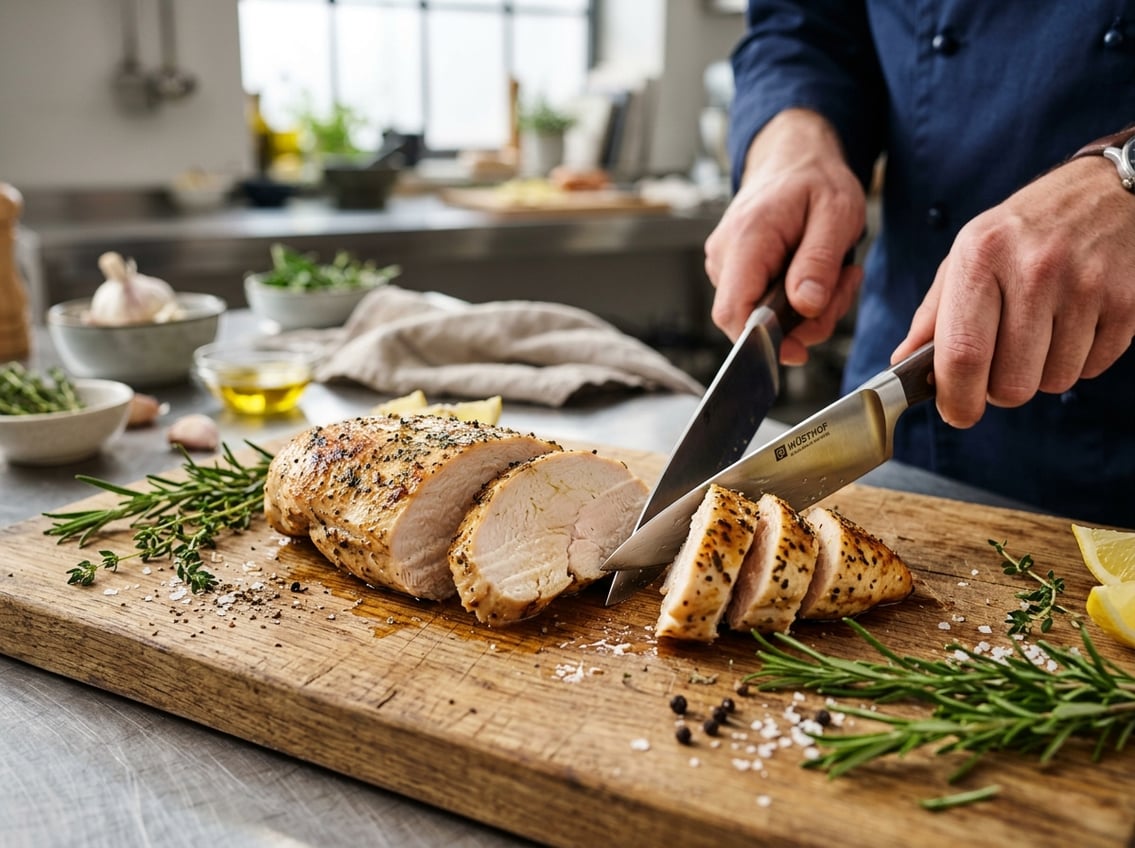
The best cooking method is the one that lets you control heat. A meat thermometer gives you a clear target, and gentler methods lower the risk of overcooking.
How to Use a Meat Thermometer Correctly
Insert the thermometer into the thickest part of the chicken breast, not near the pan or bone. Wait for the reading to stabilize before deciding whether the meat is done.
This is the most reliable way to avoid tough chicken breast.
Best Pull Temperature and Carryover Cooking
Pull chicken breast from the heat when it reaches about 160°F to 163°F, then let it rest. The temperature usually rises a little more during resting, which gets you close to the safe final range without overcooking.
The USDA safe endpoint is 165°F, and Cooknight notes that this temperature is important for both safety and texture.
Gentle Methods for More Reliable Results
Gentle methods such as poaching, steaming, or sous vide give you more room for error. A lower, steadier heat helps protect juiciness because the meat does not tighten as quickly.
These methods are useful when you want a tender chicken breast with less risk.
Pan, Oven, Grill, and Poaching Timing Basics
A hot pan works well for a quick sear, then a lower oven finish. On the grill, keep an eye on flare-ups and move the chicken if one spot cooks too fast.
Poaching is the most forgiving option if you want mild heat and a soft texture. For each method, your main goal is the same: stop cooking before the chicken breast dries out.
How to Fix Tough Chicken Breast After Cooking
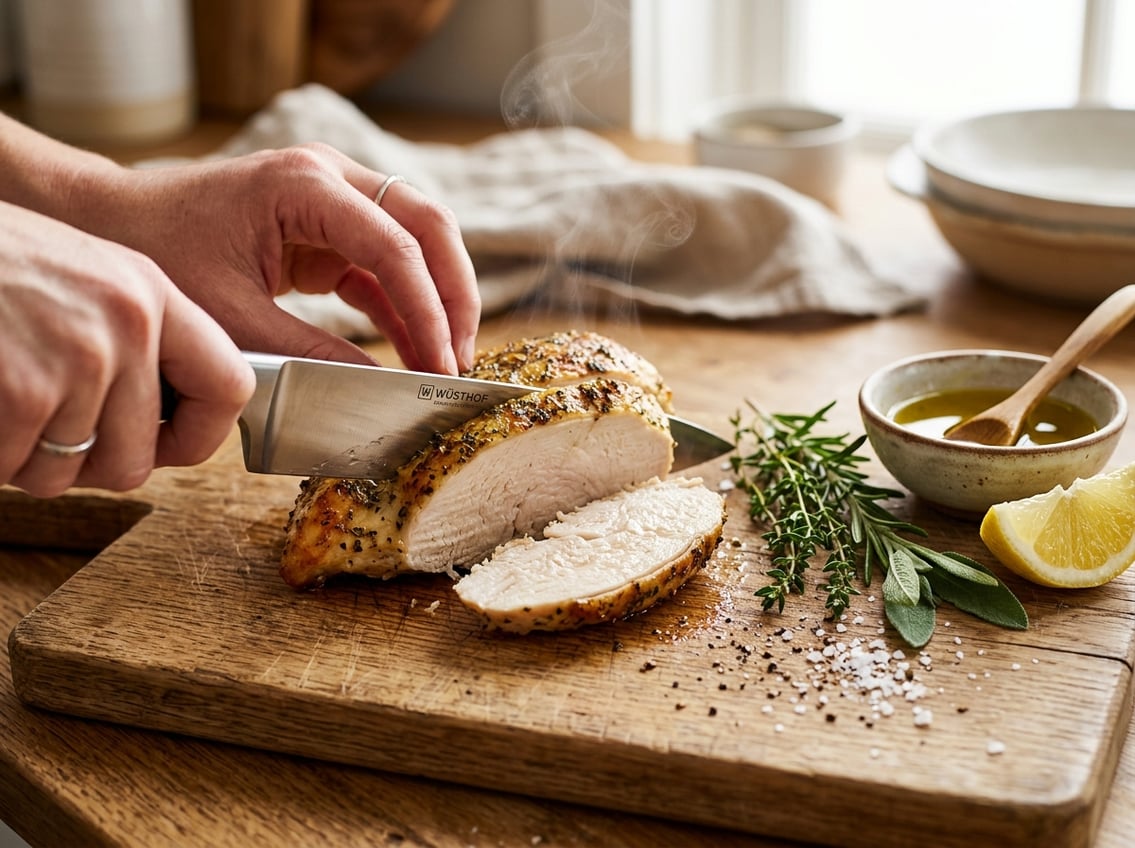
You cannot fully undo overcooked chicken, but you can still improve the meal. Sauce, slicing, and smart reuse can make dry pieces easier to eat.
When You Can Save Overcooked Chicken
If the chicken is only slightly dry, warm it gently in a sauce or broth. This can soften the outside and add some moisture back.
If it is very tough, use it in a dish where the texture matters less.
Ways to Add Moisture Back Through Slicing and Sauce
Slice the chicken breast against the grain so each bite feels less chewy. Then serve it with pan sauce, gravy, salsa, yogurt sauce, or a light broth-based dressing.
Moist toppings help a tough chicken breast feel more tender on the plate.
How to Reuse Dry Pieces in Soups, Salads, and Bowls
Dry chicken works better when you mix it with other moist foods. Add it to soup, noodle bowls, grain bowls, or salads with dressing.
In those dishes, the extra liquid helps cover up the dry chicken texture.
How to Fix Tough Chicken Next Time
To fix tough chicken breast, focus on even thickness and careful timing. Use a thermometer for accuracy.
Dry brining or marinating chicken breast helps, especially with boneless pieces. Keep the heat moderate for best results.
Pull the meat as soon as it reaches the right temperature. This prevents it from becoming tough.


