
How Long Till Chicken Breast Goes Bad? Storage and Safety
How long chicken breast stays good depends on storage, temperature, and whether it is raw or cooked.
In a typical U.S. refrigerator at 40°F or below, raw chicken breast usually stays safe for 1 to 2 days. Cooked chicken breast usually keeps for 3 to 4 days.
Refrigerate raw chicken breast quickly, cook it within 1 to 2 days, and throw it out sooner if it smells off, feels slimy, or looks wrong.
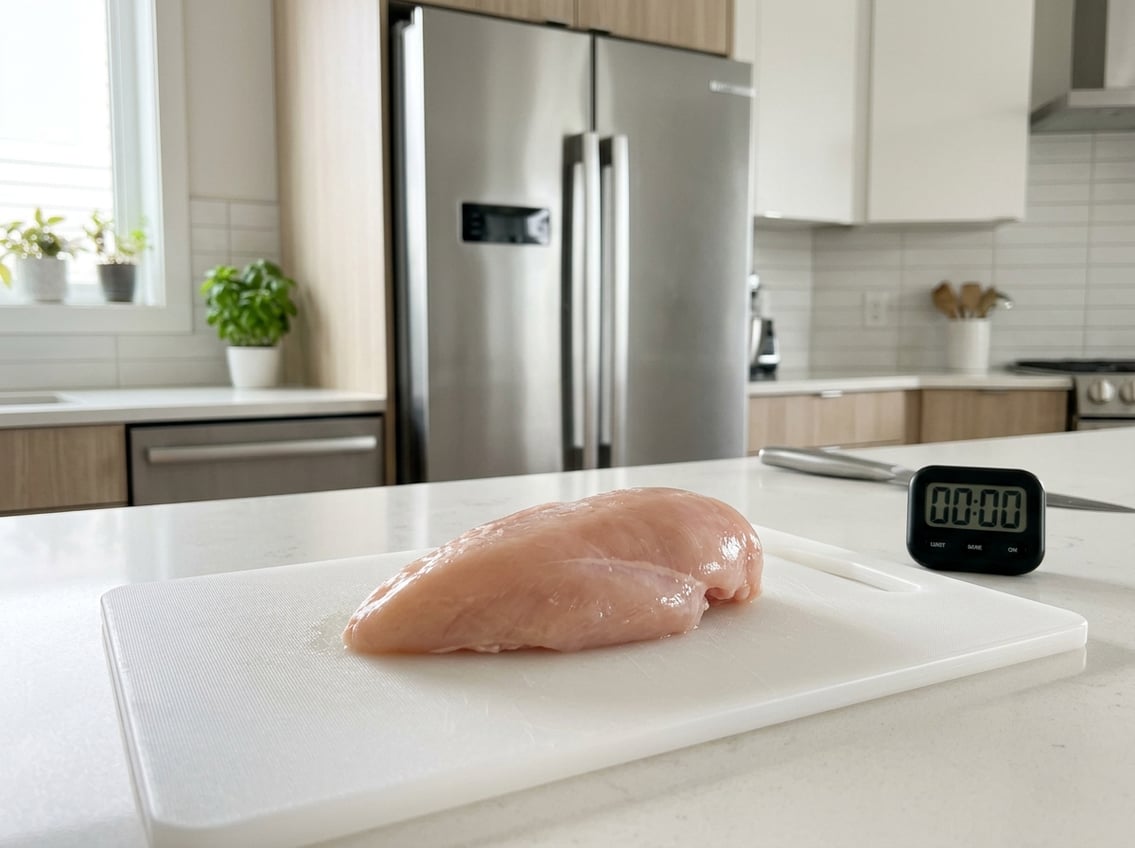
Food safety, not just quality, determines these time limits. Chicken can carry bacteria such as Salmonella and Campylobacter even when the meat looks normal.
If you feel unsure about chicken breast in the fridge, check the date, smell, and texture, and follow the storage window closely.
Safe Time Limits for Raw and Cooked Chicken Breast
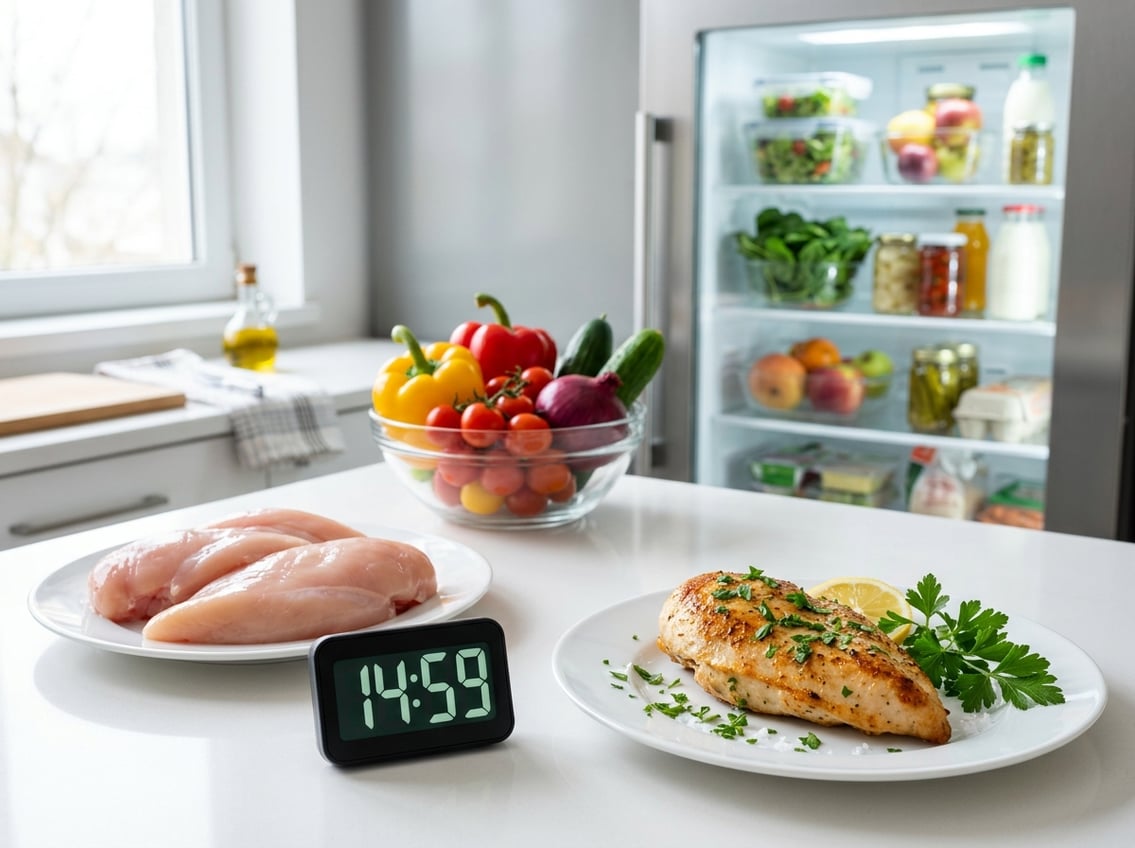
Chicken breast has a short shelf life in refrigeration. Fresh raw chicken breast, cooked chicken breast, and refrigerated chicken all have different safe windows.
If your chicken breast has been in the fridge longer than the safe time limit, throw it away. Even a strong refrigerator slows bacteria growth but does not stop it.
Raw Chicken Breast in the Fridge
Raw chicken breast stays safe in the fridge for 1 to 2 days at 40°F or below, according to Good Housekeeping’s chicken storage guide.
If you do not plan to cook it in that window, freeze it while it is still fresh. Freezing gives you a longer shelf life without the same risk.
Cooked Chicken Breast in the Fridge
Cooked chicken breast lasts 3 to 4 days in the fridge when you cool and store it properly. Keep it in a covered container and put it away soon after cooking.
Freeze leftovers if you will not eat them within that time. You can freeze cooked chicken and reheat it later as long as you handle it safely.
When Refrigerated Chicken Becomes Unsafe
Chicken becomes unsafe when time, temperature, or storage conditions drift out of range. If your fridge runs warm, chicken can spoil faster.
Throw out chicken if it sat at room temperature too long before going back into the fridge. Harmful bacteria can grow even when the meat still looks fine.
How to Tell When Chicken Breast Should Be Thrown Out
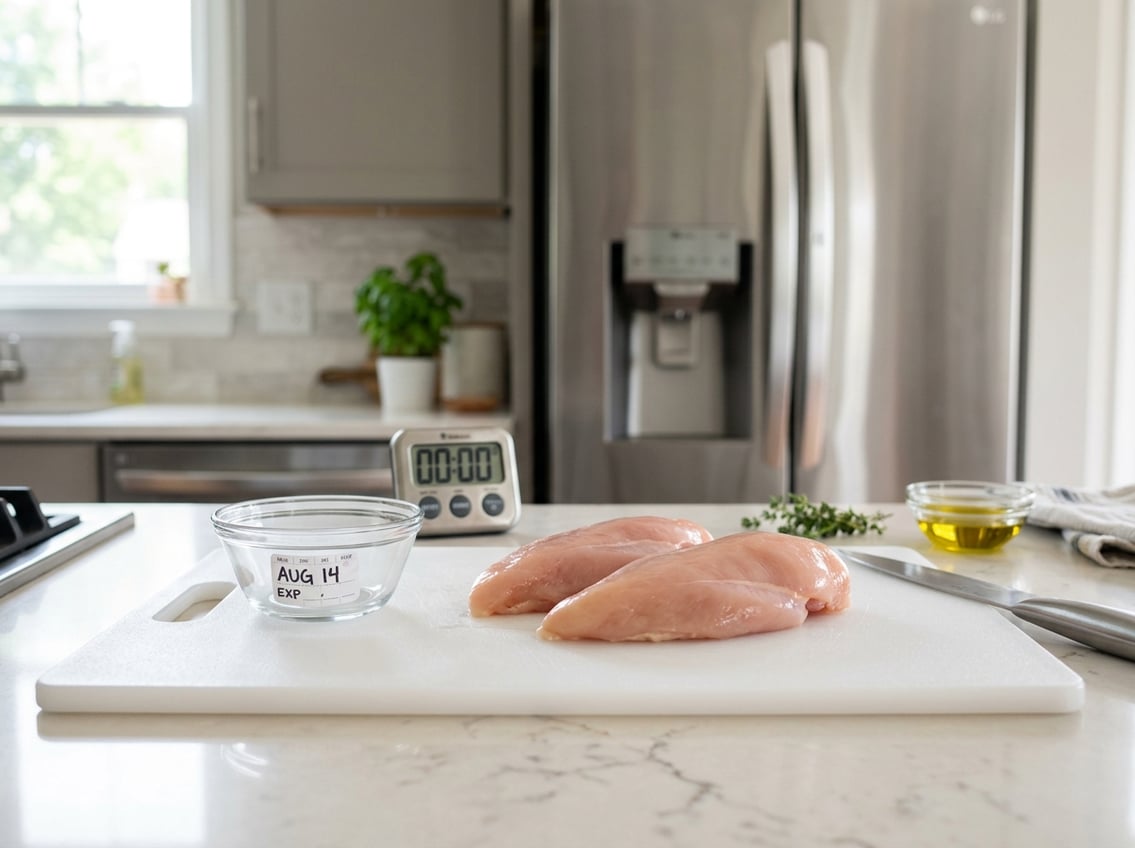
You can spot spoilage by checking smell, color, and texture. Some chicken can look only slightly off, so use more than one clue.
If you see any strong warning signs of spoiled chicken, throw it out. Do not try to save it by cooking it longer if it already smells bad or feels slimy.
Signs of Spoilage in Raw Chicken
Raw chicken can show spoilage in several ways:
- Sour, rotten, or ammonia-like smell
- Slimy or sticky texture
- Gray, green, or dull-looking color
- Package swelling or leaking
- Past the safe fridge time limit
Color alone is not always reliable, since vacuum-packed chicken can look odd at first, as noted by Good Housekeeping. Smell and texture are often more useful.
Signs of Spoilage in Cooked Chicken
Cooked chicken should still smell mild and look like normal cooked poultry. Toss it if you notice a sour smell, visible mold, sliminess, or a strange color.
Throw it away if it has been stored longer than 3 to 4 days.
Why Spoiled Chicken Is Risky
Spoiled chicken can carry bacteria that cause foodborne illness, including Salmonella and Campylobacter. These bacteria can make you sick even if you cook the meat after it has already gone bad.
You cannot fix spoiled chicken by rinsing it, smelling it again, or cooking it longer. For food safety, cook thoroughly only when the chicken starts out safe.
Proper Storage to Extend Freshness
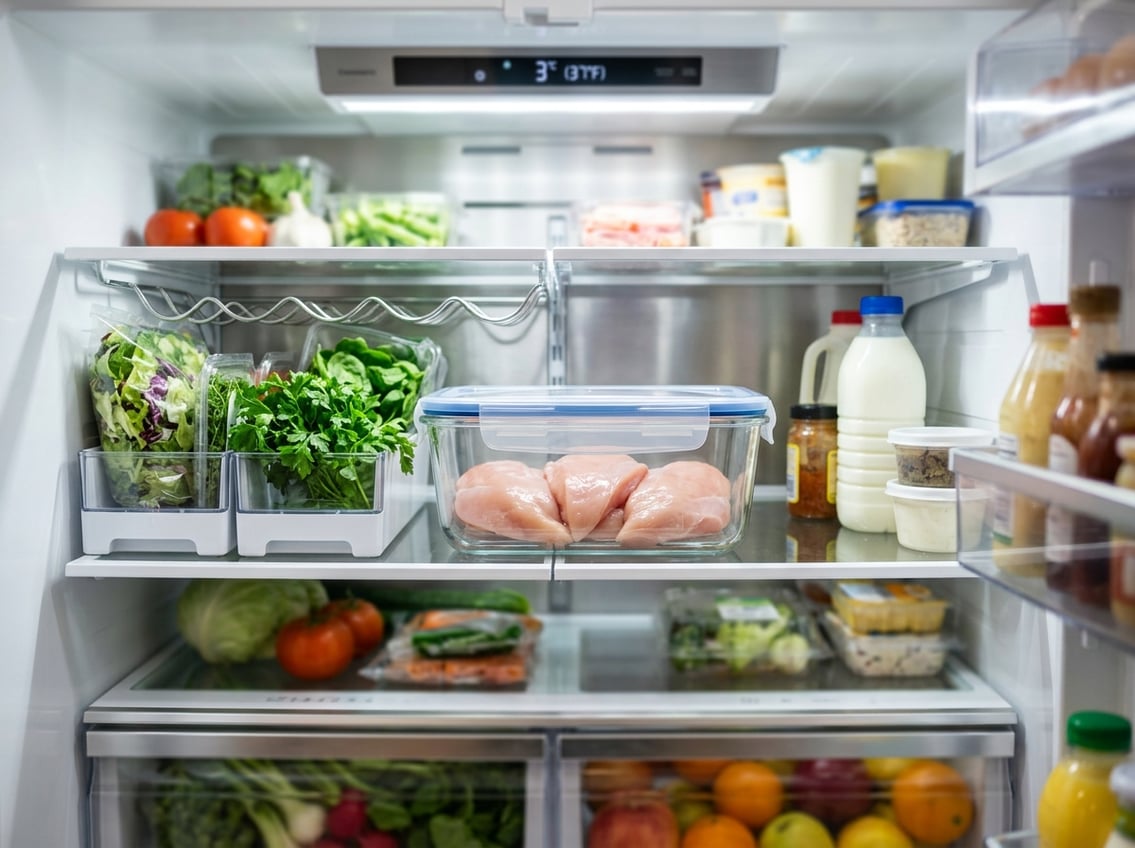
Proper storage helps you get the most out of your chicken breast without raising food safety risks. Keep it cold, sealed, labeled, and away from ready-to-eat foods.
If you know how to store chicken breast the right way, you can reduce spoilage and make freezing easier later.
How to Store Chicken Breast in the Fridge
Store chicken breast on the lowest shelf of your fridge so juices do not drip onto other foods. Keep raw chicken in a leak-proof bag or container, and use airtight containers for cooked portions.
A few useful habits can help:
- Keep your refrigerator at 40°F or below
- Leave chicken in its original package until you are ready to use it
- Place raw chicken on a plate or tray to catch leaks
- Label and date leftovers before refrigerating them
If you need to store chicken breast for more than a day or two, freezing is usually better.
Freezing Chicken Breast the Right Way
Freezing chicken breast stops spoilage from advancing, as long as the chicken is still fresh when you freeze it. Wrap raw or cooked portions tightly, then place them in freezer bags or airtight containers to prevent freezer burn.
Label and date every package so you know how long it has been frozen.
According to Good Housekeeping, freezer quality can drop after long storage, so better packaging matters. Heavy-duty wrap, foil, and tight sealing help protect texture.
How to Thaw Frozen Chicken Safely
Thaw frozen chicken in the fridge, in cold water that you change often, or in the microwave if you plan to cook it right away. Never thaw chicken on the counter, since the outer layers can warm into the danger zone.
If you thaw frozen chicken in the fridge, keep it in a container that catches drips. You can refreeze thawed chicken only if it was thawed safely in the fridge and stayed cold the whole time, though quality may suffer.
Handling Mistakes That Raise Food Safety Risks
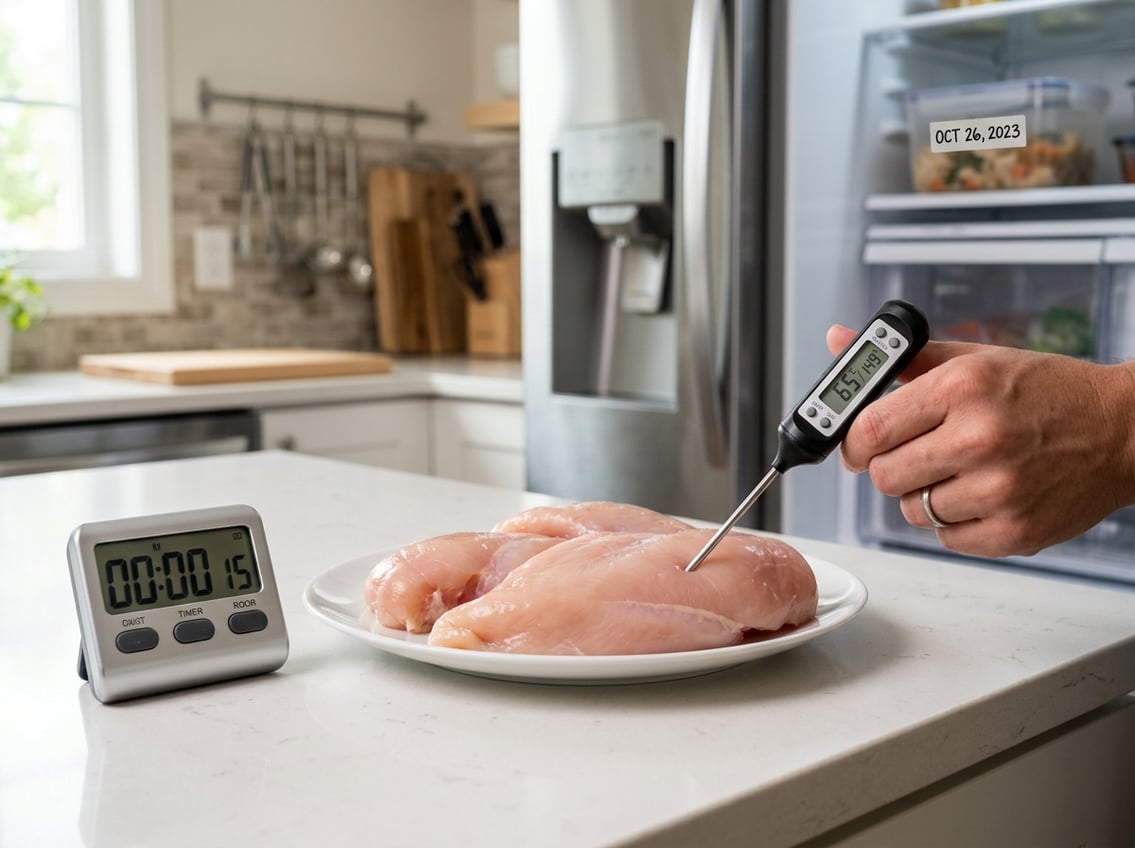
A few common kitchen habits make chicken less safe, even when the meat was fresh at the store. Cross-contamination, time at room temperature, and uneven cooking are the biggest problems.
If you handle raw chicken breast carelessly, you can spread bacteria to hands, counters, utensils, and cooked food. Food safety depends on both storage and cleanup.
Cross-Contamination in the Kitchen
Cross-contamination happens when raw chicken touches other foods or surfaces. Keep raw chicken separate from salad, bread, fruit, and cooked chicken breast.
Wash your hands, cutting boards, knives, and counters with hot soapy water after touching raw poultry. Do not rinse raw chicken, since that can spread bacteria like Salmonella and Campylobacter around the kitchen.
Leaving Chicken Out Too Long
Chicken should not sit at room temperature for more than 2 hours, or 1 hour if the room is hot. After that, bacteria can grow fast enough to raise food safety risks.
If cooked chicken breast has been left out during a meal or on the counter for too long, throw it away. Refrigerated chicken only stays safe when you get it back into the fridge quickly.
Cooking and Reheating Safely
Cook chicken breast thoroughly to a safe internal temperature of 165°F. Use a food thermometer instead of guessing based on color.
Heat leftovers until they are steaming hot throughout. If you are unsure about smell, texture, or storage time, do not try to reheat the chicken.


