
Is Frozen Chicken Breast Same as Fresh? Key Differences
The question of is frozen chicken breast same as fresh comes up because both start as the same cut of chicken. They do not behave the same in your kitchen.
The main differences show up in flavor, texture, storage, and how easy each one is to use.
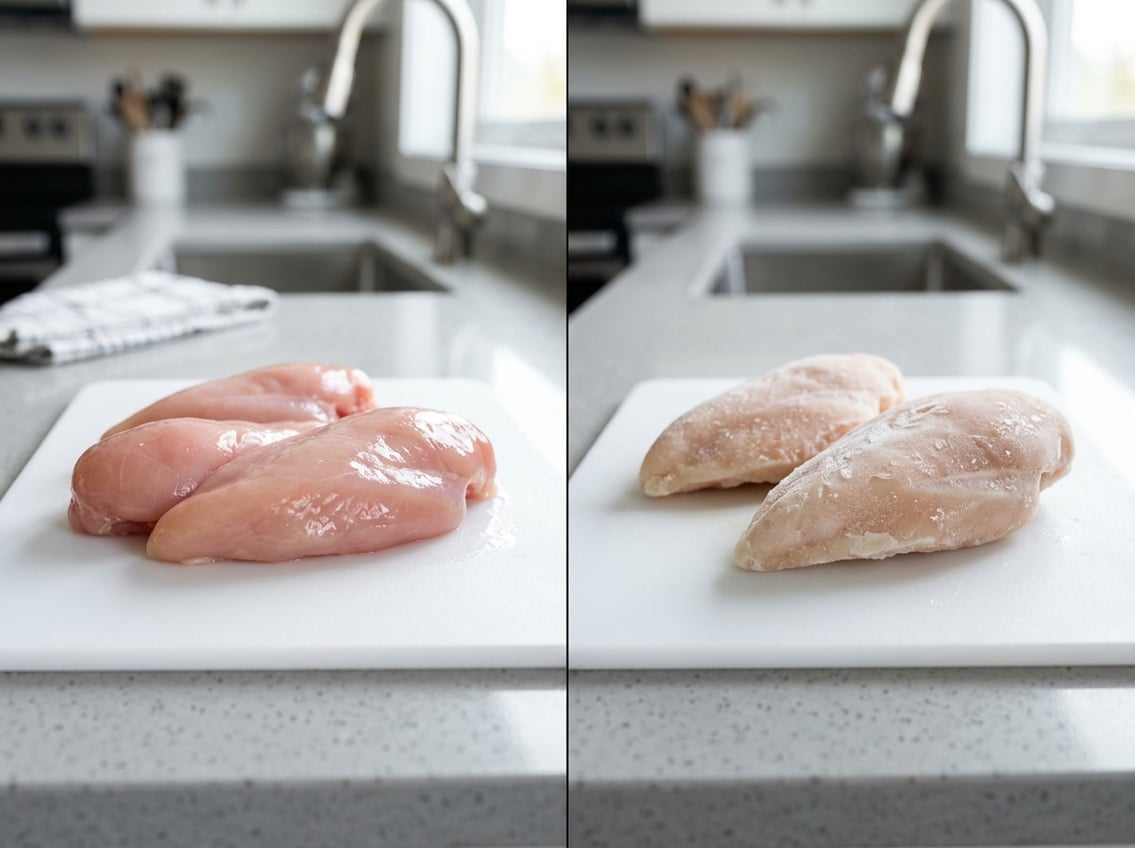
Frozen chicken breast and fresh chicken breast are close in nutrition, but they are not identical in taste, texture, convenience, or shelf life. If you know what matters most for your meal, you can choose the better option with less guesswork.
For many meals, fresh or frozen chicken both work well. The better choice depends on how soon you plan to cook it, what texture you want, and how much storage space you have.
What Is Actually Different at a Glance
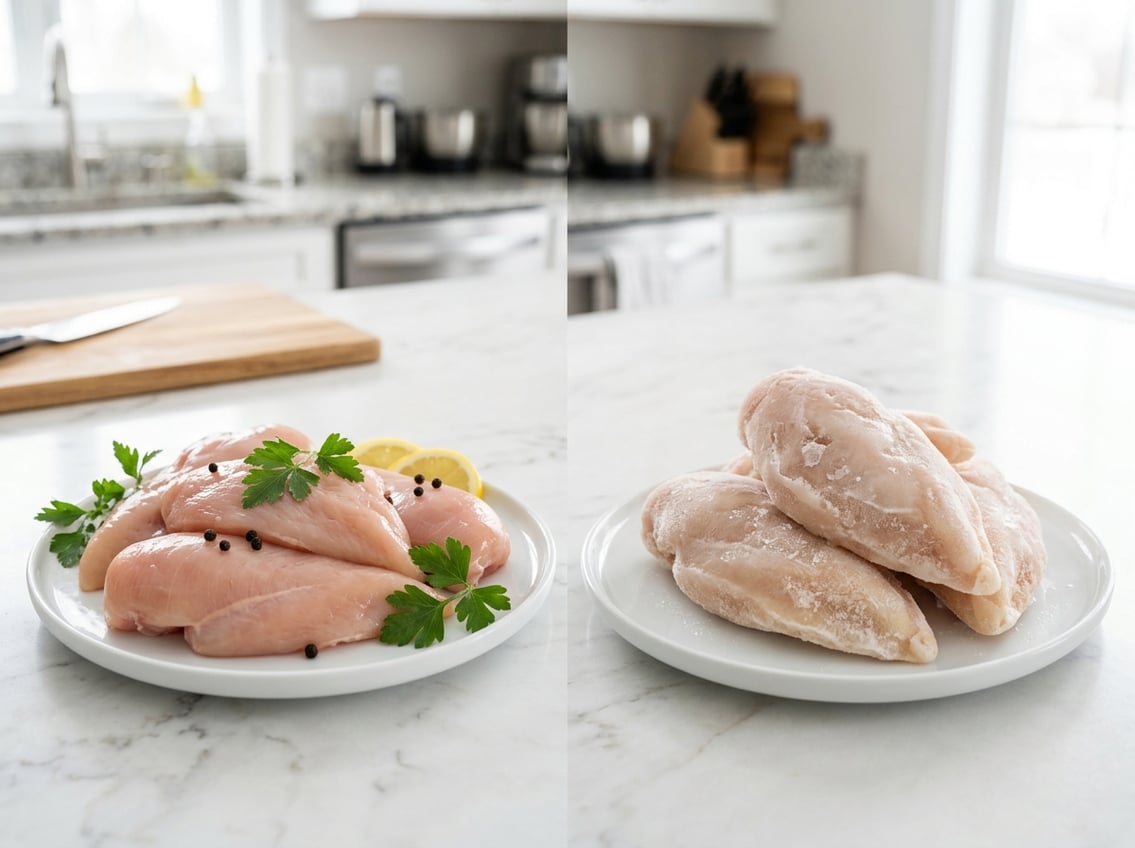
Fresh and frozen chicken breast start with the same lean protein. The biggest differences are practical, not dramatic.
Nutrition stays close, while flavor, texture, price, and shelf life can change your experience.
Nutrition and Protein Content
Frozen chicken and fresh chicken breast both offer excellent sources of lean protein. A typical serving has very similar protein content, and both provide useful amounts of vitamin B6, vitamin B12, phosphorus, and selenium, according to Cookindocs.
Freezing does not significantly reduce the nutritional value in a normal home setting.
Flavor, Texture, and Tenderness
Fresh chicken breast often has a slightly stronger flavor and a more tender feel. Ice crystals can affect texture during freezing and thawing, which may make frozen chicken feel firmer.
Juiciness can also differ. Fresh chicken may seem a little juicier when cooked well, while frozen chicken breast often needs more careful cooking to avoid dryness.
Price, Convenience, and Shelf Life
Frozen chicken usually gives you more convenience and a longer shelf life. It works well when you want to keep food ready for later and reduce food waste.
Fresh chicken breast usually needs to be used within a few days. Frozen chicken breast can stay usable for months when stored properly.
Price often favors frozen chicken, which makes it easier for meal planning and budget control.
Which Option Fits Different Cooking Needs
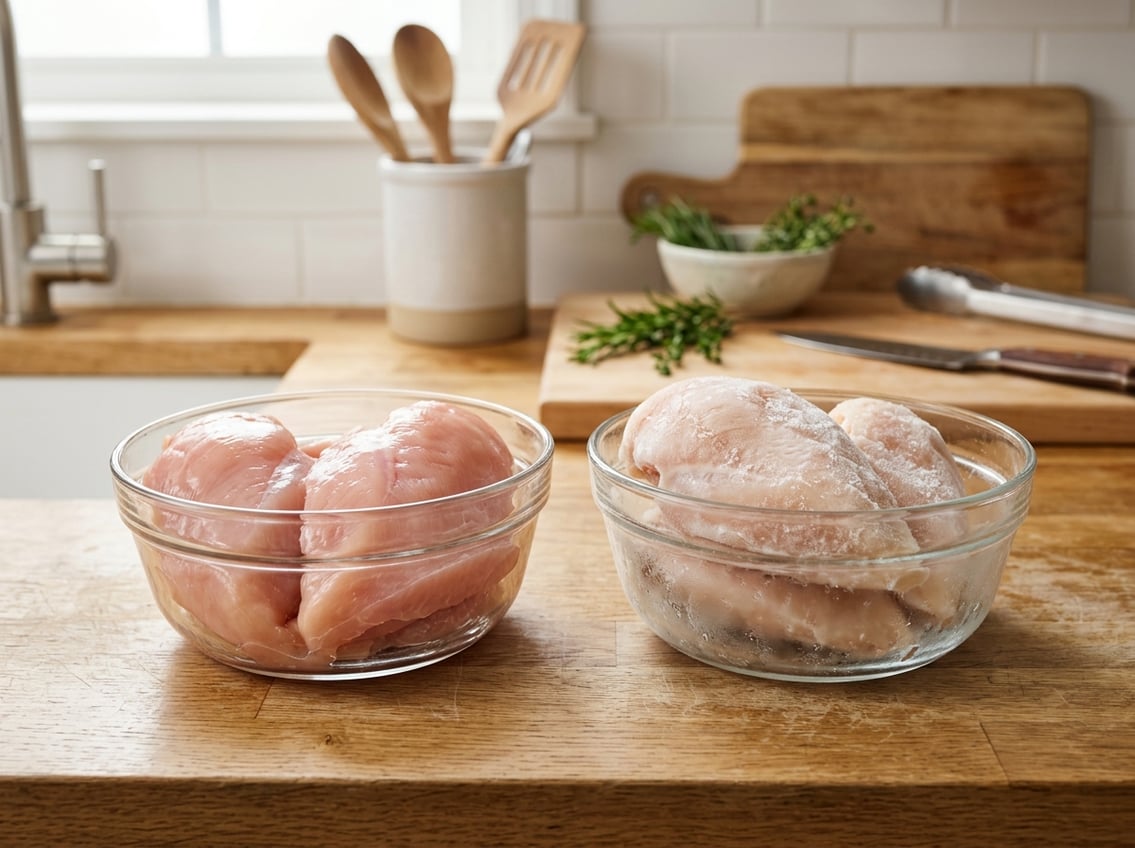
Your best choice depends on the meal you want to make and how much time you have. The cooking method changes how much you notice the difference.
Best Choice for Grilling and Roasting
Fresh chicken breast is often the easier choice for grilling and roasting. It cooks more evenly from the start and tends to give you better juiciness and tenderness.
If you use frozen chicken breast, thaw it first for these methods. Thawing helps the outside and inside cook at the same rate, which reduces the risk of dry edges and undercooked centers.
When Frozen Works Better for Meal Planning
Frozen chicken works well when you plan meals ahead. You can buy in bulk, store it safely, and use it when your schedule changes.
That flexibility makes frozen chicken breast useful for busy weeks. It also helps when you want to keep cost lower without giving up a good protein source.
How Cooking Techniques Affect Results
Cooking techniques matter as much as the chicken itself. Moist methods like braising, steaming, and poaching can help frozen chicken breast stay tender.
Grilling and roasting often reward fresh chicken breast with better texture. If you cook chicken from frozen, you need extra time and careful heat control.
According to Cookindocs, thawing first gives more even results and helps preserve tenderness.
Safe Thawing, Storage, and Handling Basics
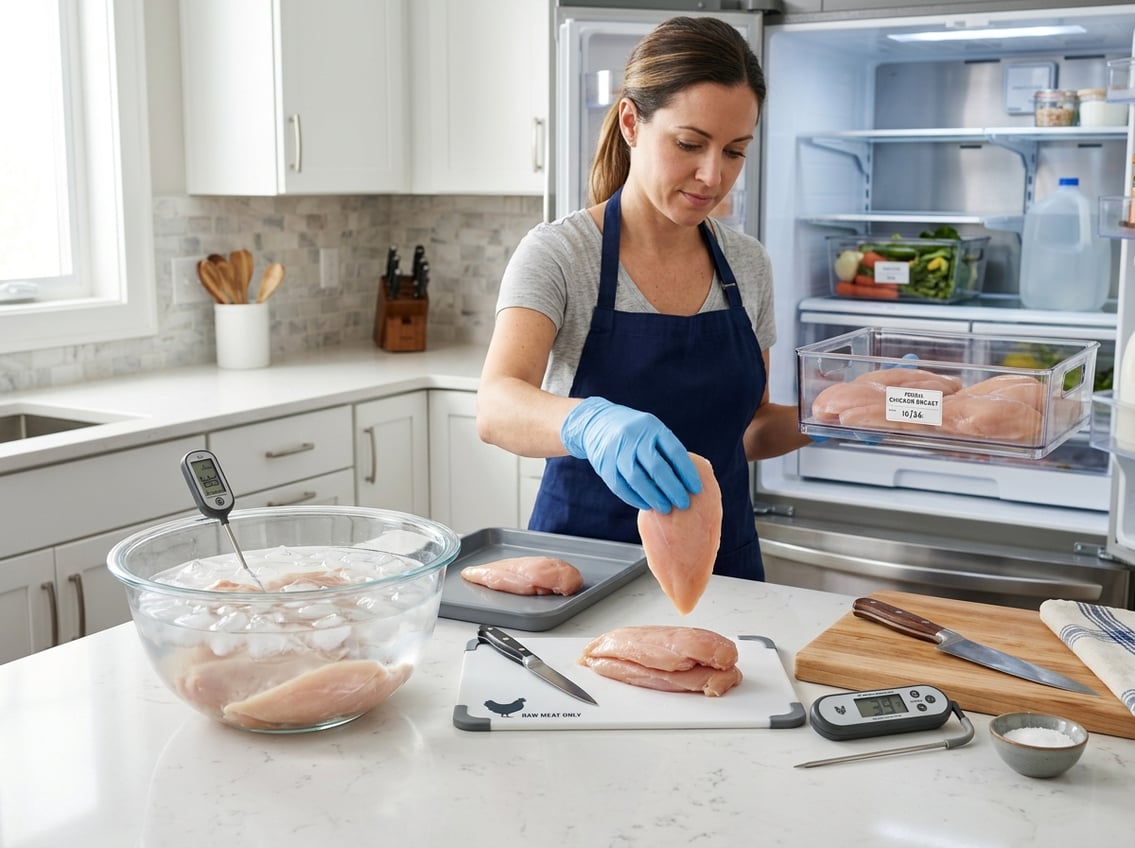
Food safety matters with both fresh chicken breast and frozen chicken breast. Safe handling protects quality and lowers the chance of spoilage.
Best Thawing Methods for Even Cooking
You get the safest results when you thaw frozen chicken breast in the refrigerator. Cold water thawing also works when you keep the chicken sealed and change the water often.
These thawing methods help the chicken cook at a steady rate. That makes a difference for thick pieces, where the center can stay cold long after the outside starts cooking.
Handling and Storage Rules to Know
Keep frozen chicken breast at 0°F or lower. Store fresh chicken breast in the refrigerator at 40°F or lower.
Use sealed packaging or airtight containers to protect quality and limit contamination. Watch for freezer burn and excess ice crystals on frozen chicken breast.
Those signs do not always mean the chicken is unsafe, but they can affect flavor and texture.
Can You Refreeze Chicken Safely
You can refreeze chicken if it thawed in the refrigerator and stayed cold.
If you thawed it in cold water or the microwave, cook it first before refreezing.
Refreezing can affect texture.
Careful refreezing can help reduce food waste when your plans change.


