
Which Part of Chicken Is Called Chicken Breast? Explained
You may hear the phrase which part of chicken is called chicken breast and wonder if it refers to a specific strip, a whole cut, or the front of the bird.
The chicken breast is the meat on the front upper chest of the bird, centered on either side of the breastbone and made mostly of the pectoral muscles.
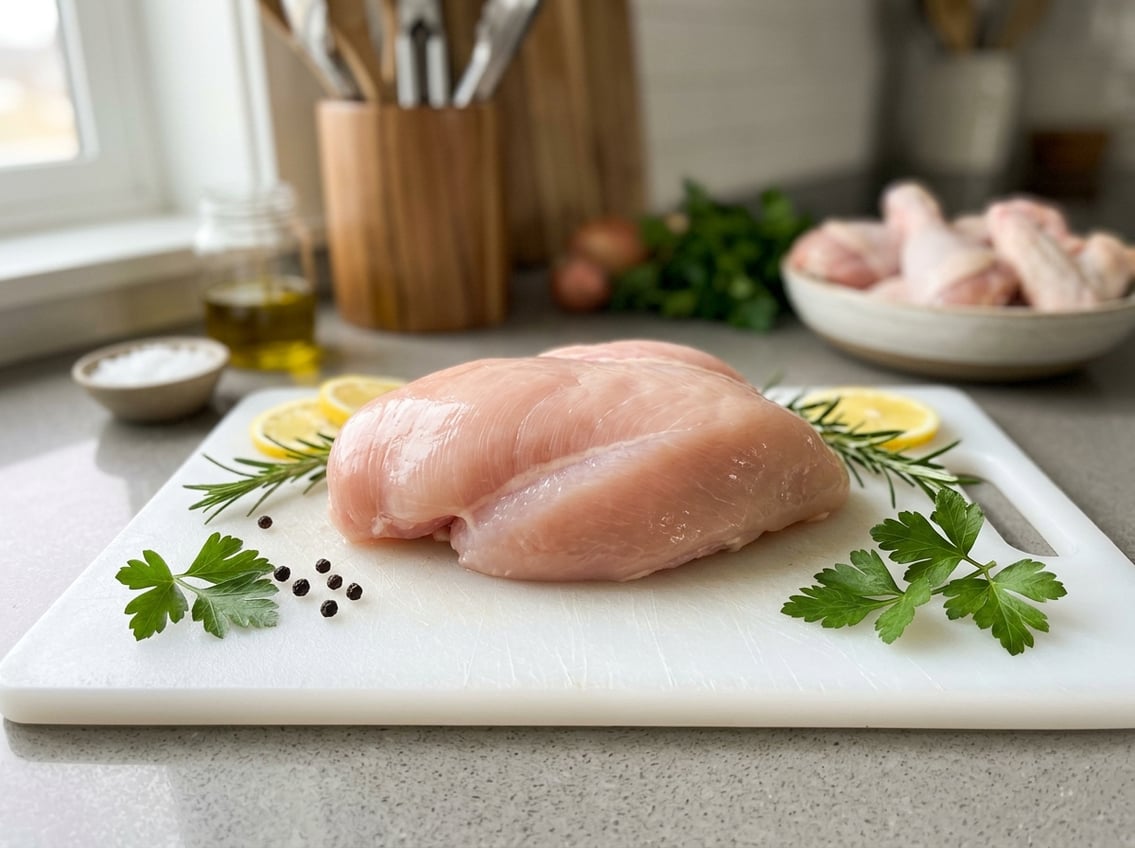
When you buy chicken breast, you are buying the front chest muscle of the bird.
This is usually the leanest and lightest-colored meat on a whole chicken.
It is one of the easiest cuts to identify and one of the most common cuts in U.S. stores.
The term can mean a whole breast half, a split breast with bone, or a boneless chicken breast, depending on how the bird was cut.
Knowing the layout of chicken anatomy helps you tell the breast from the thighs, drumsticks, wings, and other chicken parts.
Where the Breast Is Located on the Bird
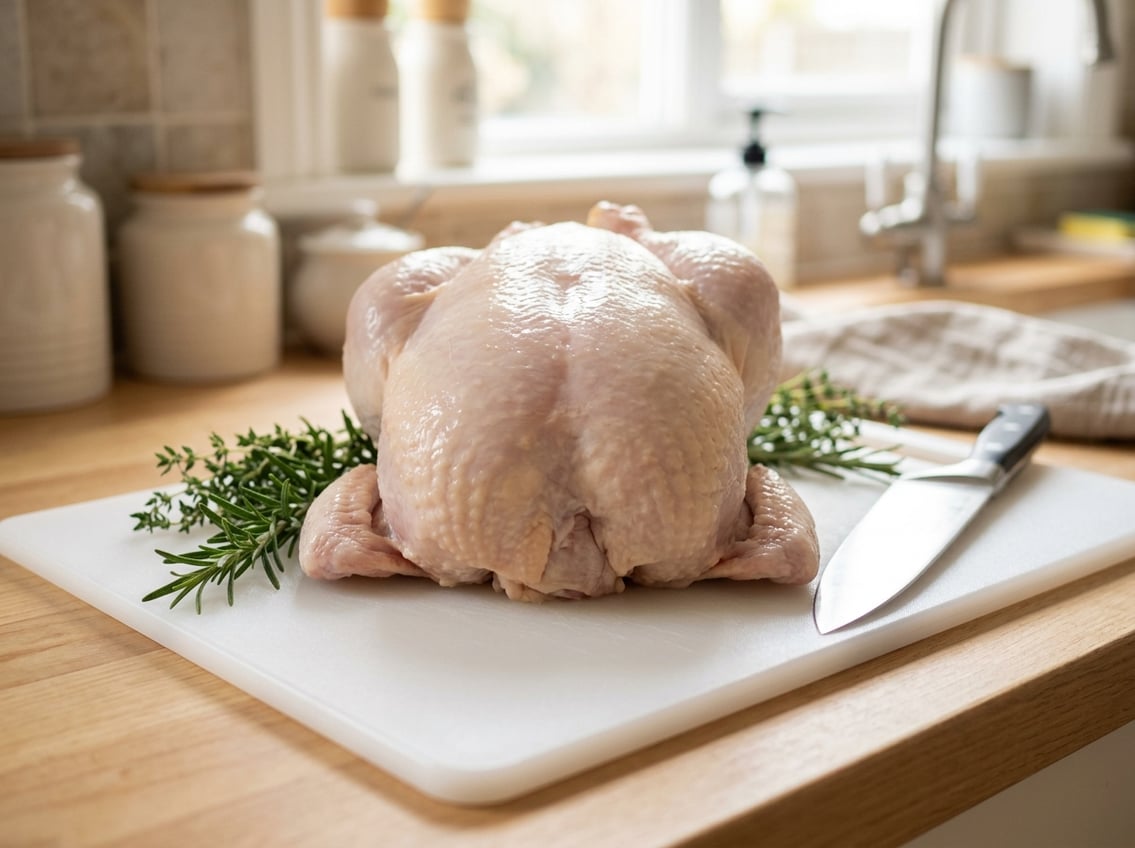
The breast is the large meaty area on the front of a whole chicken, above the legs and below the neck.
On many whole chicken cuts, it appears as two rounded halves separated by a center line.
How to Spot It on a Whole Chicken
On a whole chicken, the breast sits on the top front side, where the meat looks broad and smooth.
It is the largest pale section on the bird and is usually thicker than the meat on the wings or back.
If the bird is lying breast-side up, the breast is the first part you see.
In retail chicken parts, this area may be sold as a whole breast, split breast, or breast quarter.
The Breastbone, Keel Bone, and Rib Area
The breast sits over the breastbone, also called the keel bone.
That bone runs down the center of the chest and separates the left and right sides of the breast, as described in this chicken anatomy guide.
A breast with ribs still includes some of the rib cage under the meat.
A split breast is usually one side of the breast cut along the breastbone.
How the Breast Connects to the Wings and Legs
The breast meets the whole wing near the shoulder area and sits above the thigh, drumstick, and leg quarter.
The legs and wings do more work than the breast, which is why they tend to have darker, richer meat.
The chicken back and tail are farther from the breast and make up the rear and lower parts of the bird.
These areas are not part of the breast cut, even when they are attached in a whole bird.
What Makes Chicken Breast Different From Other Cuts
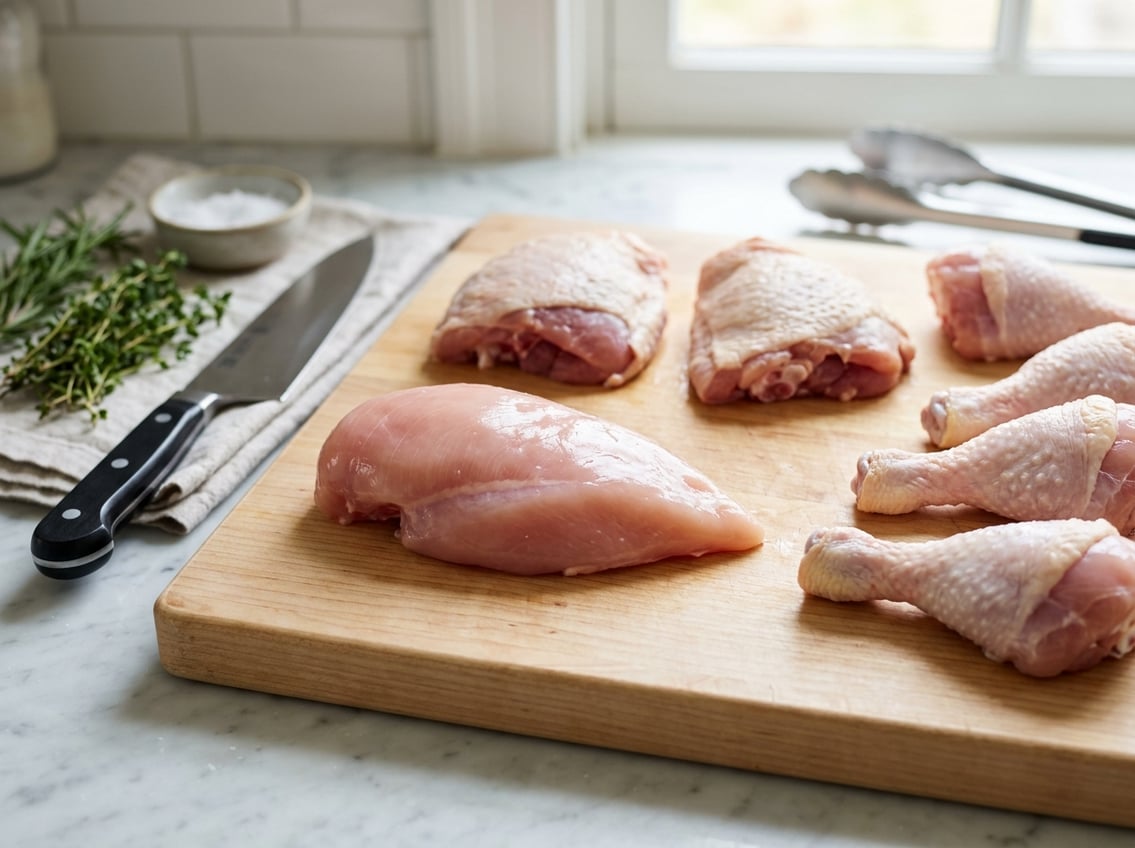
Chicken breast stands out because it is white meat, while the thigh, drumstick, and wings are darker and usually richer in flavor.
It is also known as a lean protein and a lean cut of meat, which is why many people choose it for everyday meals.
White Meat vs Dark Meat
Chicken breast is white meat because the muscles work less than the legs and wings.
A guide to chicken breast anatomy notes that the breast is mainly the pectoral muscle group, including the pectoralis major and pectoralis minor.
Dark meat comes from the chicken thigh, chicken drumstick, and similar working muscles.
These cuts usually contain more fat and connective tissue, which gives them a deeper flavor and a juicier texture.
Breast vs Thigh and Drumstick
A skinless chicken breast is lower in fat than most thigh or drumstick cuts.
That makes it a common choice for salads, sandwiches, and simple meal prep.
Thighs and drumsticks often stay moist better during long cooking.
Many cooks prefer them for braising, roasting, or saucy dishes.
Breast vs Wings and Wing Sections
Wings are made up of the drumette, wingette or wing flat, and wing tip or wingtip.
The breast has a very different structure, since it is one large muscle mass rather than three smaller wing sections.
Chicken wings, including buffalo wings, are usually eaten for skin, fat, and texture rather than for lean meat.
The breast is more uniform and easier to slice into cutlets or strips.
Breast vs Tenderloin
The tenderloin or chicken tenderloin is a separate strip of meat that sits under the breast.
It is also called a chicken tender, and many people use chicken tenders to mean either the actual tenderloin or breaded strips made from breast meat.
The inner pectoral muscle is the larger breast meat, while the tenderloin is the smaller strip beneath it.
A breast fillet or boneless breast usually comes from the larger breast muscle, not the tenderloin.
Common Store Labels and Butcher Terms
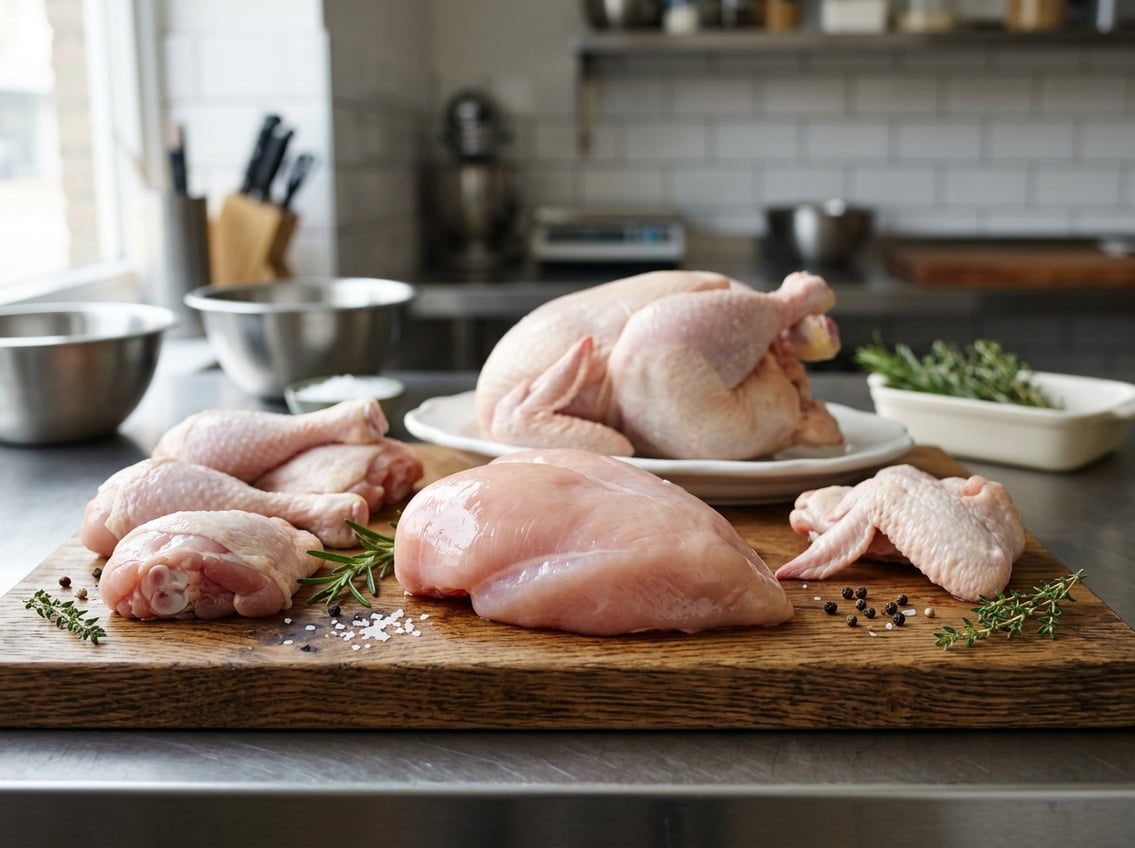
Store labels can make chicken shopping feel more complicated than it is.
The main differences are usually bone, skin, and how much of the bird is still attached to the cut.
Bone-In, Boneless, Skin-On, and Skinless Labels
A whole breast may include both halves of the breast on one piece.
A breast with ribs or split breast keeps some bone attached, while a boneless breast or boneless chicken breast has the bone removed.
Skinless chicken breast means the skin has been taken off.
A breast fillet is another common name for a boneless breast in many stores.
Retail Cuts You May See in the Meat Display Case
In the meat display case, you may also see breast quarter, whole leg, leg quarters, and whole wing.
These are common chicken cuts and part of the larger set of major chicken cuts sold in U.S. retail stores, as described by National 4-H poultry parts identification.
For cooked meals, chicken breast works well when you want a mild flavor and quick prep.
Cuts like thighs, wings, and leg quarters are often better when you want more fat and stronger flavor, such as for fried chicken.
How to Choose the Right Cut for Cooking
If you want fast, even cooking, boneless breast is usually the easiest choice.
If you want more flavor and don’t mind bone-in meat, split breasts and breast quarters give you more options.
If you are learning how to butcher a chicken, terms like spatchcock and 10-piece country cut help you understand how a whole bird is divided.
Broilers and heavy broilers are common market birds, while turkeys are larger birds with a different breast shape and size.
Related Anatomy and Less Common Edible Parts
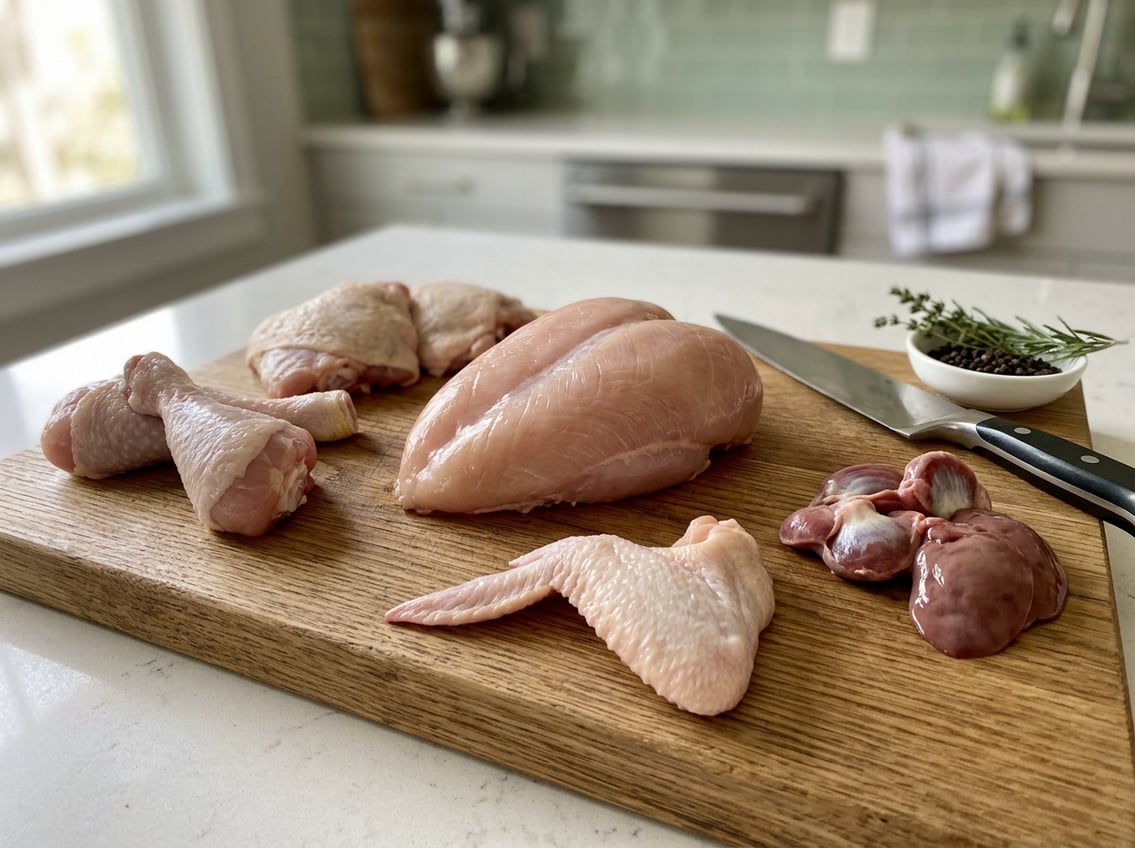
Chicken anatomy includes many parts beyond the breast, thigh, and wing.
Some are visible on the outside, while others are part of the bird’s internal anatomy and are used in cooking less often.
External Features of the Bird
The external parts of a chicken include the comb, wattles, beak, earlobes, legs and feet, hock, shank, toes, claws, and vent or cloaca.
These parts help with movement, balance, and body function.
The legs and feet sit below the body and are separate from the breast.
They are not edible in the same way as the breast, though feet are used in some cuisines.
Internal Organs and Giblets
The internal anatomy of a chicken includes the crop, reproductive system, internal organs, and giblets.
Giblets usually refer to edible organs such as the heart, liver, and gizzard.
The gizzard is a muscular organ that helps the bird grind food.
These parts are not breast meat, even though they may be sold with the chicken.
Backs, Necks, and Stock Uses
Butchers often sell chicken necks for broth or stews.
Chicken backs also work well for making chicken stock because they contain bones and connective tissue.
These pieces are not common table cuts like breast meat. They add flavor and body to soups and stocks.
If you buy a whole bird, you can use these parts to reduce waste.


