
When Baking Chicken Breast Should I Cover It? Best Method
When baking chicken breast, you might wonder if you should cover it. The answer depends on the result you want.
If you want to protect the chicken from dryness, cover it for part of the bake. For more browning and a firmer surface, bake it uncovered.
For most baked chicken breasts, a hybrid method works best. Cover the chicken first to hold moisture, then uncover it near the end to finish the surface.
That gives you a better chance at a juicy chicken breast without giving up color or texture.
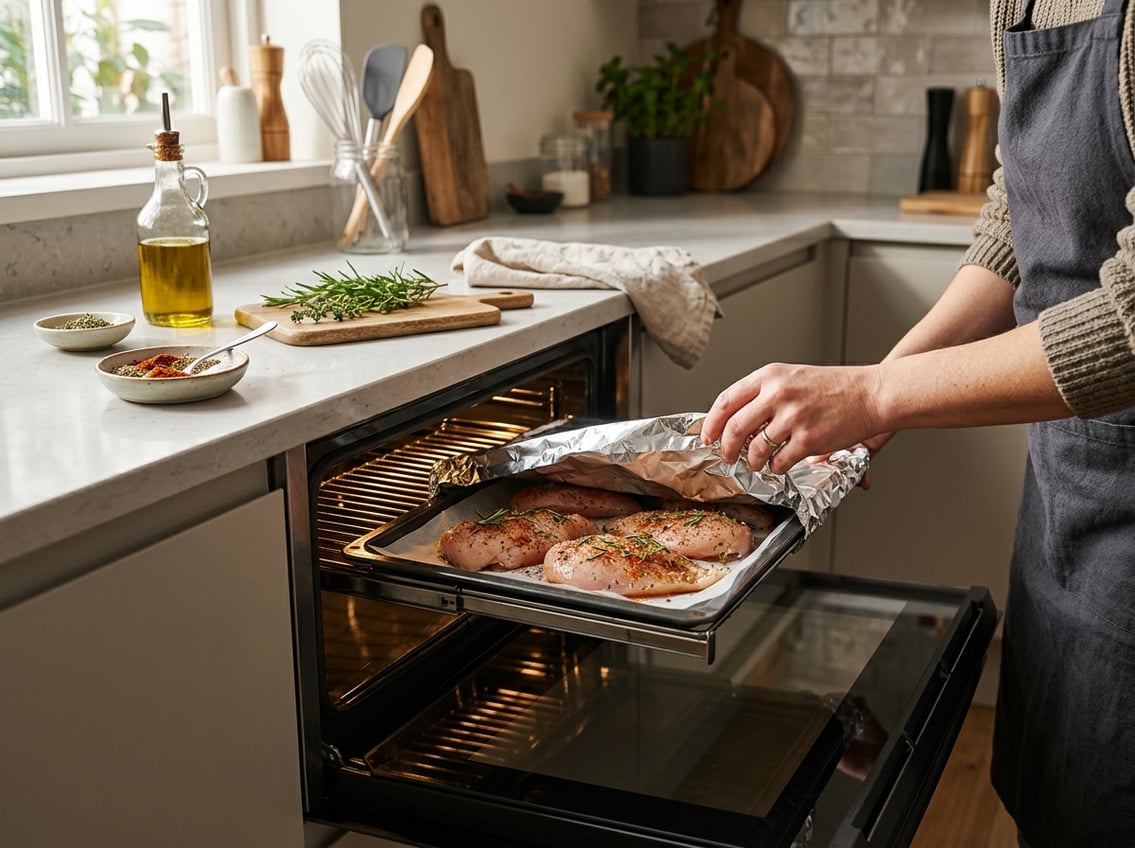
The right choice also depends on thickness, whether the chicken has skin, and whether you use a sauce or coating. Lean baked chicken breasts dry out quickly, so match your method to your desired result.
The Best Short Answer
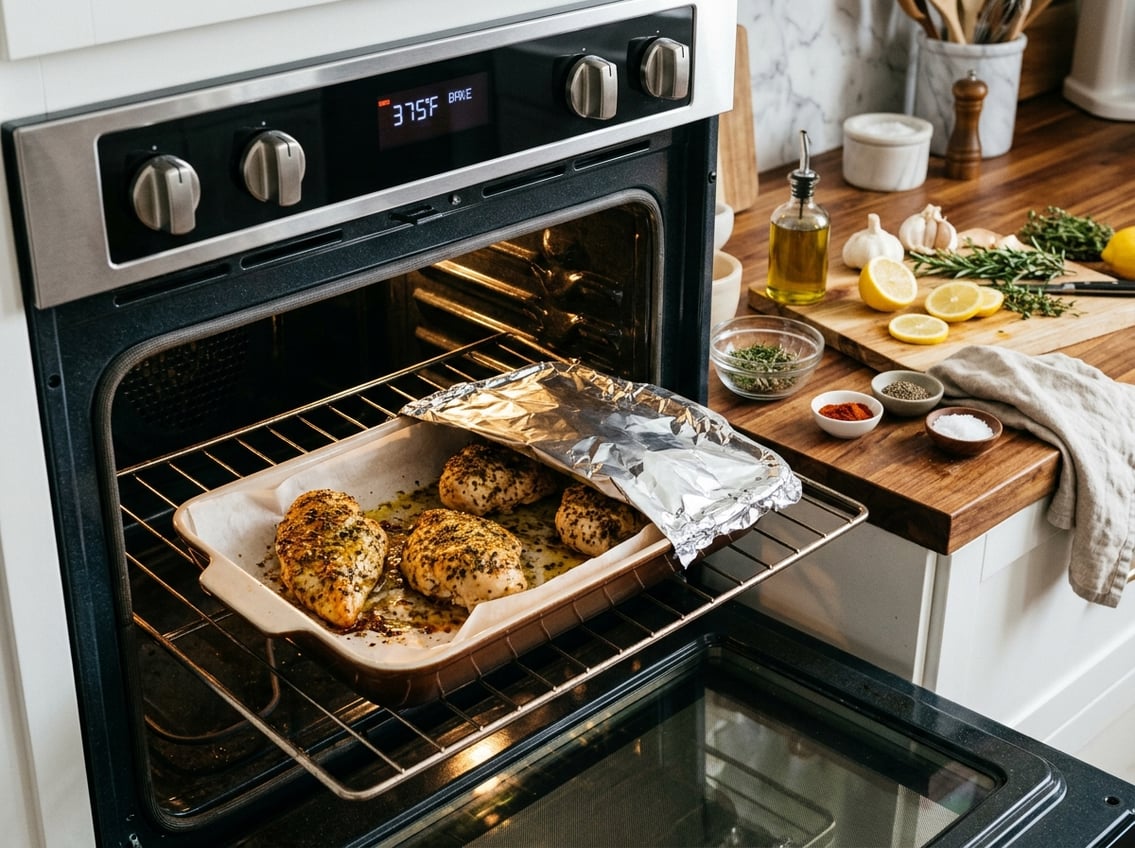
If you decide whether to cover chicken breast when baking, know that covering helps keep chicken breast moist. Uncovered baking gives you better browning.
A covered dish traps steam, which protects lean meat from drying out.
When Covering Helps Most
Covering works well when the chicken is very lean, thick, or baked with sauce. It helps when you want soft, tender meat and less surface color.
That is why cooks often cover chicken for dishes where moisture matters more than a crisp top.
When Uncovered Works Better
Bake chicken breasts uncovered when you want more browning, a drier surface, or a light crust. Uncovered chicken works well when the breasts are thin enough to cook quickly.
The surface browns more easily because moisture escapes instead of staying trapped.
Why a Hybrid Method Often Wins
A two-step method gives the best balance. Start covered, then finish uncovered so you keep the chicken breast moist while still getting better color near the end.
That approach matches the method described by Cookin Docs, which recommends covering first and uncovering later for a crisper finish.
How Each Method Changes the Final Result
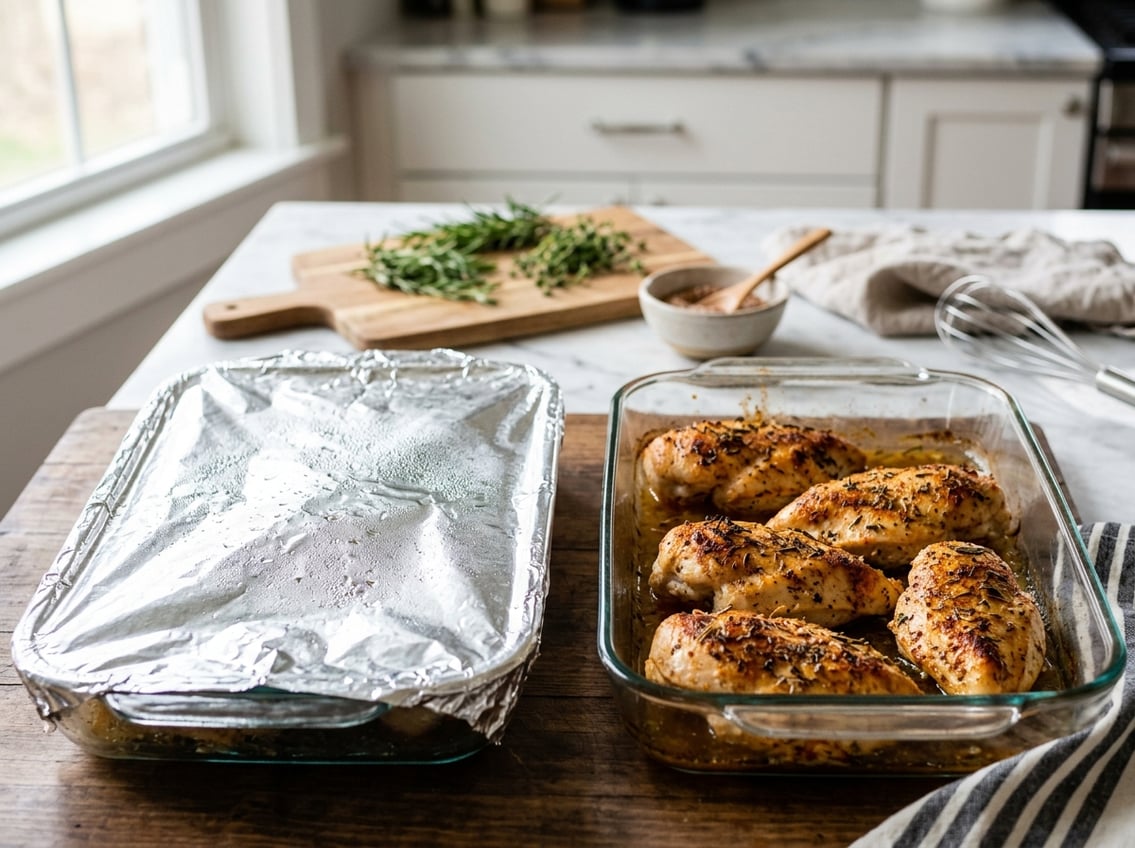
Baking chicken affects more than doneness. The method changes how much moisture stays in the meat, how the outside looks, and how the finished chicken feels.
Moisture Retention and Steam
When you cover chicken, steam stays in the dish and around the meat. That helps the chicken stay juicy because less moisture escapes into the oven air.
The covered environment benefits baked chicken breasts, which are naturally low in fat and easy to dry out.
Browning, Texture, and Surface Dryness
Uncovered chicken gets direct dry heat, so the surface dries out more and browns faster. That gives you more color and a firmer texture.
The tradeoff is that the meat can lose moisture faster, especially if it stays in the oven too long.
How Thickness and Skin Affect the Choice
Thicker breasts often benefit more from covering because they need longer cooking time. Thin breasts can do well uncovered if you watch them closely.
Skin-on chicken browns better uncovered, while skinless breasts usually need more help staying tender.
How to Bake It the Right Way
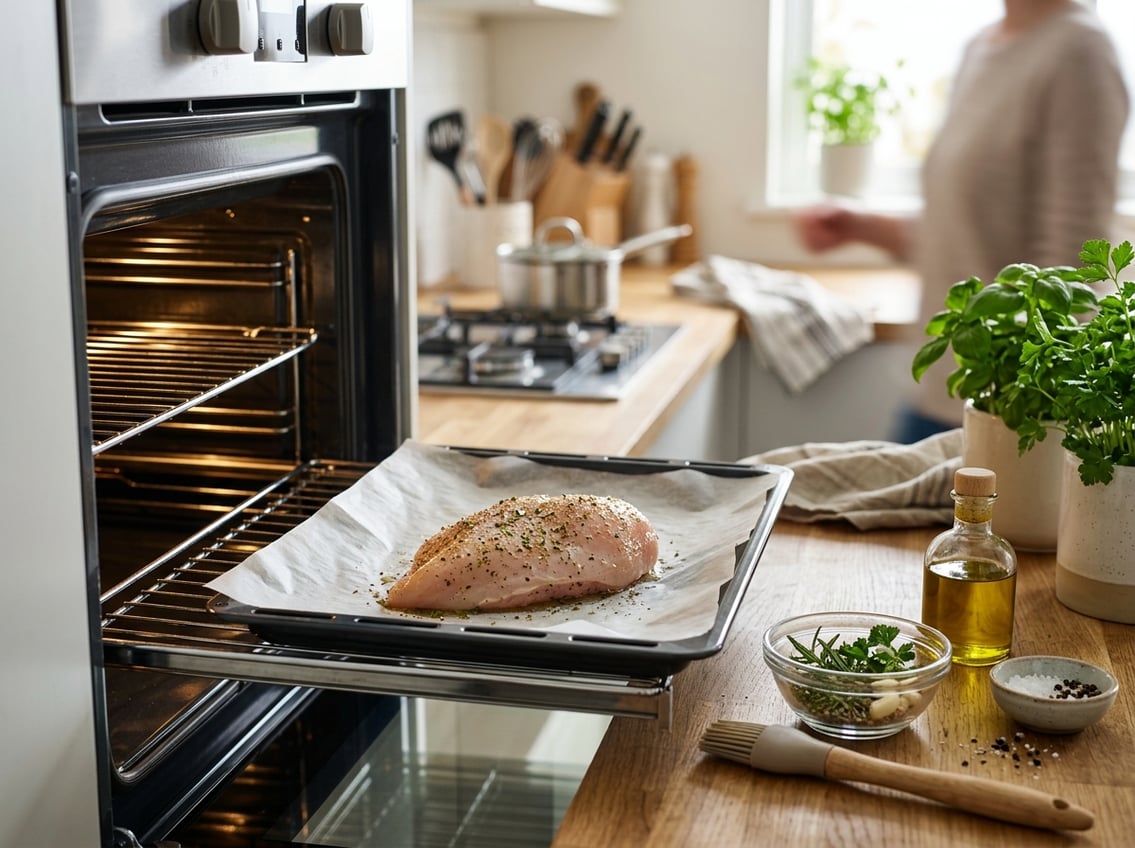
The right method depends on the result you want and how much time you have. Many home cooks start with heat and moisture control, then finish with color.
Covered Method for Tender Results
If you want softer texture, place the chicken in a baking dish and cover it tightly with foil or a lid. This works well when you need to protect the meat from drying.
It is useful for sauced chicken, stuffed dishes, or thicker breasts that need more time.
Uncovered Method for Better Browning
If you want more color, bake chicken breasts uncovered on a sheet pan or in a shallow dish. For better browning, pat the chicken dry first and avoid crowding the pan.
That gives the surface more direct heat, which helps the top set and brown.
Best Temperatures, Timing, and Internal Doneness
Most baked chicken breasts cook well in a moderate oven, often around 375°F to 400°F. The most reliable check is internal temperature, not time alone.
Chicken breast is safe at 165°F in the thickest part. Let it rest a few degrees higher during resting.
What Keeps Chicken Breast Moist Besides a Cover
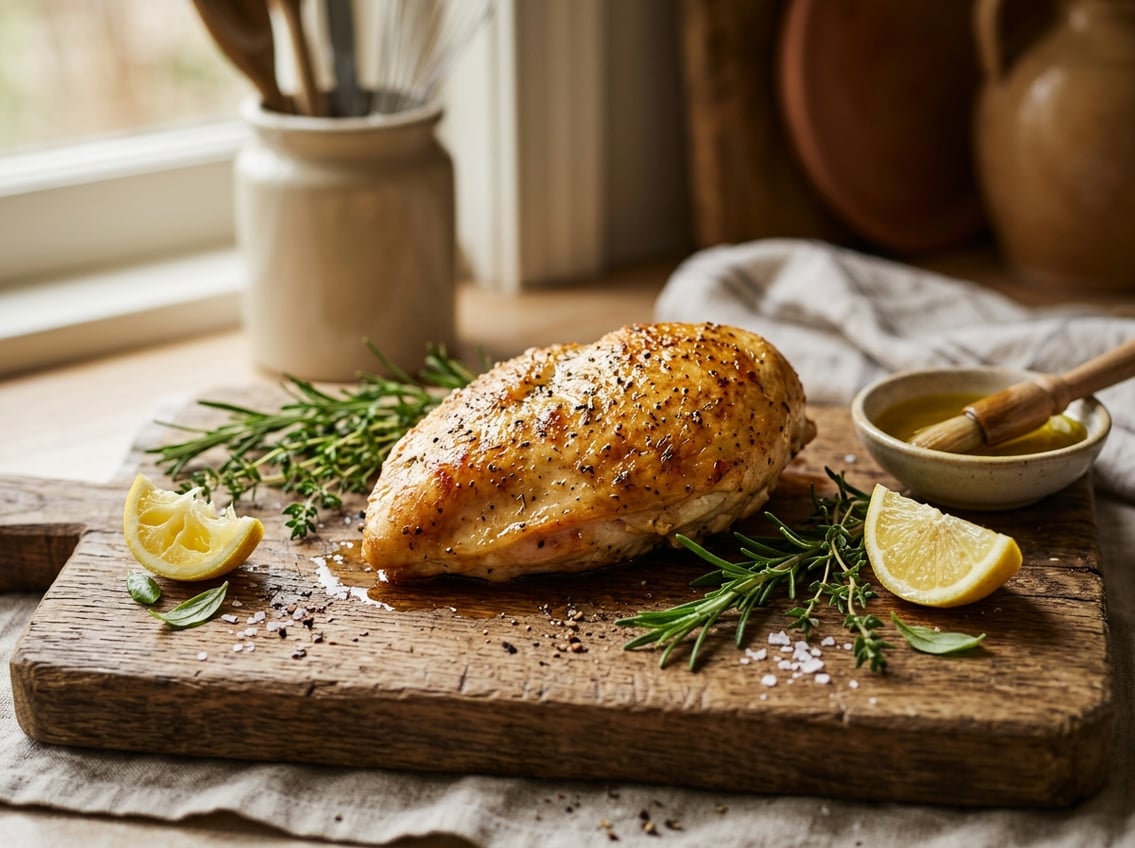
Covering helps, but it is not the only way to keep chicken breast moist. Good prep, careful cooking, and proper resting matter just as much.
Marinating vs. Brining Before Baking
Marinating chicken breast can add flavor and some surface moisture, especially with oil, acid, and seasoning. Brining chicken breast is often even more effective for juiciness because salt helps the meat hold onto water better.
For a simple method, a short brine can improve baked chicken breasts before they go into the oven, as noted by Meat Chef Tools.
Resting, Tenting, and Avoiding Overcooking
Let the chicken rest after baking so the juices settle back into the meat. You can tent it loosely with foil after it comes out of the oven, which helps hold heat without continuing to overcook the surface.
That small pause can make a clear difference in how juicy the chicken feels.
Common Mistakes That Dry Out Chicken Breast
Baking chicken breast for too long dries it out, even if the temperature is correct.
Using very high heat the entire time also leads to dryness.
People often skip using a thermometer, which makes it hard to check doneness.
Slicing too soon can cause juices to escape.
To keep chicken breast juicy, focus on doneness, rest time, and even thickness.


