
Which Is More Healthy Chicken Breast or Thigh? Key Differences
You might wonder which is more healthy chicken breast or thigh when you are trying to build meals that are high in protein and easy to fit into your routine. The short answer is that chicken breast is usually the healthier pick if your main goal is fewer calories and less fat, while chicken thigh can still be a healthy choice if you want more flavor, more iron and zinc, and better fullness.
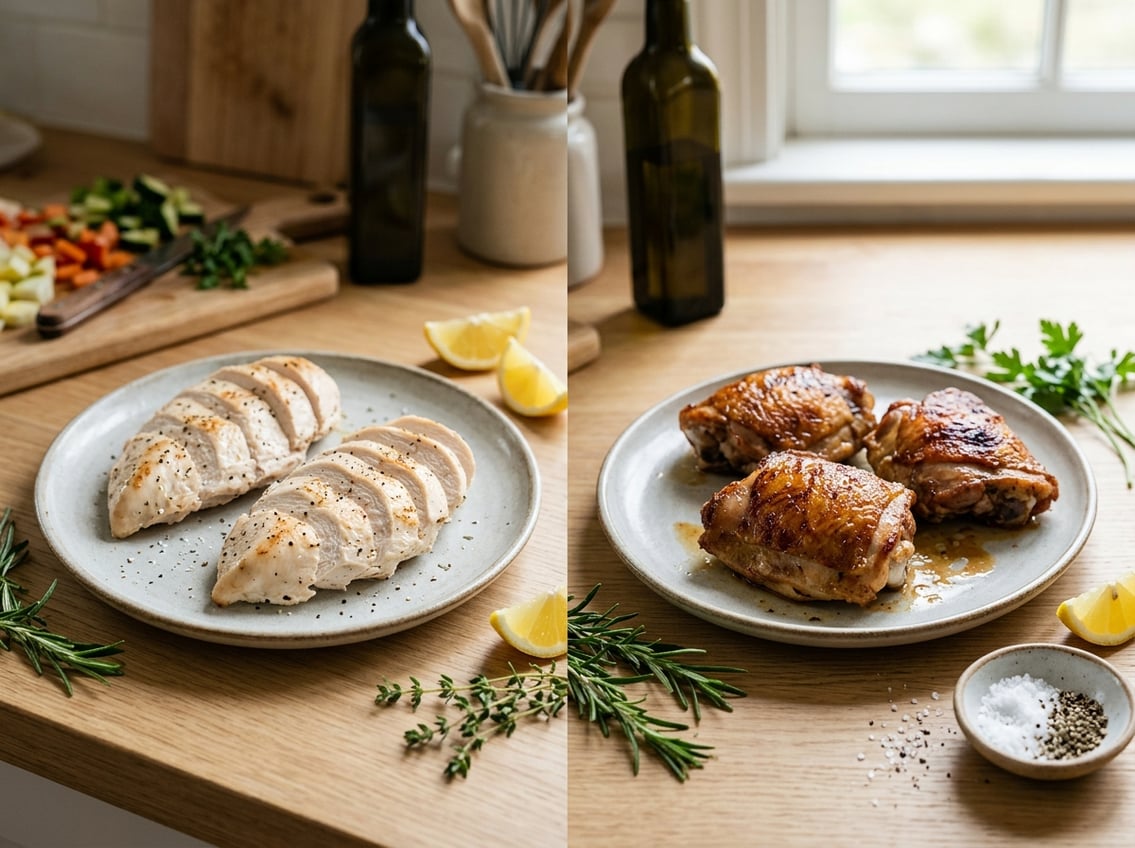
Your best choice depends on your goals and your cooking method. Skinless, simply cooked chicken breast gives you a very lean protein option. Chicken thigh gives you a richer cut that some people find easier to eat consistently.
Quick Answer: How the Two Cuts Compare
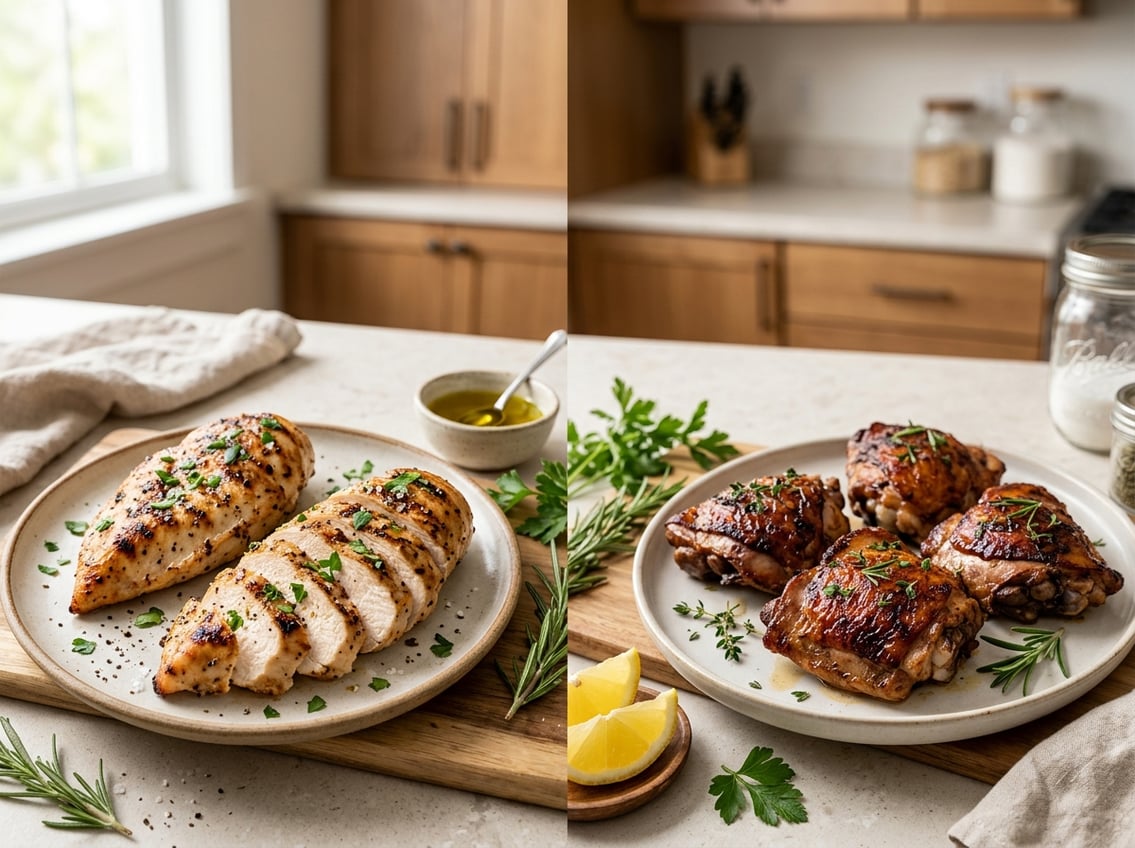
Chicken breast and chicken thigh are both nutritious, but they are not the same. Chicken breasts are leaner and lower in calories, while chicken thighs usually have more fat and a little less protein per serving.
According to USDA-based nutrition figures, 100 grams of boneless, skinless chicken breast has about 106 calories, 22.5 grams of protein, and 2 grams of fat. The same amount of boneless, skinless chicken thigh has about 144 calories, 18.6 grams of protein, and 8 grams of fat.
Calories, Protein, and Fat at a Glance
- Chicken breast: fewer calories, more protein per ounce, less fat
- Chicken thigh: more calories, slightly less protein, more fat
- Skinless chicken: keeps the comparison closer to the lean side
- Chicken breasts vs. chicken thighs with skin: calories and fat rise fast
For lean protein, chicken breast usually wins. If you want a food that gives you more protein for fewer calories, it is the cleaner fit.
Which Cut Fits Weight Loss, Muscle Gain, and Fullness
If weight loss is your goal, chicken breast usually fits best because it gives you more protein with less fat. That makes it easier to keep calories in check while still supporting muscle repair.
For muscle gain, both cuts can work well. If you struggle to feel full after eating, chicken thigh may help because its higher fat content can slow digestion and make meals more satisfying.
Why Skin and Serving Size Change the Comparison
Skin changes the picture a lot. Skin-on chicken adds extra fat and calories, so skinless chicken is usually the better choice if you want a lean meal.
Portion size matters too. A large serving of chicken thigh can easily outrun a moderate serving of chicken breast in calories, even if both are cooked in the same way.
Nutrition Strengths of Each Option
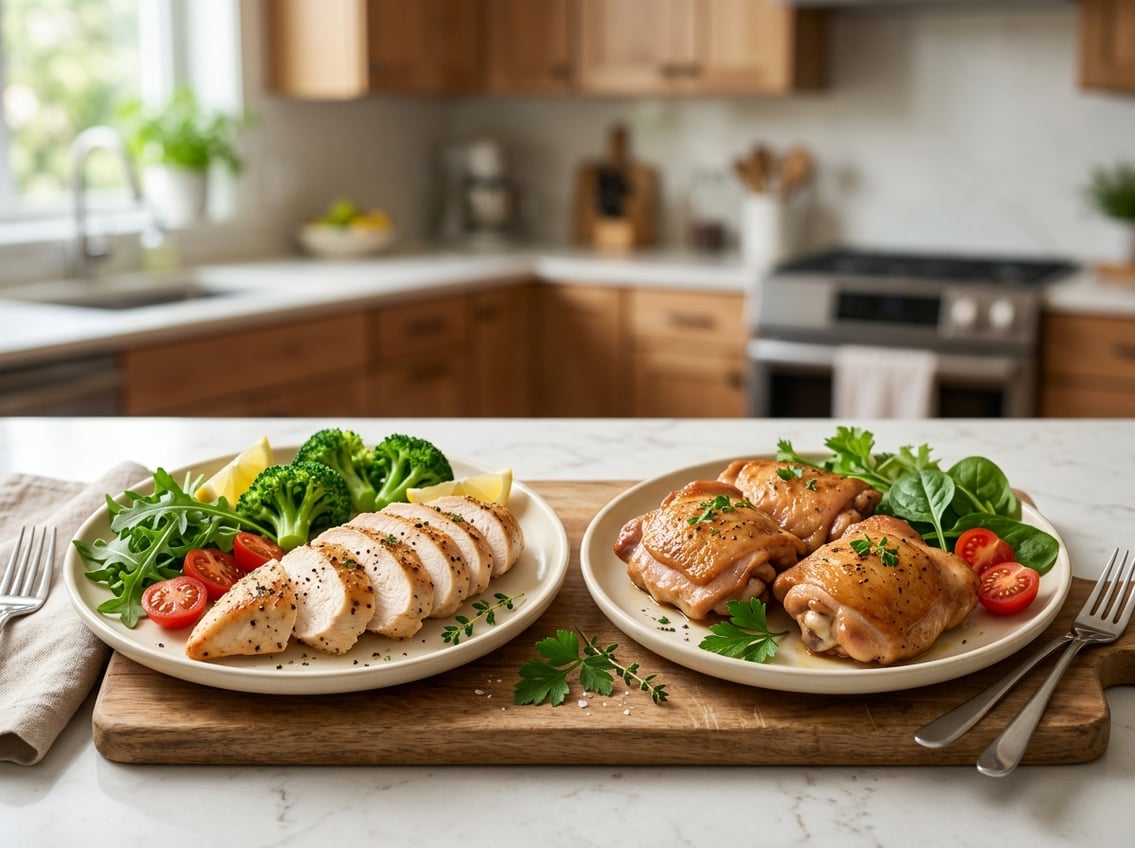
Each cut has clear strengths, and the better one for you depends on your diet pattern. Chicken breast is the more classic lean protein.
Chicken thighs bring a few nutrients and texture benefits that make healthy eating easier to stick with.
What Chicken Breast Does Best
Chicken breast is the stronger choice when you want a high-protein, low-fat food. It works well for people who want a simple, mild-tasting protein that fits into salads, grain bowls, wraps, and post-workout meals.
It is also rich in B vitamins, especially B6 and niacin. Chicken breast also provides selenium and phosphorus, according to dietitian-reviewed guidance on chicken breast nutrition.
Those nutrients help with energy use, metabolism, and immune support.
What Chicken Thighs Offer Nutritionally
Chicken thighs still count as lean protein when you choose skinless chicken thighs and keep portions moderate. They give you a bit less protein per ounce, yet they often feel more filling because of the extra fat.
Chicken thighs bring more iron and zinc than chicken breast. That can matter if you want more mineral density in your meals.
Chicken thighs taste richer without requiring heavy sauces.
Micronutrients: B Vitamins, Iron, Zinc, and Selenium
Both cuts give you useful nutrients, but the mix is slightly different. Chicken breast tends to stand out for B6 and niacin, while chicken thigh has more iron and zinc.
Selenium appears in both. It matters for normal immune function and thyroid health.
If your diet already includes seafood, beans, eggs, or fortified grains, either cut can fit into a balanced week.
Cooking Method Can Make One Choice Healthier
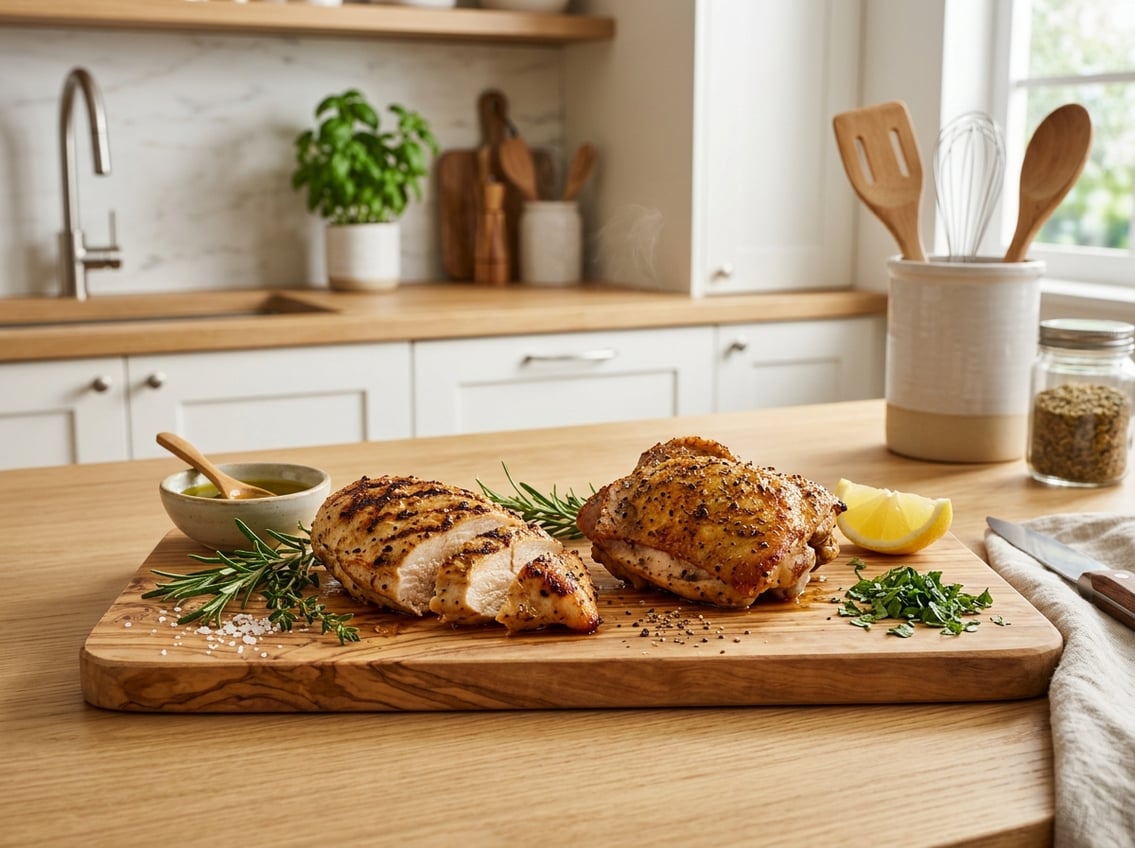
How you cook chicken can matter as much as which cut you buy. Grilling, baking, and roasting keep the meal lighter, while breading, frying, and heavy sauces can erase the benefit of choosing a lean cut.
Grilled, Baked, and Roasted Options
Grilled chicken, baked chicken, and roasted chicken are the best everyday methods if you want a healthier result. They let you keep added fat low while still building flavor with herbs, citrus, garlic, and spices.
These methods work well for both chicken breast and chicken thigh. If you keep the seasoning simple and avoid deep frying, the cut itself stays the main difference.
How Skin-On vs. Skinless Affects Fat and Calories
Skin-on chicken thighs usually have more fat and calories than skinless chicken thighs. The skin holds much of the extra fat, so removing it can make a noticeable difference.
Skinless chicken is the better match for a lean meal. If you are aiming for a lighter plate, skinless chicken thighs and skinless chicken breast both work well, with breast still being the leaner choice.
When Juiciness and Texture Matter for Better Eating Habits
A food only helps your health if you actually want to eat it often. Chicken thighs are usually juicier and harder to overcook, which can make healthy meals more enjoyable.
That matters for consistency. If chicken breast feels dry to you, you may be more likely to stick with chicken thighs cooked simply than to skip protein meals or rely on more processed choices.
How to Choose for Real-Life Meals
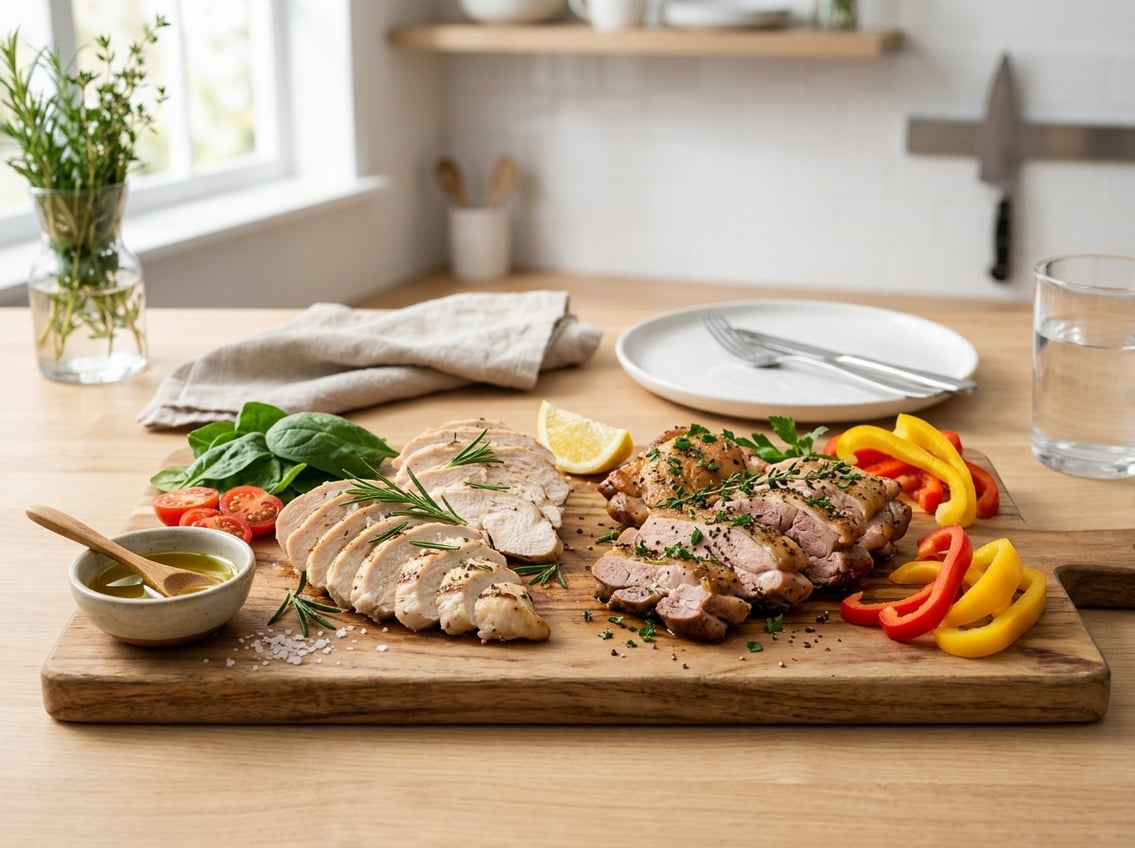
In daily life, the best choice is the one that fits your schedule, budget, and appetite. Both chicken breasts and chicken thighs can work in a healthy plan if you keep the cooking method simple and pay attention to portion size.
Best Pick for Meal Prep and Fast Weeknight Dinners
Chicken breasts are usually the easiest choice for meal prep because they are lean, versatile, and easy to portion. They also work well for grilled chicken, baked chicken, and quick stovetop meals.
Chicken thighs are a strong choice for dinners where moisture matters more. They reheat well and stay tender, which can make leftovers more appealing.
When Mixing Breasts and Thighs Works Best
You do not need to pick one cut forever. Rotating skinless chicken and using both cuts across the week can give you variety without making meals harder to plan.
A simple pattern works well, such as chicken breast on lighter days and chicken thigh in meals where you want more flavor or fullness. That balance can make your eating pattern easier to keep long term.
What to Watch for in Pre-Marinated or Seasoned Chicken
Pre-marinated chicken can save time. It may also contain extra sodium, sugar, and oils.
Check the label before you buy. If the ingredient list is short and the sodium is moderate, pre-seasoned chicken can fit into a healthy routine, especially when you pair it with vegetables and whole grains.


