
Which Is Better Chicken Breast or Whey Protein for Your Goals
When you ask which is better, chicken breast or whey protein, the real answer depends on your goal, your budget, and how you like to eat. Both are strong protein sources for muscle building, weight loss, and daily protein intake.
Whey protein is usually better for speed and convenience. Chicken breast is usually better as a whole-food choice for meals, fullness, and everyday eating.

Chicken breast and whey protein each fit different needs. Whey protein offers very high protein density as a supplement. Chicken breast is a lean protein that provides more chewing satisfaction and a broader meal profile.
The best choice depends on your protein intake target and how much convenience matters to you.
Quick Answer by Fitness Goal
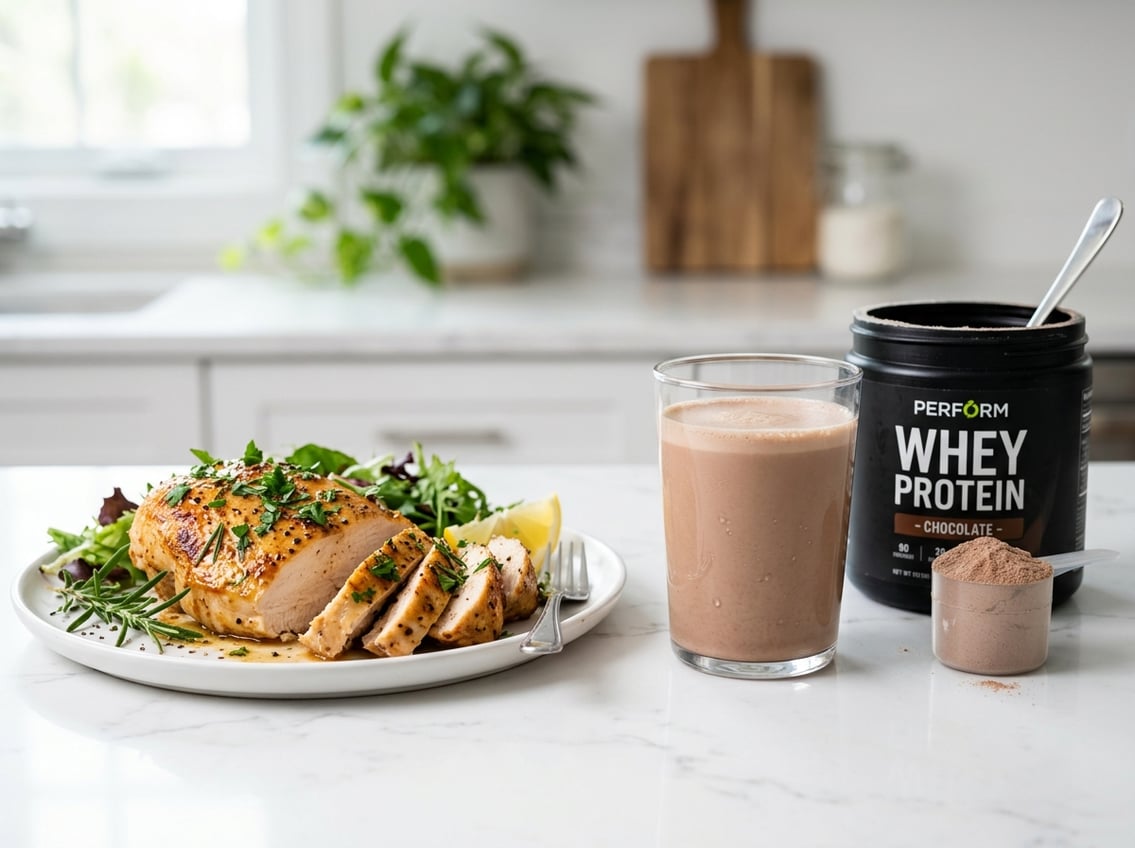
Your goal changes the best pick. For muscle growth, recovery, fullness, and daily consistency, each option has a different edge.
Best Choice for Building Muscle
Whey protein is often the easier choice right after training because it is fast, convenient, and rich in essential amino acids. Research summaries show that your body rapidly absorbs whey, making it useful for muscle protein synthesis.
Chicken breast also supports muscle building if you eat enough total protein over the day. The main difference is timing and convenience.
Best Choice for Post-Workout Recovery
Whey protein usually makes post-workout recovery easier. You can drink a shake soon after exercise, and the amino acids reach your muscles quickly.
Chicken breast supports recovery if you eat it in a meal with carbs and vegetables. It just takes more time to prepare and digest.
Best Choice for Weight Loss
Chicken breast often has the edge for weight loss because it is filling. Lean protein and solid food usually help satiety more than a shake.
Whey protein still helps if it keeps you from skipping protein or reaching for less helpful snacks.
Best Choice for Everyday Protein Intake
For everyday protein intake, the better choice is the one you can repeat. Chicken breast works well for meals, meal prep, and satiety.
Whey protein works well when you need convenience, travel support, or a quick way to raise protein intake.
Protein Quality and Nutrition Breakdown
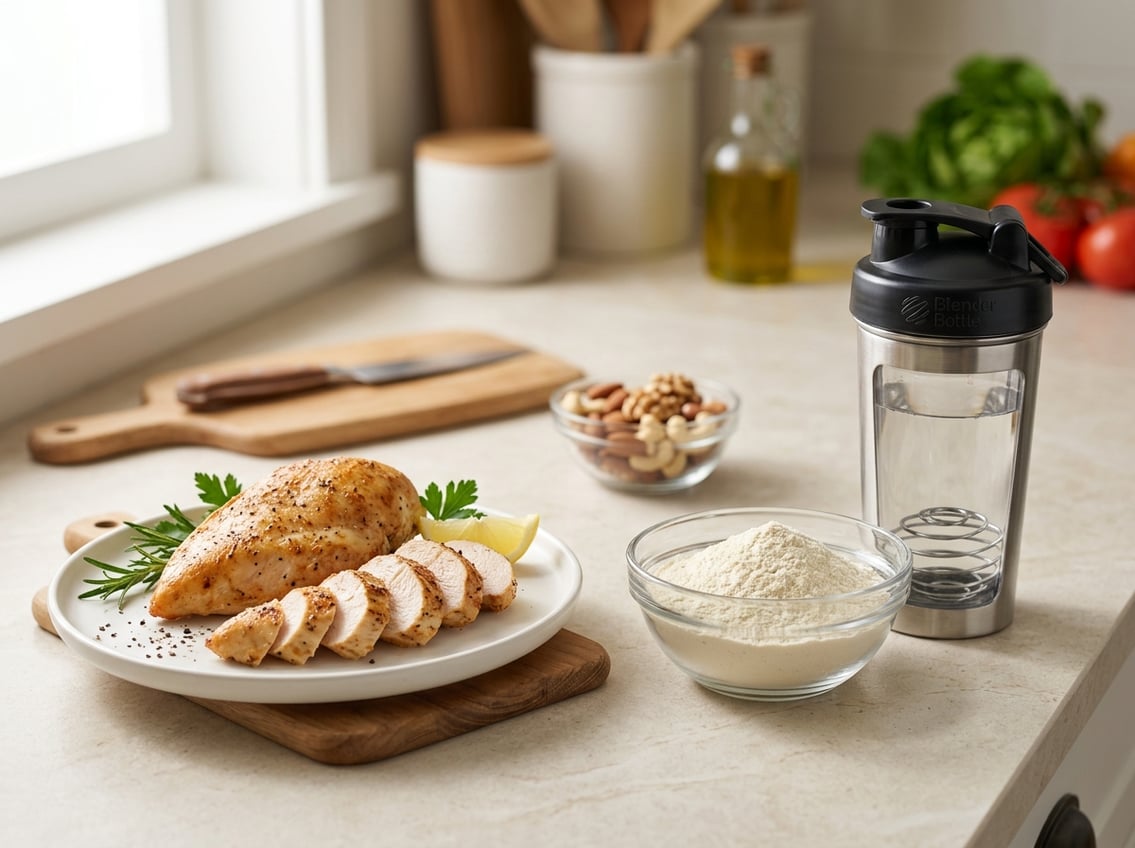
Both options offer high-quality nutrition, but they do not provide it in the same way. Chicken breast gives you whole-food nutrition. Whey protein gives you a concentrated dose of protein content with less extra food.
Protein Content per Serving
Chicken breast provides about 30 grams of protein per 100 grams. Whey protein powder often provides about 80% to 90% protein per scoop, depending on the product.
Whey is more protein-dense. Chicken breast gives you more food volume for the same protein amount.
Complete Protein and Essential Amino Acids
Both chicken breast and whey protein are complete protein sources. They provide all nine essential amino acids your body needs from food.
Whey is especially concentrated. Chicken breast gives you those amino acids in a whole-food form.
Leucine, BCAAs, and Muscle Protein Synthesis
Whey protein contains a strong amino acid profile, especially leucine, which helps trigger muscle protein synthesis. It also contains branched-chain amino acids, or BCAAs, which help with muscle repair and growth.
Chicken breast also contains leucine and BCAAs, just in a less concentrated form.
Vitamin B6, Selenium, and Whole-Food Nutrition
Chicken breast gives you more than protein. It also provides nutrients like vitamin B6 and selenium, which support normal body function.
Whey protein powder is mostly about protein, so it does not offer the same micronutrient range.
Absorption, Fullness, and Practical Use

Speed, fullness, and ease of use matter in real life. A protein source can work well on paper but still fail if it does not fit your routine.
Fast Digestion vs Lasting Fullness
Your body digests whey protein quickly, which is why it works well after exercise. Chicken breast digests more slowly because it is a whole food with more structure.
That slower digestion can help with satiety. If your main goal is staying full between meals, chicken breast often feels more satisfying.
Convenience and Versatility in Real Life
Whey protein powder is hard to beat for convenience. You can mix it in water, milk, or a smoothie and drink it almost anywhere.
Chicken breast is more versatile at meals. You can grill it, bake it, slice it into salads, or pair it with rice and vegetables.
Cost, Preparation, and Daily Adherence
Chicken breast is often an affordable protein source, especially if you buy in larger packs. Whey protein can cost more per serving, but it may save time.
If cooking is easy for you, chicken breast may be the better fit. If you need speed, whey protein may help you stay consistent with your protein sources.
When Whey or Chicken Makes More Sense

Your choice can change based on digestion, food preferences, and how you use protein in your day. In many cases, the best plan uses both.
When Whey Protein Concentrate or Whey Protein Isolate Fits Better
Whey protein concentrate and whey protein isolate both work well when you want a complete protein source in a fast, easy form. Whey isolate is more processed and often lower in lactose, which may help if you want a cleaner-tasting shake or need less lactose.
Whey concentrate can be a good middle ground if you want a lower-cost protein supplement. If you train often and need quick recovery support, whey is usually the more practical option.
When Chicken Breast Is the Better Whole-Food Option
Chicken breast is the better choice when you want a meal, not just a shake. It gives you protein, chewing satisfaction, and more room to build balanced plates.
It also fits well if your goal is weight loss and you need food that keeps you full. For many people, a grilled chicken breast with vegetables is easier to manage than several small snacks.
Lactose Intolerance and Professional Guidance
If you have lactose intolerance, whey protein concentrate may cause symptoms. You may find whey protein isolate easier to tolerate.
Milk allergy is a different issue. Whey may still cause problems in that case.
If you have a medical condition or trouble digesting protein, speak with a healthcare professional.
If you have questions about your protein intake, ask a healthcare professional.


