
Can I Cook Chicken Breast in the Oven? Easy Guide
You might wonder, can I cook chicken breast in the oven? Yes, you can, and you get very good results when you control thickness, heat, and timing.
Oven baking offers a simple way to make baked chicken breast that stays tender for salads, sandwiches, tacos, soups, and meal prep.
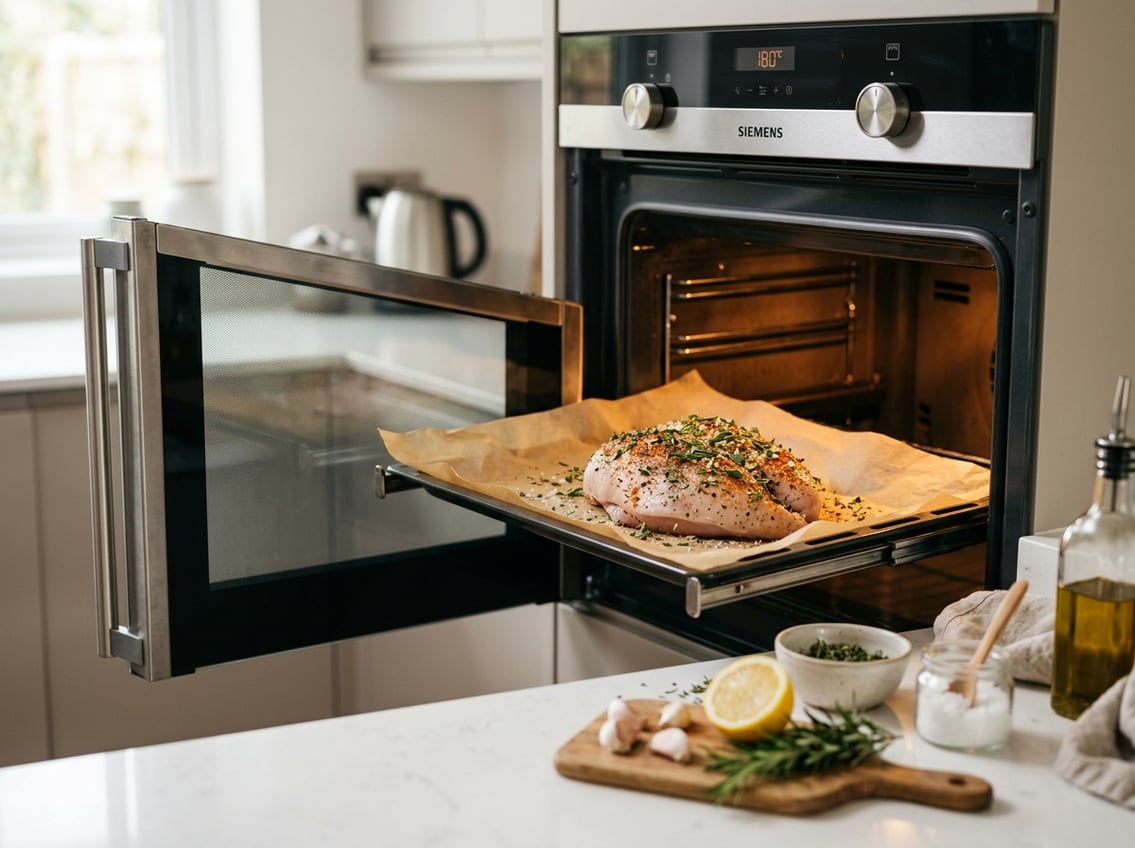
Do not use a random time and hope for the best. Start with even pieces, season them well, and pull them from the oven at the right internal temperature for better results.
If you want juicy baked chicken breasts, use even thickness, moderate oven heat, and a thermometer instead of guessing.
Best Oven Method for Juicy Results
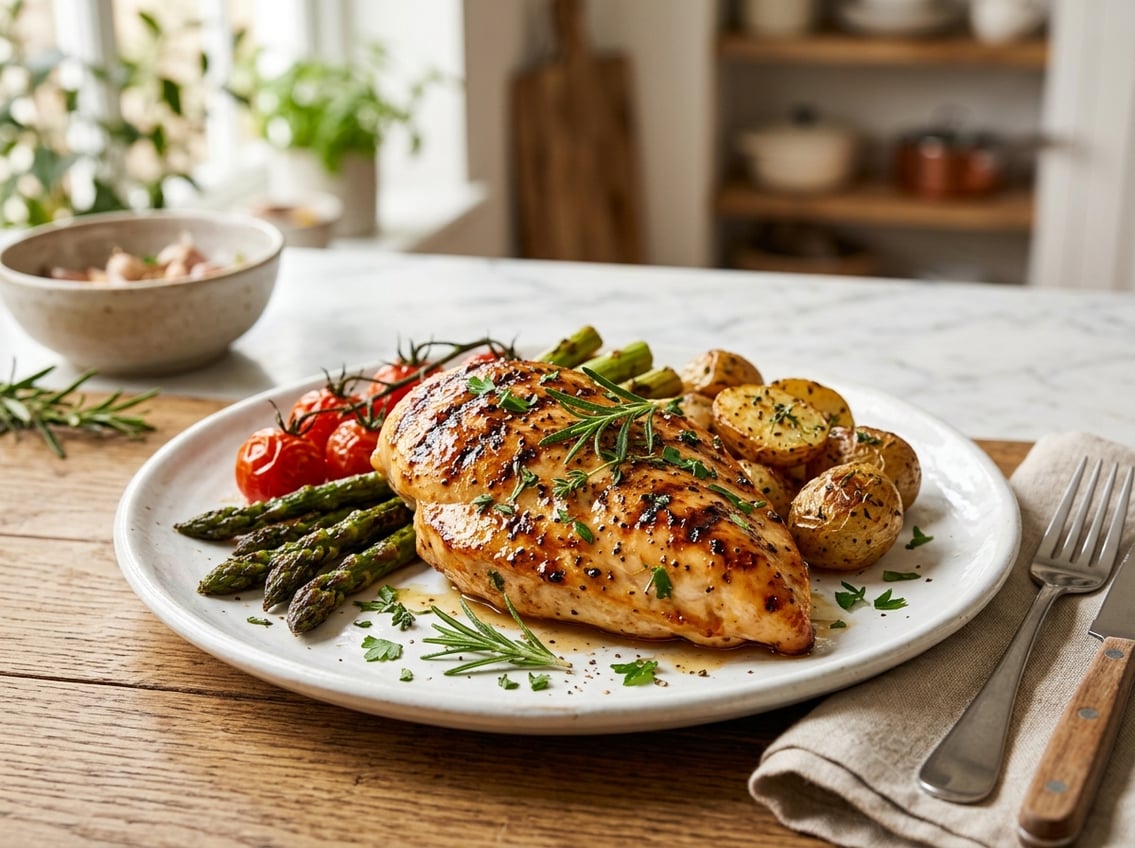
Use even-sized pieces, season them well, and avoid overcooking. You do not need many ingredients to get juicy baked chicken.
A little broth, butter, or oil in the baking dish helps keep chicken moist, according to How to Bake Chicken Breasts That Are Juicy and Delicious. This method works well for a flexible chicken breast recipe.
Choose Boneless or Bone-In Cuts
Boneless, skinless breasts are the easiest for quick baking. They cook faster and are easier to slice for salads or meal prep.
Bone-in breasts can stay juicy but usually need more time. For the simplest process, start with boneless cuts.
Prep for Even Thickness
Chicken breasts often have a thick end and a thin end. That uneven shape can lead to dry edges before the center is done.
Lightly pound the thicker side so the breast cooks at the same rate. This step makes baking chicken breast more predictable.
Season Simply for Reliable Flavor
Salt, pepper, garlic, and a little oil provide strong flavor. You do not need a complicated seasoning mix.
Simple seasoning lets the chicken flavor shine. This works well when you want one batch for many meals.
Bake Uncovered or Covered
Covered baking keeps more moisture in the pan, especially with a little broth or butter. Uncovered baking gives more browned edges and a drier surface.
Try baking covered for most of the time, then uncover near the end if you want more color. This approach gives juicy chicken breast without extra effort.
Use a Thermometer the Right Way
A meat thermometer removes guesswork. Check the thickest part of the breast.
Chicken breast is safe at 165°F. Many cooks pull it at 160°F and let carryover heat finish the job while it rests.
Temperature and Timing That Actually Work
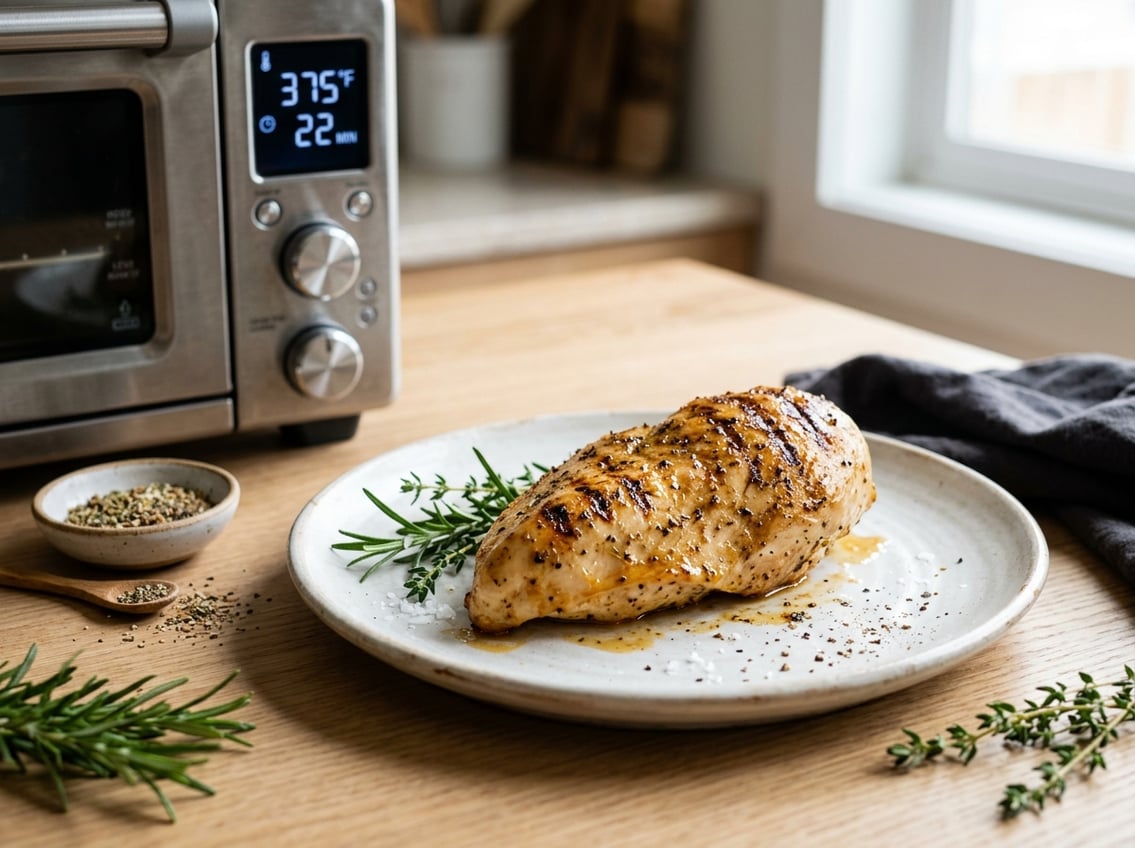
The right oven temperature depends on the cut and your goal. For most oven baked chicken breasts, a moderate temperature gives a good mix of speed and moisture.
Time changes with thickness, so the clock alone is not enough. Use a thermometer to know when to stop.
Best Oven Temperature for Chicken Breast
For boneless breasts, 375°F is a dependable choice and is recommended in How to Bake Chicken Breasts That Are Juicy and Delicious. It cooks steadily without drying the meat too fast.
Higher heat can work for thinner pieces or bone-in cuts but narrows your timing window. Lower heat is more forgiving but takes longer.
How Long Smaller Breasts Need
Small boneless breasts may finish in about 15 to 18 minutes at 375°F. Thin cutlets can be done even sooner.
Start checking early. Smaller pieces dry quickly, so a thermometer is the safest way to judge doneness.
How Long Larger Breasts Need
Large boneless breasts usually need about 20 to 25 minutes at 375°F. Very thick pieces can take longer, especially if they start cold.
Place larger pieces toward the outside of the dish where heat is often stronger.
When to Pull at 160°F and Rest
Pull the chicken around 160°F, then rest it for 5 to 10 minutes. Resting lets the juices settle back into the meat.
The temperature continues to rise a little after you remove it from the oven.
How to Know It Is Fully Cooked
The meat should look opaque in the center with no pink, and juices should run clear. A thermometer is still the most accurate tool.
If you cook bone-in pieces, place the thermometer away from the bone.
Simple Ingredient and Seasoning Options
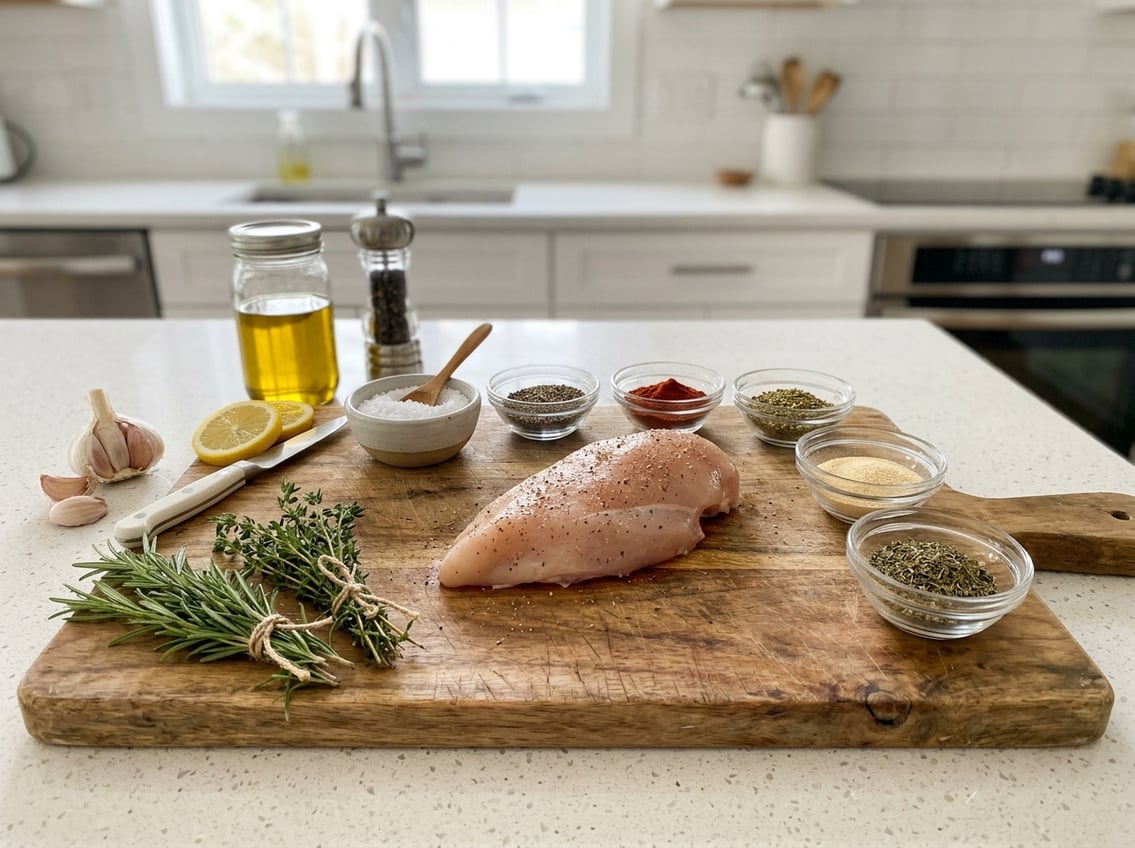
You can build a good baked chicken breast recipe from a short ingredient list. You only need enough seasoning to support the chicken.
The same base recipe can turn into many meals with a few small changes.
Basic Pantry Ingredient List
A simple baked chicken setup often includes:
- Chicken breasts
- Olive oil or melted butter
- Salt
- Black pepper
- Garlic powder
- Paprika or dried herbs
- Optional chicken broth
This list keeps the recipe easy and repeatable. It works well for busy nights.
Classic Salt Pepper Garlic Blend
Salt, pepper, and garlic powder make a dependable all-purpose seasoning. Add oil first so the spices stick.
This blend pairs well with vegetables, rice, pasta, or salad. It also works as a base if you plan to use sauces.
Paprika and Herb Variation
Paprika adds color and mild smoky taste. Dried thyme, oregano, rosemary, or Italian seasoning can give more depth.
Use this variation when you want more flavor without adding many ingredients.
When to Use Oil Butter or Broth
Oil helps the outside brown and keeps seasonings in place. Butter adds richness and flavor.
Broth adds moisture to the baking dish. Martha Stewart recommends broth, butter, and fresh thyme for a juicy baked chicken breast.
Serving, Storing, and Reheating
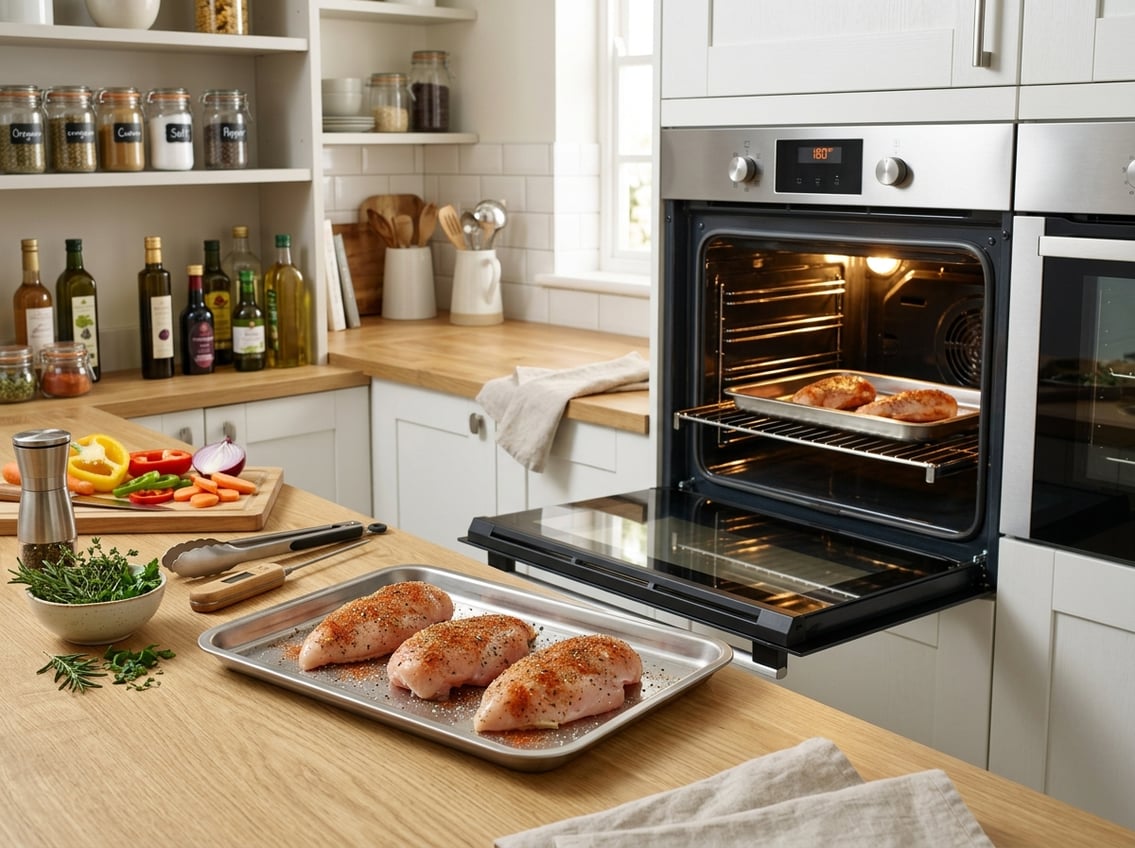
Baked chicken breasts fit into many meals. You can serve them right away, save them for later, or use leftover chicken breast in a new dish.
Safe storage keeps texture better and lowers food safety risk.
What to Serve Alongside It
Serve baked chicken breast with rice, roasted potatoes, green beans, broccoli, or a simple salad. It also works with pasta, couscous, or steamed vegetables.
The mild flavor pairs with many sauces. Try salsa, gravy, pesto, or a simple pan sauce.
How to Store Cooked Chicken Safely
Cool the chicken quickly, then store it in an airtight container in the refrigerator. Keep it for up to 3 to 4 days.
If you want to save it longer, freeze it in portions. Wrap it well to protect the texture and reduce freezer burn.
Best Way to Reheat Without Drying Out
Reheat chicken gently in the oven with a splash of broth or water and cover it with foil. A low oven helps protect the moisture.
The oven is a smart choice for larger pieces, as Southern Living notes, because steady heat brings the meat back to serving temperature without drying it out.
Ideas for Leftover Portions
Slice leftover chicken breast for sandwiches, wraps, and salads.
Dice it for soup, quesadillas, pasta, or grain bowls.
If the meat is a little dry, add sauce or shred it into something moist.
Thin slices or shredded pieces stay more tender in leftovers.


