
What Happens If I Only Eat Chicken Breast? Risks Explained
Eating only chicken breast can make you lose weight at first. This happens mainly because you may eat fewer calories and much more protein than usual.
That short-term change can look effective, especially if your usual diet is high in snacks, refined carbs, or large portions.
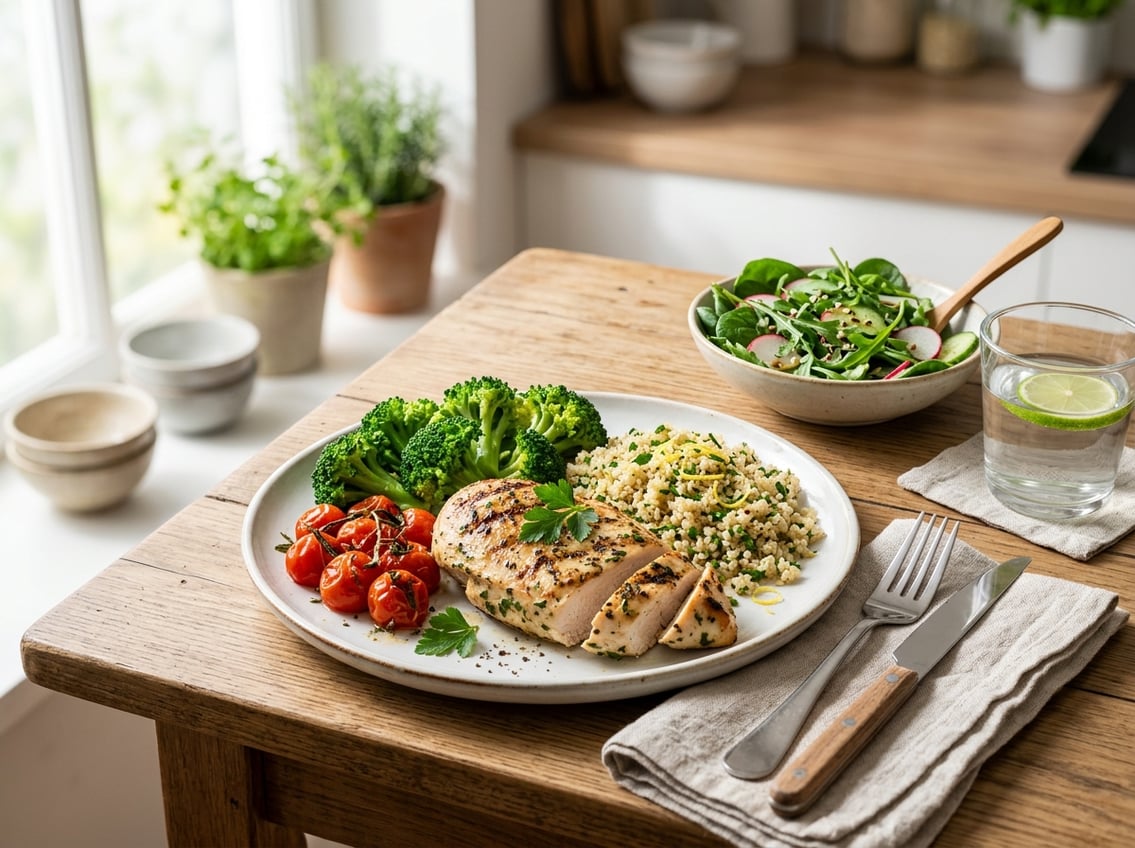
If you keep eating only chicken breast, your body starts missing fiber, healthy fats, key vitamins, and minerals. This makes the diet hard to sustain and risky for your health.
A chicken-only diet can quickly lead to fatigue, constipation, nutrient gaps, and an unhealthy relationship with food.
Chicken breast gives you protein, but it does not give you everything your body needs to stay healthy.
What You May Notice First

You may notice changes within days, especially if your chicken diet replaces a higher-calorie pattern. Weight loss and lower hunger are common early effects.
Energy can also drop sooner than expected if your calorie intake falls too far.
Why You Might Lose Weight at First
Chicken breast is high in protein and relatively low in calories, so it can help create a calorie deficit. Losing weight usually requires eating fewer calories than you burn.
A strict all-chicken diet can crowd out calorie-dense foods like sweets, fried foods, and snacks, which makes short-term weight loss more likely.
A mono diet built around chicken breast may feel simple. However, that does not mean the pattern is balanced or healthy for the long run.
How High Protein Affects Hunger and Muscle Mass
Protein can help you feel full, so you may notice fewer cravings at first. It also supports muscle repair, which is one reason chicken breast is popular during weight loss.
Protein alone does not protect all your muscle mass if your total calories are too low for too long. If you lose weight quickly, some of that loss may come from water and lean tissue, not just body fat.
A protein-focused chicken breast diet may support muscle more than a low-protein diet, yet it still leaves gaps in other nutrients your body needs.
Why Energy, Fatigue, and Diet Fatigue Can Show Up Quickly
A chicken-only diet can feel repetitive fast. That kind of diet fatigue is common when your meals look the same every day.
Low calories, limited carbs, and missing micronutrients can also leave you tired. If you eat mostly grilled chicken with little else, your body may not get enough fuel for workouts, focus, or steady daily energy.
The Nutrients Your Body Starts Missing
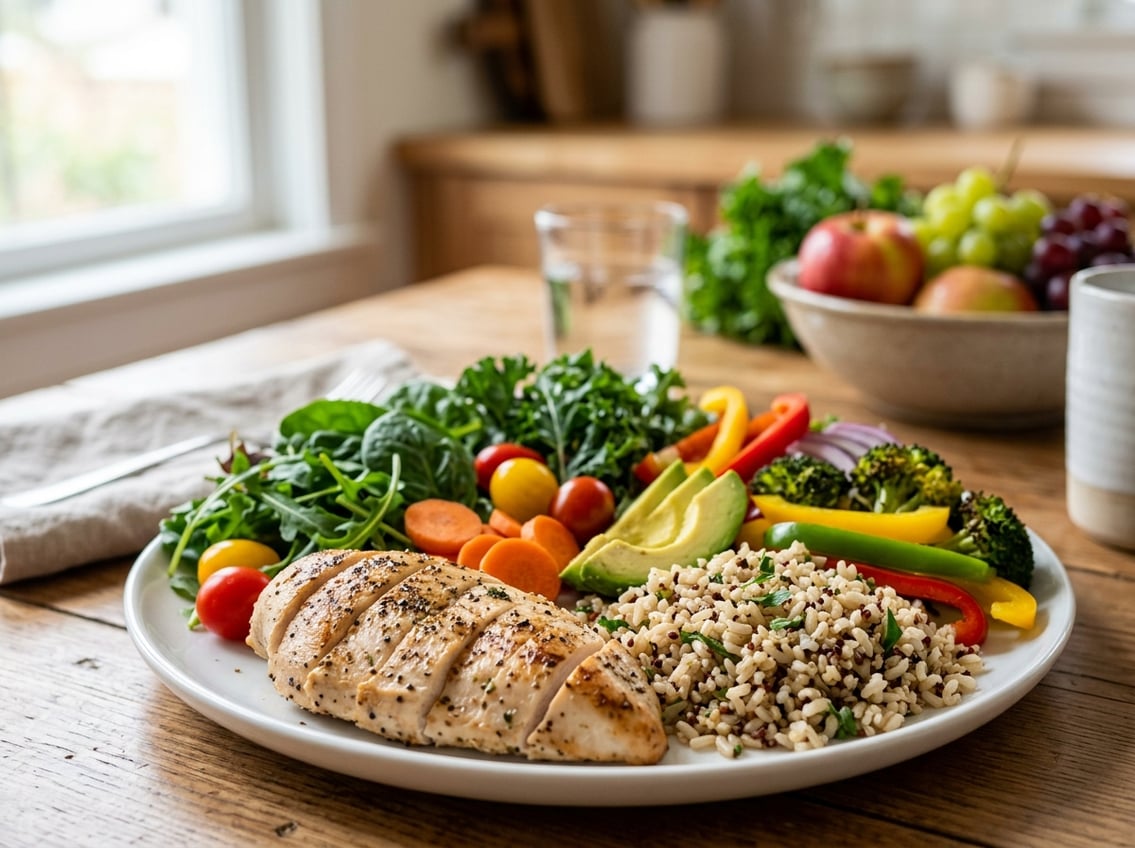
Chicken breast gives you protein and some B vitamins. It does not cover many basic needs.
Over time, nutrient deficiencies can affect digestion, bones, blood, and immune function. The biggest gaps usually show up in fiber, calcium, vitamin D, iron, zinc, and several B vitamins.
Fiber Deficiency, Constipation, and Digestive Issues
Chicken has no fiber. If you remove fruits and vegetables, whole grains, and legumes, you can develop fiber deficiency very quickly.
That can lead to constipation, bloating, and other digestive issues. Fiber also supports healthy gut bacteria, so a low-fiber pattern can make your digestion less regular and less comfortable.
Calcium, Vitamin D, and Bone Health Concerns
Chicken breast does not provide much calcium or vitamin D. Those nutrients matter for bone health, muscle function, and calcium absorption.
When intake stays low, your body may not meet the recommended dietary allowance for these nutrients. Over time, that can increase the risk of weaker bones and fractures, especially if your overall diet is also low in fruits and vegetables, dairy, or fortified foods.
Iron, Zinc, B Vitamins, and the Risk of Anemia
Chicken contains some iron and zinc, yet not always enough to cover your needs, especially if you eat only chicken breast. Low iron intake can contribute to anemia, which often causes fatigue and weakness.
B vitamins support energy metabolism and red blood cell function. If you miss enough of them for long enough, you may notice low energy or other signs of nutritional deficiencies.
A diet without enough variety is also less likely to meet your full need for fruits and vegetables and whole grains, which are major sources of fiber and micronutrients.
Why It Stops Being a Healthy Strategy

A chicken-only pattern may help with short-term weight loss, yet it leaves out food groups that support heart health, hormones, and long-term energy. You also lose the flexibility that makes eating sustainable.
As the diet stays restrictive, the risks grow.
Healthy Fats, Omega-3 Fatty Acids, and Cardiovascular Health
Your body needs healthy fats, including omega-3 fatty acids, for cardiovascular health and normal cell function. Chicken breast is low in these fats, so an all-chicken diet can leave you short.
Omega-3s also help manage inflammation. If you never eat foods like salmon or other fatty fish, you miss one of the easiest ways to get them.
Low intake of healthy fats can hurt diet quality and make meals less satisfying.
Restriction, Eating Patterns, and Disordered Eating Risks
A very strict eating pattern can change how you think about food. When you only allow one food, you may start to feel anxious around meals or overly focused on control.
Those psychological effects can feed disordered eating habits. A chicken-only diet can also make normal eating feel harder later, because your body and mind may push back against restriction.
Why Preparation Method and Saturated Fat Still Matter
Chicken breast is lean, yet the way you cook it still matters. Breading, frying, heavy sauces, and added butter can raise calories and saturated fat fast.
If you rely on only grilled chicken, you may keep fat low, yet that still does not solve the missing nutrient problem.
If you choose fattier cuts or add rich ingredients often, the pattern can also work against cardiovascular health.
A Smarter Way to Build Meals Around Chicken Breast
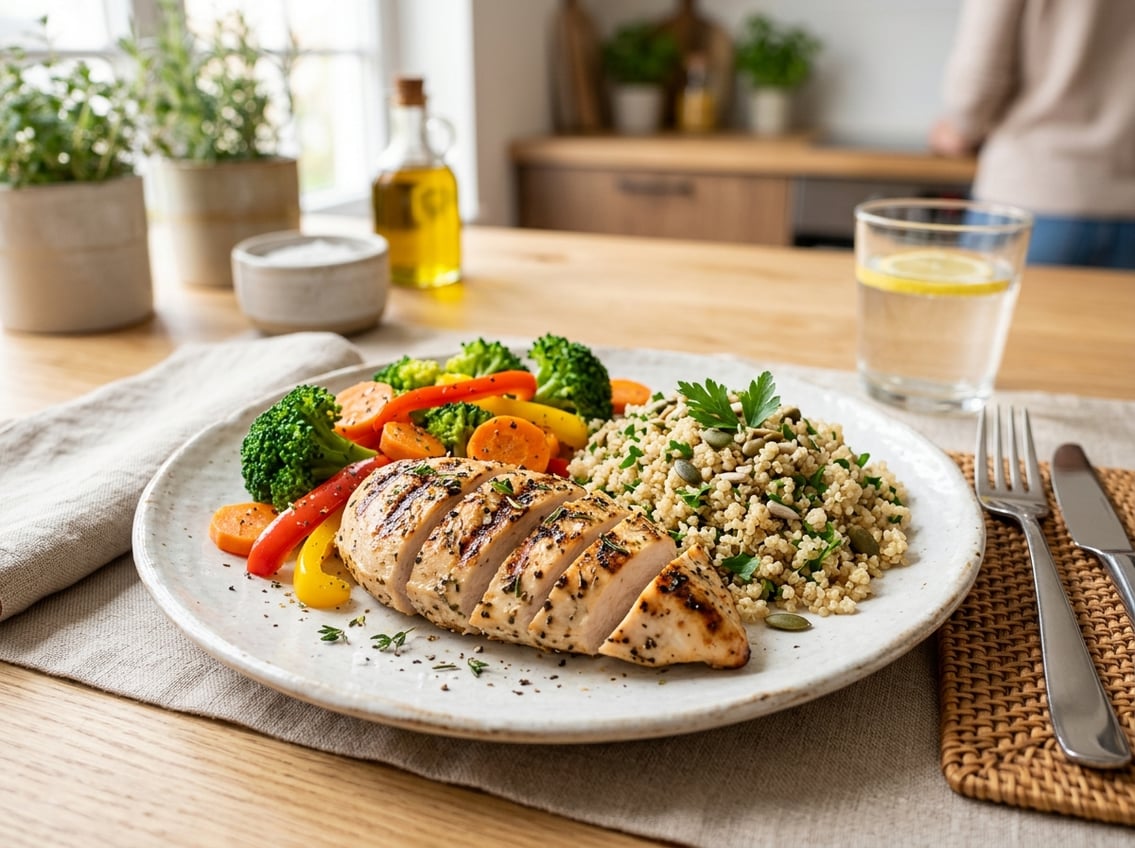
Chicken breast works best as part of a balanced diet, not as the whole diet. You get the protein benefits without giving up fiber, healthy fats, and key vitamins.
The goal is to build meals that keep you full and meet more of your daily needs.
What to Add for a Balanced Diet
Start with chicken breast, then add a colorful side and a smart carb source. Try leafy greens, roasted vegetables, or a salad with olive oil and vinegar.
Pairing chicken with fruits and vegetables and whole grains helps you get more fiber and a wider mix of nutrients.
That also makes the meal more filling than chicken alone.
Better Carb and Fiber Pairings for Satiety
If your goal is weight loss, you still need enough fuel to stay steady. Brown rice, quinoa, beans, and vegetables can help you feel satisfied while keeping calories reasonable.
These foods slow digestion and support better blood sugar control than a meat-only plate. They also make your meals easier to stick with day after day.
Foods That Cover the Biggest Gaps
Choose foods that fill the gaps chicken breast leaves behind. Olive oil and walnuts add healthy fats.
Salmon and other fatty fish provide omega-3 fatty acids. Leafy greens and whole grains help cover fiber and iron needs.
Dairy or fortified alternatives supply calcium and vitamin D. Colorful produce adds more nutrients, including zinc.
A varied plate supports protein intake and prevents a mono diet.


