
Chicken Breast vs Canned Chicken: What Matters Most
Chicken breast vs canned chicken depends on what you need most, because each one solves a different problem in your kitchen. Fresh chicken breast gives you a cleaner taste, firmer texture, and more control over sodium and seasoning.
Canned chicken offers speed, storage ease, and a ready-to-use protein source.
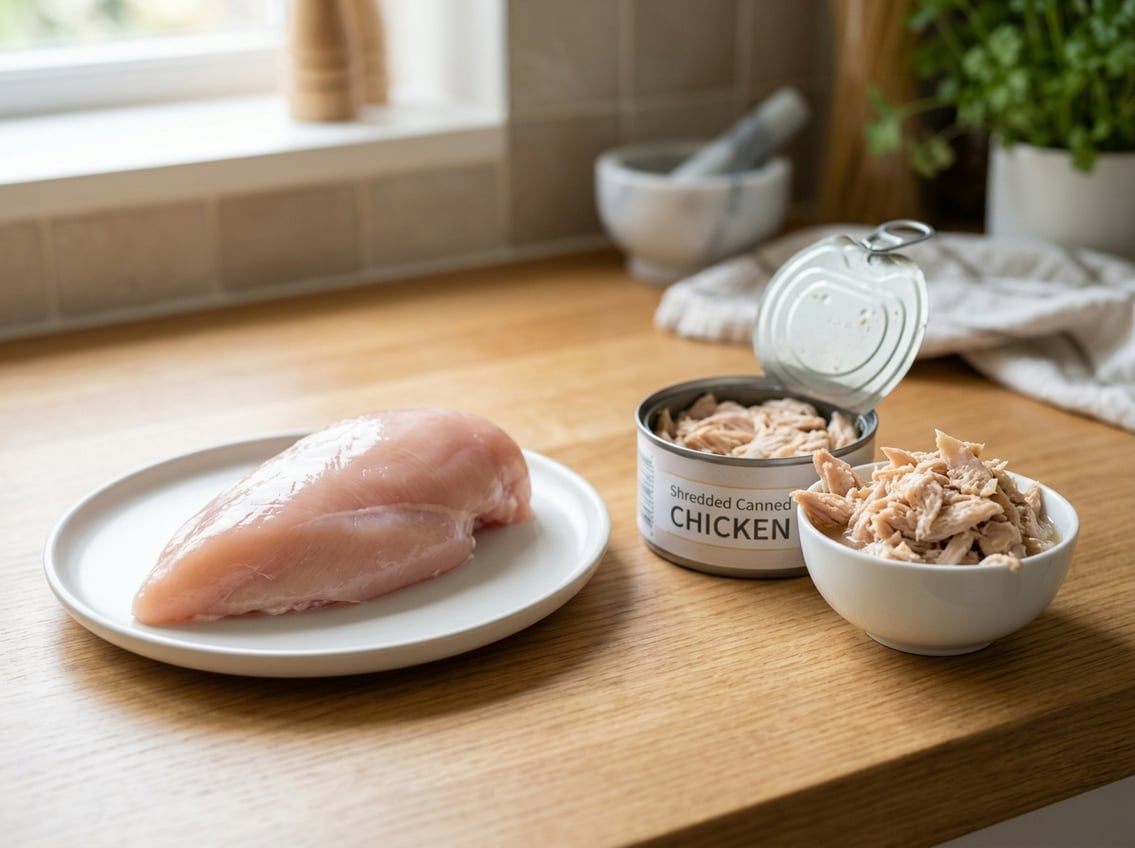
You may see canned chicken breast, chunk chicken breast, and regular chicken listed on labels, which can make the choice feel confusing. The main issue is whether canned chicken matches your needs for protein, sodium, calories, and recipe results.
If you have ever wondered if canned chicken is as nutritious as fresh chicken breast, the answer depends on what you compare. The protein can be close, but the sodium, additives, and texture often differ enough to matter in daily eating.
Nutrition Differences That Actually Matter
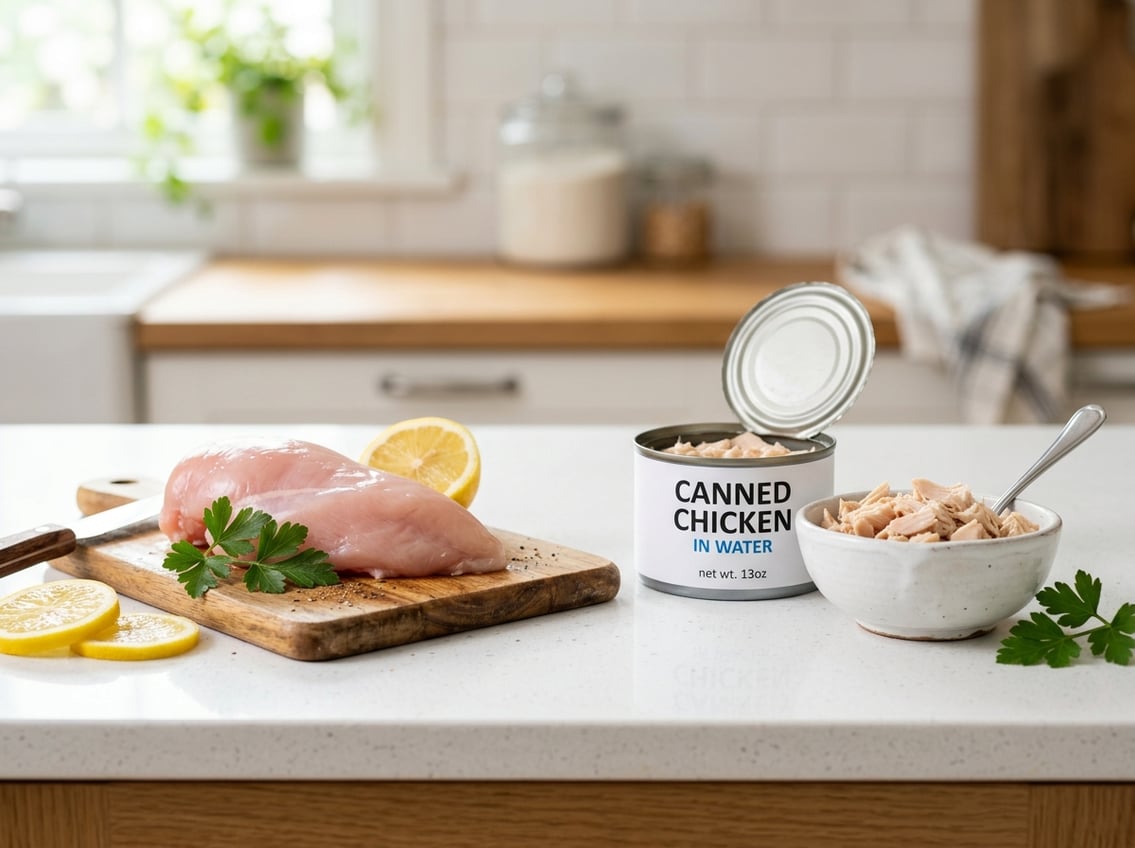
The biggest nutrition gaps show up in protein quality, sodium, and portion size. For many people, those are more important than small label differences.
Protein Content, Lean Protein, and Fullness
Both fresh chicken breast and canned chicken can provide a solid amount of protein per serving. Manufacturers often make canned chicken breast to stay close to the lean protein profile people expect from chicken breast.
Fresh chicken breast usually helps with fullness because it is less processed and comes with fewer extras. If you are managing hunger or building meals around protein, either option can work, though fresh chicken breast often fits better for weight management.
Sodium Content, Preservatives, and Label Reading
Sodium is one of the biggest differences between canned chicken and fresh chicken breast. Many companies add salt for flavor and shelf life, and some canned chicken products include preservatives, which can push sodium higher than fresh chicken.
Read labels carefully. Look for low-sodium or no salt added versions when possible, and check the ingredient list for water, chicken, and salt only if you want a more natural option.
Calories and Fat in Everyday Portions
Fresh chicken breast is usually lower in calories and fat than canned chicken, especially in simple, skinless servings. That matters if you track calories, build lighter meals, or want more control over sauces and fats added later.
Canned chicken can still fit into a balanced diet, especially when you use chunk chicken breast in soups, salads, and wraps.
Convenience, Storage, and Real-World Value

Canned chicken serves as a true pantry staple, while fresh chicken belongs in the fridge or freezer and needs more planning. That difference changes how useful each one is for meal prep, emergency meals, and busy nights.
Pantry Staple vs Refrigerated Fresh Options
Canned chicken works well as a shelf-stable pantry item, which makes it a practical convenient protein source. You can store it at room temperature until you open it, and that gives it value that fresh chicken cannot match.
Fresh chicken gives you more control over flavor and texture, yet it requires refrigeration and faster use.
Meal Prep, Quick Meals, and Emergency Use
For meal prep, quick meals, and emergency use, canned chicken is hard to beat. It is already cooked, so you can turn it into lunch or dinner with very little effort.
That convenience makes it useful for travel, power outages, or weeks when cooking time is limited. Canned chicken saves time because you can use it right away after draining.
Cost, Shelf Life, and Food Waste Trade-Offs
Canned chicken is often cheaper per can, and its long shelf life can reduce food waste. You can buy it ahead of time and use it only when needed.
Fresh chicken can be a better choice when you want better taste and lower sodium, yet it may spoil faster and waste more if plans change. Fresh chicken bought locally may create less packaging waste than canned chicken.
Taste, Texture, and Best Uses in Recipes
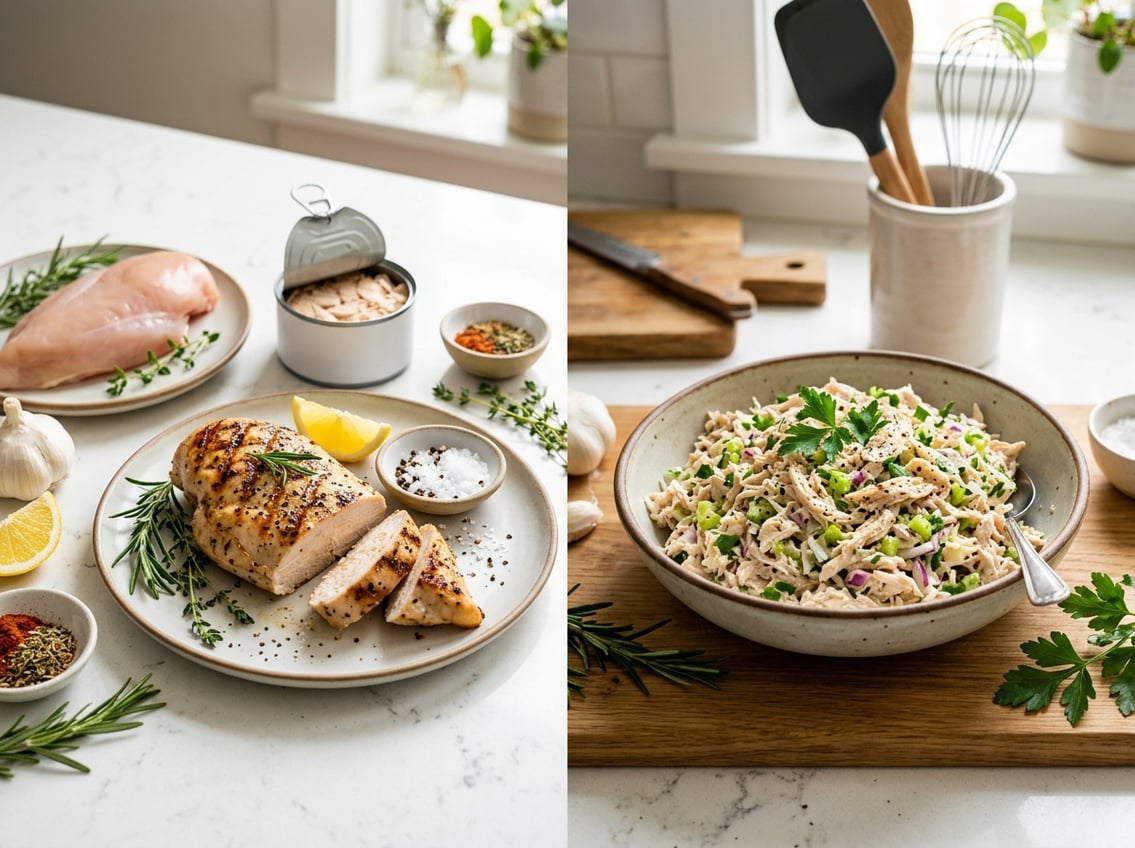
Taste and texture are where the choice becomes easiest to notice. The canning process changes both, so the best option depends on whether you want convenience or a more natural chicken bite.
How the Canning Process Changes Taste and Texture
The canning process softens the meat and gives it a more uniform texture. That works well when you want shredded or chopped chicken, though it can feel less firm than fresh chicken breast.
Flavor also shifts a bit during canning. Fresh chicken usually tastes cleaner and more neutral, while canned chicken can taste more processed, especially if the product includes extra salt or broth.
Best Dishes for Canned Chicken
Canned chicken works best in dishes where the chicken is mixed with other ingredients. Chicken salad is a clear example, along with casseroles, dips, enchiladas, wraps, and soups.
It also works well when you want to save time and do not need perfect texture. If the recipe already includes creamy dressing, sauce, or broth, canned chicken is often a good fit.
When Fresh or Rotisserie Chicken Works Better
For recipes where chicken is the main feature, fresh chicken breast usually gives better results. Grilled chicken breast on salads, sliced chicken in stir-fries, and simple pan-seared dishes all benefit from firmer texture.
Rotisserie chicken can also be a useful middle ground. It gives you cooked chicken with better texture than many canned options, while still saving time compared with starting from raw chicken.
How to Substitute One for the Other

You can substitute canned chicken for fresh chicken in many recipes that already call for cooked chicken. The swap works best when texture is not the main focus and the dish has enough sauce, seasoning, or moisture to carry it.
When to Substitute Canned Chicken for Fresh
Use canned chicken when a recipe calls for cooked shredded or diced chicken, such as soups, chicken salad, casseroles, and tacos. It is a smart substitute when speed matters more than a perfect bite.
If the recipe depends on grilled slices, crispy edges, or a clean chicken flavor, fresh chicken is the better choice. You can also use canned chicken for a fast meal when you do not want to cook meat from scratch.
Rinsing Canned Chicken and Other Prep Tips
Rinsing canned chicken can help reduce excess sodium and remove some of the canning liquid taste. Drain it well first, then flake it with a fork if needed.
Check the label before you buy. Products labeled chunk chicken breast or white meat chicken breast usually give you the closest result to fresh chicken breast, while heavier sauces or added seasoning can change the final flavor.
Recipes Where the Swap Works Well and Where It Does Not
The swap works well in:
- Chicken salad
- Soups and chowders
It also works in quesadillas, casseroles, and sandwich filling.
It does not work as well in dishes that rely on texture, such as grilled chicken plates or breaded cutlets.
Recipes where fresh chicken breast is the main feature may not turn out as intended when using canned chicken.


