
What Should Chicken Breast Temp Be When Done? Safe Guide
The safe temperature for chicken breast is 165°F, or 74°C, at the thickest part of the meat. This number ensures your chicken is safe to eat and helps you avoid foodborne illness.
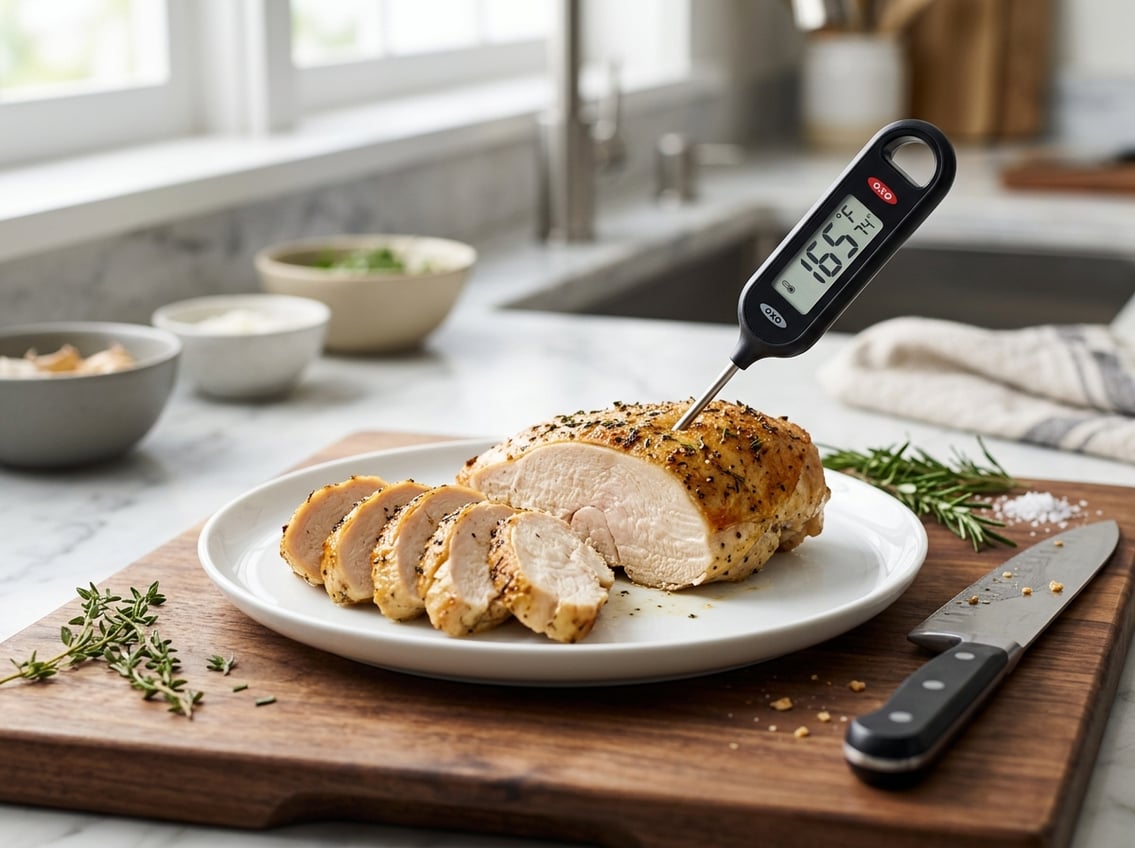
If you want chicken breasts that are safe and juicy, aim for 165°F (74°C). Check the thickest part and let carryover cooking finish the job.
Chicken breasts are lean, so they dry out fast when they stay on the heat too long. A thermometer gives you a clear reading, so you do not have to guess based on color or texture.
The Safe Finished Temperature for Chicken Breast
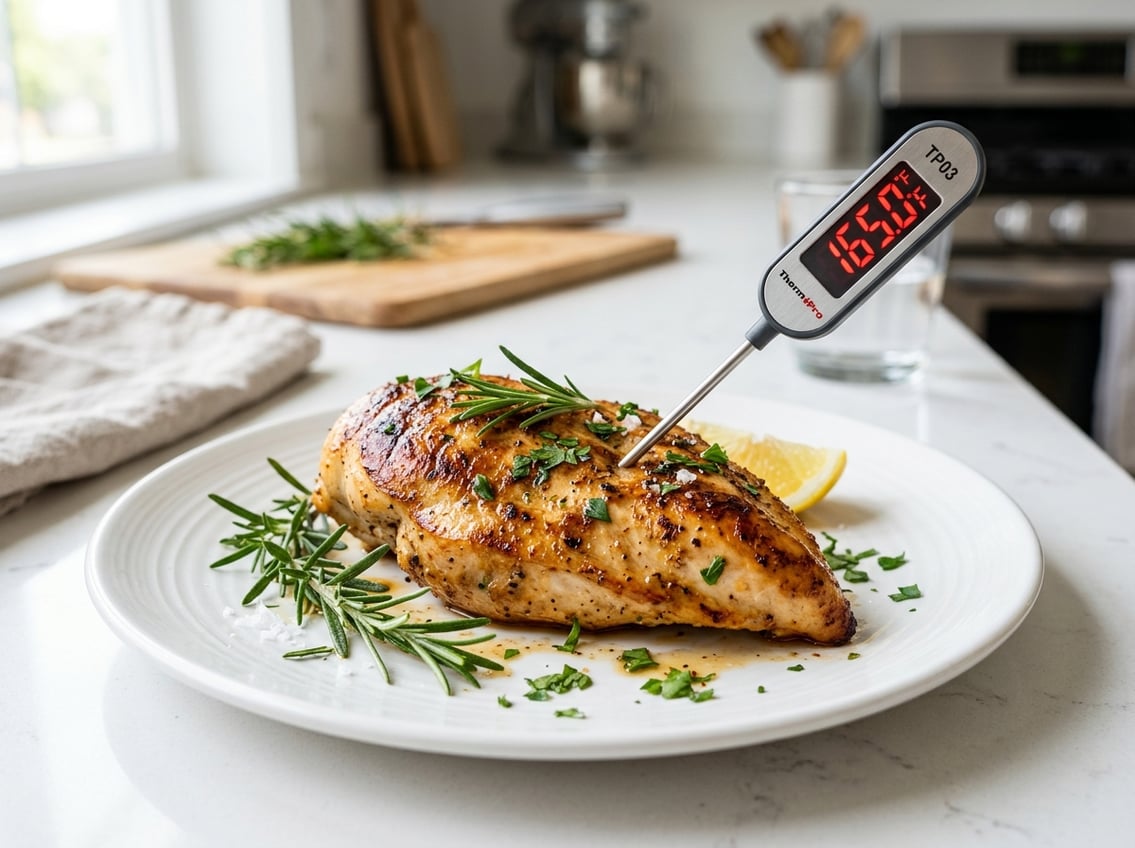
Chicken breasts reach doneness at 165°F (74°C), which matches US food safety guidance. This temperature reduces the risk from harmful bacteria such as salmonella and campylobacter.
You want to avoid overcooking chicken because breast meat turns dry and stringy once it goes past the point of doneness.
Why 165°F (74°C) Is the Food-Safe Target
At 165°F (74°C), the center of the chicken breast has reached a safe temperature. Trust this number more than color, juice, or cooking time.
Some chicken breasts may look done before they reach this point, especially if they are thin or browned on the outside. Only a thermometer can confirm the chicken is ready.
When to Pull Chicken Breasts Off the Heat
Remove chicken breasts a little before they hit 165°F if you plan to rest them. Taking them off around 160°F to 163°F gives enough room for carryover cooking to bring them to the safe final temperature.
The exact rise depends on thickness, pan heat, and how long the meat rests.
How Carryover Cooking Affects Final Doneness
Carryover cooking raises the internal temperature after you remove the meat from heat. Thicker chicken breasts can gain a few degrees while resting.
Keep the chicken loosely covered and let it rest for several minutes before slicing. Resting helps lock in juices, and the meat thermometer tells you when to take it off the heat.
How to Check Doneness Accurately
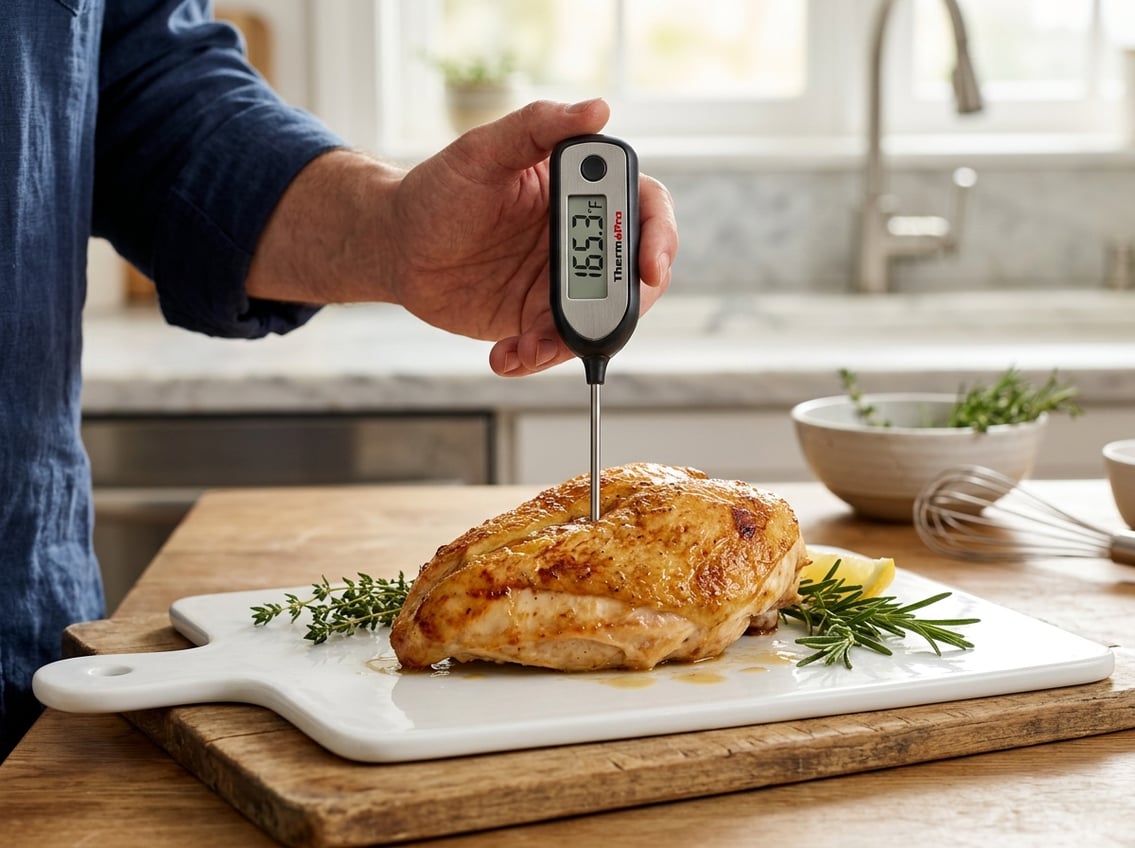
A meat thermometer gives you the most accurate answer and takes away the guesswork. Use it to check the thickest part of the breast for the correct temperature.
Placement matters as much as the tool you use. If the tip touches bone or sits too close to the pan, the reading can be off.
How to Use a Meat Thermometer
Insert the thermometer into the thickest part of the chicken breast. Wait for the reading to stabilize, then check that it reaches 165°F (74°C).
If you are testing more than one piece, check each breast separately. Chicken breasts are often uneven in size, so one piece may finish earlier than another.
Best Thermometer Placement for Breast Meat
Aim for the center of the thickest section, not the thin tapered edge. Keep the probe away from bone, if present, and away from the hot skillet or baking dish.
This placement gives you the true chicken internal temperature. A reading from a thinner or hotter spot can make the breast seem done before the center is ready.
Instant-Read vs Digital Meat Thermometer
An instant-read thermometer is fast and practical for checking chicken breasts near the end of cooking. A digital meat thermometer also works well, especially if it gives quick, clear numbers.
Both tools help you check doneness. The best choice is the one you can read quickly and accurately without leaving the chicken in the heat too long.
How Temperature Changes by Cut and Cooking Method
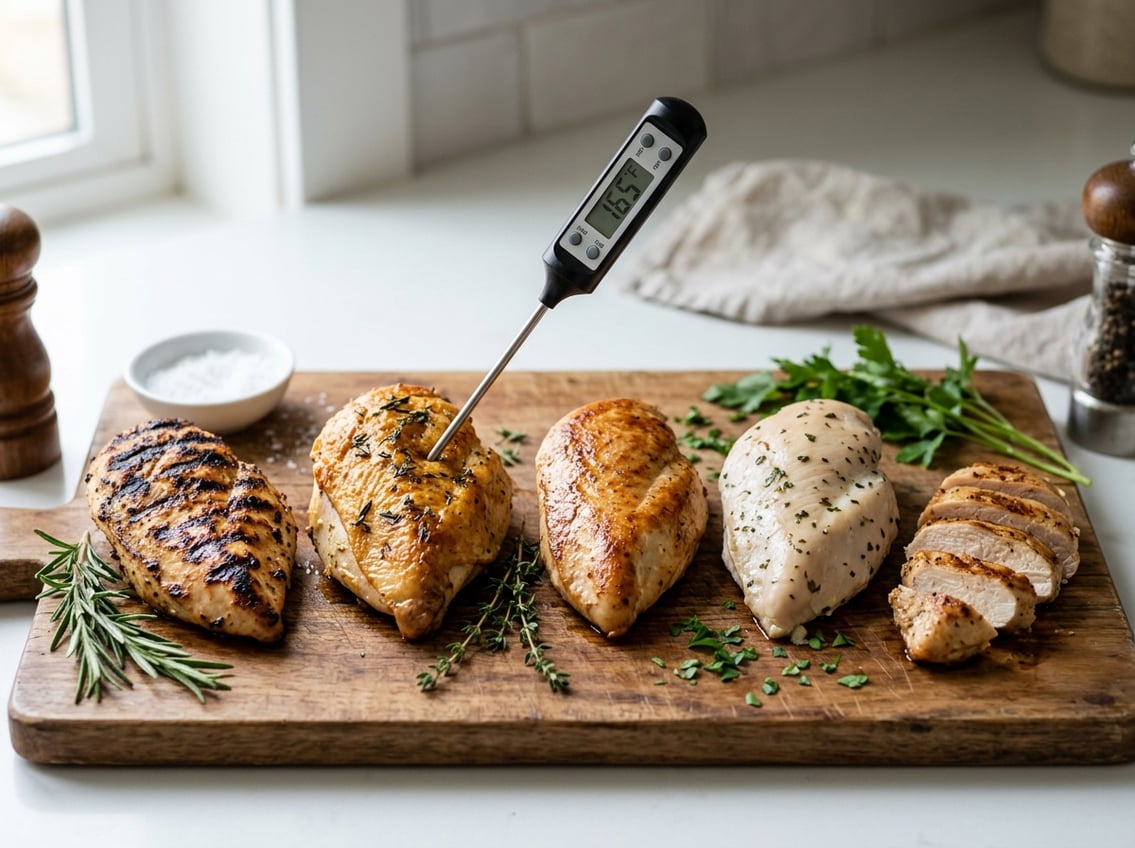
Different cuts finish at different rates, and cooking method changes how fast the center heats up. A simple chicken temperature chart helps you match the cut to the right target.
Chicken Breasts Compared With Thighs and Drumsticks
Chicken breasts are lean and usually best at 165°F (74°C). Thighs and drumsticks can handle more heat and often stay juicier at a higher finished temperature because they contain more fat and connective tissue.
If you cook mixed pieces together, the breast may finish before the darker meat.
Roasting a Whole Chicken and Checking Both Zones
When roasting a whole chicken, check more than one spot. Insert the thermometer into the thickest part of the breast and into the thickest part of the thigh, making sure you do not touch bone.
The breast should reach 165°F (74°C). The thigh may be safe and tender at a higher temperature, so checking both zones helps you avoid undercooked meat and dry breast meat at the same time.
Using a Simple Chicken Temperature Chart
A basic chart helps you track doneness without confusion.
| Cut of Chicken | Safe Finished Temperature |
|---|---|
| Chicken breasts | 165°F (74°C) |
| Whole chicken breast area | 165°F (74°C) |
| Thighs | 165°F to 175°F |
| Drumsticks | 165°F to 175°F |
Start checking early with a thermometer. Remove each cut at the right point to keep chicken safe and avoid drying out the meat.


