
Is It Good to Eat Chicken Breast at Night? What to Know
You may wonder if eating chicken breast at night is good when late hunger hits or when you want a protein-rich dinner. In most cases, eating chicken breast at night is fine as long as the portion is reasonable and the meal fits your daily calorie needs.
Chicken breast works well at night because it is lean, filling, and useful for protein before bed. The timing matters less than how much you eat and what you pair it with.
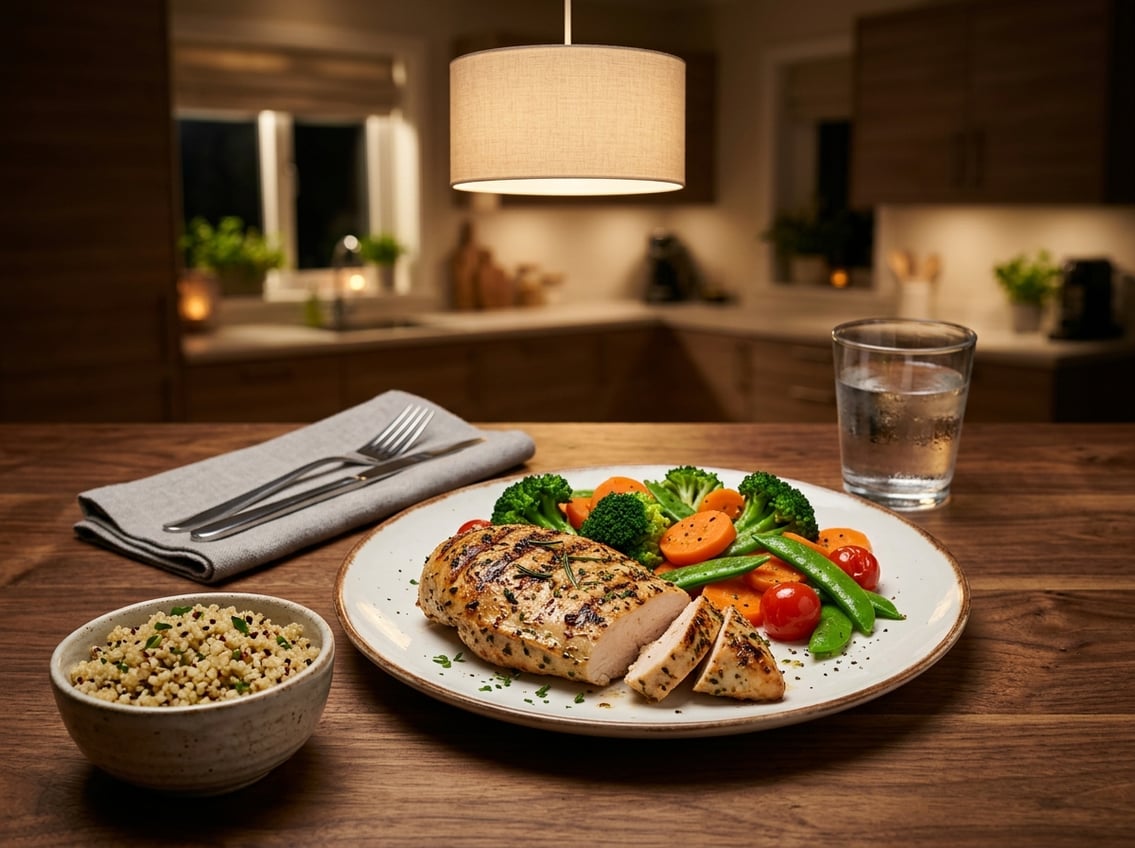
Many people find that nighttime eating is not a problem if they plan for it. Others may find that late-night snacking leads to extra calories, reflux, or a heavy feeling before sleep.
Your best choice depends on your goals, your digestion, and whether chicken at night fits into your routine.
Short Answer: When It Helps and When It Does Not
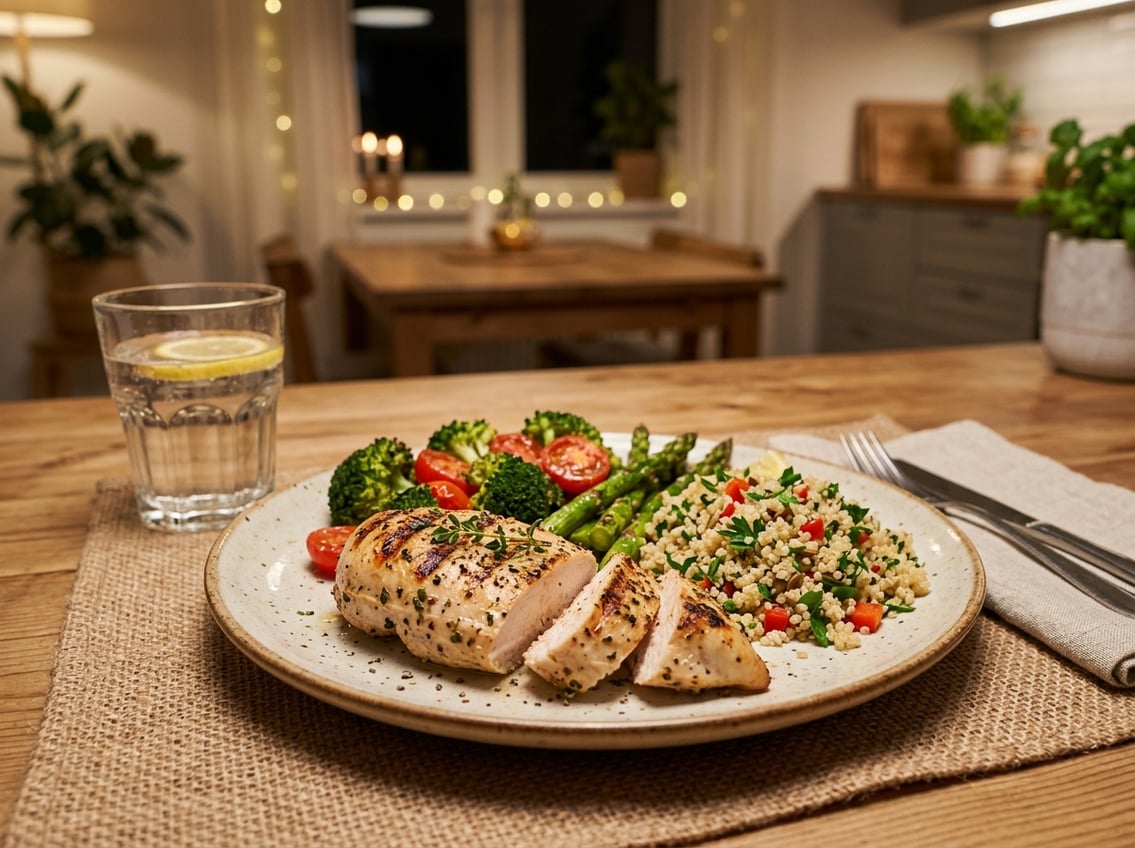
Chicken breast can be a smart evening protein when you need a satisfying meal that helps curb late-night cravings. It is also a good choice if you want a light dinner with enough protein to keep you full.
A late meal can work against you if it is too large, too greasy, or too close to bedtime. Nighttime snacking may leave you uncomfortable and more likely to keep eating.
Why Chicken Breast Can Be a Smart Evening Protein
Chicken breast is high in protein and low in fat, so it helps you feel full without a lot of extra calories. It is useful when you want a simple meal that does not turn into a binge.
You can also include it after an evening workout or on busy nights when you need a quick, balanced plate. Poultry contains tryptophan, which is one reason some people choose it before bed.
When a Late Meal May Cause Discomfort or Overeating
A large portion of chicken, especially with rich sides or heavy sauces, can sit in your stomach and make sleep less comfortable. If you already struggle with nighttime eating, even a healthy food can become a problem when it turns into extra calories.
Eating very close to bed may also trigger bloating or indigestion in sensitive people. In that case, the timing and size of the meal matter more than the chicken itself.
What Matters More Than the Clock: Total Calories and Portions
Your daily intake matters more than the hour on the clock. If chicken breast helps you stay within your calorie target, it can support your goals.
Portion size matters too. A moderate serving of chicken breast with vegetables or another light side is usually a better choice than a large plate built around protein alone.
Nutrition and Weight-Loss Benefits

Skinless chicken breast gives you a lot of protein with very little fat. This is useful if you want a filling meal that does not add many calories.
Protein before bed may also support recovery after exercise. If you are working on fat loss, chicken breast can fit into a plan that focuses on sustainable weight loss.
How Skinless Chicken Breast Supports Fullness
Skinless chicken breast is one of the leanest animal proteins you can eat. Its protein content can help reduce hunger at night, which may make it easier to stop eating after dinner.
That feeling of fullness can matter if late-night cravings usually lead you toward chips, sweets, or other calorie-dense snacks. A planned serving of chicken may help you stay on track.
Protein Before Bed and Muscle Recovery
If you train in the evening, protein before bed can help your body recover overnight. Chicken breast provides amino acids your muscles use during repair.
People who lift weights or do regular workouts can use this as a practical way to support muscle recovery without a heavy meal.
Chicken at Night for Weight Loss in a Sustainable Plan
Chicken at night for weight loss works best when you include it in a realistic routine. A sensible portion of chicken breast can support fullness, which may lower the chance of overeating later.
Weight loss depends on your total habits. A balanced plan with enough fiber, enough protein, and a calorie intake that matches your goal is more effective than focusing on meal timing alone.
Best Ways to Eat It at Night
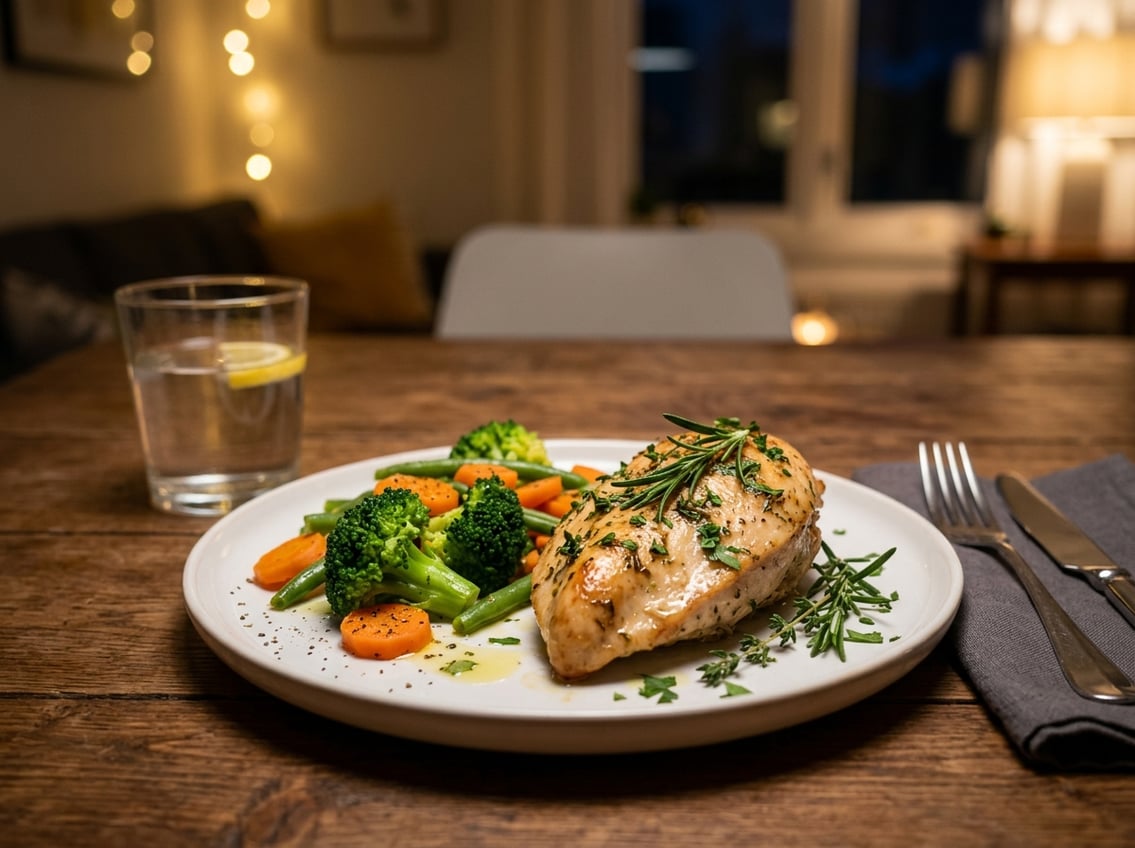
The best nighttime chicken meal is simple, light, and easy to digest. Grilled chicken with vegetables is a reliable choice because it keeps calories in check and helps you feel satisfied.
Your portion, cooking method, and side dishes matter more than the chicken itself. This is especially true if you are managing late-night cravings or trying to avoid a heavy stomach before sleep.
Ideal Portion Size and Bedtime Timing
A moderate serving is usually enough for most people, often about 3 to 4 ounces of cooked chicken breast. That amount gives you protein without turning dinner into a large meal.
Try to finish eating at least 1 to 2 hours before bed if you can. That buffer may help digestion and lower the chance of discomfort while you sleep.
Healthy Cooking Methods That Keep Calories in Check
Grilling, baking, roasting, and air-frying are all good healthy cooking methods. They keep the meal lighter than breading or frying.
Keep sauces simple. Heavy cream sauces, lots of oil, or sugary glazes can quickly raise calories, even when the chicken itself is lean.
Balanced Dinner Pairings That Reduce Late Snacking
Pair chicken with vegetables, a small portion of whole grains, or both. This adds fiber and makes the meal more satisfying.
Some good combinations include:
- Grilled chicken with broccoli and brown rice
- Baked chicken with roasted vegetables
- Chicken breast with a salad and a small serving of quinoa
These kinds of meals can reduce the urge to keep snacking later in the night.
Who Should Be More Careful With Evening Chicken Meals

Some people feel fine eating chicken breast at night, while others notice reflux, bloating, or changes in their sleep. If you have a health condition or a sensitive stomach, nighttime eating may need more attention.
The same meal can feel light for one person and too heavy for another. Your own response is the best guide.
Digestive Sensitivity, Reflux, and Heavy Meals
If you have reflux, IBS, or frequent indigestion, a late chicken meal may not feel good. Even skinless chicken breast can be hard to tolerate if the portion is large or you eat the meal too close to bedtime.
A lighter dinner earlier in the evening may work better. That can help you sleep more comfortably and avoid waking up with heartburn or pressure in your stomach.
Blood Sugar and Individual Health Considerations
Chicken breast is low in carbs, so it usually does not raise blood sugar the way a sweet snack might. Your full meal matters, especially if you eat chicken with sugary sauces or refined sides.
If you have diabetes, prediabetes, kidney disease, or another health issue, your protein needs may be different. In that case, meal timing and portion size should fit your care plan.
Signs Your Evening Routine Needs Adjustment
You may need to change your routine if you notice bloating, reflux, poor sleep, or repeated overeating at night.
These signs suggest your meal may be too large or too close to bedtime.
If eating chicken in the evening helps you feel calm, full, and steady, it may be a good fit.
If you feel uncomfortable, try eating earlier or choosing smaller portions.


