
Can I Freeze Chicken Breast? Safe Storage Guide
You can freeze chicken breast. It is one of the simplest ways to keep it safe to use later.
If you buy in bulk, cook extra for meal prep, or need to stop chicken from spoiling before you use it, freezing is a practical option.
The main job is to freeze it quickly, package it tightly, and thaw it safely. This helps you keep as much quality as possible.
Proper handling matters more than whether the chicken is raw or cooked. Air exposure and slow thawing affect texture, flavor, and food safety.
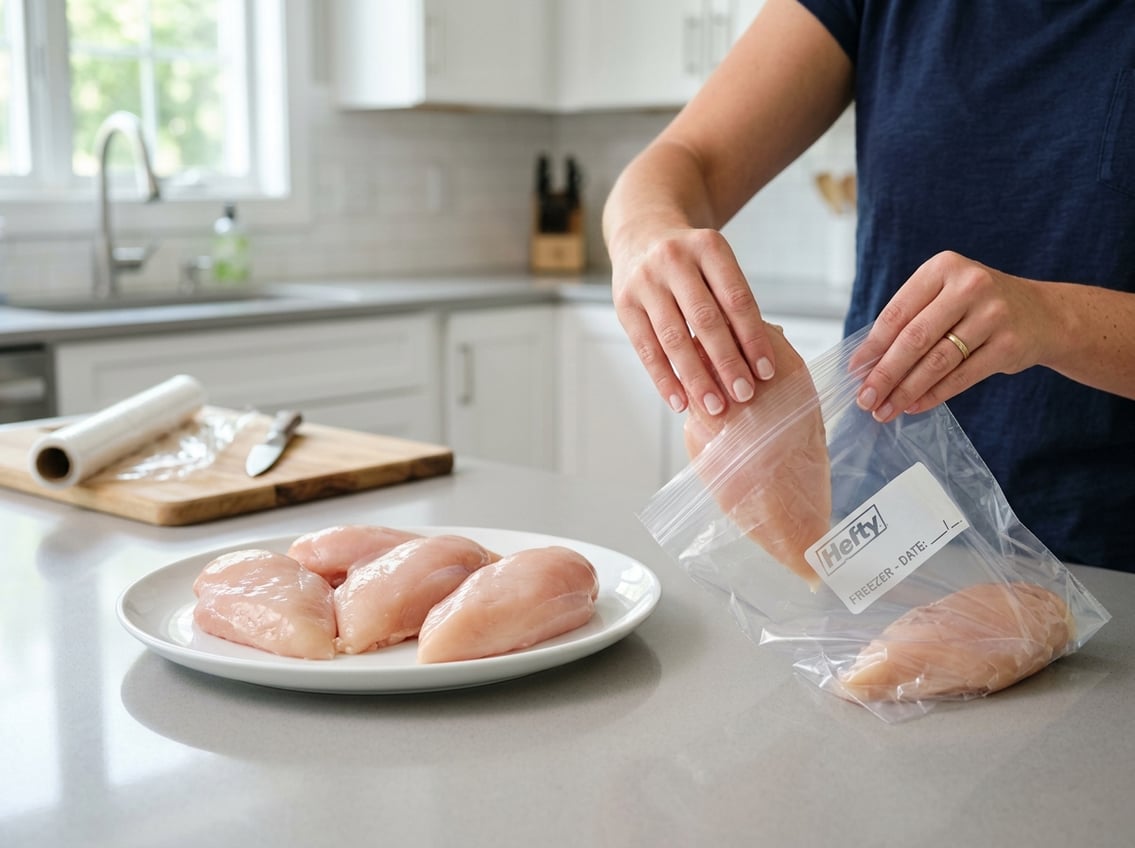
When Freezing Chicken Breast Makes Sense
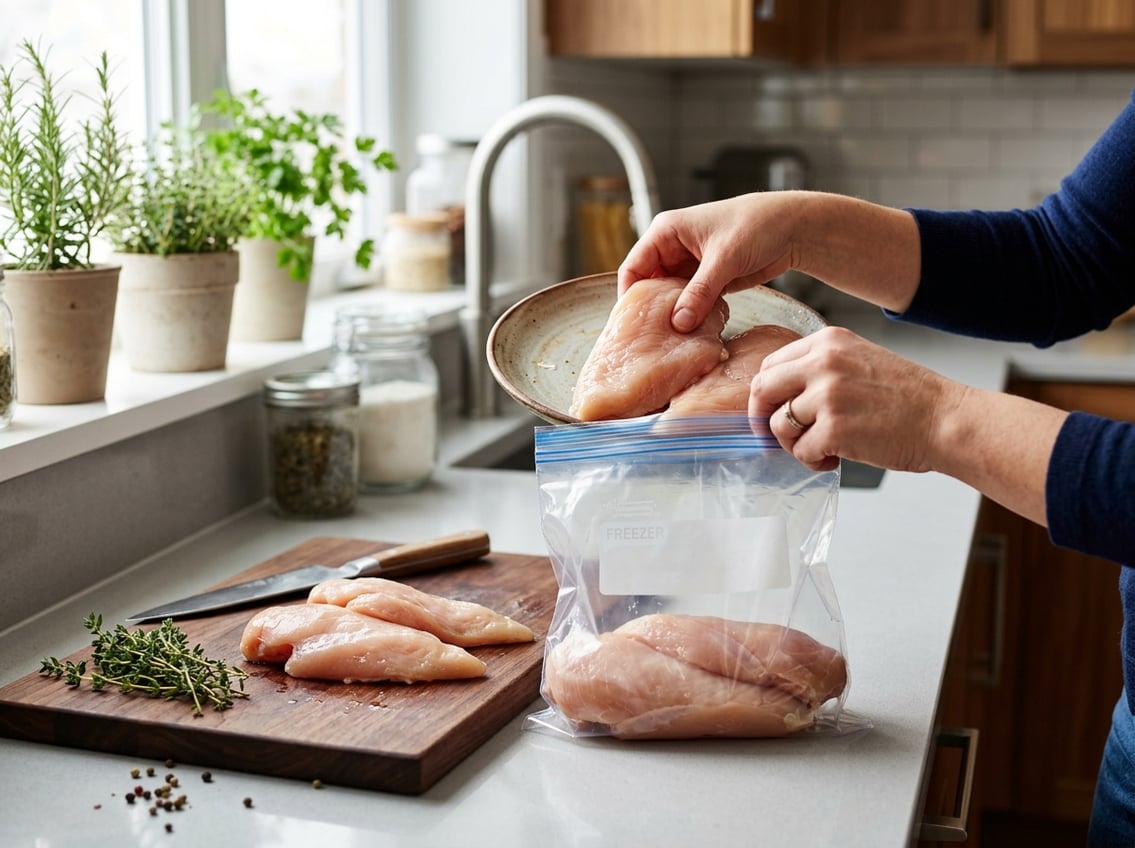
Freezing makes sense when you cannot use chicken breast before its fridge life runs out. It also helps you save money by buying extra.
You can freeze chicken raw or cooked in portions that match your usual meals. Raw chicken usually keeps its texture better than cooked chicken after freezing.
Many people freeze chicken before cooking for this reason. Cooked chicken still freezes well if you plan to use it in soups, casseroles, tacos, or shredded dishes.
Raw Vs. Cooked: What Freezes Best
If you want the best texture after thawing, freeze raw chicken breast. Raw chicken tends to lose less moisture in the freezer than cooked chicken.
Cooked chicken is a good option when you want ready-to-reheat portions.
A guide from Chef’s Resource notes that both raw and cooked chicken breasts can be frozen. Cooked chicken is best used within a shorter window for quality.
How Soon to Freeze After Buying or Cooking
Freeze raw chicken before it spoils, ideally soon after shopping if you do not plan to cook it within a couple of days. If the chicken is cooked, let it cool first, then freeze it soon after it reaches room temperature.
Do not leave chicken sitting out on the counter for long periods. Bacteria grow quickly in the temperature danger zone, so prompt chilling is important before freezing.
What Freezing Changes in Texture and Flavor
Freezing slows spoilage, but it does not keep chicken exactly the same. Some moisture loss is normal, so thawed chicken may feel a little less juicy than fresh chicken.
Air exposure can cause dry spots and mild off-flavors. Tight wrapping and fast freezing help prevent these issues.
How to Pack It for Best Results
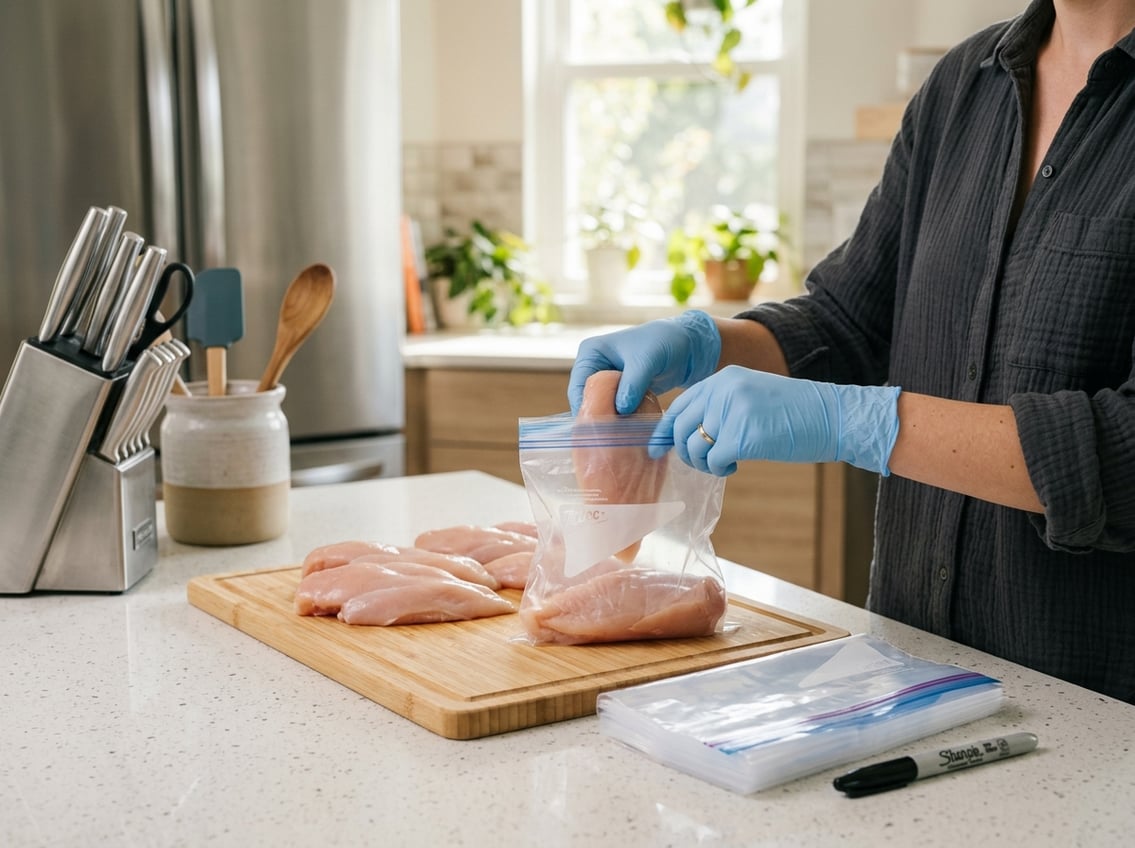
Limit air, divide chicken into usable portions, and label each package clearly. Good packaging protects flavor and helps prevent waste.
Start with the portion size you actually cook. Small, flat packages freeze and thaw faster than large clumps.
Best Way to Portion and Label Packages
Split chicken breast into meal-sized portions before packing it. Use single or family-size packs depending on your needs.
Label each package with the contents and date. This helps you keep track of storage time and use older chicken first.
How to Freeze Raw Chicken Without Drying It Out
Pat raw chicken dry with a paper towel if needed. Wrap it tightly, place it in freezer-safe wrap or a bag, press out as much air as you can, and flatten the package if possible.
According to Simply Recipes, airtight packaging like foil, freezer paper, or freezer bags helps preserve quality longer. The basic rule is to keep air away from the meat.
How to Freeze Cooked Chicken for Easy Reheating
Cool cooked chicken before freezing it. Store it in shallow, airtight packages.
Shredded chicken is easy to freeze because it thaws and reheats more evenly. If you plan to reheat it in sauces, soups, or casseroles, freeze it with a little cooking liquid or sauce to help protect the texture.
Airtight Wrapping Methods That Avoid Freezer Burn
Freezer burn happens when frozen food loses moisture because air reaches the surface. It can make chicken dry, leathery, and less flavorful.
Use tight plastic wrap, freezer paper, freezer bags, or vacuum sealing to prevent freezer burn. Remove as much air as possible before sealing, and store the chicken in the coldest part of the freezer.
How Long It Keeps and How to Tell If It Is Still Worth Using
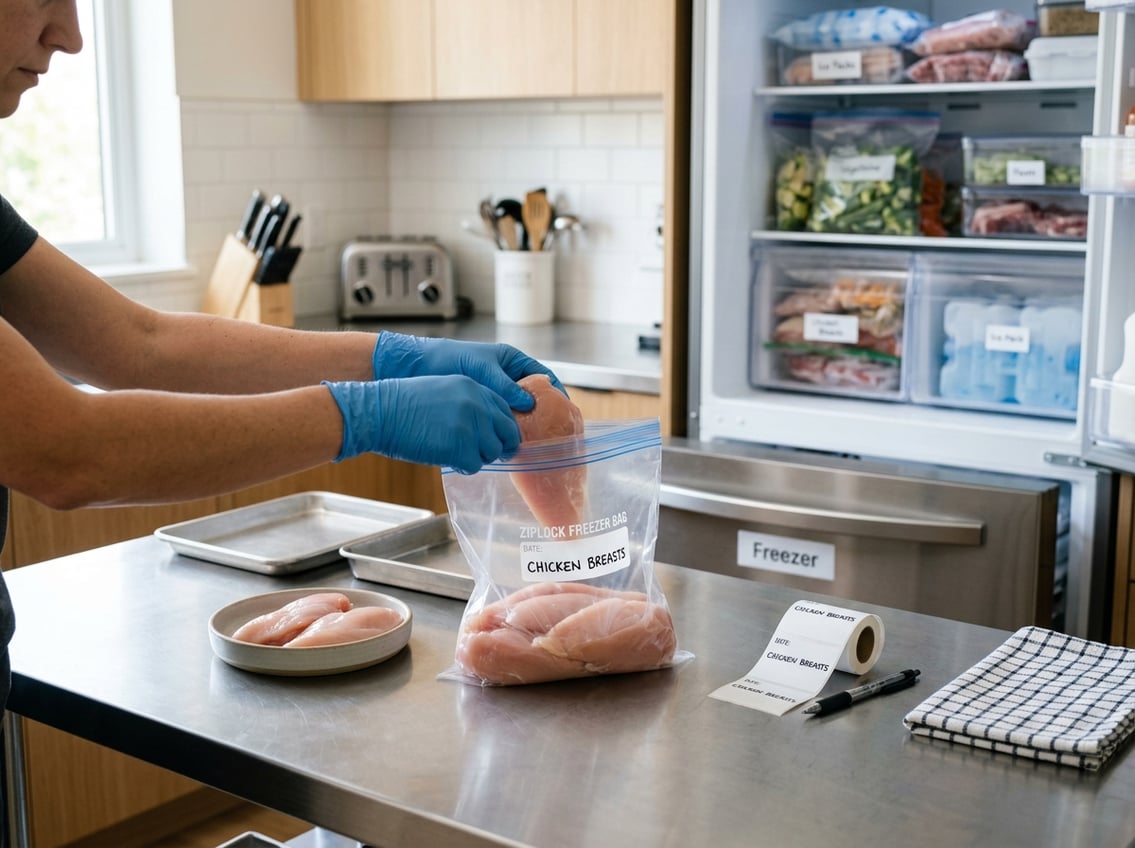
Frozen chicken stays safe at 0°F or lower, but quality drops over time. Raw chicken breast keeps best for several months, while cooked chicken has a shorter quality window.
Check packaging condition, odor after thawing, and visible drying or discoloration. If the chicken smells bad or shows strong spoilage signs, discard it.
Best-Quality Freezer Timelines for Raw Breast Meat
For the best quality, use raw chicken breast within about 6 to 9 months. Some guides stretch that to 9 to 12 months when stored well.
Chef’s Resource notes that properly frozen chicken breasts can last up to 9 to 12 months, with best flavor in the earlier part of that range. The USDA says frozen food kept at 0°F stays safe, even though quality can decline.
A USA Today report also notes that properly stored chicken remains safe to defrost, cook, and eat.
Storage Time for Cooked Portions and Leftovers
Cooked chicken breast is best used within about 2 to 3 months for quality. After that, it may still be safe if it stayed frozen solid, though the texture may become drier.
Use cooked leftovers sooner if they were already refrigerated for a few days before freezing.
Signs of Freezer Burn Vs. Spoilage
Freezer burn usually looks like dry, pale, gray, or white patches on the surface. The chicken may feel tough or stringy in those spots, but freezer burn alone does not always mean the chicken is unsafe.
Spoilage is different. If thawed chicken smells sour, rotten, or otherwise off, discard it. If the odor is strong or unpleasant, do not try to salvage it.
Safe Thawing Before Cooking
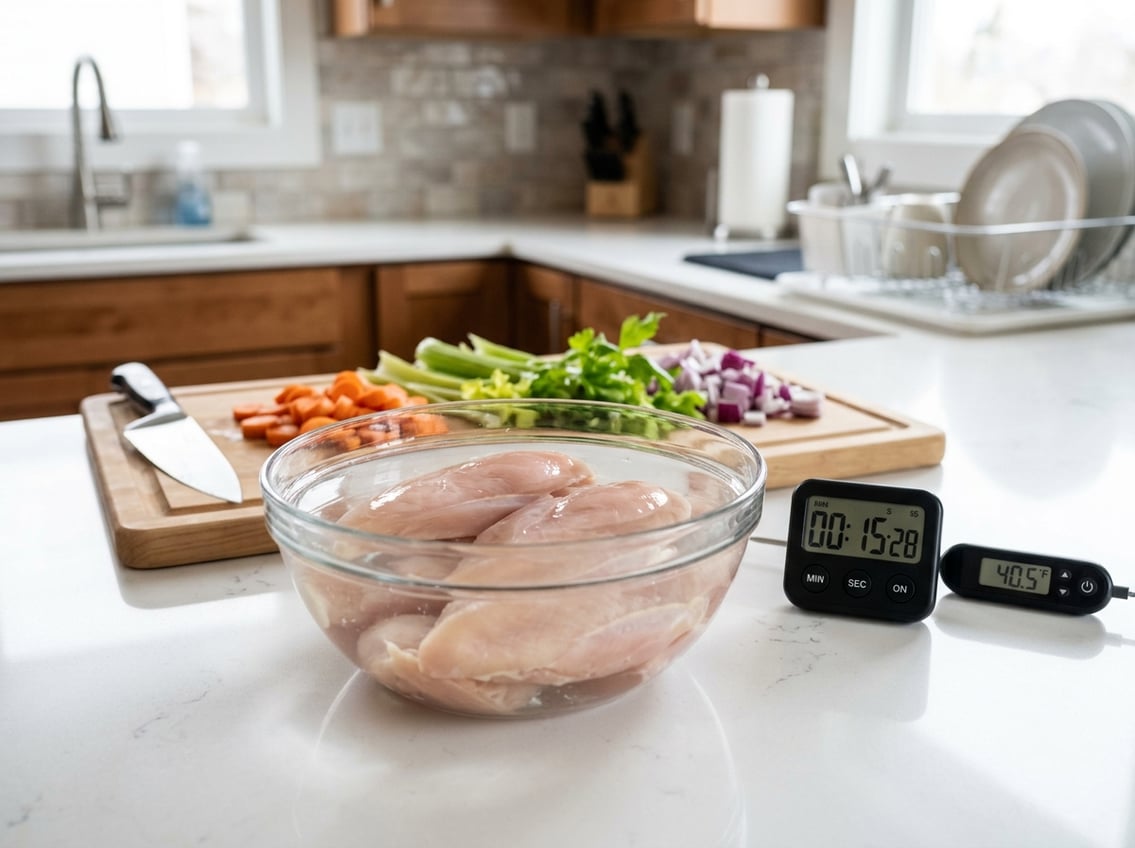
Thaw frozen chicken in the refrigerator for the safest results. Cold-water thawing works for same-day use, and microwave thawing is fine when you plan to cook it right away.
Never thaw chicken on the counter. Slow, warm thawing gives bacteria time to grow on the outside while the inside is still frozen.
Refrigerator Thawing as the Safest Method
Refrigerator thawing is the best choice when you have time. Place the chicken on a plate or in a container to catch drips, then let it thaw in the fridge for 24 to 48 hours depending on thickness.
Chef’s Resource recommends refrigerator thawing as the safest method. Larger batches may need at least 48 hours.
Cold-Water Thawing for Same-Day Use
If you need to thaw frozen chicken breast the same day, seal it in a leakproof bag and submerge it in cold water. Change the water every 30 minutes so it stays cold.
Cook the chicken right after it thaws. Do not use warm or hot water, since that can raise the surface temperature too much.
Microwave Defrosting and When to Cook Immediately
Microwave thawing helps when you are short on time. Use the defrost setting in short intervals so the edges do not start cooking.
Cook the chicken immediately after you defrost it in the microwave. Some parts may warm unevenly, so do not let it sit before cooking.


