
Where to Marinate Chicken Breast for Best Results
Where you marinate chicken breast matters because the container, temperature, and timing all affect safety and flavor. A good chicken marinade can make boneless skinless chicken breasts taste better and stay juicier, while the wrong setup can lead to bland meat or food safety problems.
You get the best results when you marinate chicken breast in the refrigerator, in a nonreactive container, with enough room for the chicken to be fully coated in the marinade. That simple choice makes it easier to marinate chicken the right way and get consistent results.
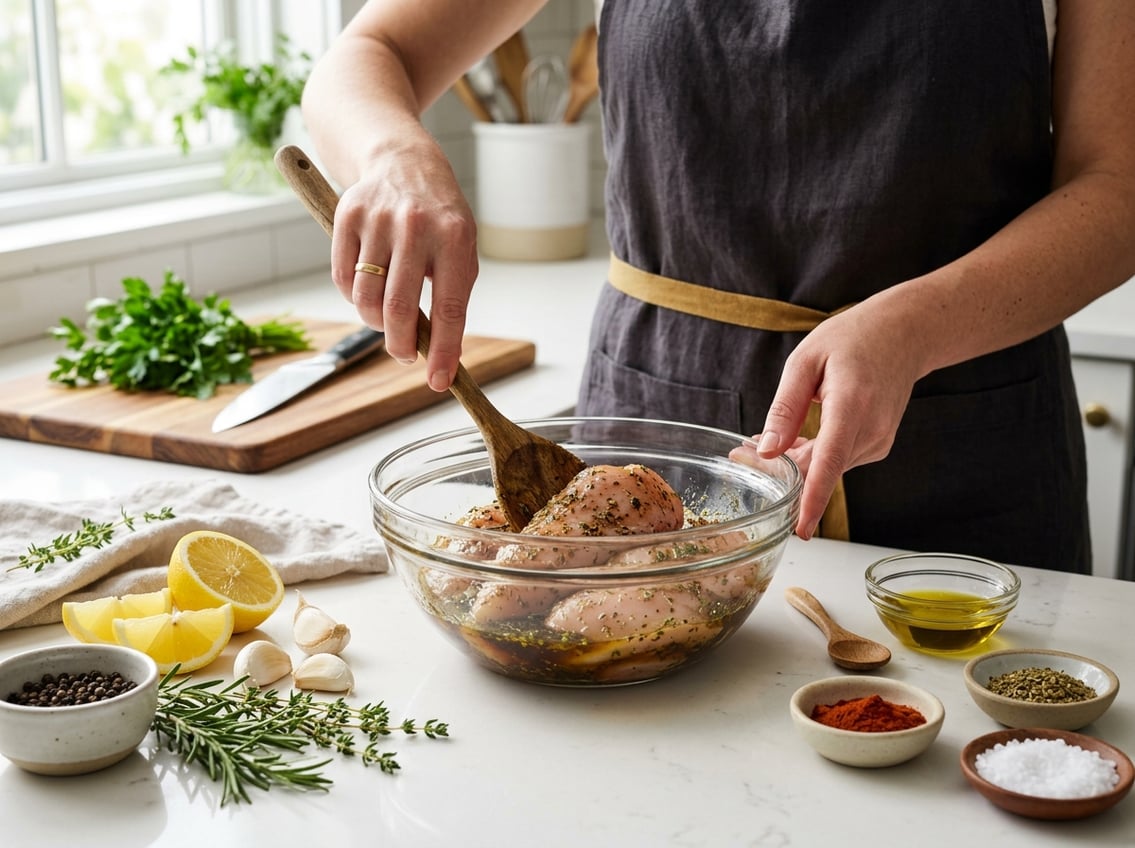
Best Containers and Places to Marinate Chicken Breast
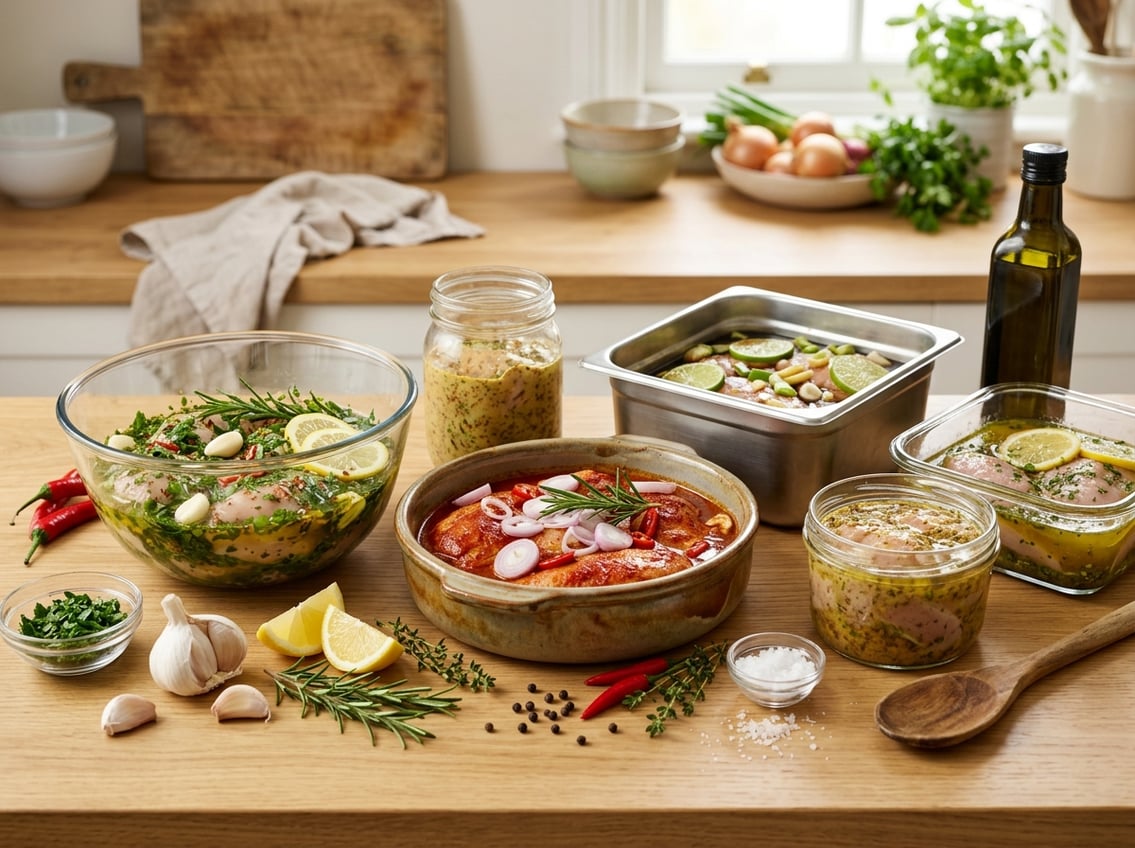
Keep chicken cold, covered, and in a container that will not react with acidic marinade ingredients. Make sure the chicken stays fully coated and can sit without leaking or tipping.
A cold, stable spot in your fridge is the safest place for chicken marinades.
Use the Refrigerator, Not the Counter
Always marinate chicken in the refrigerator. Martha Stewart recommends keeping chicken off the countertop or at room temperature to avoid foodborne illness, and storing raw chicken on the bottom shelf to prevent drips onto other foods (Martha Stewart).
Cold storage keeps the chicken safe while the marinade works.
Zip-Top Bags vs. Glass or Ceramic Dishes
Use zip-top bags when you want the marinade to coat the chicken closely with very little extra liquid. These bags save space in the fridge and help create a thin, even layer.
Glass or ceramic dishes work better when you want to see the chicken and turn it by hand. These containers suit larger batches, especially when using marinades with herbs, oil, citrus, or yogurt.
Why Metal Containers Are Best Avoided
Avoid metal containers for acidic marinades. Ingredients like lemon juice, vinegar, and wine can react with some metals, affecting flavor and sometimes the container surface.
If your marinade includes citrus or vinegar, choose glass, ceramic, or food-grade plastic instead. These materials are safer for long contact with marinade ingredients.
How Much Space and Marinade the Chicken Needs
Give the chicken enough space so the marinade can touch all sides. Crowded containers leave parts of the meat dry and lead to uneven flavor.
You do not need to drown the chicken in liquid. A thin layer that fully coats the surface is usually enough.
Timing, Safety, and Prep Before Cooking
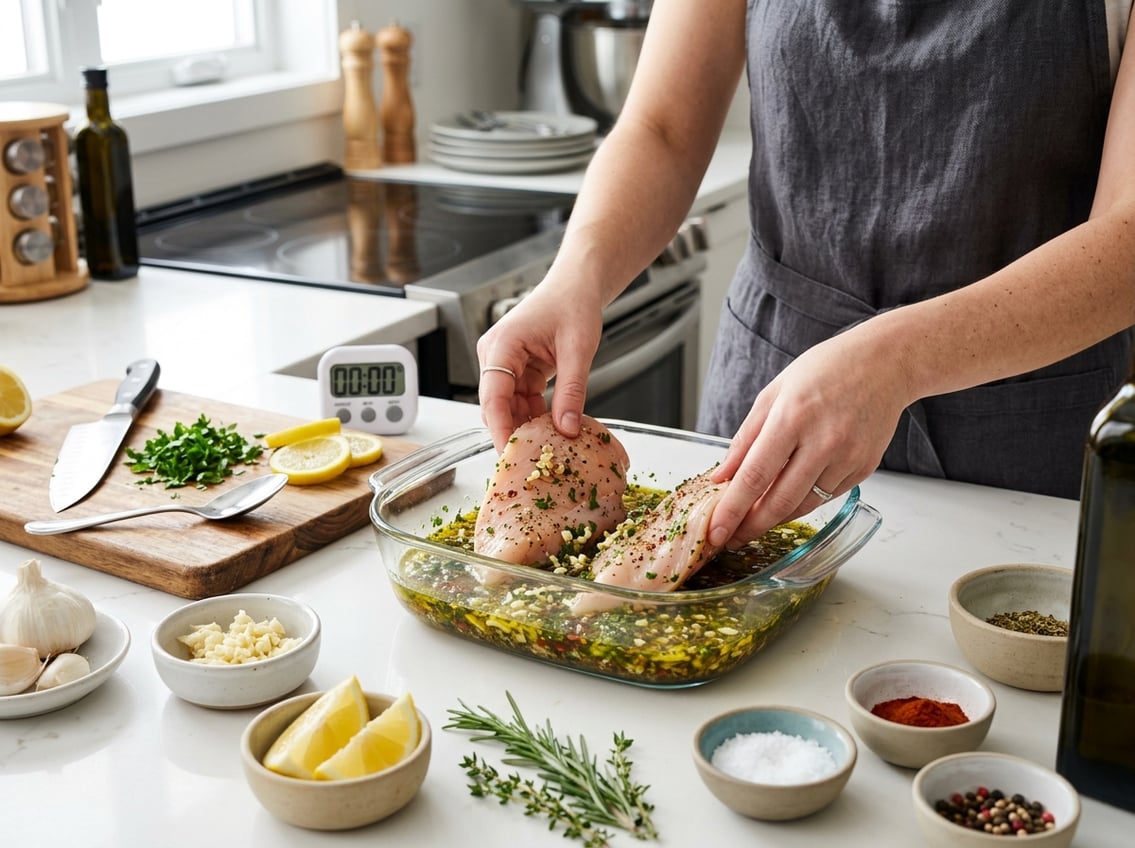
Match the marinating time to the type of marinade and the thickness of the chicken. Even pieces and proper handling of used marinade also help with results.
How Long to Marinate Chicken Breast
For boneless skinless chicken breasts, marinate for 3 to 6 hours, and overnight is often ideal, according to Martha Stewart. You can marinate up to 2 days, but longer can make the texture mushy.
Thin pieces absorb flavor faster than thick ones, so a shorter soak can still help.
When Acidic Marinades Can Go Too Far
Citrus, vinegar, and other acids help tenderize chicken, but too much time can break down the meat. This is a concern with lemon, lime, and other strong marinades.
Keep the acid balanced with oil, yogurt, herbs, or soy sauce. Martha Stewart suggests a 2-to-1 or 3-to-1 fat-to-acid ratio as a standard starting point (Martha Stewart).
How to Prep Thin, Even Pieces for Better Marination
Even thickness helps the chicken cook at the same rate and lets the marinade work more evenly. Gently pound thicker areas so the breasts are closer in size.
You can also score the surface lightly or poke small holes so the marinade can reach more of the meat.
Handling Used Marinade Safely
Never reuse marinade that touched raw chicken unless you boil it first. Raw juices can carry bacteria, making leftover marinade unsafe.
If you want extra sauce, set some aside before adding the chicken. That separate portion is safe for basting or serving.
Freezer-Friendly Marinating and Meal Prep
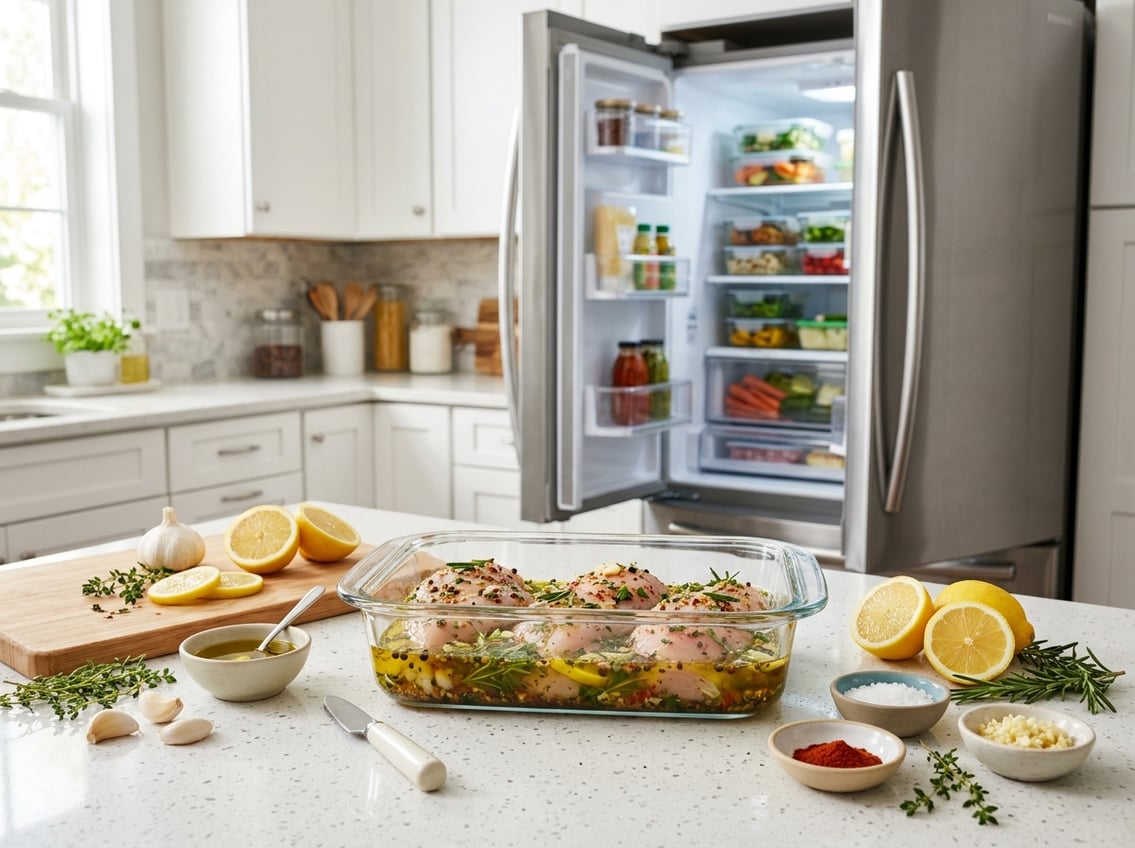
Freezing marinated chicken is a practical way to save time. You can prep marinades in batches and keep dinner ready for later.
Thin cuts like chicken breast thaw quickly and cook evenly. This makes freezer meal prep easy.
When to Freeze Chicken in Marinade
Freeze chicken in marinade as soon as the chicken is coated and packed. The marinade continues to flavor the meat as it thaws.
Freezing works especially well for simple marinades with oil, garlic, herbs, soy sauce, citrus, or yogurt.
Best Freezer Containers and Labeling Tips
Use freezer bags or airtight freezer-safe containers. Push out extra air from bags before sealing and lay them flat so they freeze in a thin layer.
Label each package with the marinade name, the date, and the cooking method you plan to use. This helps you keep track of different marinades.
How to Thaw Marinated Chicken Breast Safely
Thaw chicken in the refrigerator, not on the counter. Slow thawing keeps the meat at a safer temperature and preserves texture.
Let chicken thaw in the same sealed container or bag. Once thawed, cook it promptly for the best food safety and texture.
Cooking Marinated Chicken Breast Successfully
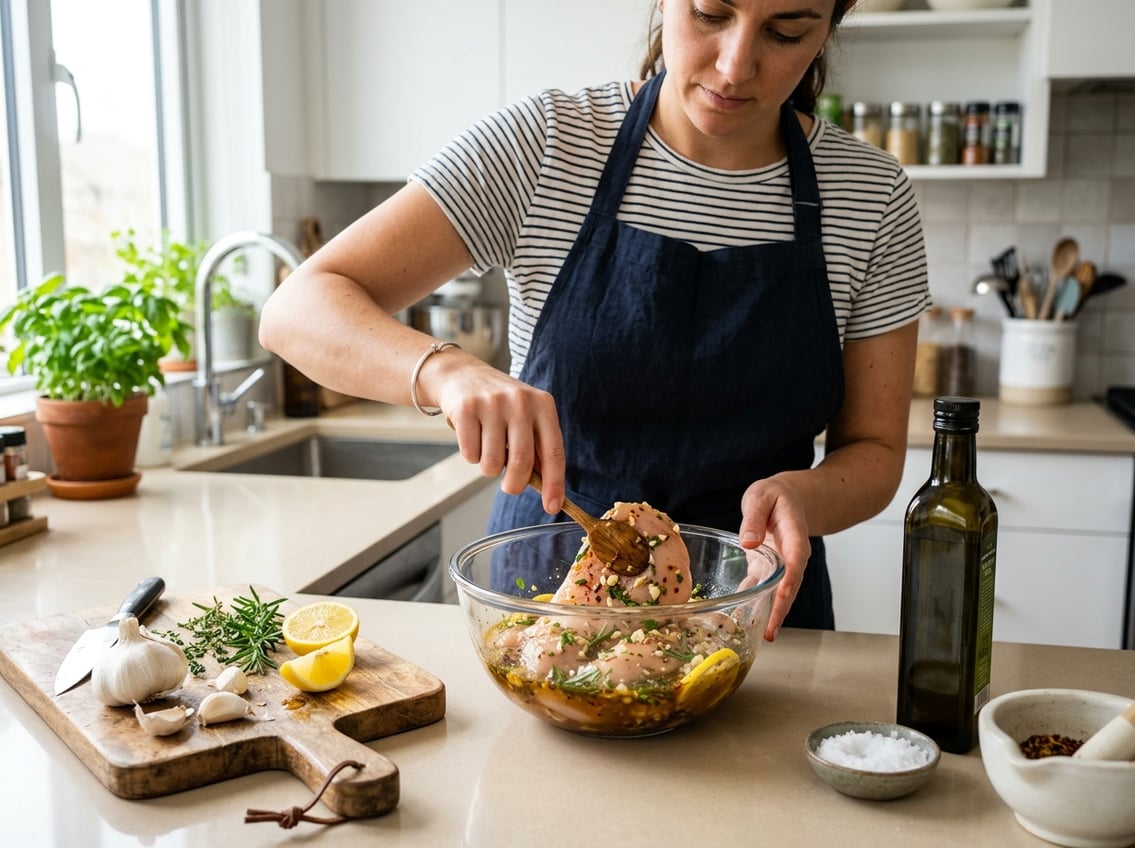
Choose your cooking method based on the marinade style and the cut of chicken. Grilling works well for bold marinades, while baking is a reliable choice for thinner cuts.
Keep the chicken juicy without burning the sugars or drying out the meat.
How to Cook Marinated Chicken on the Grill
Shake off excess marinade before grilling so the surface does not drip into the flames. This helps you get better browning and less flare-up.
Grill chicken breasts over medium heat until they are fully cooked and the center reaches a safe temperature. Marinades like barbecue, cilantro lime, and lemon work well for grilled chicken breast because they add flavor fast and pair well with char.
Baking Marinated Chicken Breast
Bake chicken breast when you want even cooking and less hands-on time. Place the chicken in a baking dish and bake until it reaches a safe internal temperature.
Baked chicken works well with Italian, Greek, or yogurt-based marinades. These styles stay moist in the oven and fit everyday dinners.
Matching Marinade Styles to Cooking Methods
Match the marinade to the cooking plan.
Use teriyaki chicken marinade or teriyaki marinade for broiled or baked dishes. A little sweetness helps caramelize the surface.
For grilled chicken, lemon chicken, lime chicken marinade, fajita marinade, chicken fajita marinade, cilantro lime chicken, and herb chicken all work well.
Yogurt-based marinades and Italian chicken marinade give richer, softer results.


