
Can I Refreeze Chicken Breast? Safety Rules to Know
You might wonder, can I refreeze chicken breast? The answer is yes, in some cases.
The safety rules depend on how the chicken was thawed, how long it stayed warm, and whether it stayed within safe temperature limits.
If you thawed your chicken breast in the refrigerator and kept it cold the whole time, you can usually refreeze it safely.
If you thawed it in cold water or the microwave, cook it first before freezing it again.
The biggest risks come from time, temperature, and poor handling.
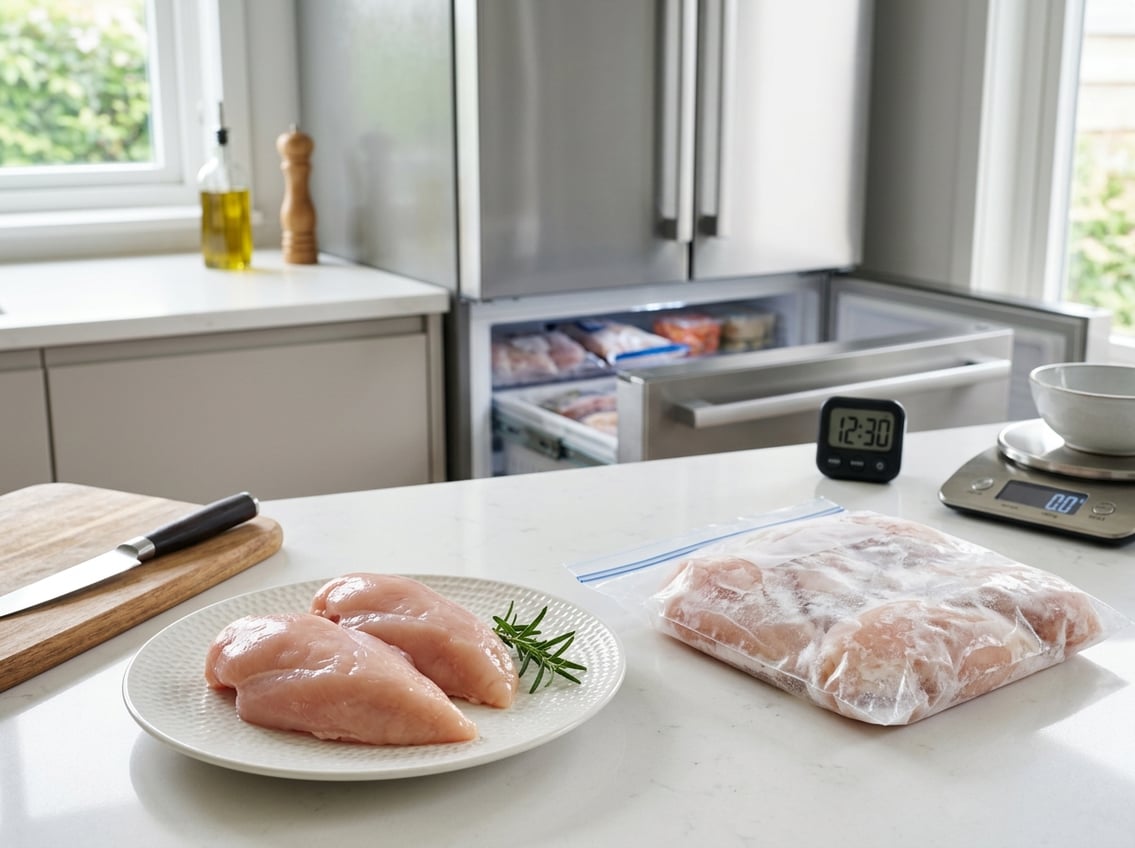
Refreezing chicken is not just about whether you can do it, but also about quality.
Each freeze-thaw cycle can dry out the meat and affect texture.
Safe refreezing and good storage habits help you avoid waste while keeping the chicken usable.
When Refreezing Is Safe
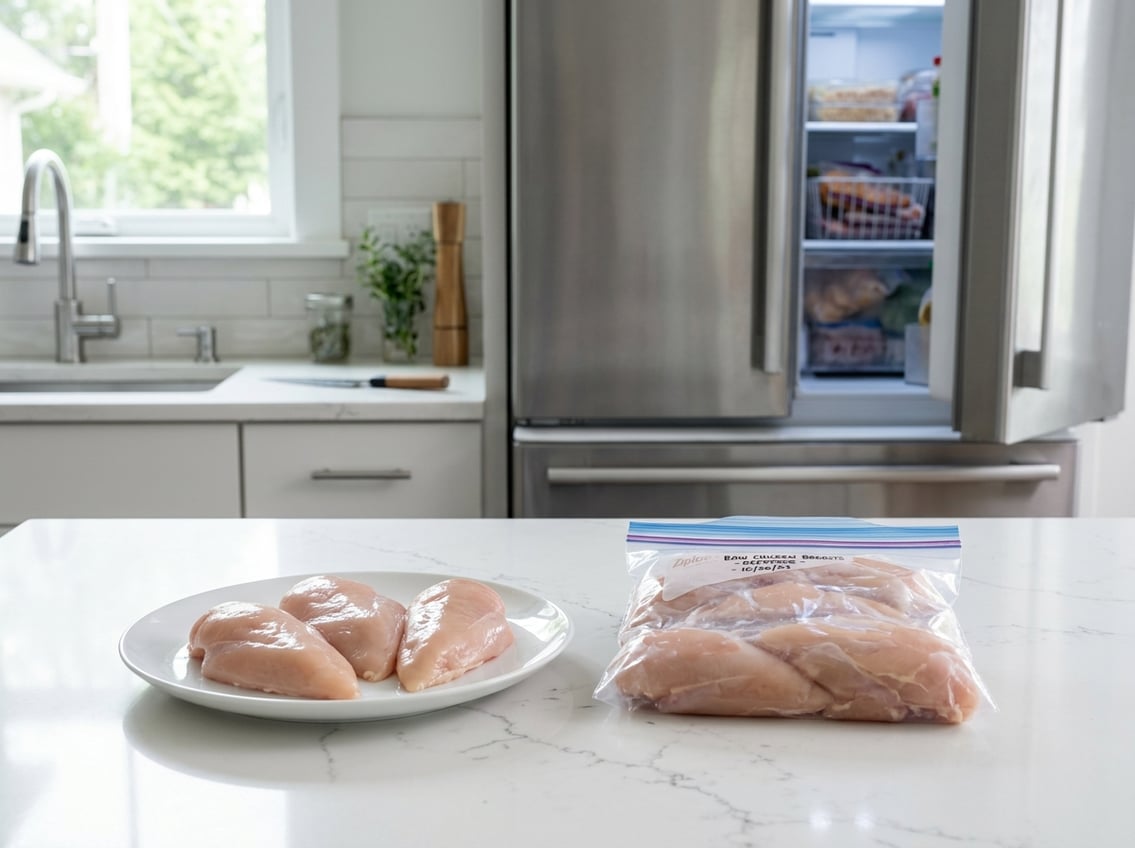
You can safely refreeze chicken breast when it has stayed cold enough and has not sat out too long.
The main goal is to keep it out of the temperature range where bacteria grow quickly.
According to USDA thawing guidance, you can refreeze chicken thawed in the refrigerator before or after cooking.
Chicken Thawed in the Refrigerator
If you thawed chicken in the refrigerator at 40°F or below, you can usually refreeze it safely.
You do not need to cook it first if it stayed cold the whole time.
Refrigerator thawing is the best option for refreezing raw chicken.
Chicken Thawed in Cold Water or the Microwave
If you thawed chicken in cold water or the microwave, you should cook it right away.
These methods can warm parts of the meat enough to raise safety concerns, even if the center still feels cold.
If you want to freeze cooked chicken after this kind of thawing, cook it first, then freeze it after cooling.
Raw vs. Cooked Chicken
You can refreeze both raw and cooked chicken, but the rules are different.
Only refreeze raw chicken if you thawed it in the refrigerator.
You can also freeze cooked chicken again if you cooled it quickly and stored it safely.
When to Cook It First or Throw It Out
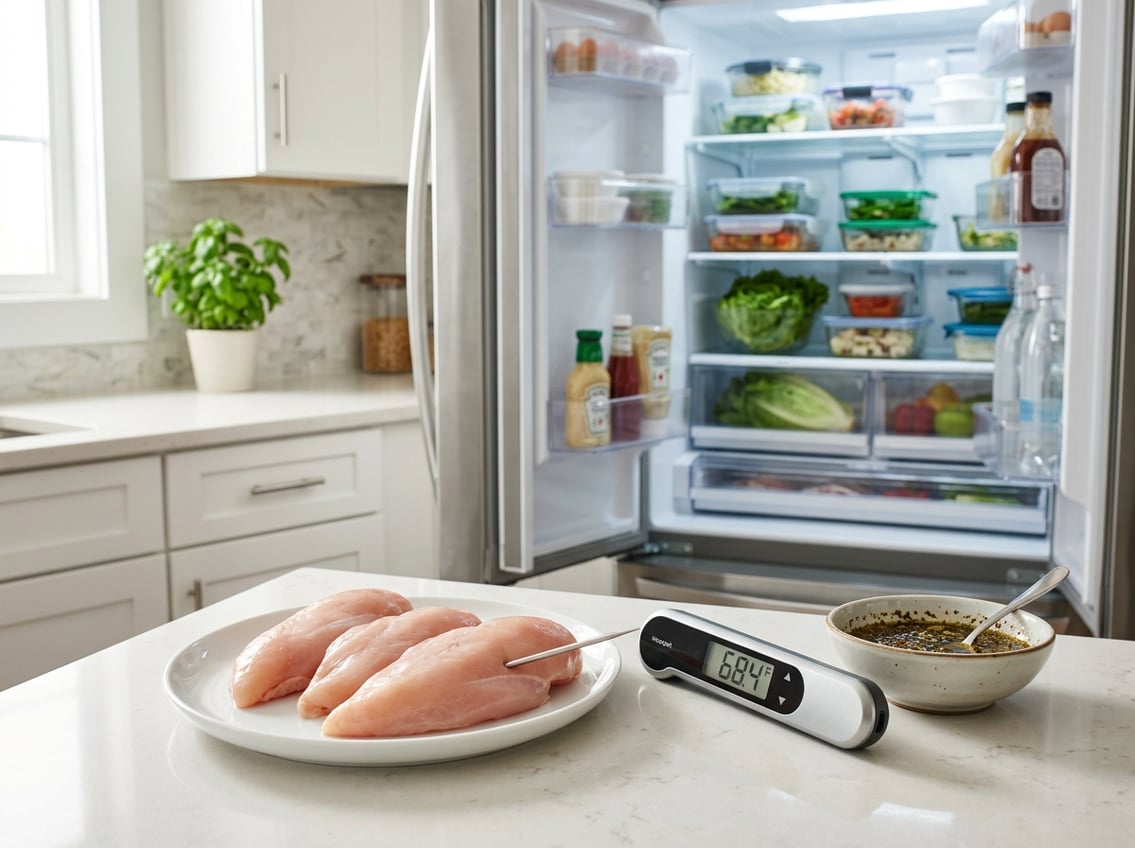
Time and temperature are key when you handle thawed chicken.
If the chicken spent too long in the danger zone, refreezing will not make it safe.
Poor handling can raise the risk of foodborne illness even when the meat still looks normal.
Time Limits That Affect Safety
If chicken breast has been left out for more than 2 hours, do not refreeze it.
If the room is hot, that limit drops to 1 hour.
Thawed chicken that has stayed in the refrigerator for more than 1 to 2 days should be cooked or discarded, depending on how it looks and smells.
Signs the Chicken Should Not Be Saved
Throw the chicken out if you notice a sour smell, sticky texture, slimy feel, or unusual color.
These signs can point to spoilage, and refreezing will not make the chicken safe again.
If you are unsure, it is safer to discard it.
Foodborne Illness and Bacterial Risk
Bacteria can grow when thawed chicken sits above 40°F.
Refreezing does not kill those bacteria, it only slows growth again.
To prevent bacterial growth, keep thawed chicken cold, handle it cleanly, and cook it soon when the safety window has passed.
How to Refreeze Chicken Breast Properly
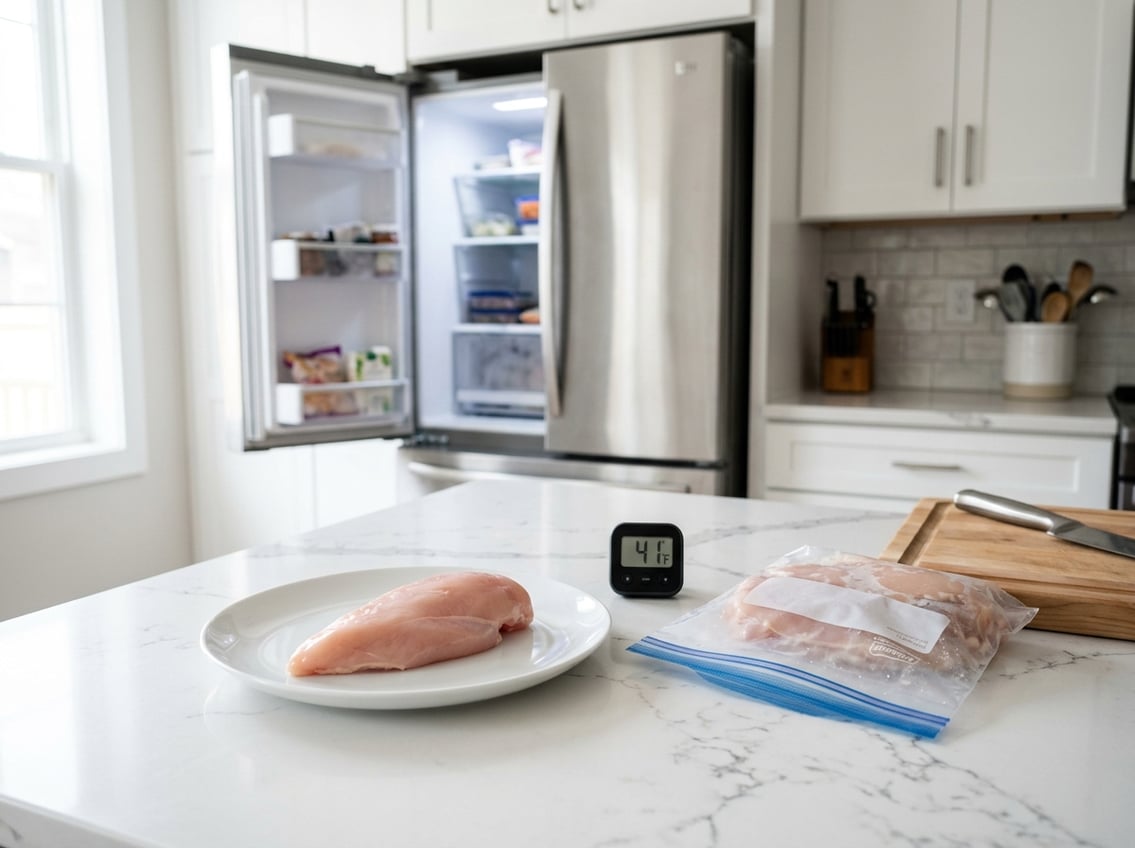
Good packaging protects both safety and texture.
Limit air exposure, lock out moisture loss, and keep the chicken easy to track later.
The same steps help whether you refreeze chicken breast raw or freeze cooked chicken.
Packaging to Prevent Freezer Burn
Wrap the chicken tightly in freezer paper, plastic wrap, or a freezer bag.
Push out as much air as possible before sealing.
Airtight packaging helps prevent freezer burn and keeps the chicken from drying out.
Labeling and Storage Times
Label the package with the date you froze it again.
Use a freezer set to 0°F or below, and plan to use the chicken within a few months for best quality.
Tracking how long the chicken has been stored makes refreezing safer.
Best Practices for Better Texture
Refreezing chicken breast can make it drier, so cook it in a way that adds moisture.
Soups, casseroles, stir-fries, and shredded chicken dishes usually work better than dry-heat cooking.
If you freeze cooked chicken, cool it first before packing it for the freezer.
Mistakes That Cause Safety or Quality Problems
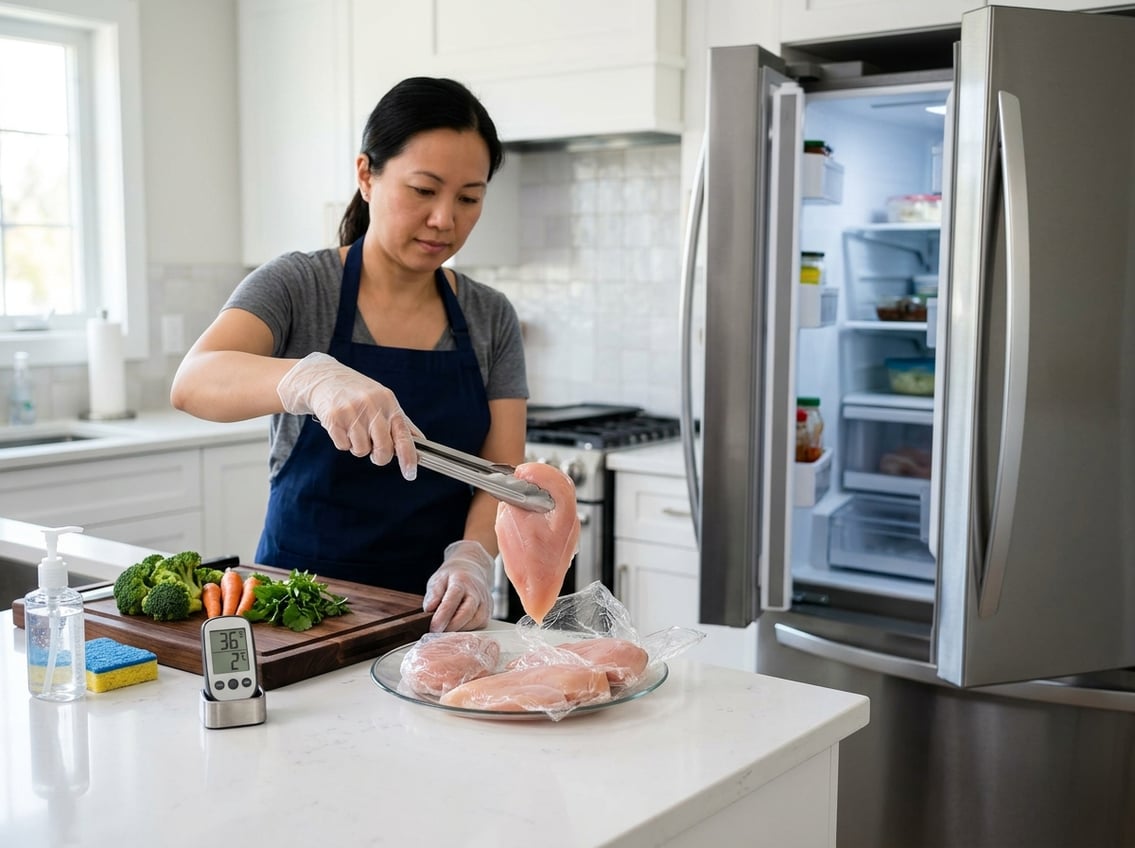
Common refreezing mistakes can make chicken unsafe or low quality.
The most important rule is to keep cold food cold and hot food hot.
If you break that rule, the chicken may no longer be worth saving.
Leaving Chicken on the Counter
Leaving raw chicken on the counter is one of the most common refreezing mistakes.
Even a short time at room temperature can let bacteria grow.
If the chicken has been out too long, cook it only if it still meets safety rules, or throw it out.
Refreezing After Partial Cooking
Do not refreeze chicken that was only partially cooked and then sat out or cooled too slowly.
Partial cooking does not make it safe for storage unless you finish cooking it promptly.
If you want to freeze cooked chicken, cook it all the way through first.
Common Refreezing Mistakes to Avoid
Avoid these errors when handling raw chicken:
-
Thawing chicken in warm water and then refreezing it
-
Sealing chicken while it is still warm
-
Using damaged packaging that lets air in
-
Ignoring changes in smell, texture, or color
-
Letting thawed chicken sit in the fridge too long
Handle raw chicken carefully to prevent bacterial growth and achieve better results after refreezing.


