
Is It Better to Eat Chicken Breast or Thighs? Health Guide
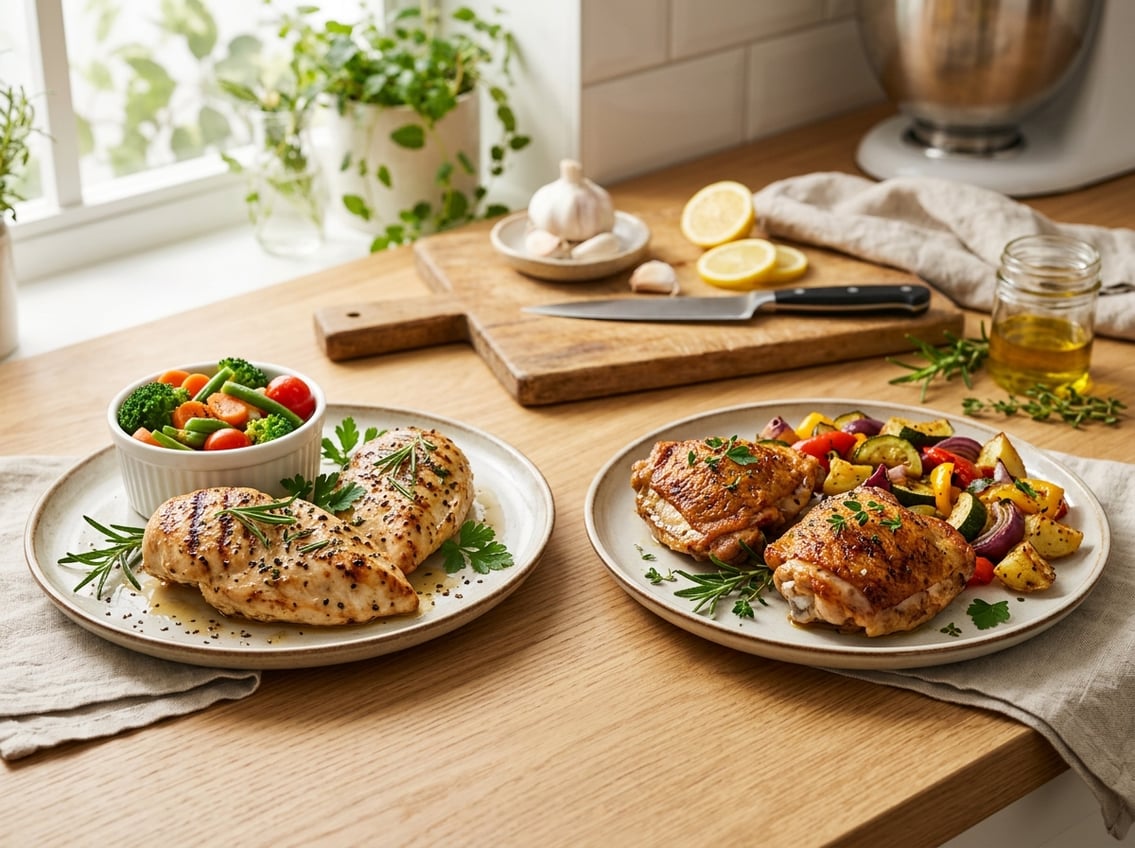
Choosing between chicken breast and thighs depends on your goal. If you want fewer calories and more protein per bite, chicken breast usually wins.
If you want more flavor, more fullness, and a meal that feels more satisfying, chicken thighs often work better.
Chicken breast is the leaner pick. Chicken thighs give you more fat, slightly fewer grams of protein per calorie, and a richer texture.
Both chicken breasts and chicken thighs are complete protein sources. Either one can fit into a healthy diet.
The better option depends on your calorie needs, your protein target, and how you plan to cook it.
Quick Answer by Health Goal
Chicken breast and chicken thighs are both solid lean protein sources. They serve different needs.
If you match the cut to your goal, you can make meals that are easier to stick with. They are also easier to track.
Best Choice for Weight Loss and Lower Calories
Chicken breast is usually the better choice when you want fewer calories. According to a dietitian-reviewed nutrition breakdown, 100 grams of skinless chicken breast has fewer calories and less fat than skinless chicken thigh.
Chicken breast gives you a higher protein per calorie ratio. You get a lot of complete protein without adding much fat.
Best Choice for Higher Protein Intake
Chicken breast is the better pick when you want more protein in a smaller serving. Because it is leaner, you get more grams of protein for each calorie you eat.
That helps when you are trying to raise protein without pushing calories too high. It works well for meal prep and post-workout meals.
Best Choice for Fullness, Flavor, and Satisfaction
Chicken thighs often win when you care most about taste and satiety. Their higher fat content slows digestion, which can help meals feel more filling and less dry.
If you want a cut that is easier to keep enjoying long term, thighs can be the better fit.
Nutrition Differences That Matter Most
Chicken breasts and chicken thighs are both complete protein sources. Both provide all essential amino acids.
The main differences are in fat, calories, and a few micronutrients.

Calories, Fat, and Protein Compared
A common comparison uses 100 grams of boneless, skinless chicken breast and chicken thigh. In the USDA-based breakdown cited by Prevention, skinless chicken breast has about 106 calories, 22.5 grams of protein, and 2 grams of fat.
Skinless chicken thigh has about 144 calories, 18.6 grams of protein, and 8 grams of fat.
Chicken breast gives you more protein for fewer calories. Chicken thigh gives you more fat and a little fewer grams of protein.
Micronutrients in White Meat and Dark Meat
Chicken breast is known for being lean, but it also provides nutrients like vitamin B6, niacin, selenium, and phosphorus. Chicken thigh tends to provide more iron and zinc, which support oxygen transport and immune function.
If you want the leanest cut, breast makes sense. If you want more iron and zinc in the same meal, thigh can be useful.
How Skin Changes the Nutrition Profile
Skinless chicken breast and skinless chicken thighs keep the nutrition picture much simpler. Once you move to skin-on chicken, the calorie and fat content rise fast.
Skin-on chicken thigh and skin-on chicken breast are much higher in fat than their skinless versions. If your goal is weight control or heart health, removing the skin usually makes the cut easier to fit into your plan.
How Cooking Method Can Change the Better Option
The cut matters, and so does the way you cook it. A lean piece can become a high-calorie meal if you fry it, bread it, or cover it in heavy sauces.

Healthier Cooking Methods for Either Cut
You can grill, bake, roast, poach, air-fry, or sauté either cut with a small amount of oil. These methods let the nutrition of skinless chicken breast or thighs stay close to the original cut.
Simple seasoning helps. Herbs, spices, citrus, garlic, and vinegar add flavor without adding much sodium or fat.
When Fried or Breaded Chicken Changes the Math
Fried chicken changes the picture quickly. Breading and frying add a lot of calories, fat, and refined carbs, which can erase the advantage of chicken breast.
If you choose fried or heavily breaded chicken, the cut matters less than the cooking method. A fried thigh and a fried breast can both become calorie-dense meals.
Hidden Sodium and Additives in Processed Options
Processed chicken, such as deli slices, pre-seasoned strips, or packaged patties, may contain more sodium and additives than plain chicken. That can matter if you watch blood pressure or need to limit ultra-processed foods.
Reading the label helps more than choosing breast or thigh alone. The healthiest option is often plain chicken with a short ingredient list.
How to Choose for Real-Life Meals
Your best choice changes with the recipe, the cooking method, and how much flavor or structure you want from the meat.
In day-to-day cooking, both chicken breast and chicken thighs have clear uses.
Best Uses for Breast in Everyday Cooking
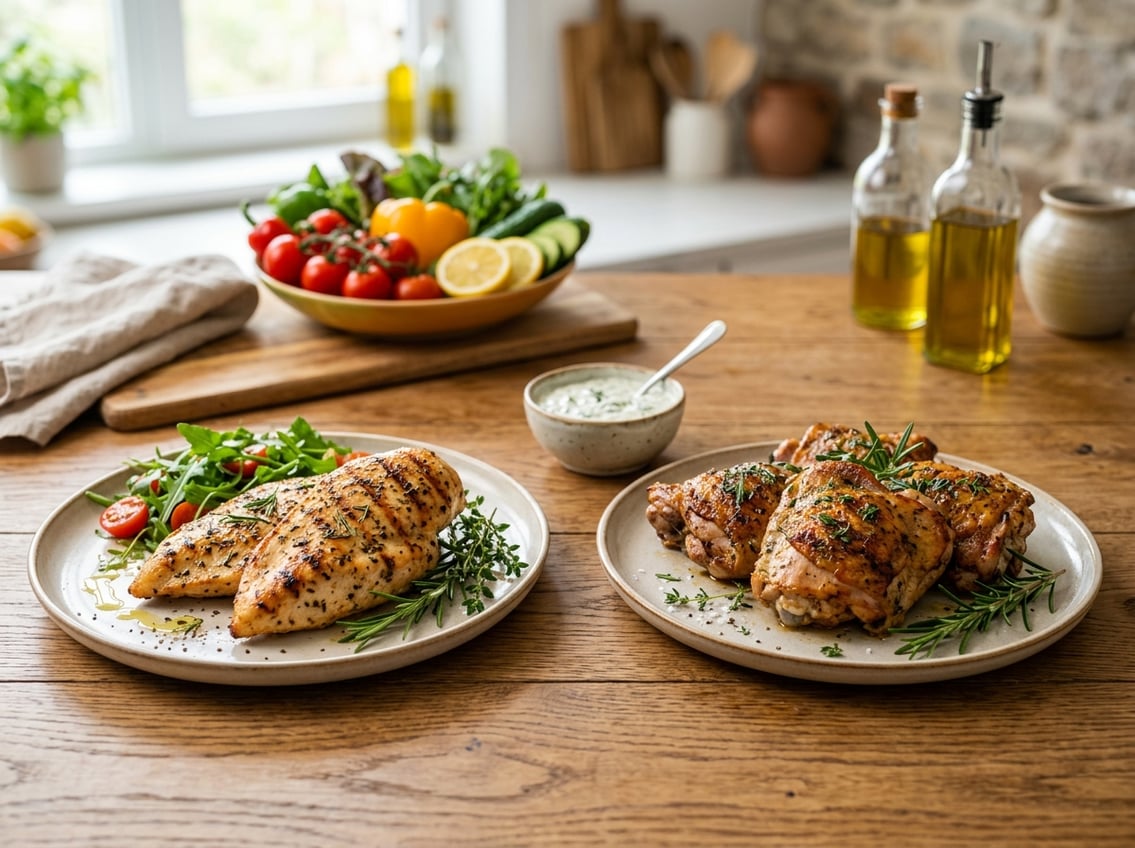
Chicken breast works well when you want a fast, lean protein. It fits salads, grain bowls, stir-fries, wraps, and lighter meals where you want the protein to stay simple.
It is also a good fit for dishes like chicken piccata, where a thin cut cooks quickly and takes on sauce well.
If you are counting protein closely, chicken breasts are often easier to portion.
Best Uses for Thighs in Everyday Cooking
Chicken thighs work well in soups, stews, braises, curries, sheet-pan meals, and recipes with longer cooking times. The extra fat helps keep the meat moist and flavorful.
They are often easier to keep tender if you cook for a little longer. That can make thighs more forgiving when your timing is not exact.
When Mixing Both Cuts Makes Sense
Using both cuts gives you the best mix of nutrition and taste.
Breast keeps the meal lean. Thighs bring flavor and fullness.
This approach works well for meal prep and family dinners.
You can keep your meals interesting by rotating between chicken breast and thighs.


