
Should Chicken Breast Be Covered When Baking? Quick Guide
When you ask should chicken breast be covered when baking, the answer depends on the result you want.
Covering helps hold in moisture and can make baked chicken more tender. Leaving it uncovered gives you better browning and a firmer surface.
For most oven-baked chicken breasts, a covered-then-uncovered method gives you control over both juiciness and color. This approach works well when you want moist meat with a lightly browned outside.
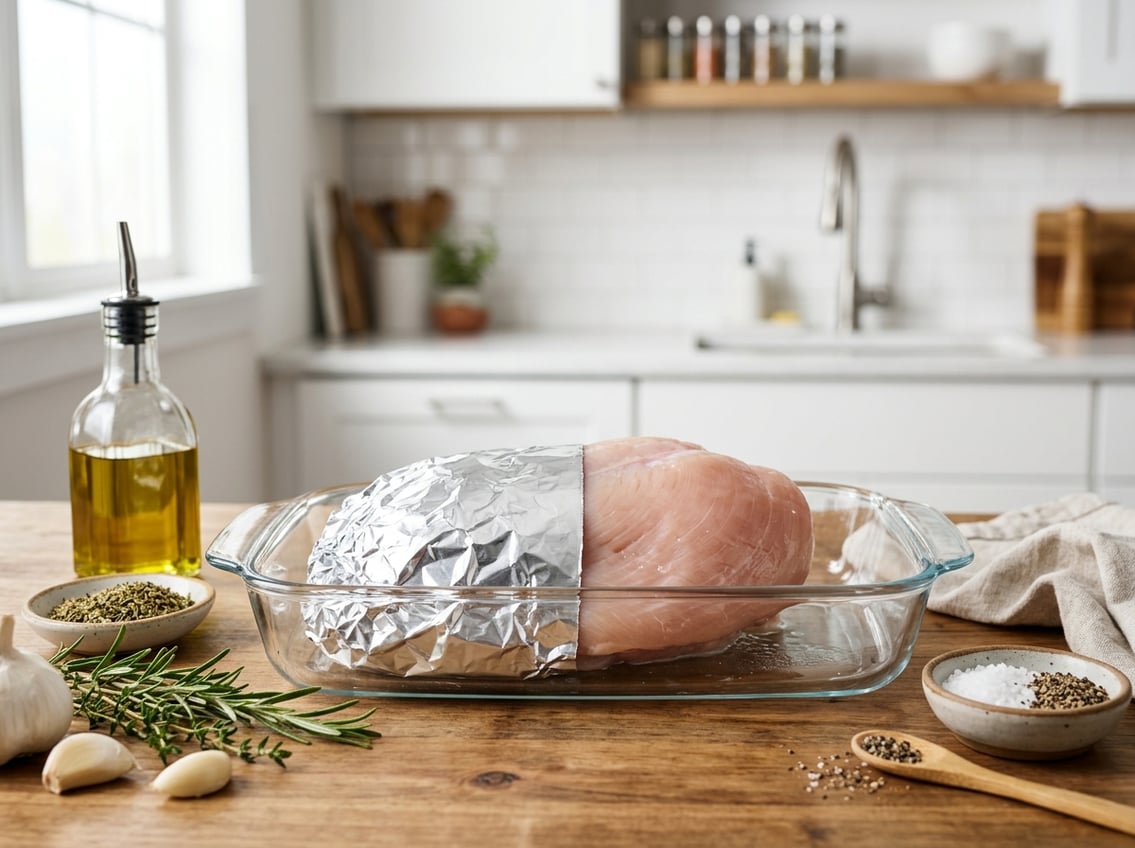
The right choice also depends on thickness, oven temperature, and your baking setup.
A few small changes can make a big difference in how your baked chicken turns out.
The Short Answer: When Each Method Works Best
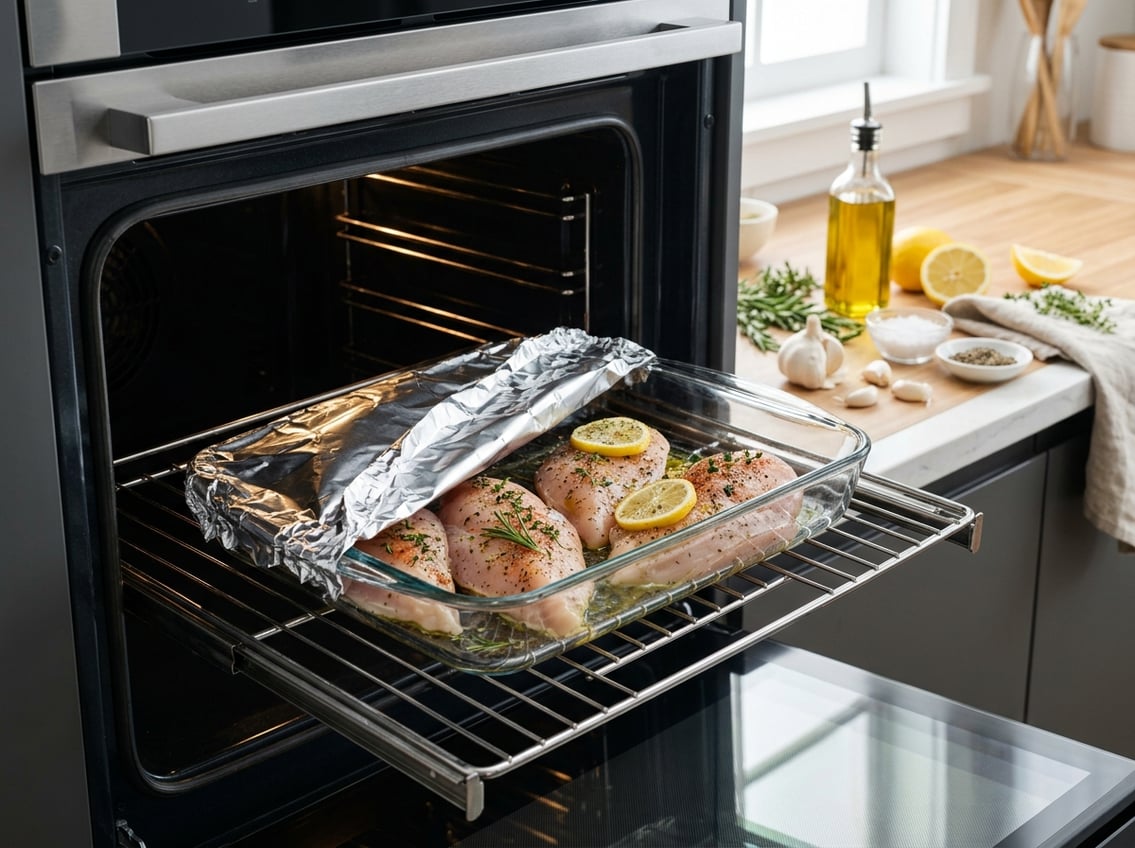
Covering chicken while baking works best when your main goal is moist chicken.
Uncovered baking works better when you want more color and a drier surface that can brown well.
A recent guide on baking chicken breast explains that covering traps steam and moisture, while uncovered baking helps the exterior brown.
That tradeoff is the key choice every time you decide whether to bake chicken covered or uncovered.
When Covering Helps Keep Chicken Breast Juicy
Covering chicken breast prevents chicken from drying out because the pan traps heat and steam.
This is useful for boneless, skinless breasts, which can dry out faster than dark meat.
You may also want to bake chicken covered when the breasts are thick, the oven runs hot, or you are baking in a dish with sauce or broth.
The extra moisture makes the texture softer and more forgiving.
When Uncovered Baking Gives Better Browning
Bake chicken breasts uncovered when you want a more golden surface and a firmer bite.
Dry heat helps the outside color faster, which improves the look and texture of baked chicken.
This method works especially well if you pat the chicken dry before baking and use a moderate or high oven temperature.
If you want a little crust on the outside, uncovered baking is the better choice.
When to Use a Covered-Then-Uncovered Approach
Start with the chicken covered to hold in moisture, then uncover it near the end so the outside can brown.
This option gives you moist chicken without a pale finish.
It also helps when you bake chicken with vegetables, since the covered stage helps everything cook more evenly before the surface dries enough to color.
How Covering Changes Moisture, Texture, and Cook Time
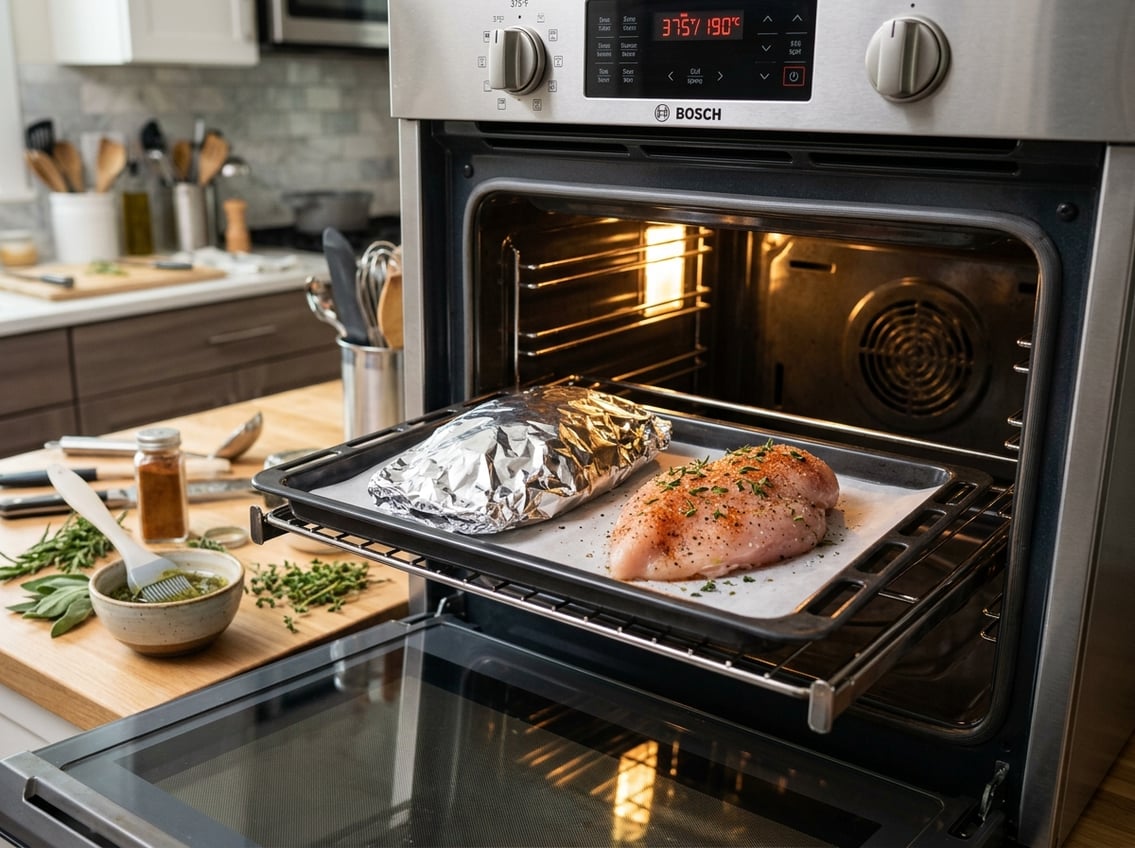
Covering changes how heat moves around the chicken breast.
It also changes how much moisture stays in the pan, which affects tenderness, surface texture, and how long chicken breasts need in the oven.
Covered chicken cooks in a steamy environment.
Uncovered chicken cooks with more direct dry heat.
That shift changes both the bite and the look of the final baked chicken breast.
Why Steam Retention Makes Breast Meat More Tender
When you cover chicken, the steam stays close to the meat.
That trapped moisture helps the surface avoid drying out too fast, which can make the chicken feel more tender.
This is useful for lean baked chicken breast because breast meat has less fat than thighs.
Less fat means less built-in moisture protection, so covering can help prevent a dry result.
Why Dry Heat Improves Color and Surface Texture
Dry heat encourages browning.
When you bake chicken breasts uncovered, the surface can dry enough for better color and a firmer texture.
That browning gives the chicken a more roasted taste and a better surface finish, especially if you bake chicken in a sheet pan or shallow dish.
How Thickness, Temperature, and Pan Choice Affect Results
Thicker breasts need more time, so they are more likely to dry out if left uncovered for too long.
Thin breasts cook faster and may not need covering at all.
Pan choice matters.
A covered baking dish holds more steam than a sheet pan, while a metal pan promotes more browning.
If you want a reference point for time and temperature, USDA-style baking guidance suggests baking chicken breast at 375°F until it reaches 165°F inside.
Best Practices for Juicy Oven Results
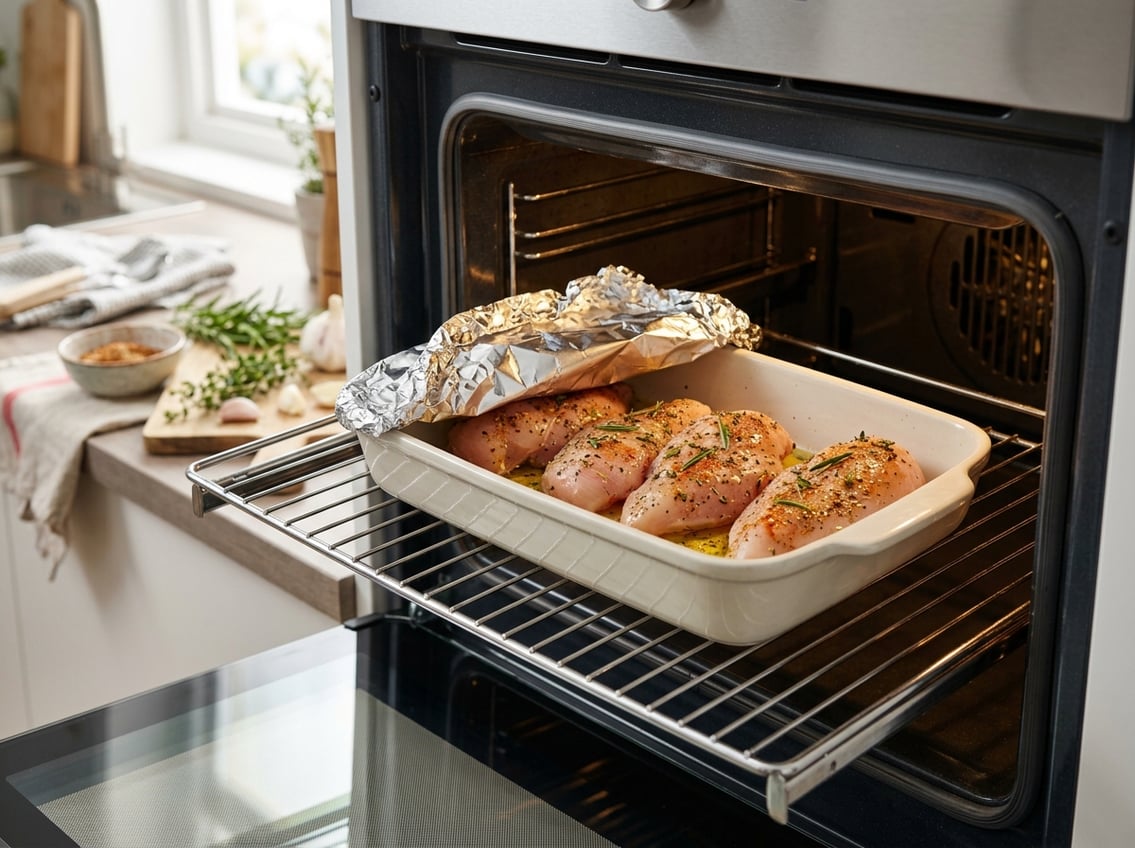
Juicy oven-baked chicken starts before the pan goes into the oven.
A few basic steps help you keep moisture in the meat while still getting good flavor and safe doneness.
The best results come from dry surface prep, accurate temperature control, and a short rest after baking.
Those steps matter whether you cover the chicken or leave it uncovered.
Pat Chicken Dry and Season It Properly
Pat chicken dry before seasoning so the outside can brown instead of steaming in extra surface moisture.
This step helps the seasoning stick and gives you better texture.
Use salt, pepper, and any dry spices you like.
If you plan to cover the chicken, add seasonings first so the trapped steam carries the flavor into the meat.
Use a Thermometer Instead of Guessing
A meat thermometer removes guesswork and helps prevent overcooking.
Chicken breast is safe at 165°F in the thickest part, and the best texture usually happens when you stop cooking as soon as it reaches that point.
A thermometer helps even more when you bake chicken covered, since the extra steam can make the surface look done before the center is ready.
The right internal temperature is more useful than a fixed bake time.
Resting, Tenting, and Reheating Without Drying It Out
Let the chicken rest for a few minutes after baking so the juices settle back into the meat.
If you cut too soon, more liquid runs out onto the board.
If you need to keep it warm, use a loose foil tent rather than sealing it tightly.
For reheating, use a low oven and add a splash of broth or a spoon of sauce to help prevent chicken from drying out.
Common Baking Setups and Meal Ideas
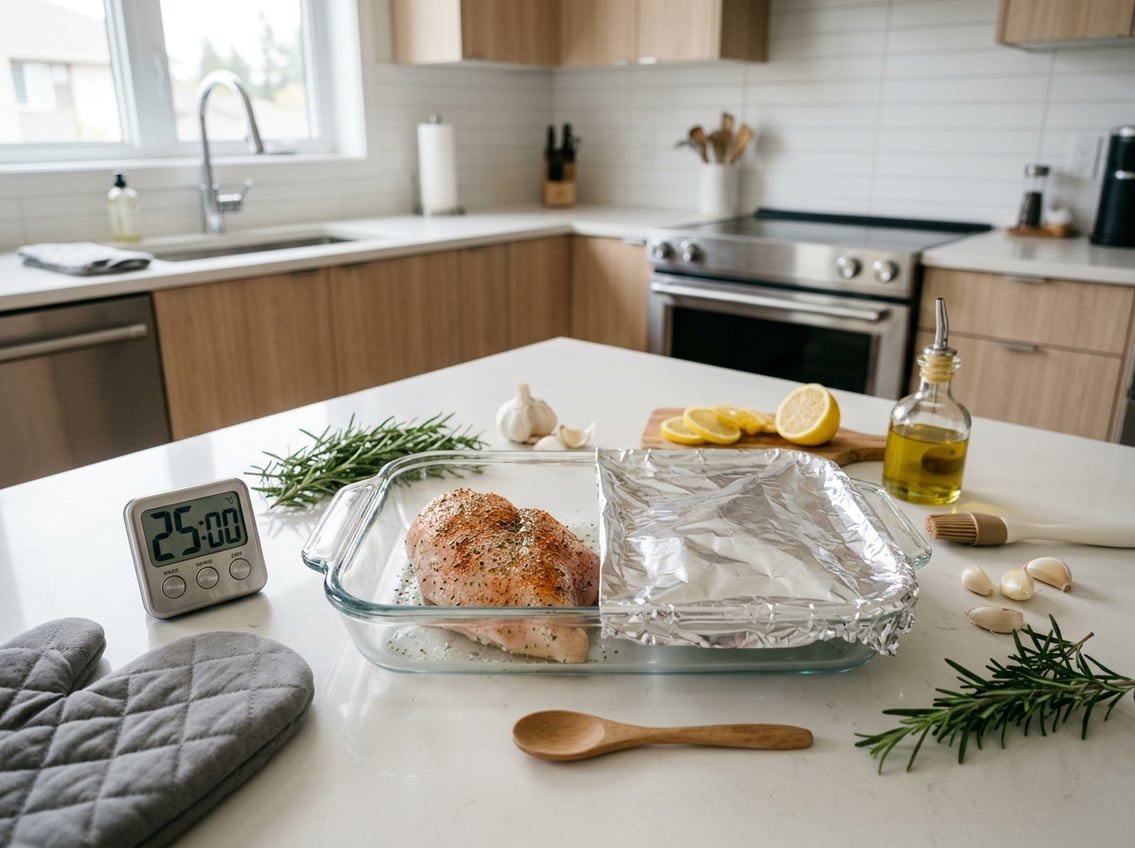
The setup you choose can matter as much as the cover itself.
A foil-covered baking dish, a sheet pan, and a dish of chicken with vegetables each give a different result.
Use the pan style that matches your goal.
If you want soft, juicy chicken, a covered dish helps.
If you want more browning, a sheet pan with space around each piece works better.
Foil-Covered Baking Dish vs Sheet Pan
A foil-covered dish traps moisture and heat, which helps keep baked chicken tender.
It is a smart choice for sauced chicken, meal prep, or thicker breasts that need a little extra insurance.
A sheet pan gives more exposed surface area, so it is better for baked chicken that should brown.
It also works well when you want even cooking across multiple pieces of chicken.
How to Bake Chicken with Vegetables Successfully
When you bake chicken with vegetables, use pieces that cook at a similar rate.
Potatoes, carrots, and onions usually need more time than zucchini or bell peppers.
If you cover the pan at first, the vegetables soften and release steam that helps the chicken stay moist.
Uncover near the end if you want more color on both the chicken and the vegetables.
Mistakes That Lead to Dry or Soggy Chicken
The most common mistake is baking too long. Even if you cover the chicken, extra time still dries it out.
Using too much liquid in a dish that stays covered can leave the chicken pale and soggy. To get the best baked chicken, match the cover method to your goal.
Check the temperature early.


