
What Makes Chicken Breast Tender and Juicy: Key Factors
Chicken breast turns out tender and juicy when you control heat, thickness, seasoning, and rest time. The cut is lean, so small mistakes can dry it out fast.
Stop cooking at the right temperature, keep the pieces even, and give the meat time to rest before you slice it.
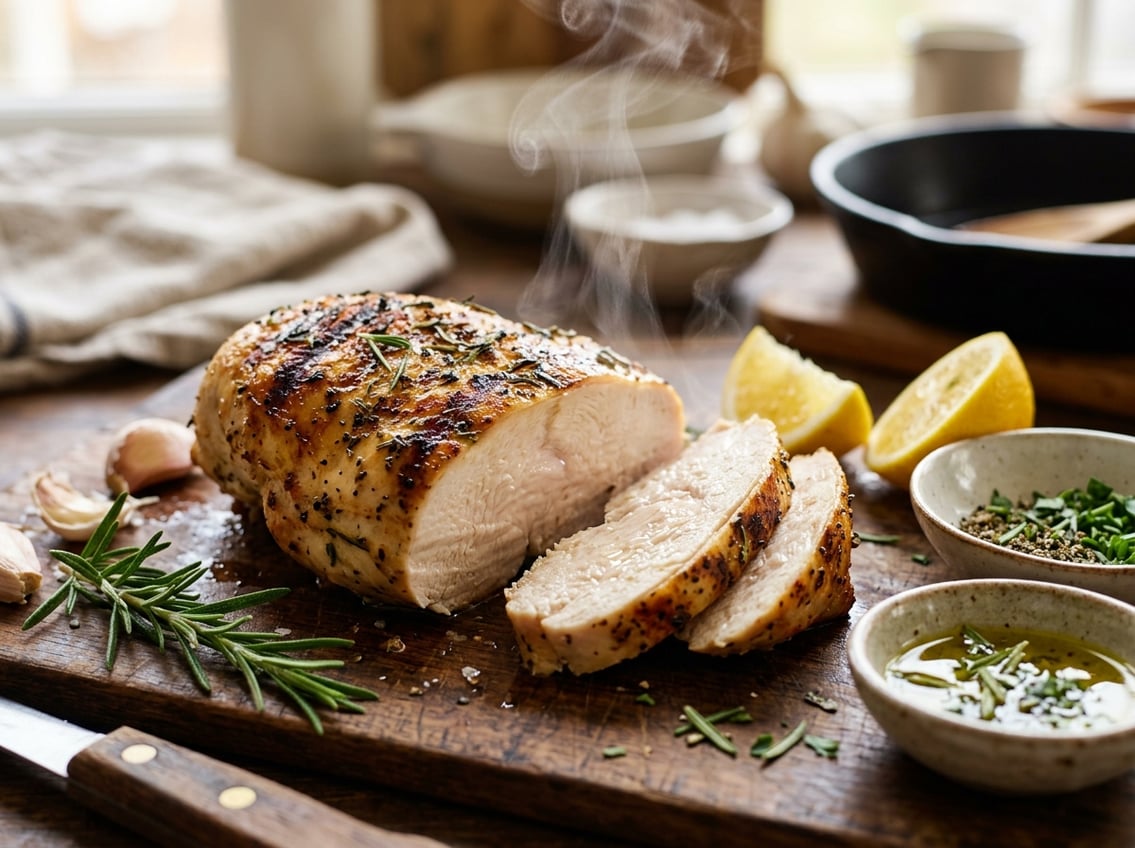
These steps matter whether you are making a weeknight dinner or meal prep. Smart prep can turn plain boneless skinless chicken breasts into juicy pieces with a balanced texture.
The Main Factors That Control Moisture
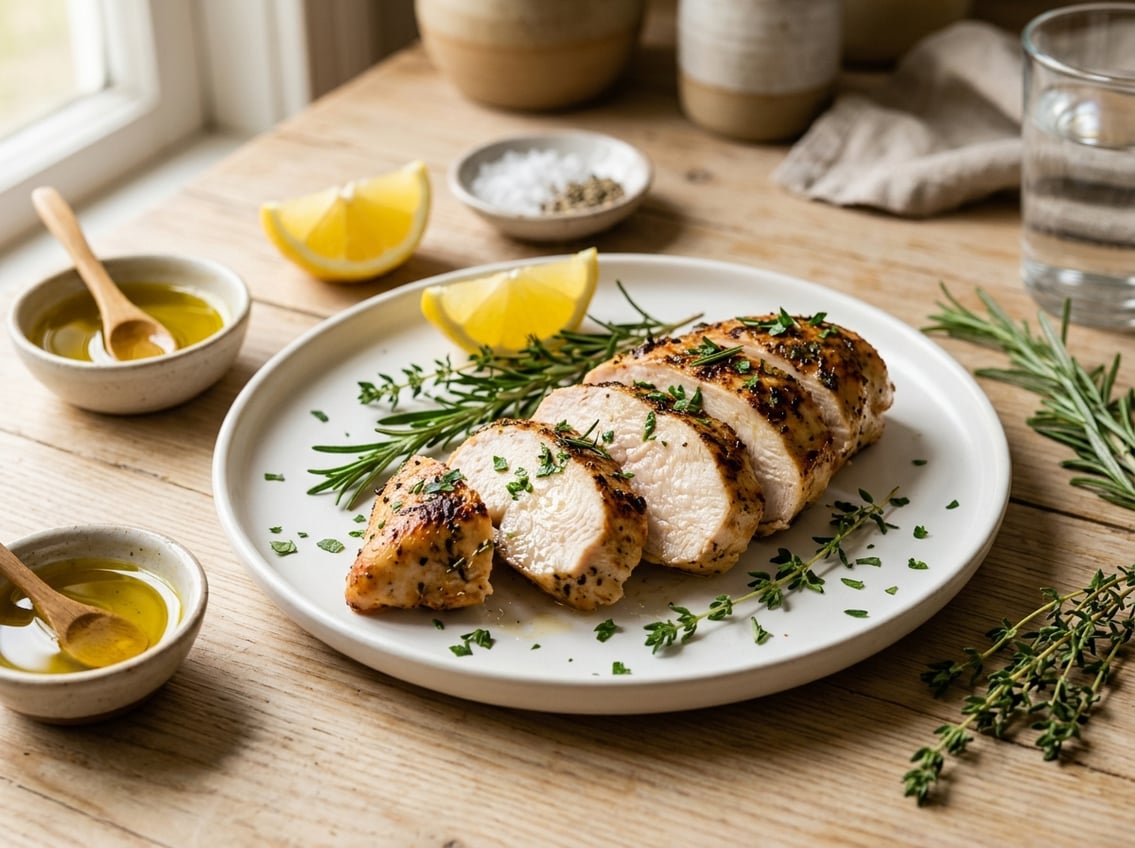
Juicy chicken breasts depend on how fast the meat heats, how evenly it cooks, and when you pull it off the heat. Lean white meat gives you very little room for error, so the method matters as much as the recipe.
The goal is not to overwork the meat or push it too far past safe temperature.
Why Lean White Meat Dries Out Quickly
Chicken breast has very little fat, so it does not have much protection against heat. As the meat warms, the muscle fibers tighten and push water out.
Boneless skinless chicken breasts can move from perfect to dry in a short time. A safe finish at the right temperature matters more than any single trick.
How Thickness Affects Even Cooking
A thick end and a thin end do not cook at the same speed. That often leaves you with one part dry and another part underdone.
Even thickness helps you make perfect chicken breasts in a skillet or oven. Flattening the meat a little can make a big difference in texture.
Why Internal Temperature Matters Most
A meat thermometer removes guesswork. You can pull the chicken as soon as it reaches 165 F at the thickest point, which keeps it from drying out.
Color alone is not reliable. Temperature, not just appearance, determines juiciness.
How Resting Keeps Juices Inside
When chicken comes off the heat, the juices are still moving. If you cut right away, more moisture ends up on the cutting board.
A short rest lets the meat settle. Even five minutes can help you keep tender slices.
Prep Steps That Improve Texture Before Cooking
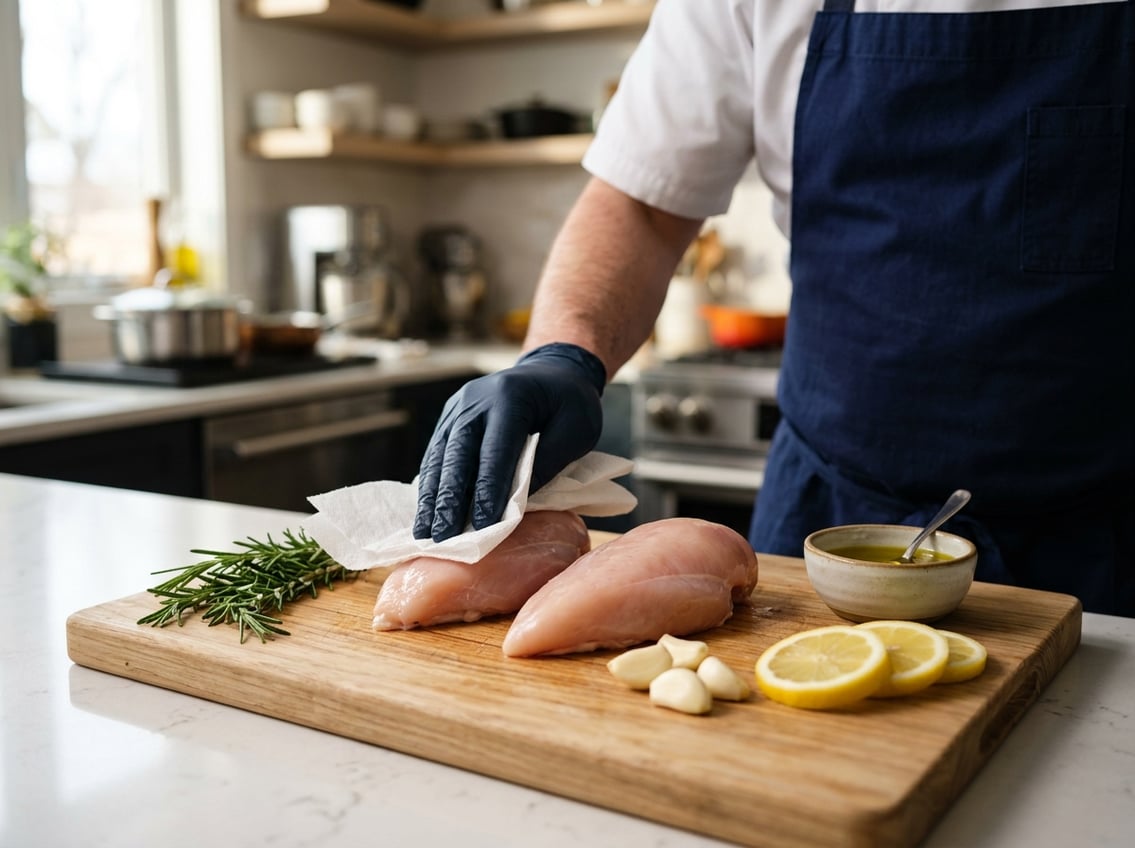
Good prep gives boneless skinless chicken breasts a better starting point. Salt, surface moisture, and even thickness all affect how the chicken cooks and browns.
Simple seasoning also helps the meat taste better without masking the natural flavor.
When to Use Salt or a Quick Brine
Salt helps chicken hold onto moisture during cooking. A short brine works well when you want a more forgiving result.
Salt ahead of time and let it sit briefly before cooking. That small step often helps create juicy chicken.
Why to Pat Chicken Dry Before Heat
Surface moisture can slow browning. Pat chicken dry so the outside can sear instead of steam.
Dry the chicken before adding olive oil, black pepper, garlic powder, and paprika. A dry surface gives you better color and a cleaner crust.
How Olive Oil and Seasoning Help Browning
A light coat of olive oil helps the seasoning stick and supports even browning. Black pepper, garlic powder, and paprika add flavor and color without making the meat heavy.
Boneless skinless chicken breasts brown well on the outside while staying tender inside. The surface should look lightly coated, not wet.
When to Use a Meat Mallet for Even Thickness
Use a meat mallet when one side is much thicker than the other. Gently pound the thicker part until the breast is closer to even thickness.
This simple step improves cooking speed and texture. The whole piece finishes at the same time, helping you get a tender result.
Best Cooking Methods for Reliable Results
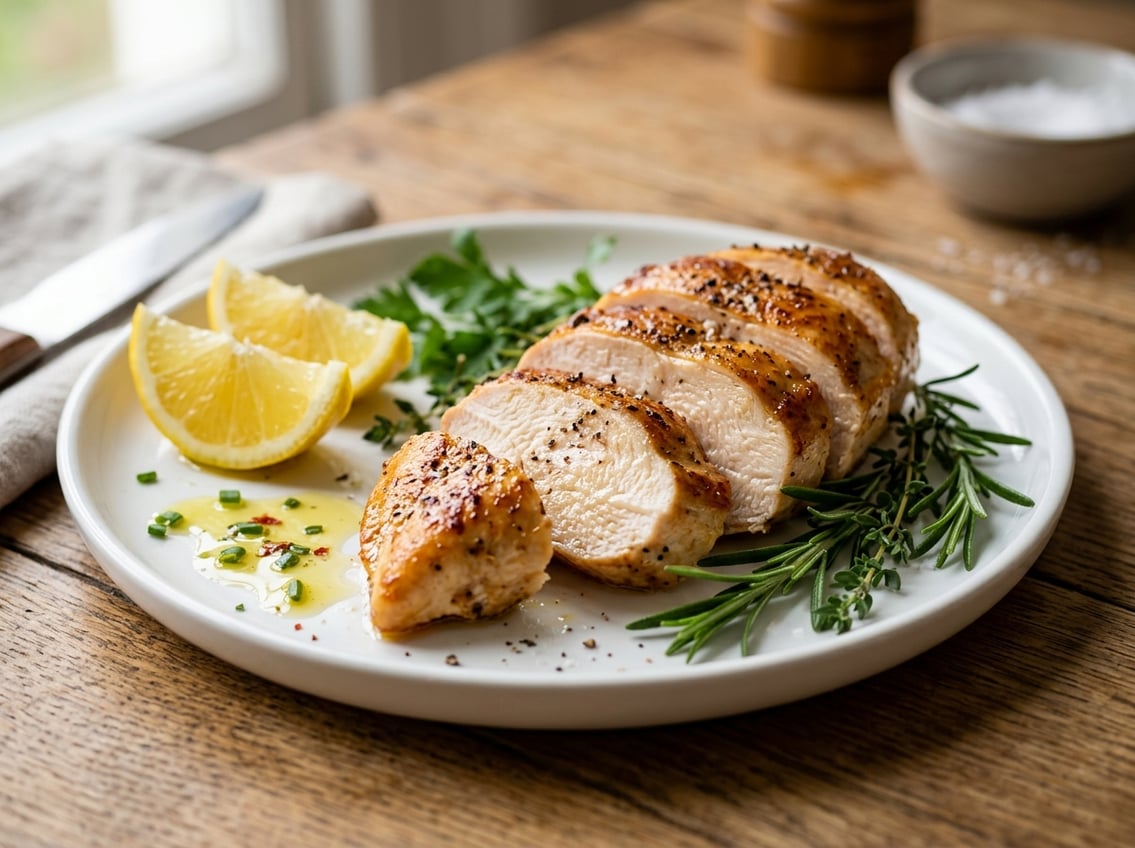
Use steady heat and check doneness with a thermometer for the best results. The best methods keep the meat from spending too long in the heat.
A good chicken breast recipe needs control, timing, and a clear stop point.
Covered Skillet Cooking for Gentle Juiciness
A covered skillet helps trap steam and keeps the meat from drying too fast. Use moderate heat, a little oil, and a lid for part of the cook.
Sear the chicken, turn it once, then check the center with a meat thermometer.
Oven Baking at High Heat
High-heat baking cooks the meat quickly and evenly. Start with lightly oiled chicken and bake at a hot temperature until the thickest part reaches 165 F.
Baking at 400 F for about 20 to 25 minutes works well for boneless pieces, depending on size. Faster cook time helps protect juiciness.
Sear-and-Bake for Crust and Moisture
Sear-and-bake gives you a browned crust and a controlled finish in the oven. Sear the chicken first, then move it to the oven to finish.
This method adds more flavor on the outside without overcooking the center.
How to Check Doneness Without Guessing
Insert a meat thermometer into the thickest part of the breast. Pull the chicken when it reaches 165 F, then let it rest.
Avoid cutting into the meat to check too soon. That can let juices escape and leave you with drier chicken.
Serving, Slicing, and Using Cooked Chicken
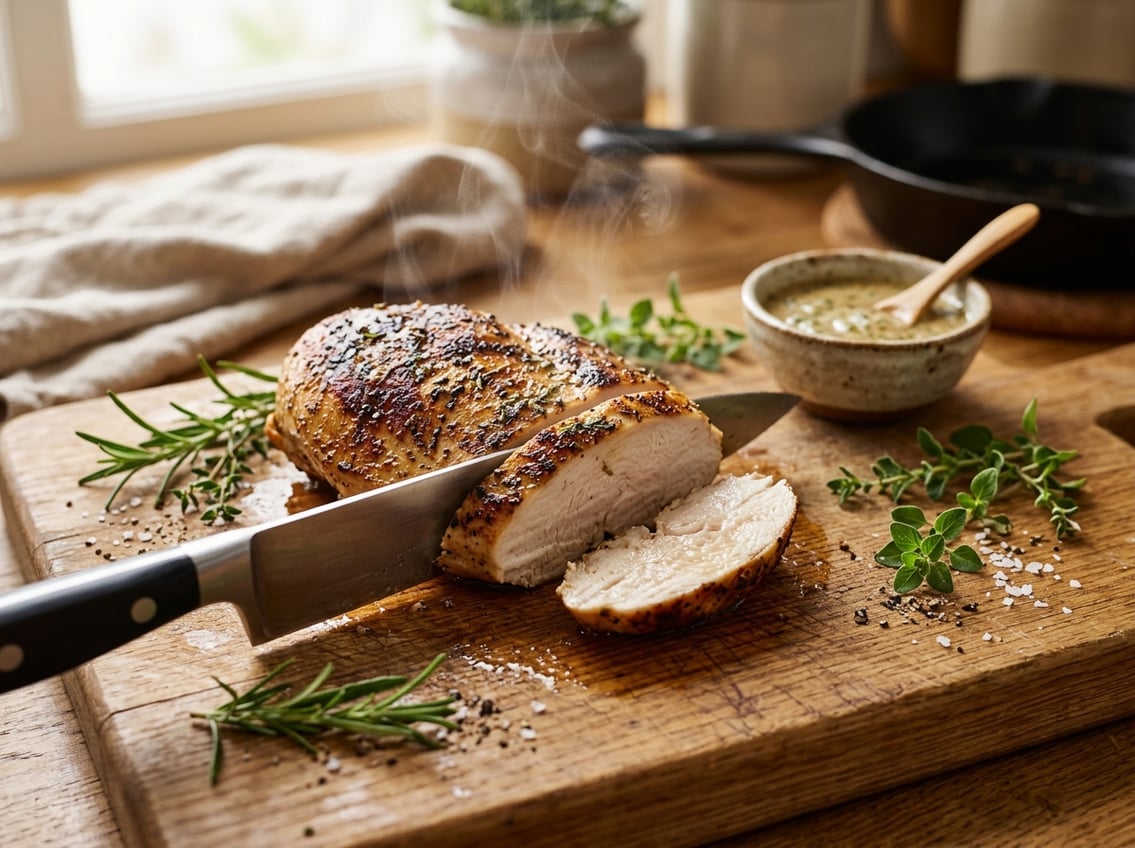
How you serve chicken changes the texture as much as cooking does. Resting, slicing, and cutting direction all affect whether the meat feels moist or dry.
Cooked chicken works well in many meals, so slice it the right way for the dish you plan to make.
How to Rest and Slice for Better Texture
Let the chicken rest before you slice it. That short pause helps the juices stay inside and keeps the meat more stable.
Slice across the grain for a softer bite. Cutting against the grain helps the meat feel more fork-tender.
Best Ways to Use It in Meal Prep
Cooked chicken breast works well for lunches and fast dinners. It keeps well in containers and fits into rice bowls, wraps, and pasta.
For the best texture later, slice after resting and store with a little of its cooking juices. That helps the meat stay juicy.
When Sliced Chicken Breast Works Best in Other Dishes
Sliced chicken breast works best in dishes with sauce, dressing, or mixed ingredients.
Chicken salad is a good example because the added moisture helps balance the lean meat.
It also works well in tacos, grain bowls, and sandwiches.
In those dishes, a tender chicken breast gives you a mild base that takes on other flavors easily.


