
Is Chicken Breast Same as Tenders? Key Differences
You may wonder, is chicken breast same as tenders when you are shopping, cooking, or reading a menu. The short answer is no, they are not the same cut, even though they both come from the chicken’s breast area.
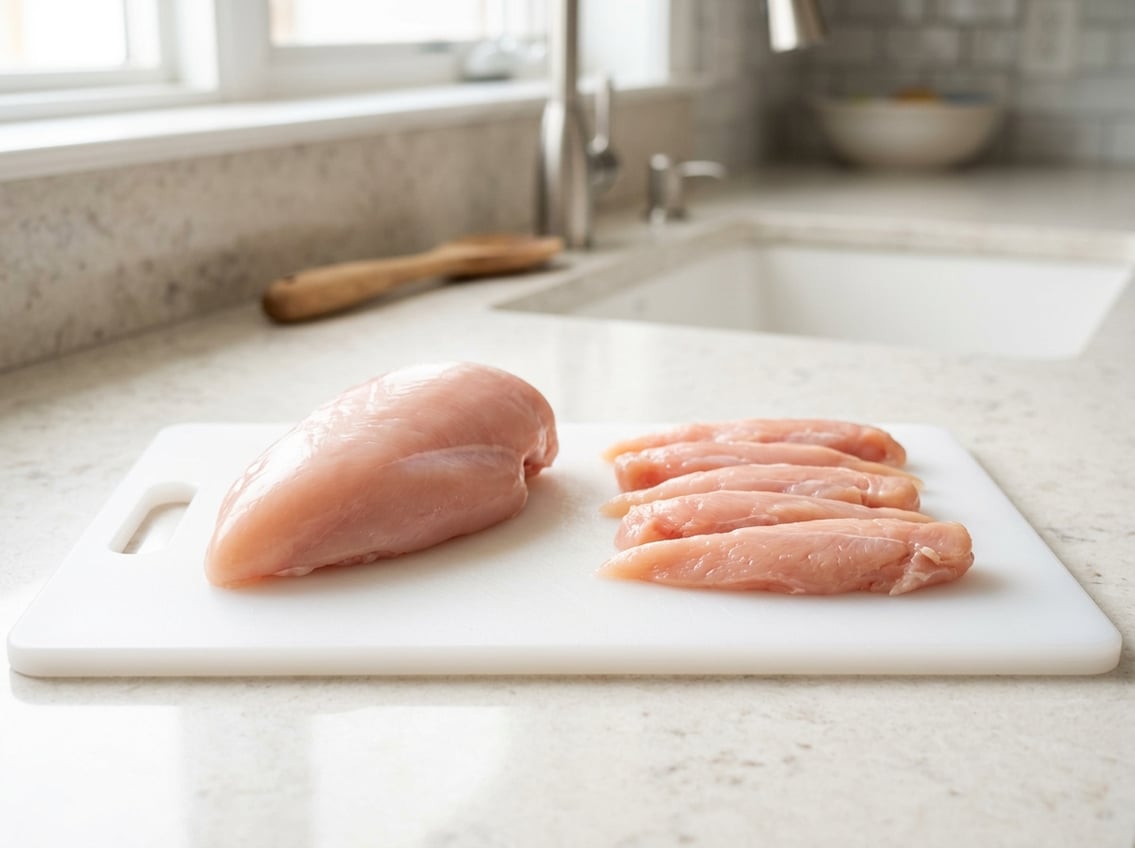
Chicken breast is the larger main breast muscle. Chicken tenders are the smaller, more tender strip of meat underneath it.
That difference changes the size and texture. It also affects cooking time and sometimes the nutrition you get from each one.
In the U.S., stores and restaurants may use the words loosely. Knowing what each cut actually is helps you shop and cook with less guesswork.
What Each Cut Actually Is
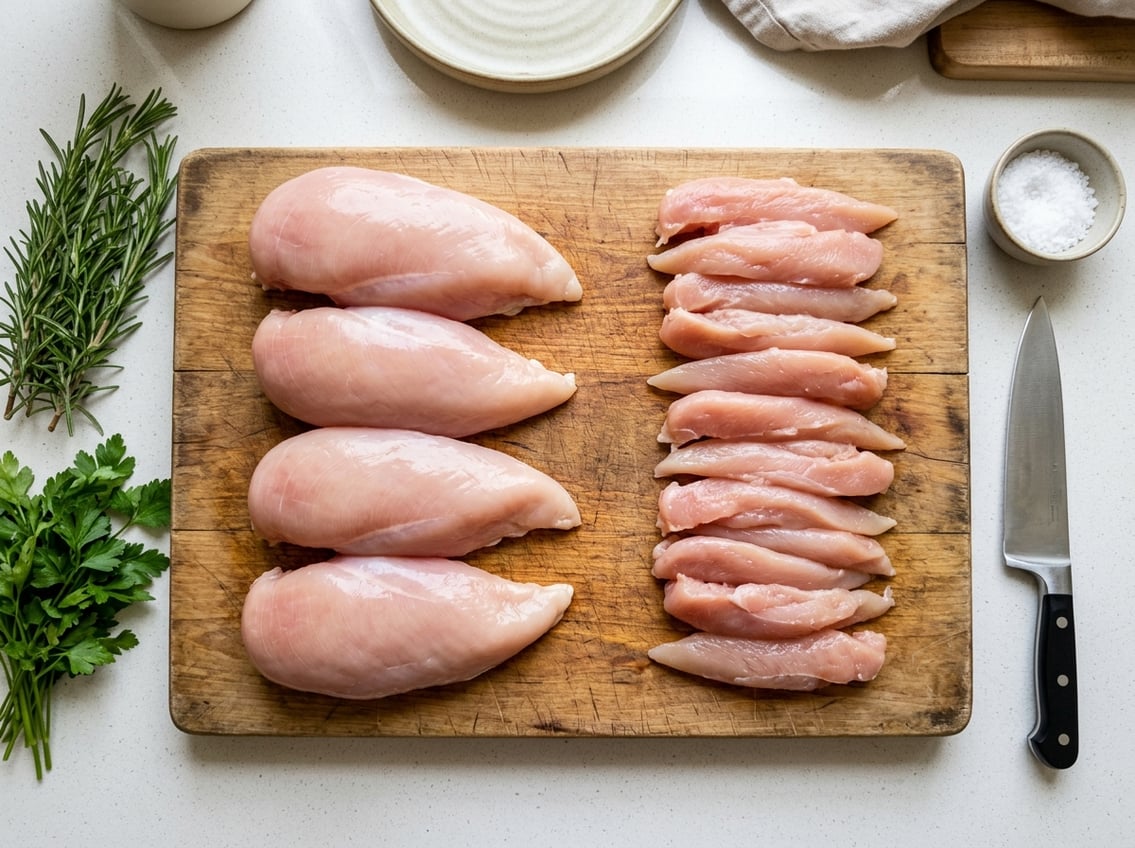
Chicken breasts and chicken tenders both count as white meat. Both are common skinless chicken options.
The key difference is that they come from different muscles. They do not cook or feel the same.
Where Chicken Breast Comes From
Chicken breast comes from the large chest area of the bird. The main muscle is the pectoralis major, which is the biggest breast muscle.
You usually see chicken breasts sold as whole boneless pieces or boneless skinless fillets. Stores also sell them sliced into cutlets.
Where Chicken Tenders Come From
Chicken tenders, also called chicken tenderloins, are the smaller strips of meat attached to the underside of the breast. Some stores label them as breast tenders or chicken tenderloins.
They are naturally smaller and more uniform than chicken breasts. That makes them easy to cut into strips, so they are often sold as chicken strips or chicken fingers in breaded products.
Pectoralis Major vs. Pectoralis Minor
The pectoralis major is the larger breast muscle. The pectoralis minor sits underneath it and is the source of the tenderloin.
That placement explains the texture difference. The tenderloin is usually softer and more delicate, while the breast can be firmer and drier if you cook it too long.
How They Differ in Nutrition and Texture
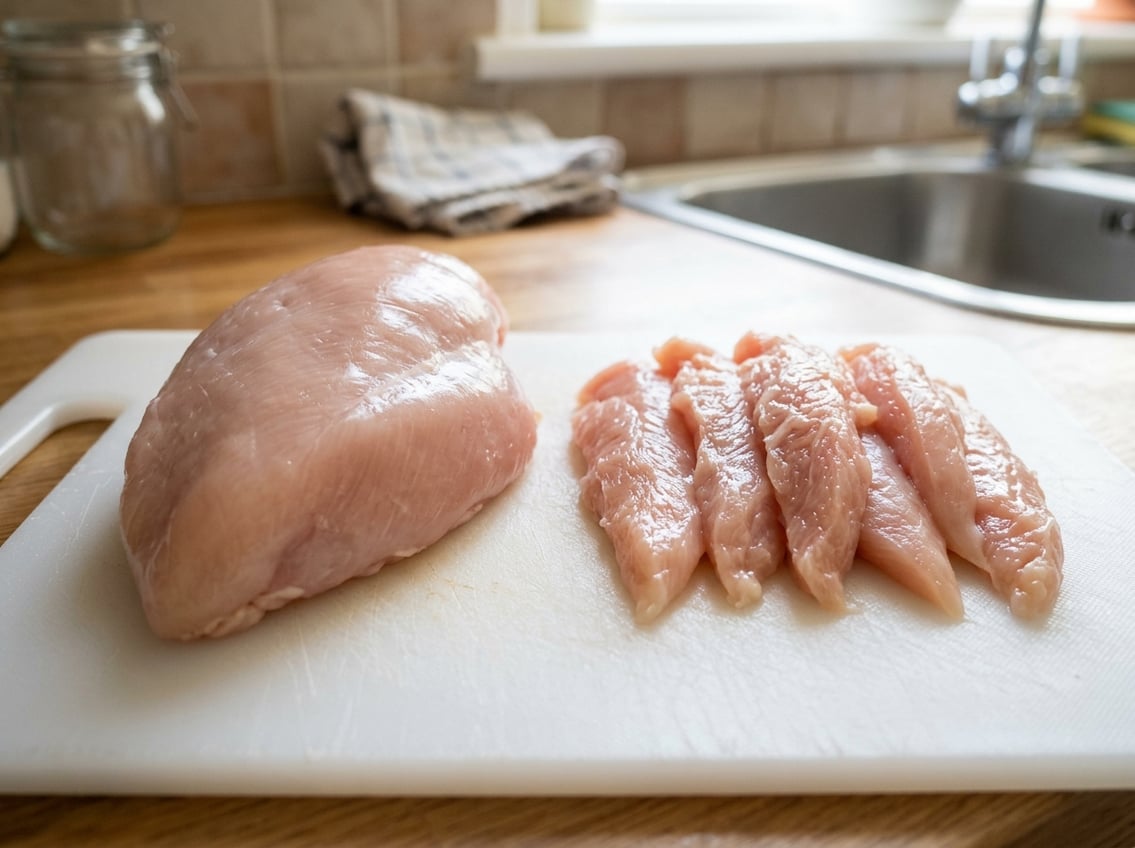
Both cuts can be a solid source of lean protein, especially when you buy skinless chicken and cook it with little added fat. The biggest nutrition differences usually come from size, moisture, and how the meat is prepared.
Lean Protein, Fat, and Calories
Plain chicken breast is usually the leanest choice. It gives you a lot of protein with very little fat.
Chicken tenders are still lean, but they are often sold breaded or fried in restaurants and frozen foods. That is where products like fried chicken tenders, chicken nuggets, and chicken fingers can pick up more fat, sodium, and calories.
Why Tenders Usually Feel Juicier
Chicken tenders are smaller and have a more delicate texture. They can seem juicier because they cook fast and are easier to pull off the heat before they dry out.
Chicken breast has a more solid texture and a larger grain. If you overcook it, it can become dry faster than tenders.
When Preparation Changes the Nutrition
Preparation matters as much as the cut itself. A plain baked chicken breast is very different from fried chicken tenders coated in breading.
Processed chicken products can also change the picture. Breaded chicken strips, chicken nuggets, and frozen chicken fingers often contain extra ingredients, added starches, and more sodium than plain chicken breast or plain chicken tenders.
Baking or grilling either cut keeps the nutrition closer to the raw meat than frying does.
Best Uses in Cooking and Shopping
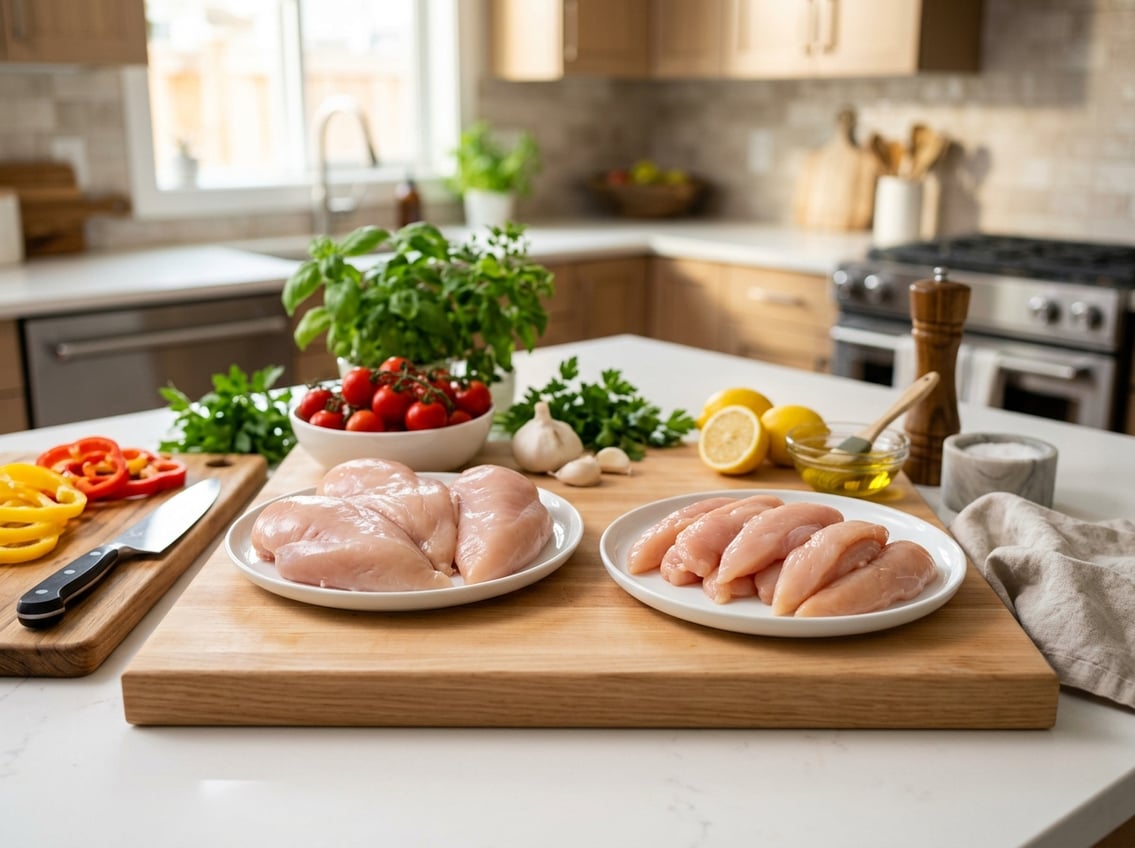
You can use either cut in many of the same recipes. Each one works best in different situations.
Your choice should depend on the cooking method and the texture you want. It also depends on whether you are buying plain meat or a processed product.
When to Choose Chicken Breast
Choose chicken breast when you want a larger piece for grilling, roasting, slicing, or stuffing. Grilled chicken breast and baked chicken breast work well in salads, grain bowls, sandwiches, and meal prep.
Chicken breast is the better pick when you want a leaner, more filling portion. If you season or marinate it well, it can handle many flavors and cooking styles.
You can also slice a chicken breast into strips if a recipe calls for tenders.
When to Choose Tenders
Choose chicken tenders when you want fast cooking and a softer bite. Baked chicken tenders are easy for weeknight dinners, and fried chicken tenders are common when you want a crisp coating.
Tenders are also useful for chicken strips, chicken fingers, and quick stir-fries. They cook faster than chicken breast, so they are a good choice when you do not want to watch the pan as closely.
How to Spot Real Tenders at the Store
Check the package label first. Labels such as chicken tenderloins, tenderloins, or tenders usually mean you are buying the real cut from under the breast.
Read the ingredient list if you see a breaded or frozen product. Some stores sell products labeled as tenders that use processed chicken shaped for convenience, similar to chicken nuggets.
Real raw tenders appear as small, natural strips of white meat. Many processed versions have coatings, shapes, or a mixture of other ingredients.


