
Chicken Breast Compared to Chicken Thigh: Key Differences
Chicken breast and chicken thigh have a few clear trade-offs. Your best choice depends on what you want from the meal.
Chicken breast is leaner and higher in protein per calorie. Chicken thigh offers more flavor, more fat, and a softer texture.
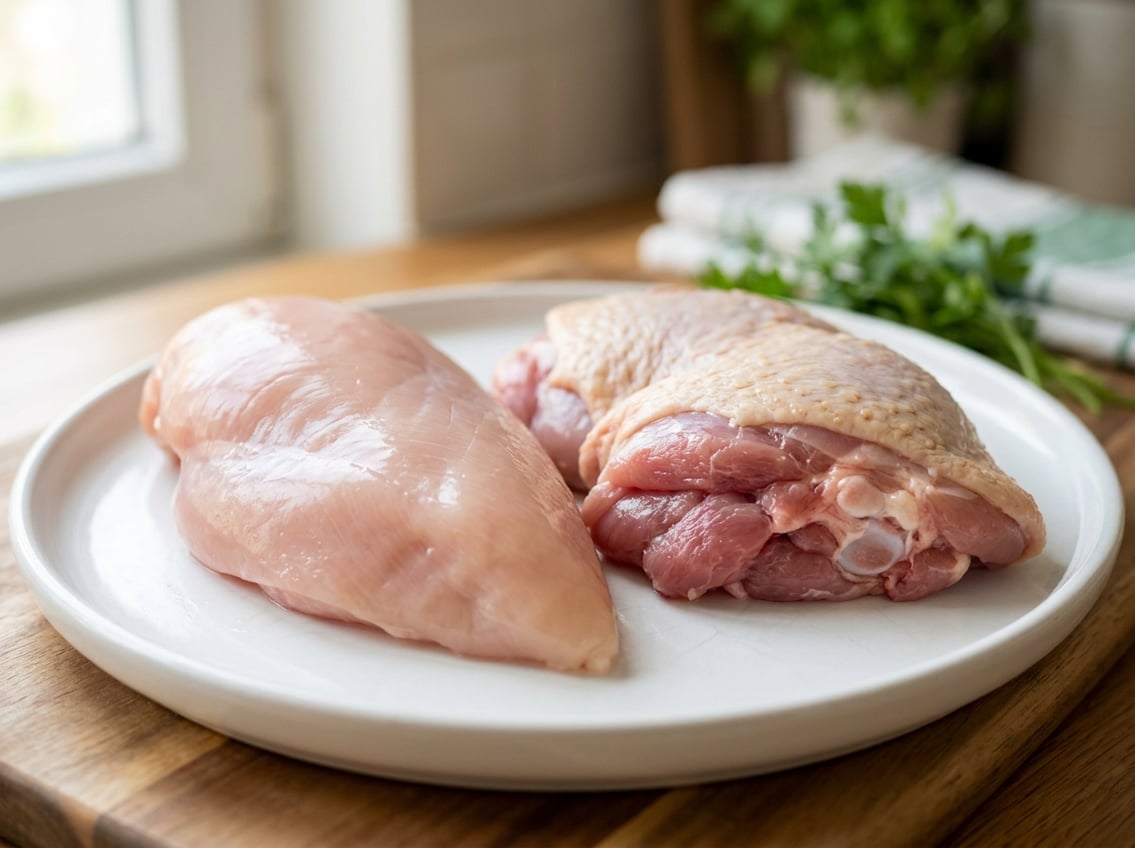
If you want the lightest option for fast meals, choose chicken breast. For richer taste and more forgiving cooking, choose chicken thigh.
Both cuts fit into a healthy diet. Both show up in everyday American cooking from salads and stir-fries to tacos and roasts.
The right pick depends on your goal, your recipe, and how much time you want to spend at the stove.
Quick Differences

Chicken breast and chicken thigh each bring a different mix of nutrition and cooking performance. Skinless chicken breast is usually the leanest pick.
Chicken thighs give you more moisture and a deeper flavor that holds up well in longer cooking.
Calories, Protein, and Fat
A 3-ounce serving of boneless, skinless chicken breast has about 140 calories and 3 grams of fat, according to The Pioneer Woman.
The same serving of boneless, skinless chicken thighs has closer to 170 calories and 9 grams of fat.
Chicken breast gives you more protein for fewer calories. Chicken thigh still gives you a solid protein boost, with more fat attached.
Flavor, Texture, and Juiciness
Chicken breast has a mild flavor and a firmer bite. It works well when you want the seasoning, sauce, or marinade to stand out.
Chicken thighs taste richer and stay juicy more easily. They are also harder to overcook, which makes them more forgiving in busy home cooking.
Different Goals
If you want a lower-calorie meal, chicken breast usually fits better. If you want a more satisfying texture and better flavor in a simple dish, chicken thigh often wins.
For meal prep, both work. Chicken breast is common in lighter bowls and salads.
For dinners where moisture matters, chicken thighs often give you better results with less effort.
Nutrition Trade-Offs
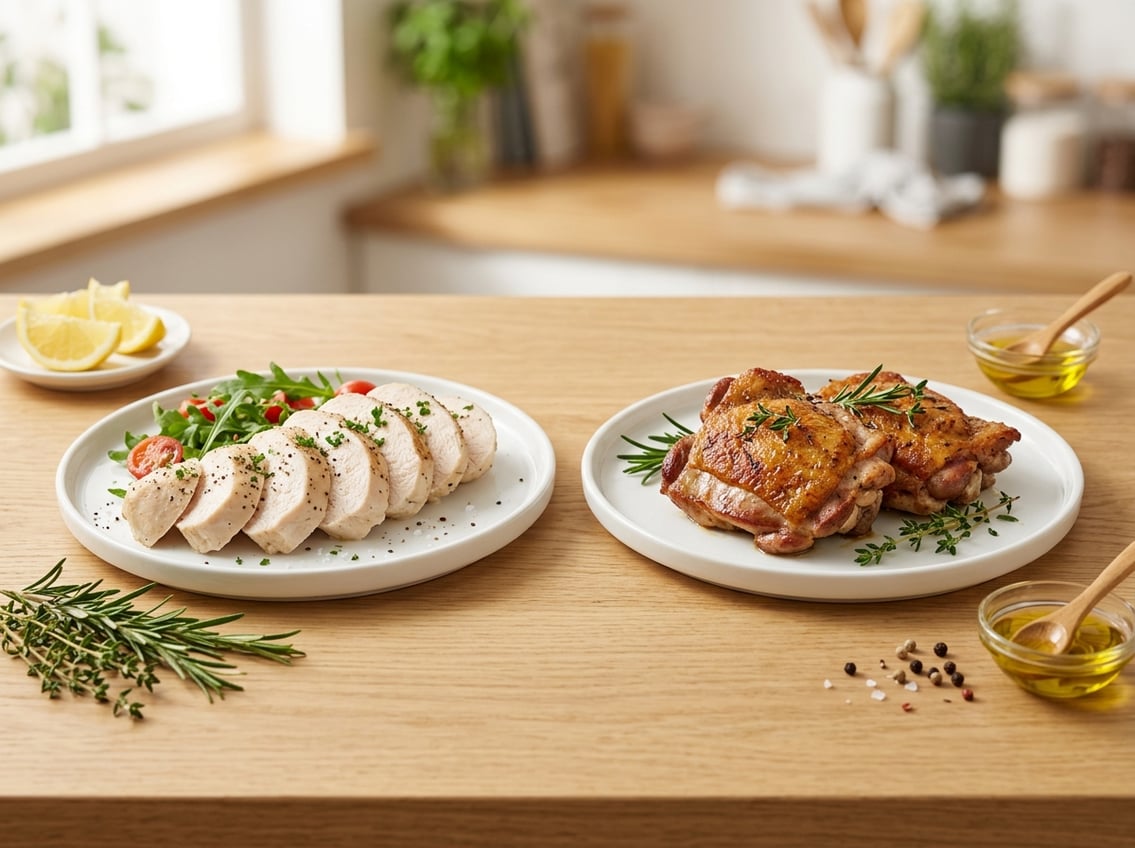
The gap between chicken breast and chicken thigh is not only about calories. The cut, the skin, and the amount of fat all change how much protein, iron, and zinc you get.
Why Breast Is Leaner
Chicken breast is white meat, and it naturally contains less fat than thigh meat. Skinless chicken breast is a common choice when you want a high-protein meal without many extra calories.
The lean profile makes it easier to match macro goals. If you are tracking protein closely, breast usually gives you the best ratio.
Where Thigh Offers More Iron and Richness
Chicken thigh is dark meat, which means it has more myoglobin and usually more iron and zinc. Diet and nutrition sources such as Chicken Breast vs. Thigh: Nutrition, Benefits & Cooking note that thighs tend to provide more of these minerals than breast.
The extra fat also adds richness. If you want more flavor without adding a heavy sauce, thigh can be the better fit.
Skin-On and Skinless Options
Skinless chicken is the leanest version of either cut. Skin-on chicken adds more fat and calories.
Skin-on chicken thighs often taste better when roasted or grilled because the skin helps protect the meat and adds texture. Skinless chicken thighs are a good middle ground when you want the same tenderness with less fat.
Best Uses in Cooking
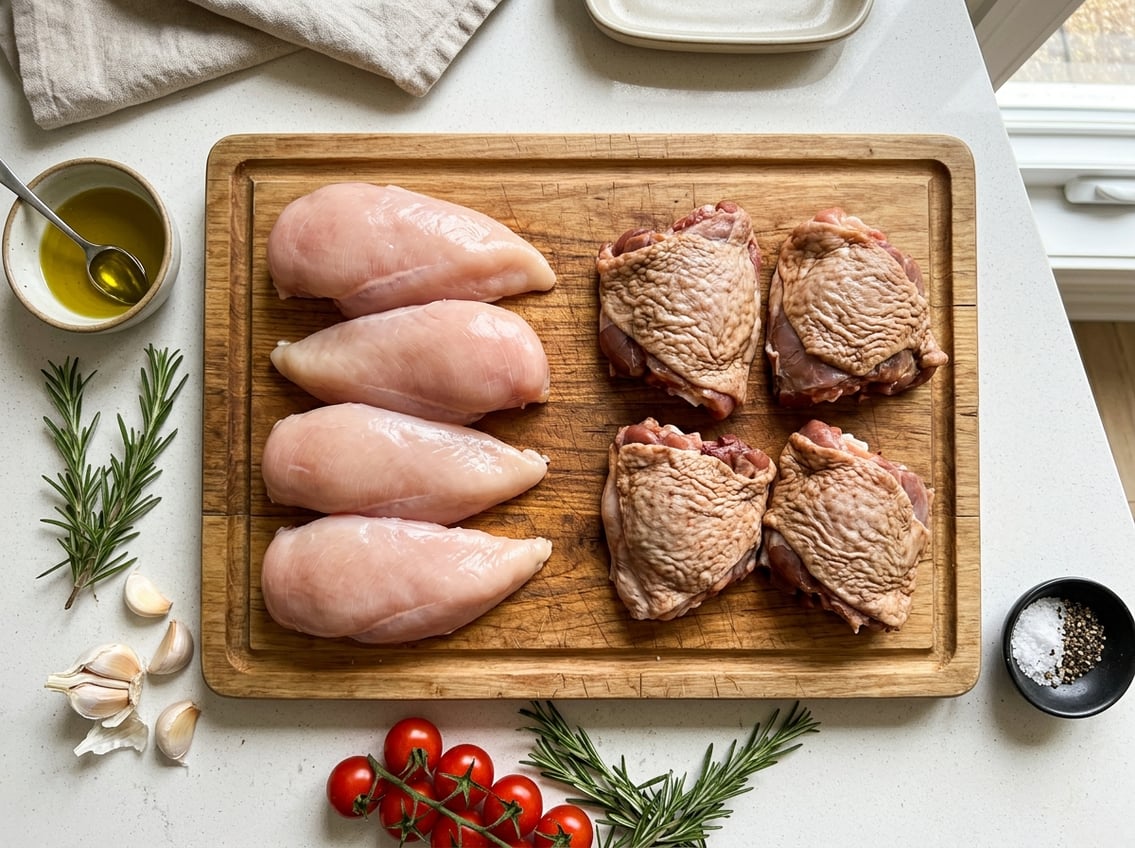
Your cooking method matters as much as the cut itself. Chicken breast works well in quick-cook dishes.
Chicken thigh handles heat, moisture, and longer cooking with fewer problems.
When to Choose Breast
Choose breast for thin cutlets, stir-fries, salads, wraps, and simple grilled chicken dishes. It cooks quickly and pairs well with light seasoning, citrus, and fresh herbs.
If you want a clean, mild flavor that takes on sauce well, breast is a strong choice. It also works well when you need neat slices for sandwiches or bowls.
When Thigh Works Better
Chicken thighs are excellent for roasting, braising, and grilled chicken because they stay juicy longer. The Pioneer Woman notes that thighs are harder to overcook and hold up well in high-heat cooking.
Skinless chicken thighs are useful when you want tenderness without extra skin. Skin-on chicken thighs are especially good when you want crisp skin and deeper flavor.
How to Prevent Dry Breast and Get Tender Thighs
For breast, use even thickness, pull it from the heat as soon as it is done, and let it rest before slicing.
For thighs, give them enough time to cook through so the fat can render and the texture turns soft. Whether you are grilling or roasting, a little extra time usually helps thighs more than it hurts them.
How to Choose at the Store

When you shop for chicken breasts or chicken thighs, match your choice to the recipe, your budget, and your cooking plan. Package style, labeling, and cut quality affect the result.
Boneless Versus Bone-In
Boneless chicken breasts are easy to slice, flatten, and cook fast. Boneless chicken thighs are also convenient and work well for weeknight meals.
Bone-in cuts often cost less and can taste richer after roasting. Skin-on chicken and bone-in pieces are a good choice when you want more flavor and do not mind extra prep.
Price and Meal Prep
Chicken thighs are often cheaper than chicken breasts, which can make them a better value for family meals. Chicken breasts may cost more, yet they are useful when you want lean protein with simple portion control.
For meal prep, breasts are easy to portion into salads and rice bowls. Thighs hold up well in reheated dishes like casseroles, curries, and roasted tray meals.
What to Check on Labels and Pre-Seasoned Packs
Look for terms like “skinless,” “boneless,” and “pre-seasoned” on labels, since these affect nutrition and cooking time.
Pre-seasoned packs save time, but they may contain added sodium or sugar.
Check the sell-by date, make sure the package is sealed, and look at the color of the meat.
Pick chicken breasts or chicken thighs based on a fresh smell and firm texture, rather than the package design.


