
Chicken Breast Versus Chicken Breast Tenders Explained
Chicken breast versus chicken breast tenders comes down to cut size, texture, cooking speed, and how you plan to use them. Both are lean, boneless chicken cuts that fit well in everyday meals, yet they do not behave the same in the pan, on the grill, or in the oven.
If you want the most versatile cut, chicken breast usually gives you more options. If you want faster cooking and a naturally more tender bite, chicken breast tenders are often the easier choice.
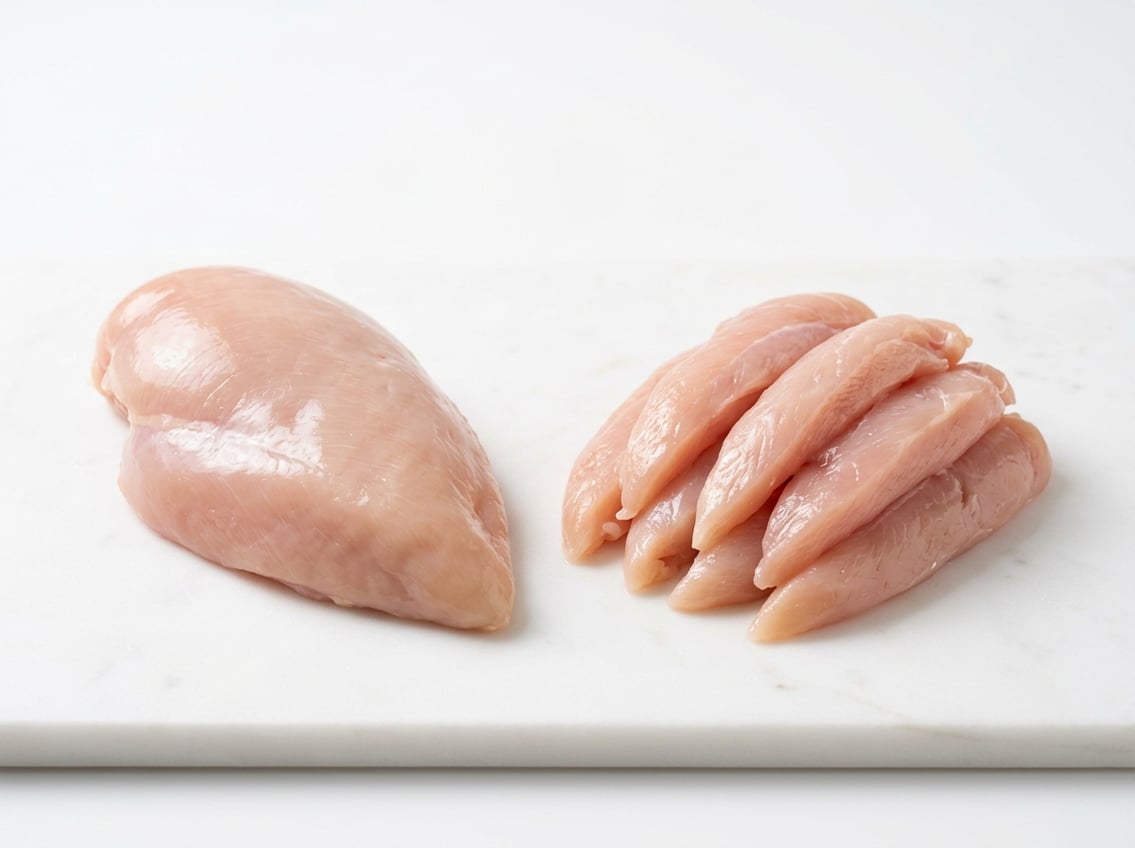
The difference matters most when you care about taste and texture, cooking time, and whether a recipe needs a firm slice or a quick-cooking strip. A good choice starts with knowing what each cut actually is.
What Each Cut Actually Is

Chicken breast, chicken tender, chicken tenders, chicken tenderloin, and chicken strips are related terms, but they do not all mean the same thing. The exact cut affects how you cook it, how it feels, and how it fits into recipes.
Where Chicken Breast and Tenderloin Come From
Chicken breast comes from the chest of the bird and is the large, main muscle. A chicken tenderloin, often called a tender, is the smaller strip of meat attached underneath the breast.
Chicken breast tenders are usually narrower and more uniform in shape than a whole breast. Some packs labeled chicken tenders contain true tenderloins, while others may be shaped or cut for convenience.
Pectoralis Major vs. Pectoralis Minor
The main chicken breast is the pectoralis major. It is the larger, denser muscle and is the cut most people mean when they say boneless chicken breast.
The tenderloin is the pectoralis minor. It is smaller and naturally softer, which helps explain why it cooks so quickly and stays tender with less effort.
A reliable anatomy guide from Chicken breast and tenders anatomy makes this difference clear.
Why Chicken Tenders Are Not Just Chicken Strips
Chicken tenders and chicken strips are often confused, yet they are not always the same thing. Chicken tenders refer to the tenderloin cut, while chicken strips can mean any breast meat cut into long pieces.
A chicken strip may come from a breast that you slice yourself, while a tender is already shaped for quick cooking and easy breading.
Texture, Nutrition, and Everyday Tradeoffs

Both cuts offer lean protein and solid nutritional value, yet your experience at the table will not be identical. Chicken breast usually feels firmer and more neutral, while chicken tenders feel softer and cook into a more tender chicken bite.
Taste and Texture Differences
Chicken breast has a dense texture that holds up well in slices, cubes, and stuffed dishes. It has a mild flavor that takes on marinades, spices, and sauces easily.
Chicken tenders are more delicate and often feel juicier right out of the pan. That makes them a good fit when you want tender chicken with less effort and a shorter cooking time.
Lean Protein and Nutritional Value
Both cuts are a strong source of lean protein, which is why they are common in high-protein meals and meal prep. Some nutrition comparisons show chicken breast as slightly higher in protein and lower in fat than tenders, while tenders still remain a lean choice overall, according to a chicken breast vs. breast tenders nutrition review and a protein and fat comparison.
That small gap may matter if you track macros closely. For most everyday meals, both cuts fit well into a balanced diet.
Price, Portion Size, and Versatility
Chicken breast is usually larger and often more versatile in the kitchen. You can roast it, slice it, dice it, shred it, or pound it thin for cutlets.
Chicken tenders come in smaller portions, which can be convenient for kids, quick dinners, and breaded dishes. A practical buying guide from Chicken breasts, cutlets, and tenders explained notes that shoppers often choose among these cuts based on convenience as much as nutrition.
Best Uses in the Kitchen

Your best choice depends on the cooking method and the final texture you want. Chicken breast works well for slower or more flexible cooking, while tenders shine when speed and even shape matter.
When to Choose Grilled or Baked Breast
Choose chicken breast when you want a larger cut for grilling, baking, roasting, or slicing over salads and bowls. It handles seasoning well and can stay moist if you watch the heat closely.
For a simple dinner, grilled chicken breast or baked chicken breast gives you a clean base for sauces, vegetables, and grains. It is also a strong pick when you want to portion one large piece into several servings.
When Tenders Work Better for Fast Cooking
Chicken tenders are often the better choice for fast cooking methods. Their smaller size helps them cook evenly in a short time, which makes them useful for sautéing, quick grilling, and pan-frying.
They also work well when you want fried chicken tenders or crispy chicken tenders without cutting a breast into strips first. For recipes built around speed, tenders often save time and reduce the risk of dry meat.
Best Picks for Nuggets, Strips, and Crispy Coatings
Chicken tenders are a natural fit for chicken nuggets, chicken strips, and breaded chicken tenders. Their shape makes them easy to coat, fry, or bake until crisp.
If you want a crunchy result, tenders usually give you more consistent pieces than a full breast. That helps each piece cook at the same rate and brown more evenly.
How to Cook Both Without Drying Them Out

The main rule is simple, thicker chicken breast needs more attention than a tenderloin. The right cooking methods, steady heat, and correct endpoint make the biggest difference in keeping the meat juicy.
Cooking Times and Heat Differences
Chicken breast usually needs a little more time than chicken tenderloin because it is larger and denser. Tenders cook faster, so they are more likely to dry out if you use the same timing as a breast.
If you are grilling or baking, use medium heat rather than very high heat. That gives the outside time to brown without overcooking the center.
Why a Meat Thermometer Matters
A meat thermometer removes the guesswork. It helps you stop cooking at the right moment, which is the easiest way to keep chicken breast and tenders tender.
For both cuts, check the thickest part and remove them when they reach a safe internal temperature. This matters even more for grilled chicken and baked chicken breast, where carryover heat can keep cooking the meat after it comes off the heat.
How to Substitute One Cut for the Other
You can swap one cut for the other if you adjust the cooking time.
If a recipe calls for chicken breast, use chicken breast tenders and cook them for less time over gentler heat.
If you only have breast meat and need tender strips, cut it into even pieces.
Pound thick sections to a similar size to help the result stay closer to a true tender chicken texture.


