
What Does the Average Chicken Breast Weigh? Size Guide
What does the average chicken breast weigh? In the U.S., a boneless, skinless chicken breast usually weighs about 6 ounces, or 174 grams.
Common sizes range from about 4 to 8 ounces. Bone-in breasts weigh more because the bone adds weight.
Cooked breasts weigh less after moisture is lost.
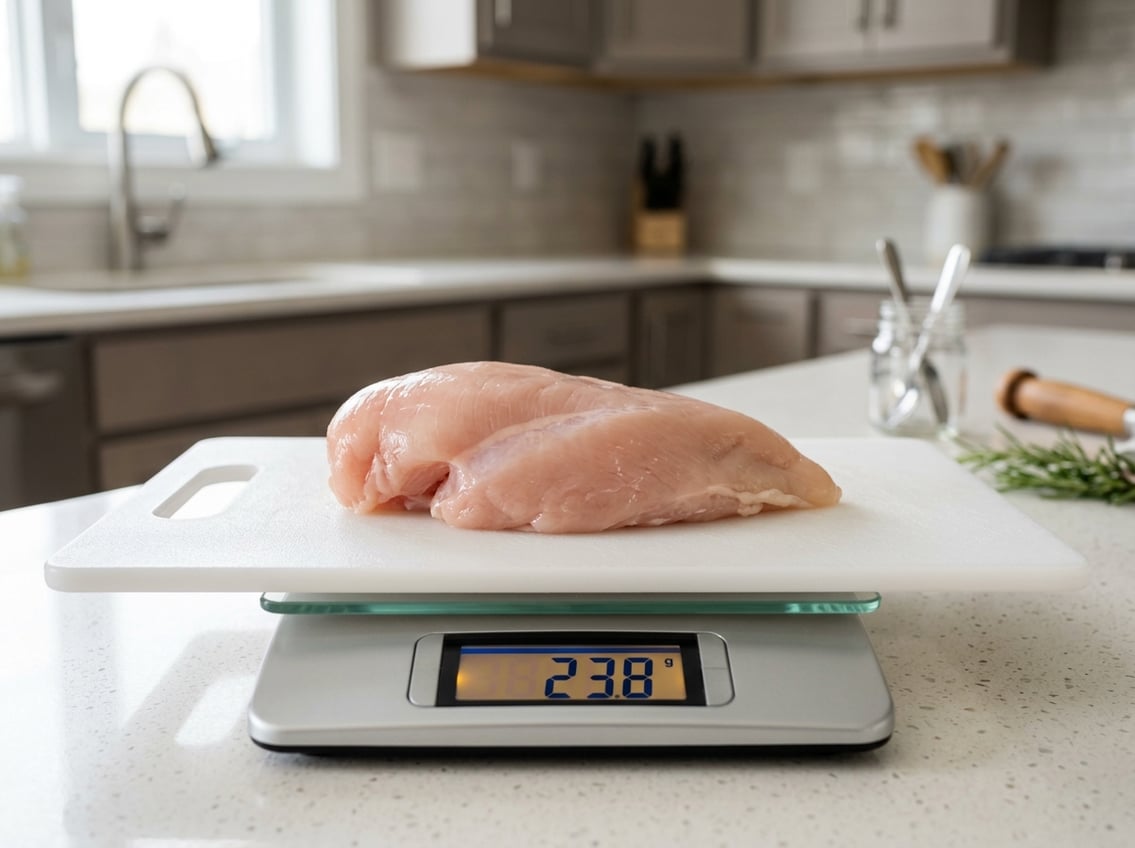
If you know the weight of your chicken breast, you can plan portions and estimate protein and calories.
You can also judge cook time with much more accuracy.
The exact number changes based on the cut and whether it is raw or cooked.
It also depends on whether it has skin or bone attached.
A quick size guide helps you estimate what you have at home or in the grocery store.
Average Weight Ranges at a Glance
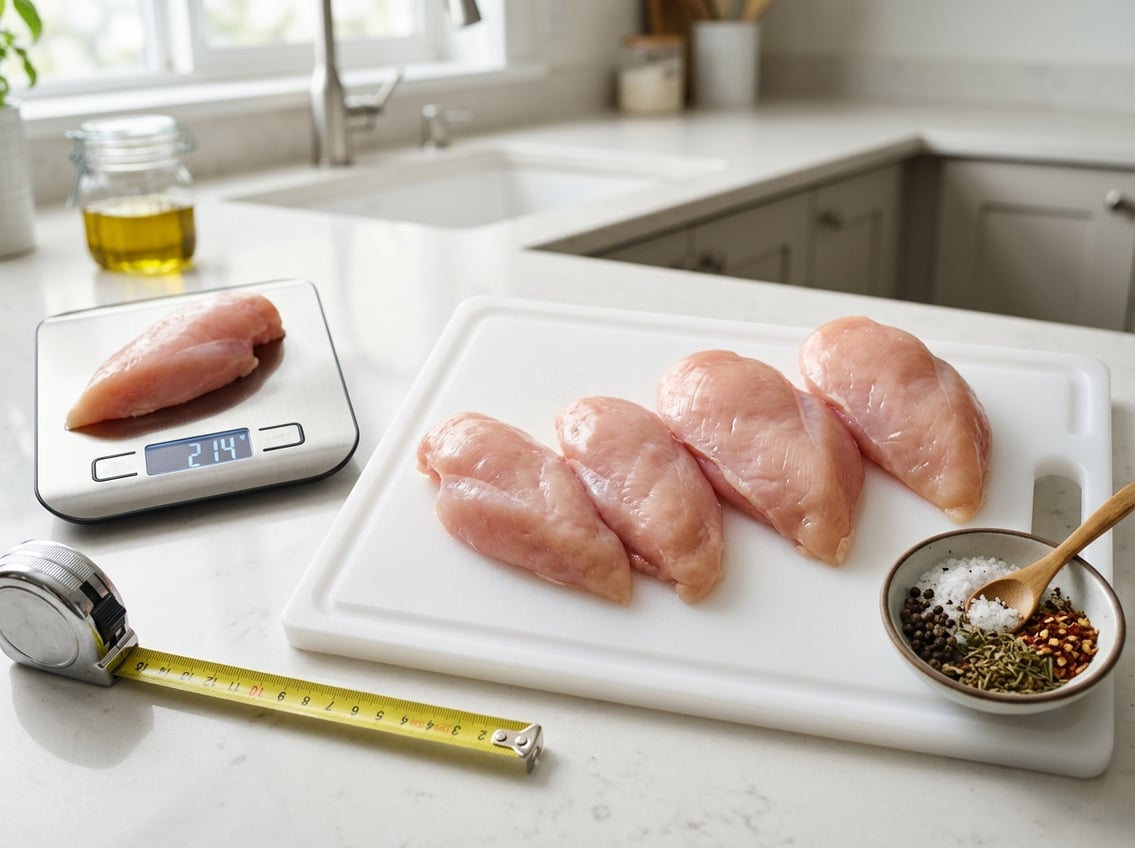
Chicken breast weight varies by cut and prep.
For most shopping and recipe needs, you can use a few simple benchmarks for chicken breast sizes.
The most common reference point is a boneless, skinless breast at about 6 ounces.
Bone-in pieces weigh more on the scale, while cooked pieces weigh less than raw ones.
Typical Boneless Skinless Range
A boneless, skinless chicken breast often weighs 4 to 8 ounces.
A smaller breast may sit near 4 ounces, while a larger one can reach 8 ounces or more.
A recent guide from Greatist notes that about 6 ounces, or 174 grams, is a common average.
That makes it a useful middle point when you do not have a scale.
Bone-In and Skin-On Range
Bone-in chicken breasts, often called split breasts, weigh more because the bone adds mass.
Greatist notes that the bone can make up about 20 percent of the total weight.
A bone-in breast may look much larger on the scale than the amount of meat you actually eat.
Skin also adds a little extra weight, along with some fat.
Small, Medium, and Large Portion Benchmarks
You can use these rough portion sizes:
- Small: about 4 ounces
- Medium: about 6 ounces
- Large: about 8 ounces
- Extra large: about 10 ounces or more
These are practical labels, not exact standards.
In stores, the same package can contain very different chicken breast sizes.
The package weight matters more than the look of the meat alone.
What Changes the Number
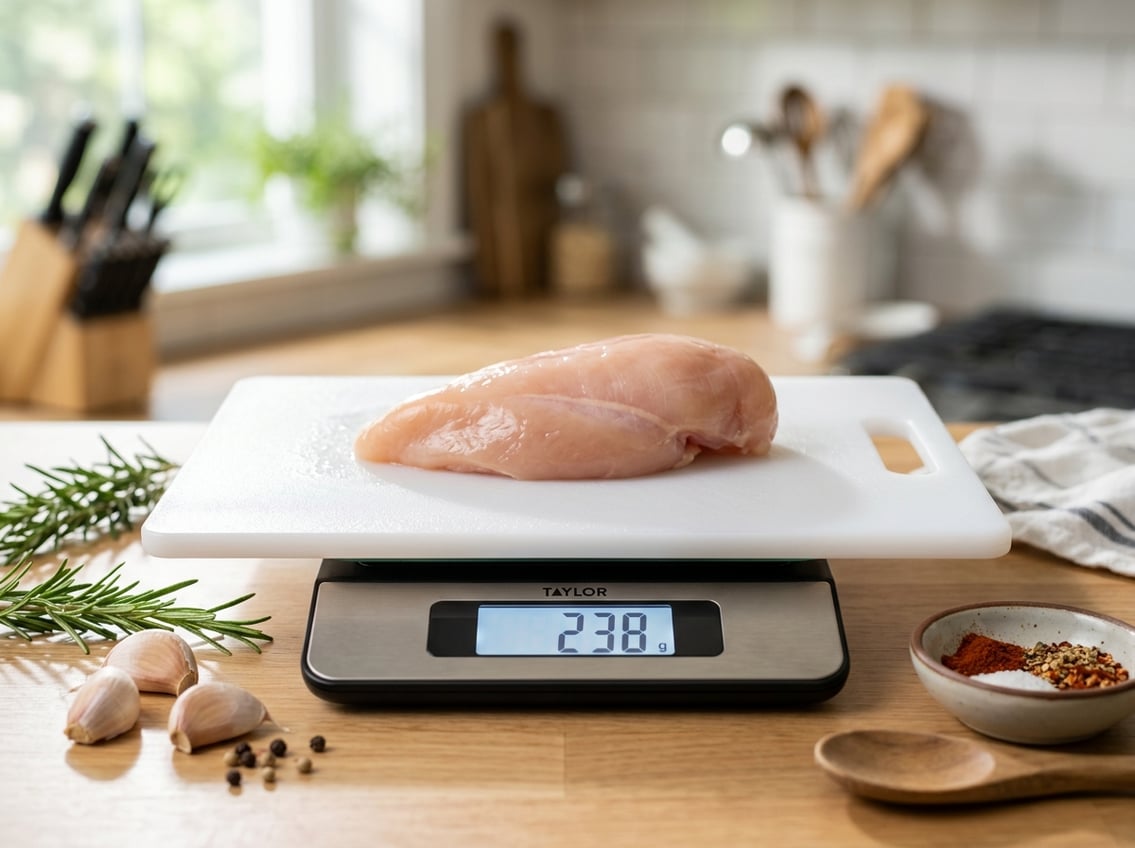
Several factors change the weight of chicken breast, even when the piece looks similar.
Raw weight, cooking loss, bone, skin, trimming, and packaging all affect the number you see.
If you want a reliable estimate, you need to know which version you are measuring.
A raw breast and a cooked breast are not the same thing on the scale.
Raw Versus Cooked Weight
Chicken breast loses weight as it cooks because moisture and some fat leave the meat.
Greatist reports that a raw chicken breast may lose about 25 percent of its weight during cooking.
A 6-ounce raw breast can end up around 4.5 ounces cooked.
That matters when you are tracking portions or matching a recipe that lists raw weights.
Bone, Skin, and Trimming Differences
Bone-in breasts weigh more than boneless breasts because the bone is part of the total.
Skin-on pieces also weigh more than skinless ones.
Trimming away fat or uneven edges lowers the weight.
The shape can matter too.
A thick breast and a flatter breast may weigh the same, yet they cook at different speeds.
Fresh, Frozen, and Thawed Considerations
Fresh, frozen, and thawed chicken from your own freezer should weigh the same once fully thawed.
Packaged frozen chicken can be different if it includes added coating or ice that increases the package weight.
Check the label and, when needed, weigh the meat after thawing.
Greatist notes that if you buy a package with several breasts, you can divide the total package weight by the number of breasts for a quick estimate.
Using Weight for Cooking and Nutrition
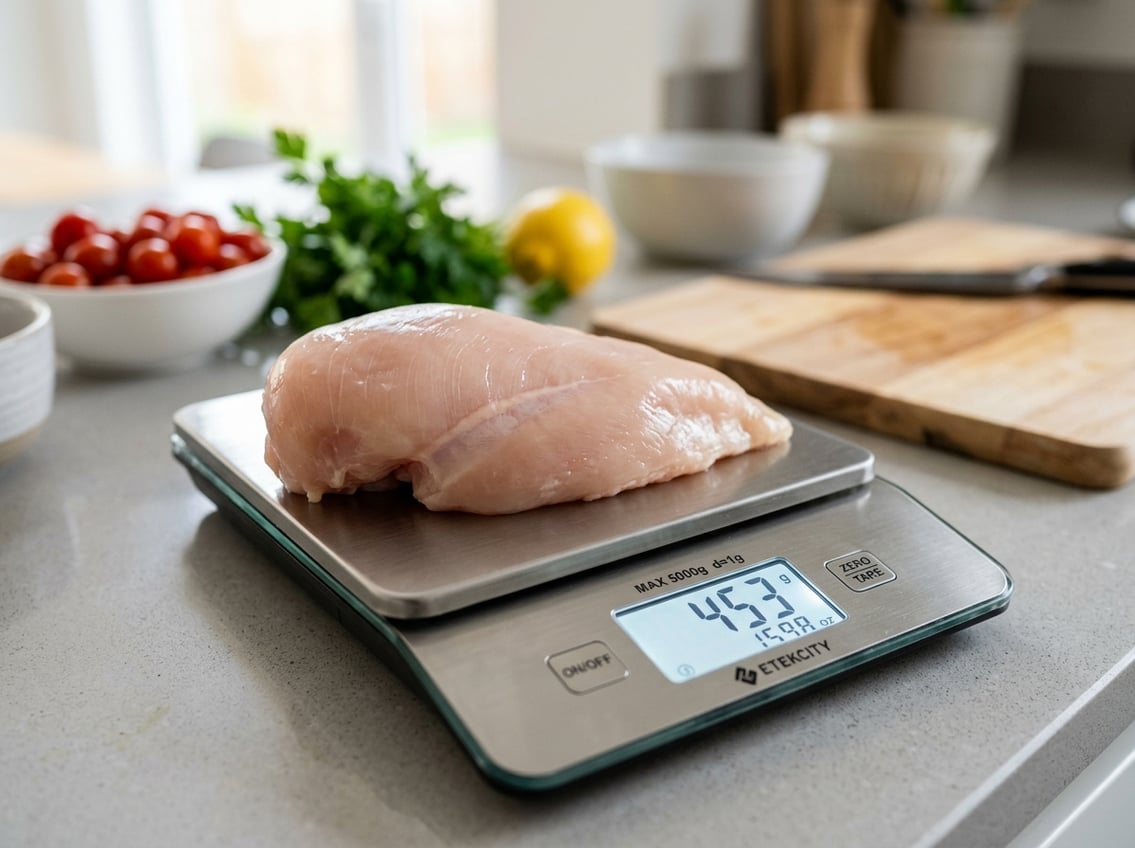
Knowing chicken breast weight helps with meal planning, nutrition tracking, and timing.
A small change in size can affect how many servings you get and how long the meat takes to cook.
Weight is especially useful when you cook for fitness goals or follow a recipe with exact portions.
It is also the easiest way to compare chicken breast sizes in the store.
How Many Breasts Are in a Pound
A pound is 16 ounces, so the number of breasts per pound depends on their size.
Greatist says you usually get about 2 to 3 chicken breasts per pound, with smaller ones pushing closer to 4 per pound.
A simple estimate looks like this:
- 4-ounce breasts: about 4 per pound
- 6-ounce breasts: about 2.5 to 3 per pound
- 8-ounce breasts: about 2 per pound
This is useful when a recipe calls for pounds instead of individual breasts.
Estimating Portions Without a Scale
If you do not have a kitchen scale, you can still make a fair estimate.
A palm-sized breast often lands near the 4 to 6 ounce range, while a very large one may be closer to 8 ounces.
Package labels help too.
If a pack has 4 breasts and weighs 1.2 pounds total, each breast weighs about 4.8 ounces before cooking.
For a deeper comparison of typical ranges, Food Readme notes that boneless breasts often fall between 4 ounces and 8 to 10 ounces.
Why Size Matters for Calories, Protein, and Cook Time
A larger breast contains more calories and protein. Size affects nutrition as much as portion count.
Thicker pieces require more time to reach a safe internal temperature. Smaller breasts dry out faster if you overcook them.
You need to manage heat carefully with larger breasts so the outside does not overcook before the center is done. If you track macros or want more even results, weigh the chicken before cooking.
Use the weight as your base for measuring. This method gives you a clearer measure than judging size by eye.


