
What Are the Macros in Chicken Breast? Simple Guide
Chicken breast macros look simple on paper, but they change based on weight, cooking method, skin, and bone. If you track food closely, those details matter because the same piece of chicken can have different calories and protein depending on how you measure it.
At its core, chicken breast offers very high protein, low carbs, and modest fat. This makes it one of the easiest foods to fit into your macro goals.
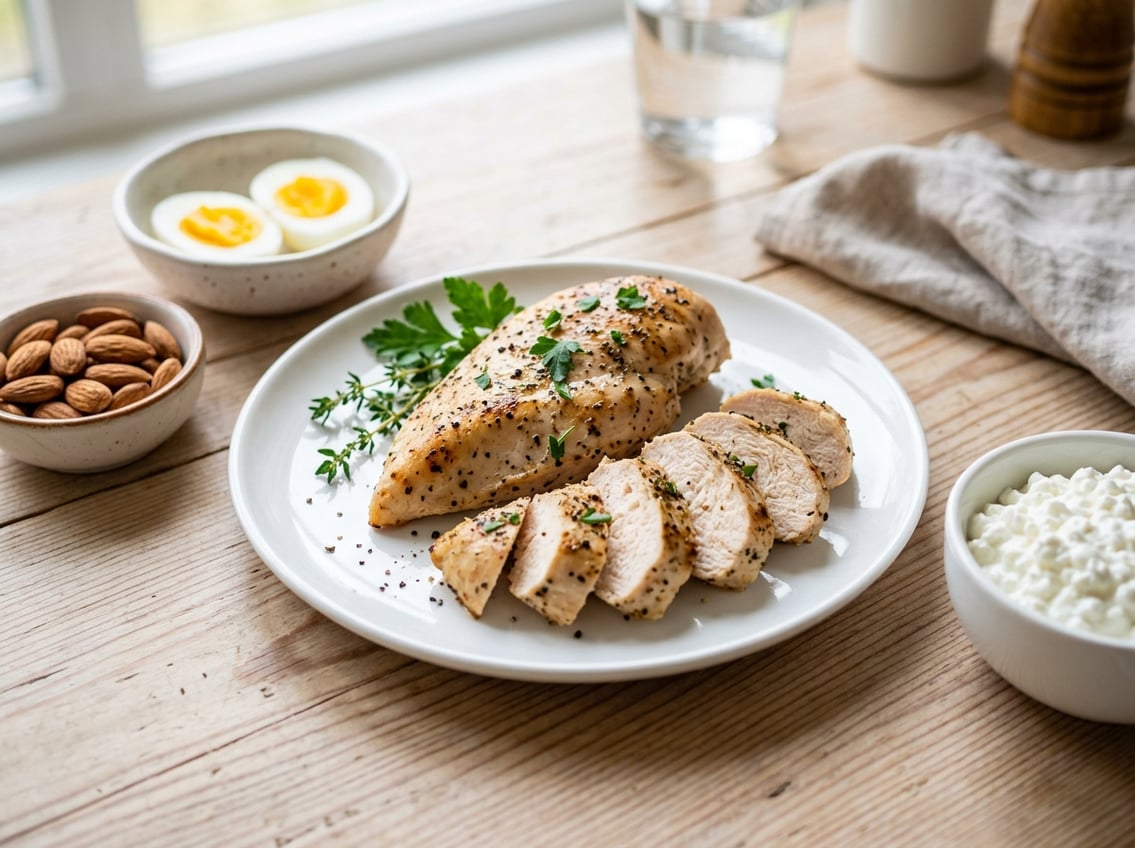
You can use chicken breast for fat loss, muscle gain, or meal prep if you know which version you are eating. A raw, skinless, boneless breast is not the same as a breaded, fried, or skin-on serving.
Macro Breakdown by Serving Size
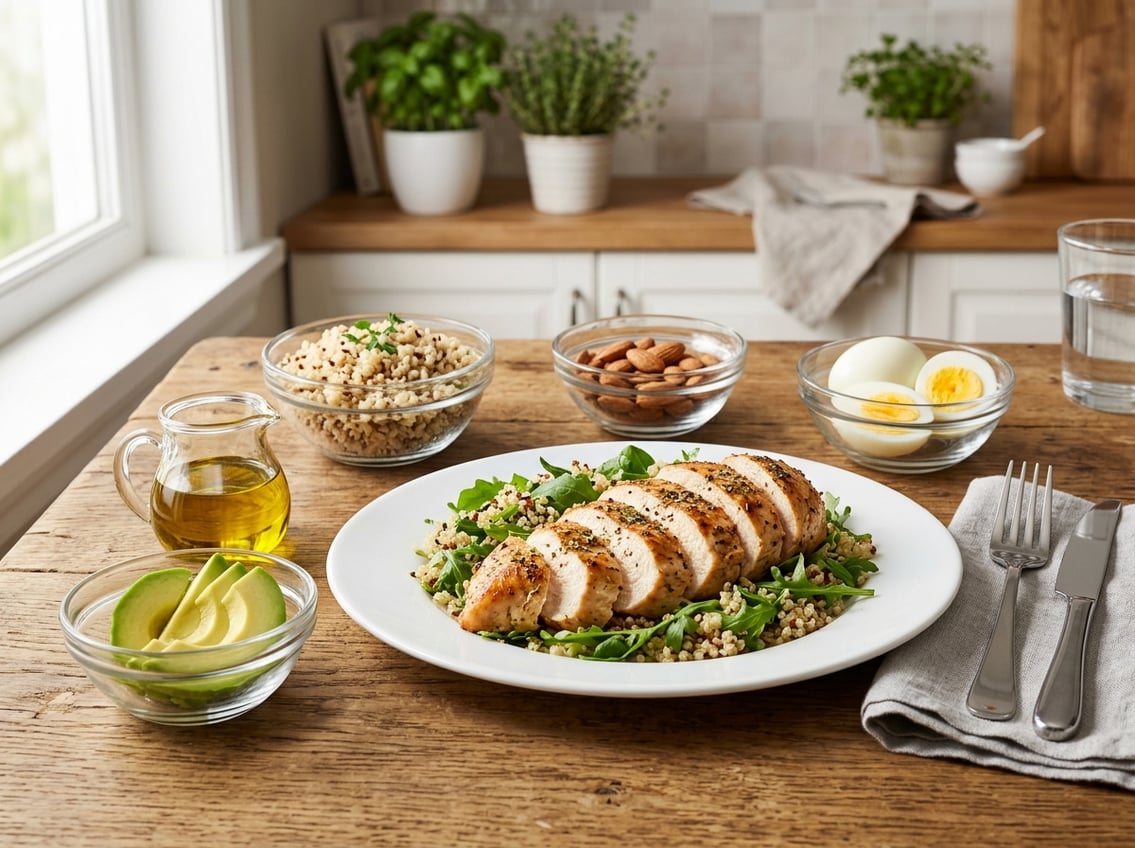
Chicken breast macros are easiest to track when you use a per-100g baseline and scale from there. Raw and cooked weights do not match, because cooking removes water and concentrates the numbers.
Boneless, skinless chicken breast stays high in protein and very low in carbs.
Protein, Calories, and Fat Per 100g
For boneless, skinless chicken breast:
| State | Calories | Protein | Fat | Carbs |
|---|---|---|---|---|
| 100g raw | 120 | 23g | 2.6g | 0g |
| 100g cooked | 165 | 31g | 3.6g | 0g |
Chicken breast provides a lot of protein in a small calorie budget. It gives you all essential amino acids, making it a complete protein.
Common Portions Like 3 Oz, 4 Oz, 6 Oz, and 8 Oz
Here are common cooked portions for boneless, skinless chicken breast:
| Portion | Calories | Protein | Fat | Carbs |
|---|---|---|---|---|
| 3 oz cooked | about 140 | about 26g | about 3g | 0g |
| 4 oz cooked | 187 | 35g | 4g | 0g |
| 6 oz cooked | 281 | 53g | 6g | 0g |
| 8 oz cooked | 374 | 70g | 8g | 0g |
If you weigh chicken raw, the numbers are lower per ounce because there is more water. The pattern stays the same: higher protein with very little carbohydrate.
How Chicken Breast Fits Lean Protein and Daily Protein Goals
Chicken breast works well as a lean protein. It helps you reach daily protein goals without adding too many calories.
A 4 oz cooked serving gives you about 35g of protein, covering a large part of a meal target. If you need more protein in a day, chicken breast lets you build meals around your target without much fat or carbs.
Raw, Cooked, Skinless, and Bone-In Differences
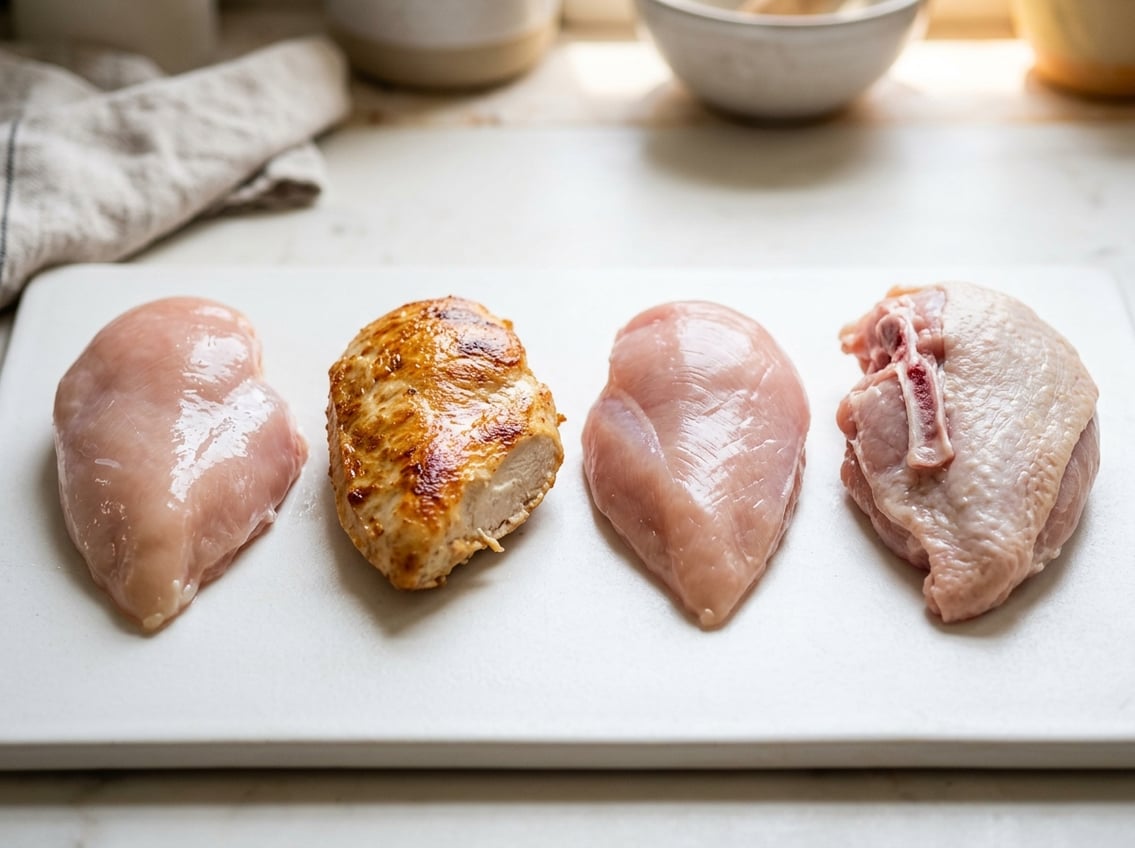
Chicken breast nutrition changes based on how you buy and weigh it. The biggest tracking mistakes happen when you mix raw and cooked entries, or when you forget that skin and bone change the edible portion.
Raw Chicken Breast vs Cooked Weight
Raw chicken breast loses about 25% to 30% of its weight during cooking. For example, 8 oz raw chicken breast often becomes about 6 oz cooked.
The total macros stay the same, but they become more concentrated. If you log cooked weight using raw nutrition facts, your numbers will be off.
Skinless Chicken Breast vs Chicken Breast With Skin
Skinless chicken breast is the leanest choice. Skin-on chicken breast brings more fat and calories, along with a richer taste.
A 4 oz cooked skinless serving is about 187 calories, 35g protein, and 4g fat. A similar serving with skin is closer to 252 calories, 30g protein, and 14g fat.
Boneless Skinless Chicken Breast and Bone-In Yield
Boneless skinless chicken breast is easy to track because the full weight is edible meat. Bone-in chicken breast includes weight you do not eat, so the labeled weight is not the same as your actual portion.
Bone-in cuts can lose about 20% to 25% of their weight to bone. If you buy bone-in, you get less meat per pound, so your logged macros should reflect the edible part only.
How Cooking Method Changes the Numbers
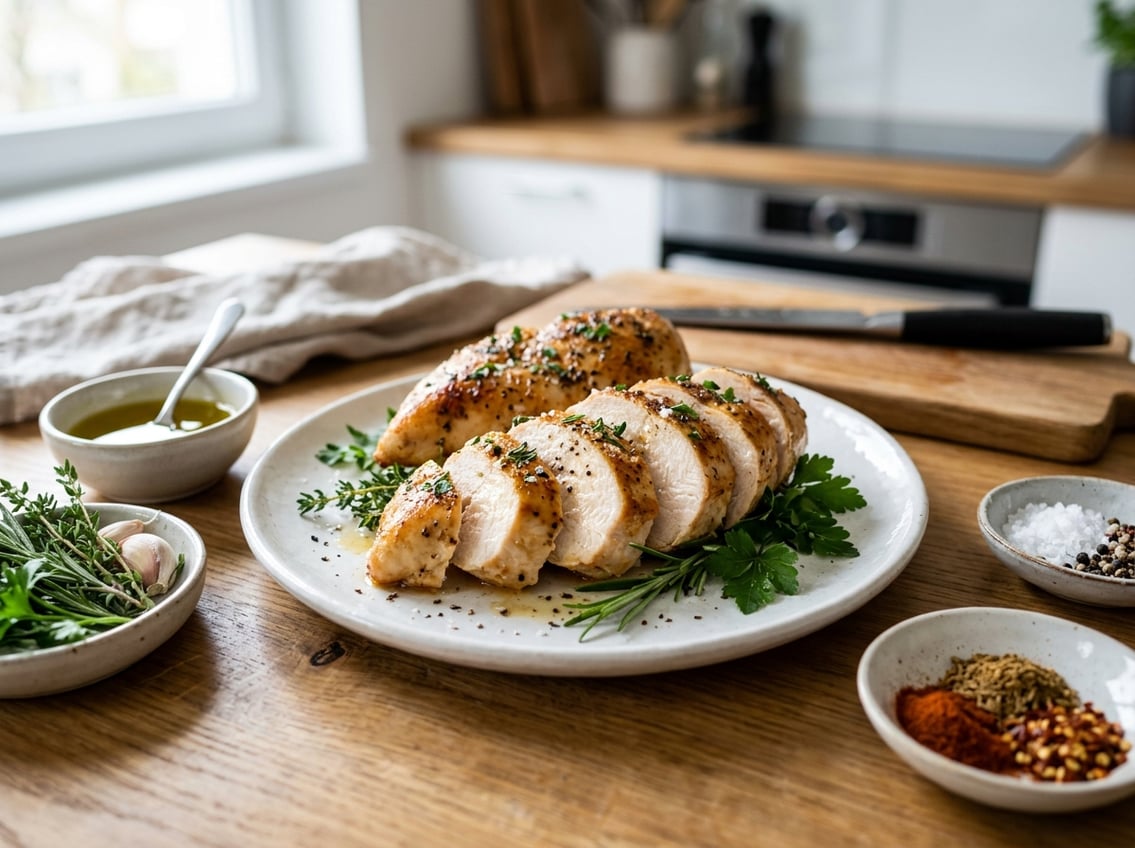
Cooking method can keep chicken breast lean or add a lot of calories. The protein stays fairly stable, while added fat from oil, breading, and sauce changes the final numbers.
Grilled Chicken Breast and Baked Chicken Breast
Grilled and baked chicken breast usually offer the lowest calories. If you do not add much oil, butter, or sauce, the macros stay close to the base numbers.
These methods help you get high protein and lower fat. You can match the chicken to your daily calorie and protein target more easily.
Fried Chicken Breast and Breaded Chicken
Fried and breaded chicken add calories quickly. Breading adds carbs, and frying adds fat from the oil.
A breaded, fried 4 oz serving can jump to about 340 calories, 28g protein, 15g carbs, and 18g fat. This is not the same as plain chicken breast macros.
Sauces, Oils, and Recipe Add-Ins
Sauces, oil, cheese, and creamy marinades can change your numbers more than the chicken itself. Even a tablespoon of oil adds about 120 calories and 14g fat.
If you want accurate tracking, log every add-in. The protein in chicken breast stays high, but the final meal may not fit a low-calorie plan if you use a heavy sauce or extra oil.
Using Chicken Breast in Real Meals
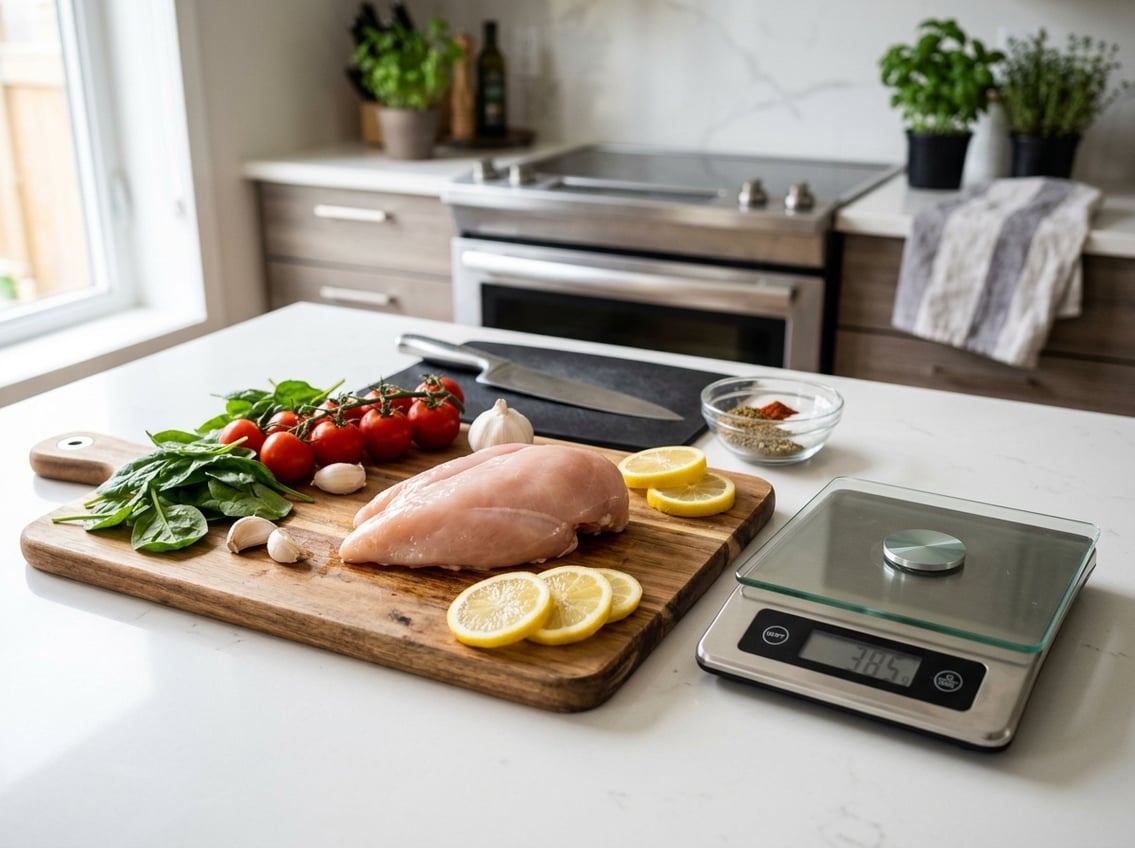
You can build many meals around chicken breast and keep control of your macros. The rest of the plate matters, since bread, cheese, dressing, and sauces can change the meal more than the chicken.
Chicken Caesar Salad and Chicken Wrap
A chicken caesar salad can stay high in protein, but dressing, croutons, and cheese add calories quickly. A chicken wrap can work well too, but the tortilla and spreads matter just as much as the meat.
If you want a lighter meal, keep the chicken portion solid and keep extras simple. That way, you get the protein in chicken without turning the meal into a calorie-heavy dish.
Chicken Parmesan and Other Higher-Calorie Dishes
Chicken parmesan shows how a lean protein can become much richer. Breading, cheese, pasta, and sauce all add up.
The chicken still gives you protein, but the full meal does not match the same macro profile as grilled or baked chicken breast. If you track closely, log the complete recipe instead of only the meat.
Best Picks for Weight Loss, Muscle Gain, and Meal Prep
Choose plain grilled, baked, or air-fried chicken breast for weight loss. It gives you a lot of protein for fewer calories.
Eat larger portions of chicken breast for muscle gain. This helps you hit your protein target without much prep time.
For meal prep, you can easily portion and store chicken breast. Repeat these meals during the week for convenience.
If you want more ideas for high-protein meals, check out this collection of macro-friendly chicken recipes. These recipes help you keep chicken interesting while staying close to your goals.


