
Temperature When Chicken Breast Is Done: Safe, Juicy Guide
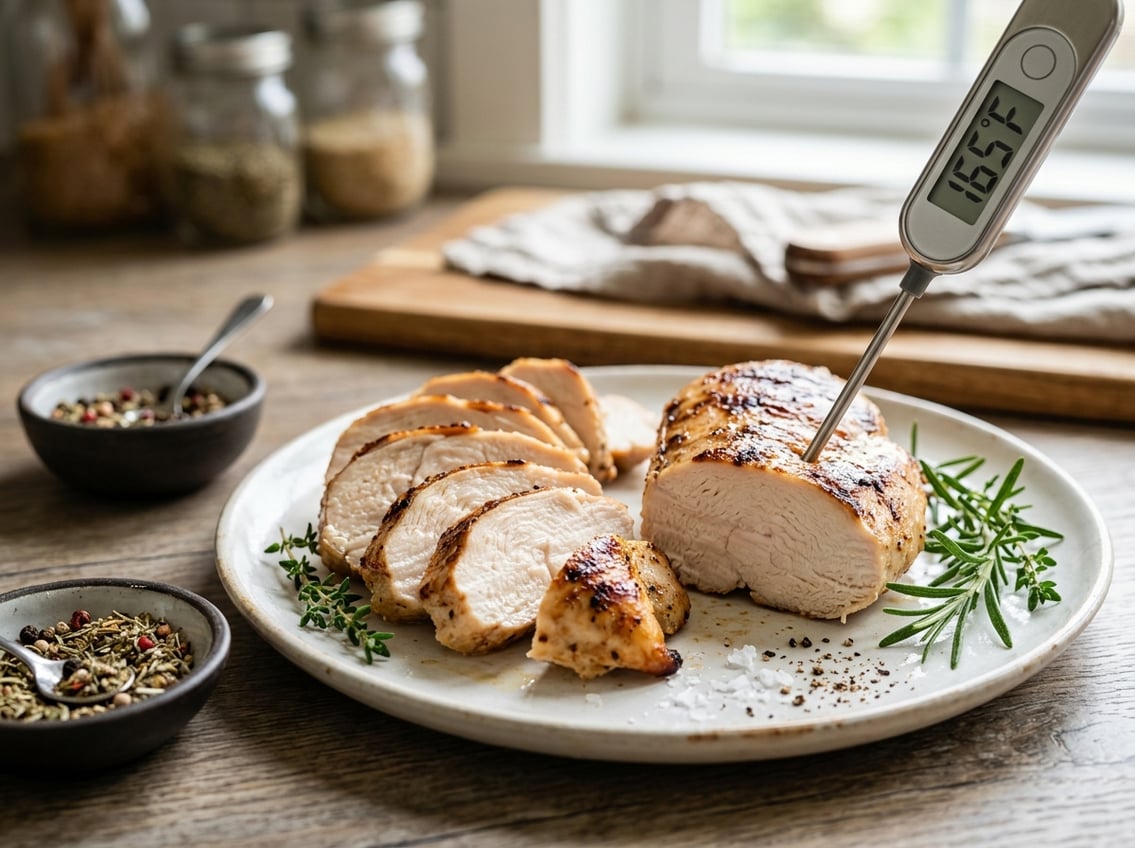
The safe temperature for chicken breast is 165°F in the thickest part of the meat. Trust this number instead of relying on color or juices.
If you want chicken breast that is safe and juicy, pull it near 160°F and let carryover cooking bring it to 165°F.
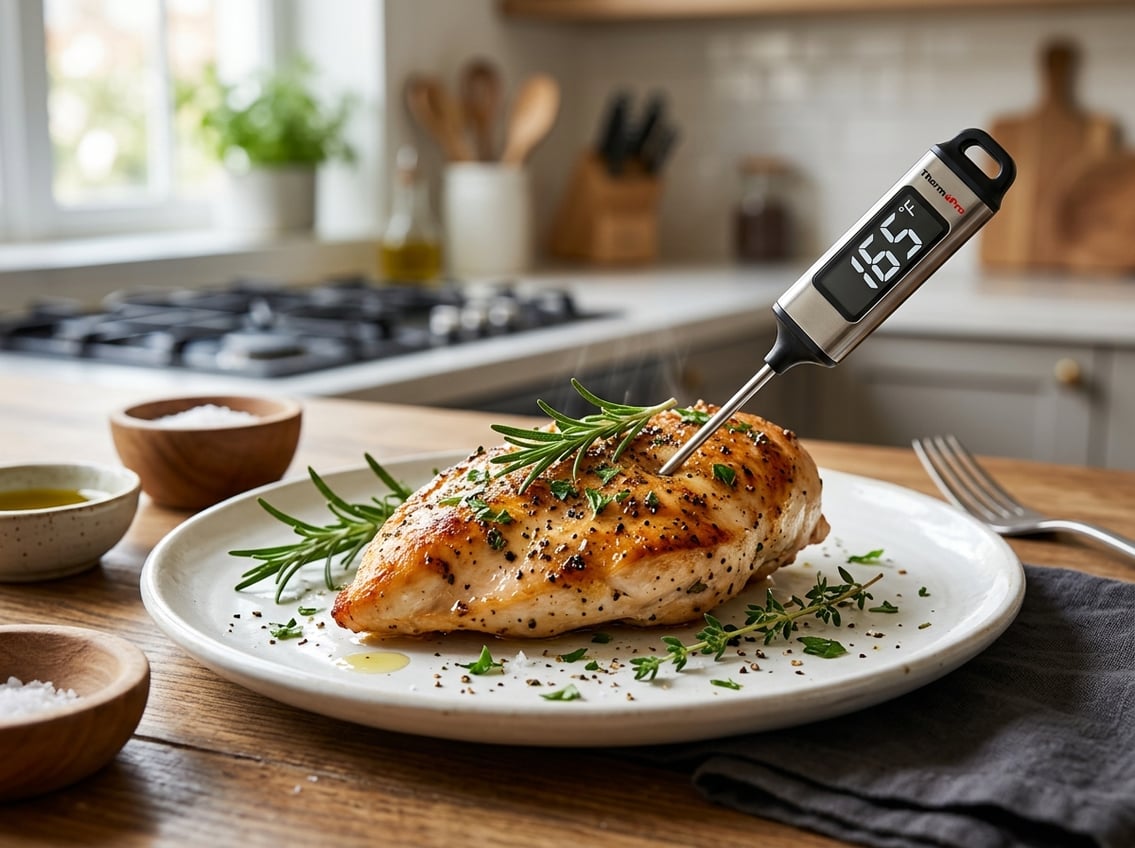
Chicken breast is easy to overcook because it is lean. Just a few extra degrees can make the meat dry and stringy, so temperature control matters more than cooking time.
You can cook chicken breast with confidence when you know the right temperature, how to check it, and why it matters for safety.
The Exact Doneness Temperature for Chicken Breast
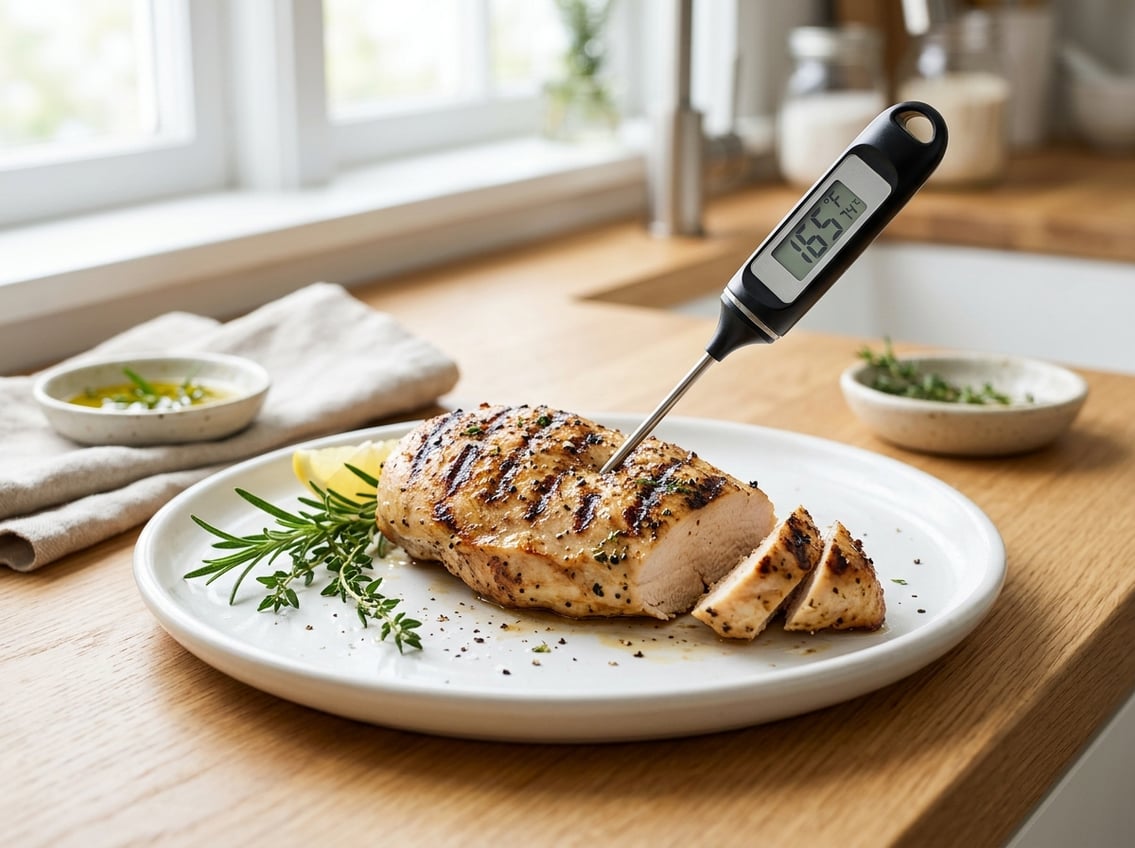
Aim for 165°F for safety. This temperature protects you from foodborne illness while keeping the texture good.
Remember to account for carryover cooking, since the temperature can keep rising after you remove the meat from the heat.
Why 165°F Is the Safe Minimum
The USDA recommends 165°F as the safe minimum internal temperature for chicken. At this point, harmful bacteria such as salmonella and campylobacter are destroyed.
You do not need a higher temperature for safety, and going above the target can cause dryness.
When to Pull Breast Meat Off the Heat
Pull chicken breast from the heat at about 160°F and let it rest. Carryover cooking usually raises the temperature by a few degrees, reaching the safe minimum without extra drying.
If you cook to 165°F on the heat, the meat may still be fine, especially if it is very thick. Checking early helps preserve juiciness.
Why Chicken Breast Dries Out Above the Target
Chicken breast has very little fat. As the internal temperature climbs past 165°F, the muscle fibers tighten and push out moisture.
Use the safe minimum internal temperature as your stop point, then rest the meat before slicing for juicy results.
How to Check Temperature Correctly
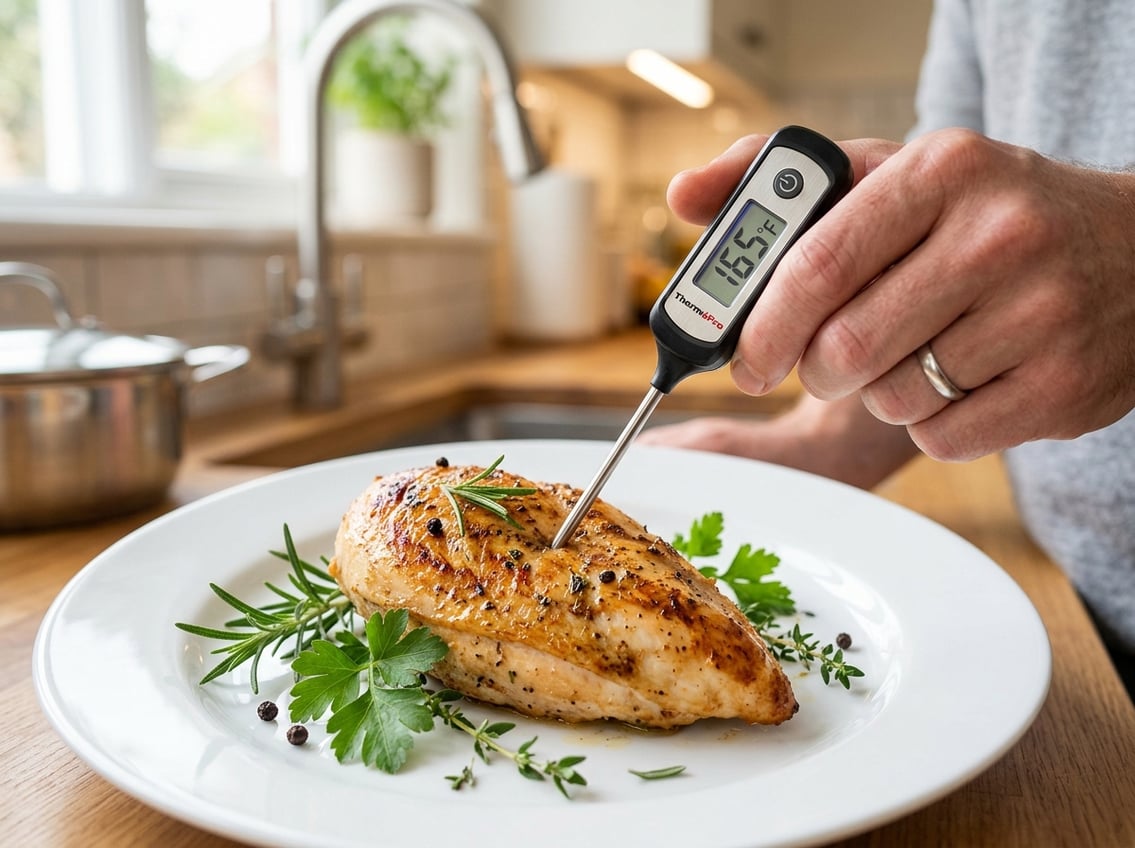
A meat thermometer removes guesswork. An instant-read or digital meat thermometer gives you the most reliable answer, especially when the cut is uneven in thickness.
Place the probe in the thickest part of the breast and avoid contact with bone or the pan.
Where to Insert the Thermometer
Insert the thermometer into the thickest part of the breast from the side if possible. The tip should sit near the center of the meat, not in the thin edge.
If the breast is uneven, check more than one spot.
How to Use a Meat Thermometer Accurately
Wait a second or two for the reading to stabilize. The thermometer should show a steady number before you decide the chicken is done.
Clean the probe before and after use. If you are checking a whole bird, test both the breast and thigh.
Mistakes That Cause False Readings
Do not touch bone, since bone can give a higher reading than the meat. Avoid inserting the probe into a pocket of fat or all the way through a thin breast.
Do not rely on timer charts alone. Oven heat, grill flare-ups, pan size, and breast thickness all affect cooking time.
Food Safety Behind the Number
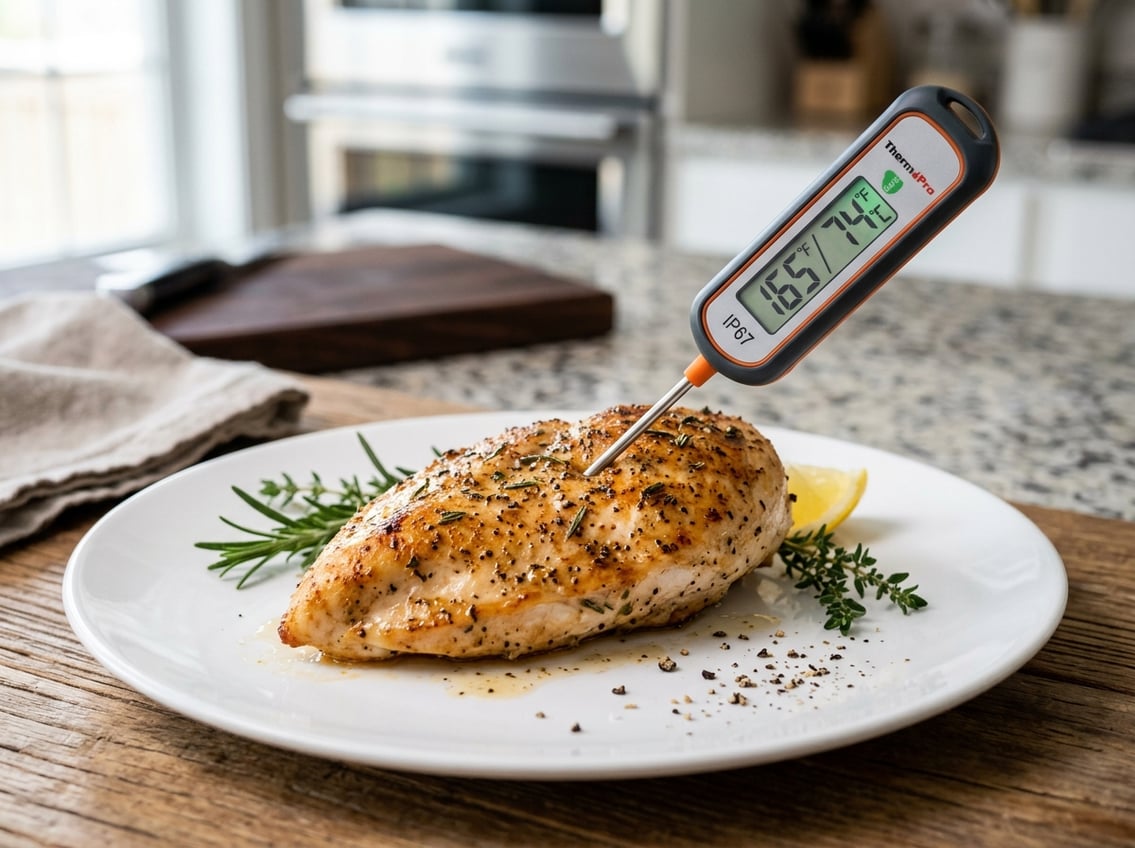
Food safety comes first. Chicken can look done before it reaches the right internal temperature, so visual cues can mislead you.
Measure with a thermometer and trust the number.
Why Color and Juices Are Not Reliable
Chicken can stay pink near the bone or in some areas and still be safe. Juices can run clear before the meat reaches 165°F, so color and juice checks do not prove doneness.
Always use a thermometer, not visual checks, to confirm doneness.
How 165°F Protects Against Foodborne Illness
Cooking chicken to 165°F reduces the risk from salmonella and campylobacter. These bacteria can cause serious illness if the internal temperature stays below the safe minimum.
The USDA recommends 165°F as the standard safe target for all chicken cuts cooked at home.
When Pink Chicken Can Still Be Safe
Pink chicken is not always undercooked. Meat near the bone can stay slightly pink because of age, cooking method, or smoke exposure, even when the chicken has reached the safe minimum temperature.
If the thermometer reads 165°F in the thickest part, the chicken is safe even if the color is not fully white.
Temperature Guide by Cut and Cooking Method
Different cuts need different finishing temperatures for the best texture. A chicken temperature chart helps you match the right temperature to the cut and lets you account for carryover cooking.
Breast meat is best kept lean and just-done. Dark meat benefits from a little more heat.
Breast vs Thigh Doneness Differences
Chicken breast is best when it reaches 165°F, or when you pull it slightly early and let it rest. Thighs and drumsticks often taste better closer to 175°F because the extra heat helps break down connective tissue.
The minimum internal temperature for chicken is the same for safety, but the best eating temperature can differ by cut.
Whole Chicken Reading Points
For a whole chicken, check the thickest part of the breast and the inner thigh, away from the bone. Both spots should reach at least 165°F.
This gives you a better read than checking only one area, since the breast and thigh cook at different speeds. Carryover cooking can finish the last few degrees during rest.
Quick Chicken Temperature Chart
| Cut or Method | Target Internal Temperature | Notes |
|---|---|---|
| Chicken breast | 165°F | Pull near 160°F, then rest |
| Chicken thighs | 175°F | Often better texture at a higher temp |
| Whole chicken | 165°F in breast and thigh | Check both spots |
| Wings | 165°F | Similar safe target as breast |
| Grilled or roasted breast | 165°F | Use carryover cooking to protect moisture |
Check this chicken temperature chart before you serve your meal.
Aim for 165°F when you cook chicken breast, letting it rest to finish.


