
What Causes Chicken Breast to Be Stringy? Key Reasons
Chicken breast often turns stringy because of two main issues: the bird itself or the way you cook it.
You may get a fibrous bite from overcooking, from very high heat, or from a breast that already has weak muscle structure before it ever reaches your pan.
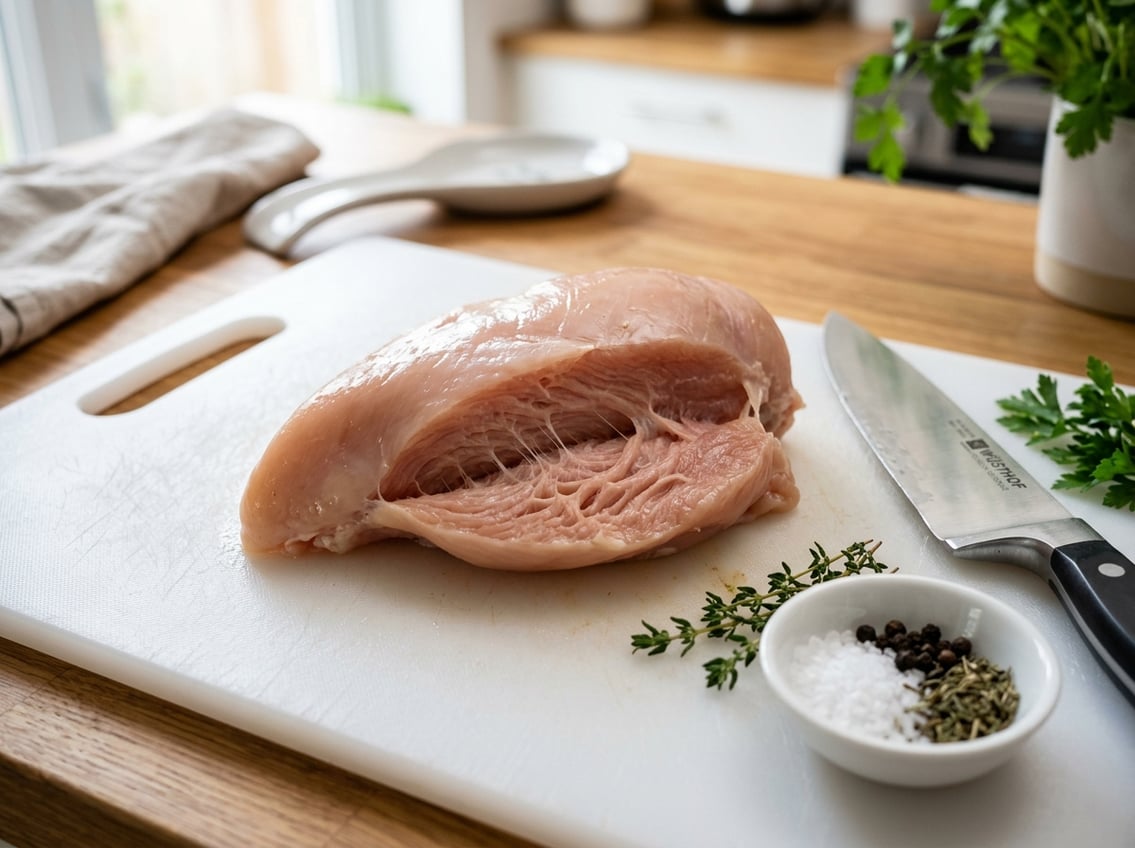
To get tender results, control the temperature, avoid pushing the meat past its ideal point, and watch for signs of quality problems before cooking.
When chicken breast turns stringy, the texture usually means the muscle fibers tightened too much or were already damaged.
The Main Reasons Texture Turns Fibrous
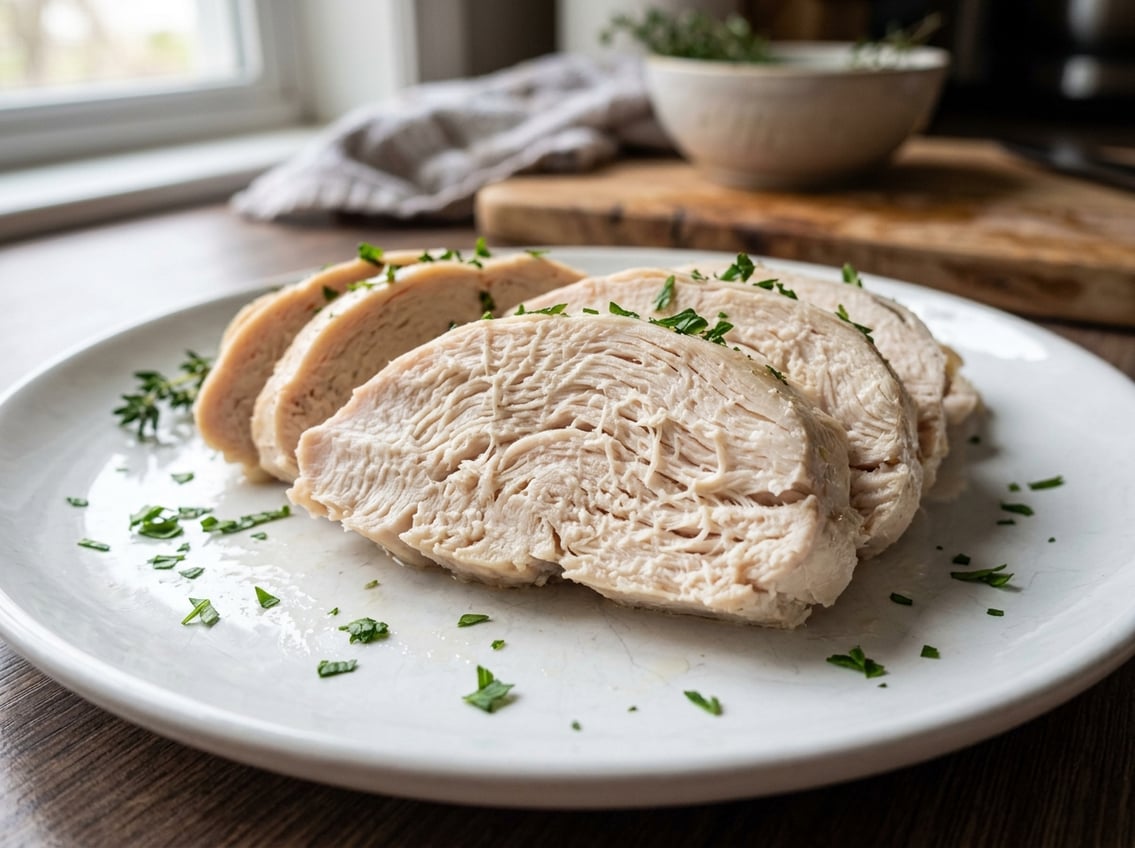
Heat most often causes stringy texture in chicken breast.
Chicken breast is lean, so it has less fat to protect it during cooking, and the muscle structure can tighten quickly.
A good meat thermometer helps you stop at the right point instead of guessing.
The muscle fibers, called myofibrils, contract as they heat, and too much heat turns juicy chicken breast tough.
How Overcooking Tightens Muscle Fibers
Overcooking quickly makes chicken tough.
As the internal temperature rises too far, the proteins contract hard and squeeze moisture out of the meat.
That moisture loss leaves the breast dry and fibrous.
Even a small extra stretch of cooking time can make a noticeable difference in texture.
Why High Heat Can Dry Out Lean Meat
High heat can work well when you stay in control, but it can also strip moisture from chicken breast fast.
Thin, lean cuts dry out more easily than fattier meats because they have less internal insulation.
If you cook the outside too quickly, the inside may still need time.
That uneven cooking can leave the exterior dry before the center is done.
How Carryover Cooking Pushes Chicken Too Far
Carryover cooking keeps raising the temperature after you remove the chicken from the heat.
A breast that looks perfect in the pan can still overcook on the cutting board.
Remove it a little before you think it is fully done, then let it rest.
The internal heat finishes the job without pushing it into stringy territory.
Why Breast Meat Is More Prone to Dryness Than Dark Meat
Breast meat is naturally leaner than thighs and legs.
Dark meat has more fat and connective tissue, which helps it stay moist during cooking.
Chicken breast has less of that protection, so the same heat that works well for darker cuts can leave it dry.
Juicy chicken breast often needs closer temperature control than other parts.
When the Problem Starts Before You Cook
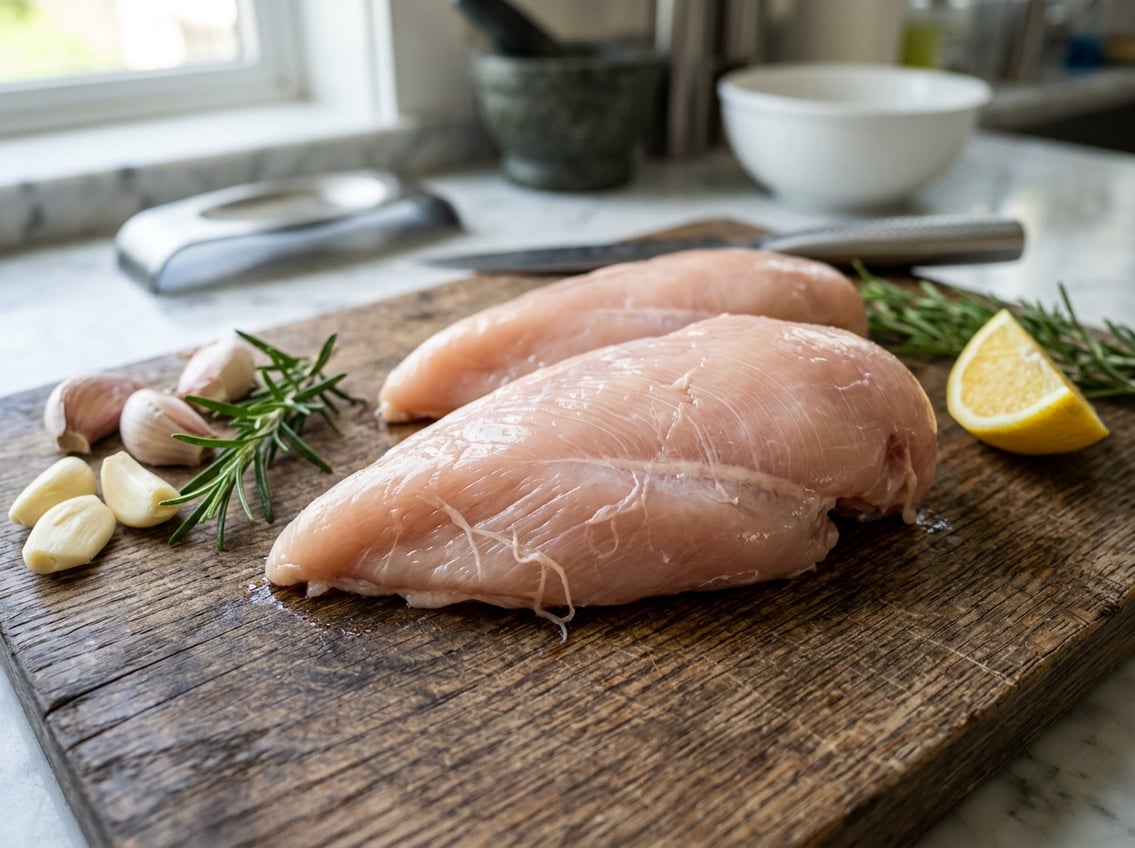
Sometimes, the texture issue begins at the farm or in processing, not in your kitchen.
Terms like spaghetti meat and woody chicken describe defects or structure changes that can make stringy chicken breast more likely before you season it.
These problems are not the same, and they do not always look the same in the package.
The key signs appear in the raw meat’s feel, appearance, and firmness.
What Spaghetti Meat Really Means
Spaghetti meat is a real muscle defect that makes the breast look and pull apart in soft, string-like strands.
The structure can seem loose or broken down.
This is different from normal stringy texture caused by cooking.
In this case, the meat already has weak internal support before heat is ever applied.
How Mushy Breast Differs From Woody Chicken
Mushy breast and woody chicken are not the same defect.
A mushy breast may feel soft and unstable, while woody chicken feels hard, dense, and unusually firm.
Both can create poor eating quality, yet they point to different muscle changes.
One is more fragile, the other more rigid.
Why Fast-Growing Broiler Chickens Are Often Linked to Defects
Fast-growing broiler chickens often develop these defects because rapid muscle growth can outpace the tissue that supports it.
That can leave the breast structure less stable.
Research and industry reporting link spaghetti meat chicken to commercially raised birds, especially those bred for fast growth.
A recent analysis notes that stringy chicken is common enough in American poultry to affect many commercially produced breasts, especially in larger birds, as described in a review of causes and solutions.
What Raw Chicken Looks Like When Structure Is Already Damaged
Raw chicken breast with a structure problem may look unusually split, loose, or uneven.
It can seem soft in one spot and fibrous in another.
You may notice that the grain separates easily when you handle it.
If the breast looks fragile before cooking, the final texture may already be compromised.
Handling and Prep Choices That Affect Bite

Your handling choices can make chicken breast more or less tender at the table.
Freezing, thawing, marinating, and slicing all change how the meat feels in your mouth.
These steps do not fix every structural problem, yet they can reduce dryness and make the bite seem less stringy.
Small prep choices matter more with lean chicken breast than with richer cuts.
How Freezing and Thawing Can Damage Fibers
Freezing forms ice crystals inside the meat, and those crystals can damage muscle fibers.
If you thaw and refreeze chicken, that damage can increase.
The result is often more drip loss when the meat cooks.
That extra moisture loss makes the breast feel drier and more fibrous.
When Marinating Chicken Helps Texture
Marinating chicken can help if your goal is better moisture and a softer surface.
Salt-based marinades and yogurt-style marinades can improve the eating quality of chicken breast.
A marinade works best when it has time to contact the meat evenly.
It helps most with surface texture and moisture retention, not with a major muscle defect.
Why An Acidic Marinade Has Limits
An acidic marinade can help break down some surface proteins, but it cannot repair badly damaged muscle.
Too much acid, or too long in the marinade, can make the outer layer mealy.
A lemon or vinegar marinade should be used with care.
It can support a juicy chicken breast, but it cannot undo overcooking or structural defects.
How Slicing and Resting Influence Perceived Tenderness
Resting lets juices settle back into the meat instead of running out on the cutting board.
If you slice too soon, the breast can seem drier and tougher than it really is.
Slicing against the grain also helps because it shortens the muscle fibers.
That simple step can make chicken breast feel less stringy even when the cooking is correct.
How to Buy and Cook for Better Results
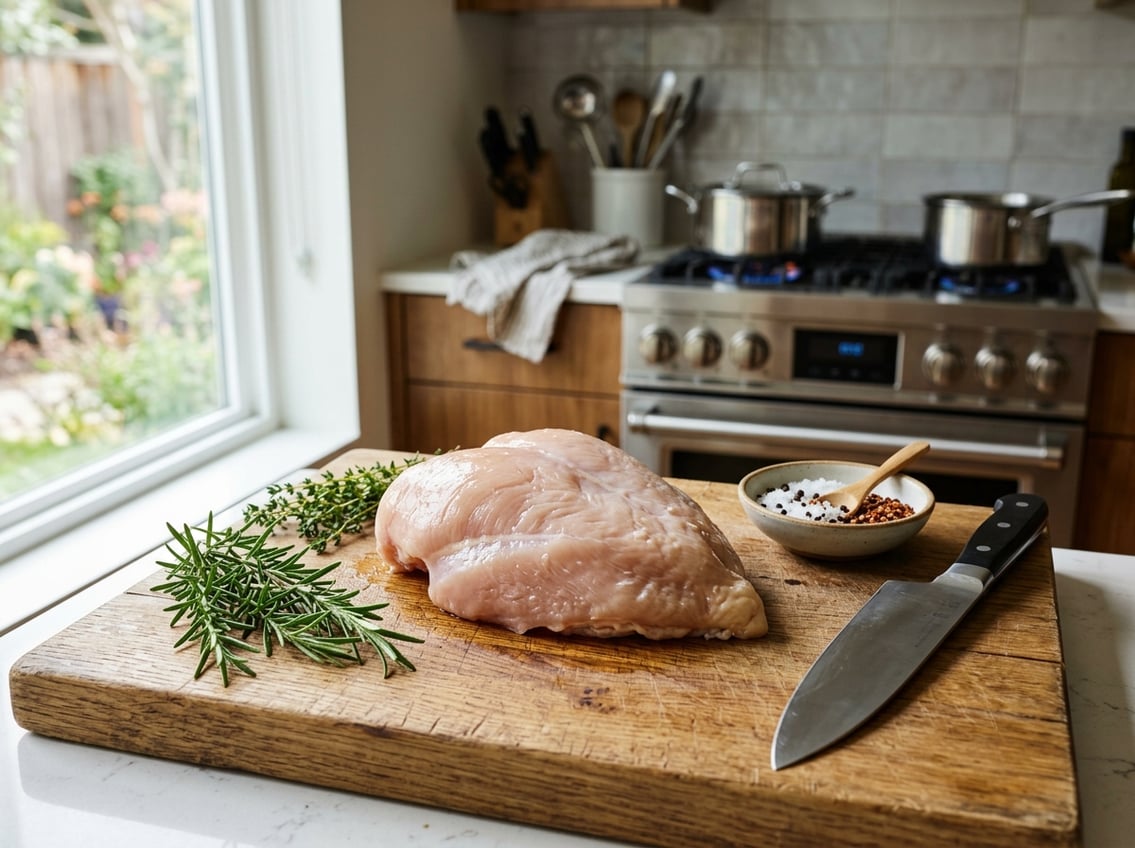
Better results start at the store and continue through the last minute of cooking.
If you choose the right breast and keep heat under control, you lower the odds of stringy chicken.
A meat thermometer is still the most useful tool in the process.
It gives you a better result than cooking by color alone.
What to Look for at the Store
Choose chicken breast that looks even in color and has a firm, normal texture.
Avoid packages with breasts that look unusually split, torn, or loose.
Smaller breasts often cook more evenly than very large ones.
If a breast seems oversized or oddly pale, it may be more likely to produce a dry bite.
Whether Organic Chicken Lowers the Odds
Organic chicken may improve your odds, since some shoppers prefer it for production standards and smaller-scale sourcing.
It can be a useful choice, though it does not guarantee a tender result.
No label can fully prevent poor cooking technique or every muscle defect.
Organic chicken can still turn stringy if you overcook it.
Best Cooking Habits for More Tender Breasts
Use moderate heat and monitor the internal temperature closely.
Remove the chicken as soon as it reaches a safe final temperature, then let carryover cooking finish the job.
A recent guide on avoiding stringy chicken breast also points to brining, careful roasting, and slicing against the grain as reliable ways to improve tenderness.
Those habits support a juicier result without making the meat mushy.
When Stringy Chicken Is Safe but Not Worth Serving
Stringy chicken is safe to eat if it reaches the proper temperature. The issue usually concerns quality, not safety.
If the breast tastes dry, shreds badly, or feels unpleasant, you can use it in soups, salads, or chopped dishes.
If the texture is too far gone, it may be better not to serve it plain.


