
Where to Cut Chicken Breast in Half for Even Cooking
Cut chicken breast in half through the thickest part, slicing horizontally to create two thinner, even portions. This technique gives you faster cooking and more even doneness for grilling, pan-searing, and stuffing.
If you keep the knife level and cut from the thick side toward the thin side, you can turn a large breast into evenly cooked pieces with very little waste. The same method works whether you want to butterfly a chicken breast, make cutlets, or prepare pieces for quick meals.
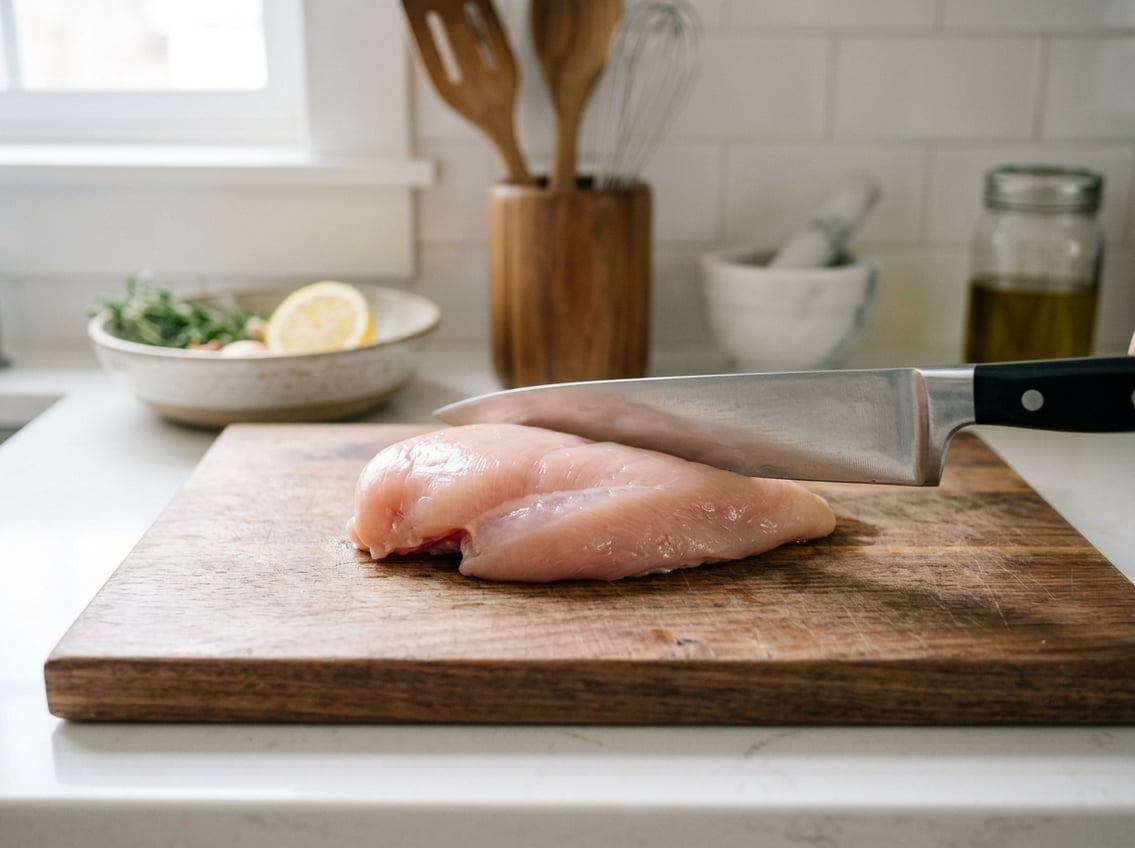
Find the Right Cutting Line
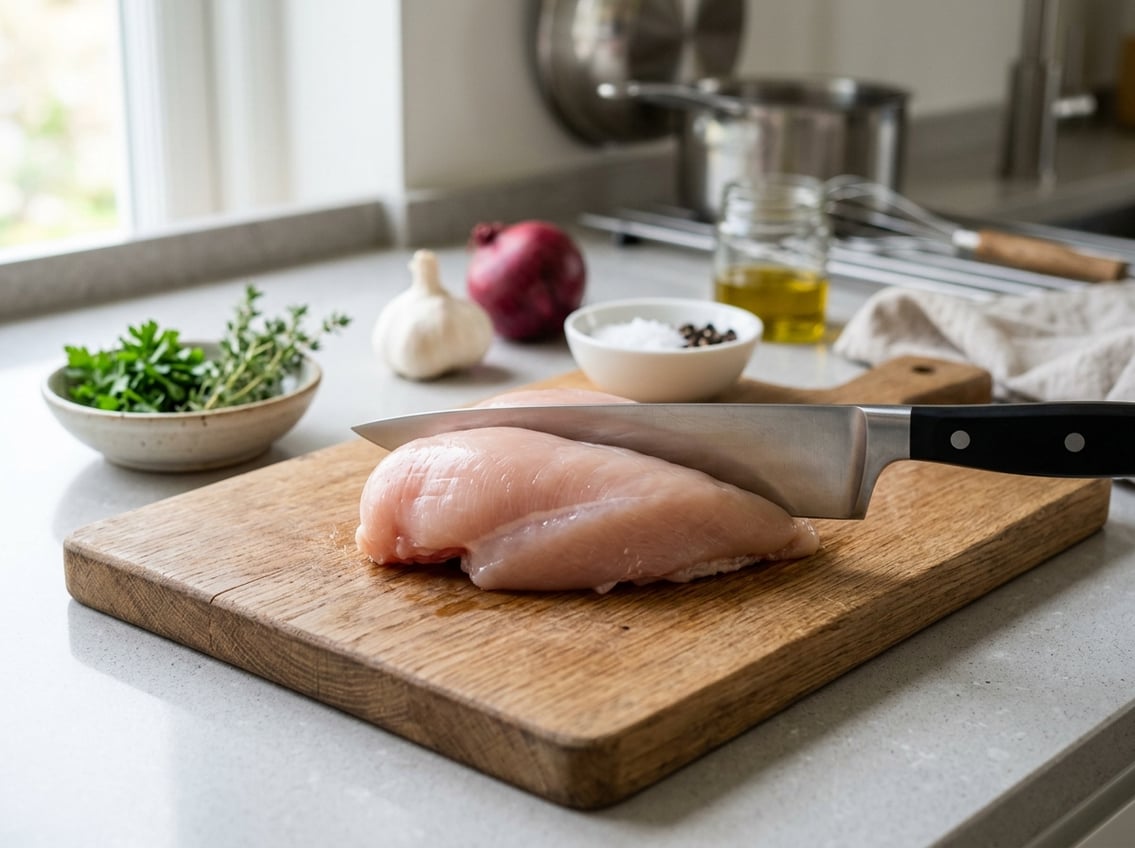
Start by choosing the right line before your knife touches the meat. Work across the middle of the breast, not straight down, so the pieces stay similar in thickness.
Identify the Thickest Side and Thin Tapered End
Place the chicken breast smooth-side up and look for the thickest side, usually the rounded end. Start your cut on the thick side and travel toward the thinner side.
A centered horizontal cut helps you avoid one piece that is thick and another that is too thin.
Position the Knife Parallel to the Board
Hold your knife so the blade stays parallel to the cutting board. This angle creates even halves and keeps the knife from angling up or down.
If you tilt the blade, one side will end up thicker. A steady, level cut gives you a better result.
Leave a Small Hinge or Slice All the Way Through
You can stop just before the edge and open the breast like a book for the butterfly method. You can also slice all the way through if you want two separate pieces.
Both methods work for different recipes and give you control over the final pieces.
Make the Cut Safely and Evenly
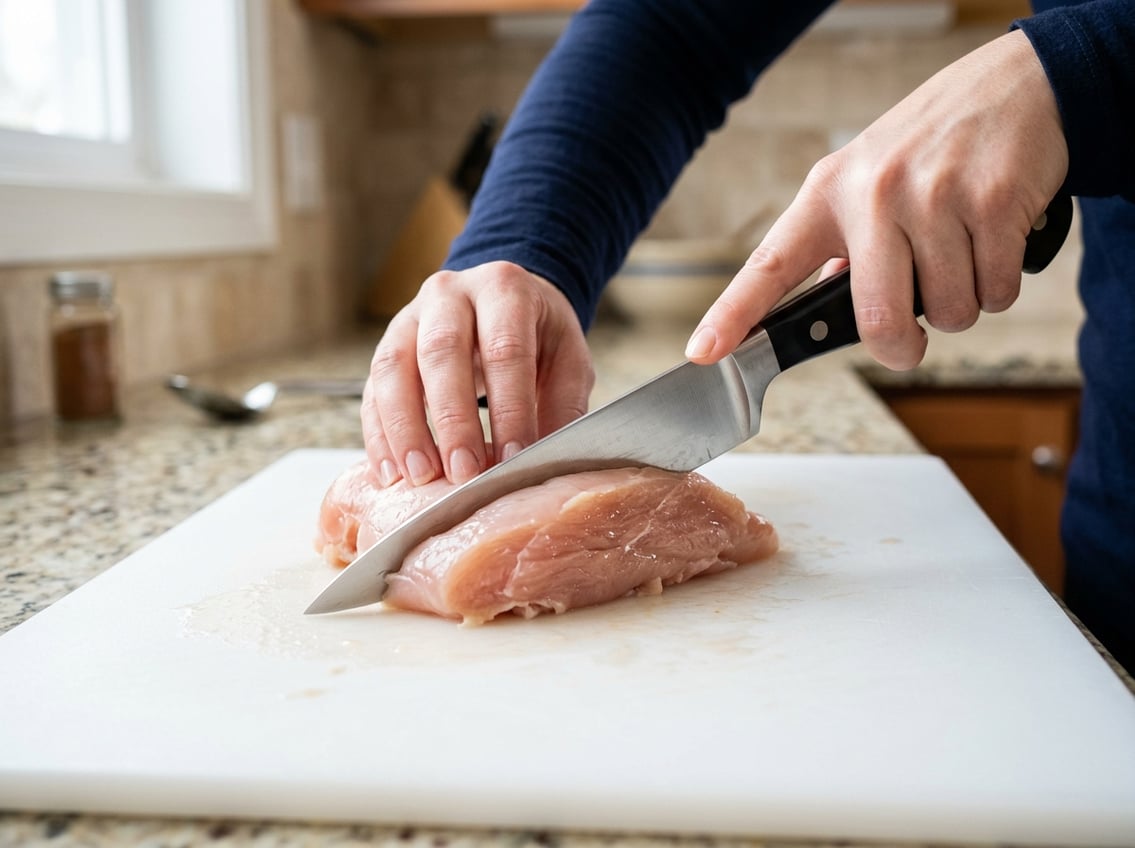
A stable setup helps you make a cleaner cut and reduces slipping. Dry chicken, a sharp knife, and a firm board are essential.
Set Up the Chicken for Stability
Pat the breast dry with paper towels before cutting. Place it on a cutting board with the flatter side down to prevent wobbling.
Use your free hand in a claw grip with fingertips tucked under. This keeps your hand out of the blade path while you work.
Use a Sharp Knife and Controlled Sawing Motion
A sharp chef’s knife, boning knife, or fillet knife gives you more control than a dull blade. Short, gentle sawing motions work better than one hard push.
Keep the motion slow and even. This helps you cut chicken breast in half without tearing the meat or making jagged edges.
Fix Uneven Thickness After Slicing
If one side is thicker, lay the piece flat and make a second light slice. You can also press the thicker area gently with the flat side of the knife to even it out.
A few light taps help a butterflied chicken breast cook at the same pace. Even thickness matters more than a perfect shape.
Choose the Best Cut for Your Recipe
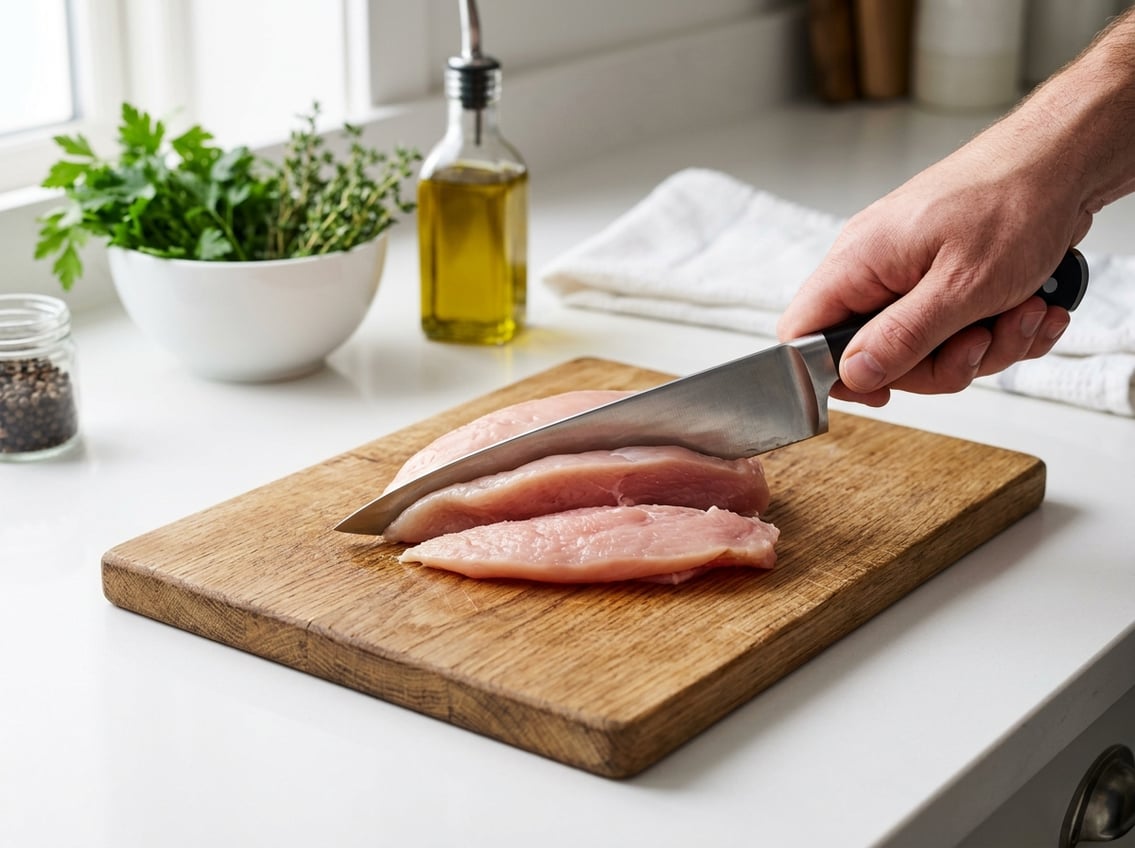
The cut you choose should match how you plan to cook the chicken. A halved breast, a cutlet, and a stuffed pocket each serve different purposes.
When to Use a Butterflied Piece
Use a butterflied chicken breast when you want one larger piece that cooks evenly but still feels substantial. It works well for grilling, roasting, or pan-searing.
This is a good choice when the recipe needs a single piece per serving.
When to Turn It Into Chicken Cutlets
Choose chicken cutlets for faster cooking and a thinner surface for breading or saucing. Cutlets work well for quick sautés, Parmesan-style dishes, and sandwiches.
If you need even thinner pieces, pound the chicken lightly after slicing. This gives you more control than forcing the knife to do all the work.
Best Uses for Stuffed Chicken Breast and Chicken Fajitas
Stuffed chicken breast works best when you cut the breast to form a pocket or butterfly opening, not fully separated. The shape holds fillings like cheese, spinach, or mushrooms securely.
For chicken fajitas, cut the halved breast into strips after slicing. Thinner pieces cook fast and work well in stir-fries and quick skillet meals.
Store and Prep the Pieces After Cutting
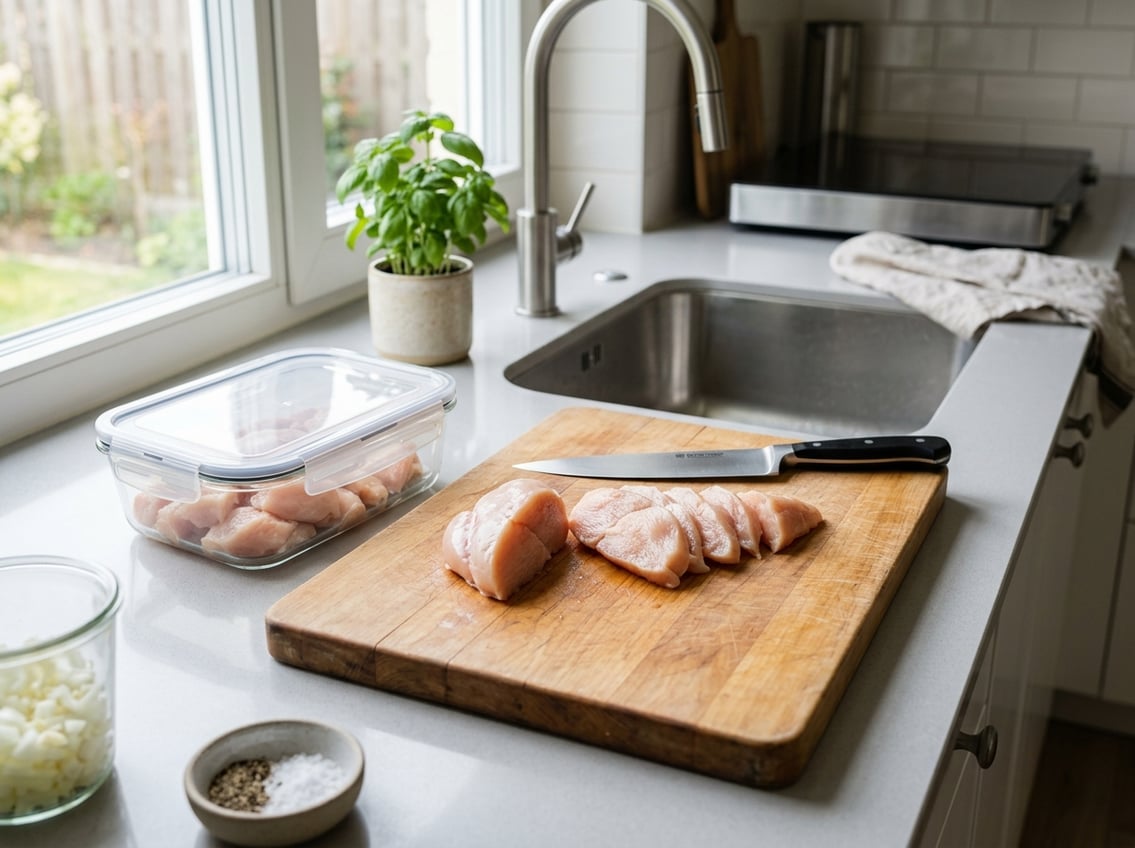
After cutting, quick prep helps the pieces cook better and stay safe. Trim only what is needed, then store the chicken at the right temperature.
Trim Tenderloins, Fat, and Tendons
Check for the tenderloin, the small strip attached to the underside of many breasts, and remove it if you want the pieces to cook more evenly.
Trim away excess fat or loose tendon bits before cooking. This gives you a cleaner shape and a more even result.
Refrigeration and Freezer Timing
Store raw chicken in a sealed container or zip-top bag and refrigerate it within two hours, or within one hour if your kitchen is warm. Keep it at 40°F or below.
For longer storage, freeze the pieces in a single layer, then move them to a bag once firm. Label the bag with the date so you can track how long the chicken has been stored.
Food Safety and Cross-Contamination Basics
Wash your knife, board, and hands with hot soapy water after handling raw chicken. Keep the chicken separate from produce, bread, and ready-to-eat food.
Use one board for raw meat if possible. Do not rinse raw chicken in the sink.


