
What Does Enhanced Chicken Breast Mean? Label Guide
Enhanced chicken breast means processors have added liquid, usually a salt solution or broth, to increase moisture, flavor, and sometimes weight. In the U.S., stores often sell this as enhanced chicken or enhanced meat, and the label should tell you what was added.

If you see an enhanced chicken breast label, processors have injected the chicken with a solution, which can change sodium levels, price, and cooking results. The USDA has pushed for clearer labeling of injected chicken and related products, according to NPR’s report on enhanced meat labeling.
You may also hear the term chicken plumping, which refers to the same practice. Processors add water-based solutions to poultry before sale.
What the Label Is Telling You

An enhanced label tells you the meat is not plain chicken breast. Processors have treated it with added liquid, which may include water, broth, salt, or seasonings.
The exact wording matters because it shows how much of the package weight comes from the added solution. Terms like contains up to x% solution and retained water indicate this.
How Enhanced Chicken Breast Is Defined
Enhanced chicken breast is raw chicken breast with added solution before packaging. Processors introduce the solution by injection, tumbling, or soaking.
Enhanced chicken, enhanced meat, and injected chicken all refer to the same idea, even if the package wording changes. Some labels list the exact flavoring, such as broth or teriyaki-style liquid, as described in NPR’s coverage of USDA labeling changes.
What ‘Contains Up to X% Solution’ Means
When a package says contains up to x% solution, that percentage refers to the added liquid in the meat. That portion of the finished product can be water-based solution.
This label can affect both price and salt intake. A higher percentage means more retained water and less pure meat by weight.
Why Some Packages Also Mention Retained Water
Retained water means the meat has absorbed liquid during processing. Some labels mention it to show the product is not just naturally moist chicken.
That wording helps you identify the product. It also explains why similar-looking packages may cook and taste differently.
What Gets Added to the Meat

Processors usually add a simple liquid base, then adjust it for flavor and texture. The most common additions are salt, water, broth, and sometimes phosphate-based ingredients.
These sodium solutions hold moisture and improve consistency. They are also the reason enhanced chicken can have much more sodium than plain chicken breast.
Typical Sodium Solutions and Broth Additions
A basic added solution may include water and salt. Some products use broth or seasoned liquid instead, which makes the meat taste more seasoned before you cook it.
Plumping, chicken plumping, plumped chicken, and injected chicken all refer to giving the meat extra liquid. That liquid may carry flavor and sodium.
Why Sodium Phosphate Is Used
Sodium phosphate helps the meat hold onto moisture. It also improves texture, so the chicken may stay juicier during storage and cooking.
Processors use it because lean chicken breast can dry out easily. A small amount can help the meat feel less stringy and more tender after cooking.
How Plumping Changes Moisture and Texture
Plumping adds water to the meat cells and the spaces between them. That can make the chicken feel heavier in the package and softer after cooking.
The texture can be less firm than plain chicken breast. The added liquid may also leak out in the pan, which can affect browning and pan drippings.
How It Affects Price, Nutrition, and Cooking

Enhanced chicken changes the value you get for your money, the sodium you eat, and the way the meat behaves in the pan or oven.
That matters if you are tracking salt, trying to sear chicken well, or comparing packages by price per pound.
Paying for Added Water Weight
When processors enhance chicken, you pay for added liquid as part of the weight. The price per pound can look similar to plain chicken, even though part of the weight is not meat.
Labels are meant to reduce confusion about water weight. A package may seem like a good deal until you realize you are paying for retained water.
How Sodium Levels Can Change
Sodium can rise a lot in enhanced chicken. According to The Star’s taste-test report, one enhanced breast had more than 10 times the salt of a fresh chicken breast in their comparison.
That matters if you are watching sodium for blood pressure, heart health, or general diet goals. The USDA has noted that some enhanced meat products use sodium solutions that are easy to miss unless you read the label closely.
Why Enhanced Chicken Can Cook Differently
Enhanced chicken often releases more liquid as it cooks. That can make browning slower and reduce the chance of a deep sear.
It may also taste saltier without any extra seasoning from you. If the meat already contains sodium solutions, your usual marinade or dry rub may push the flavor too far.
How to Spot Better Options at the Store
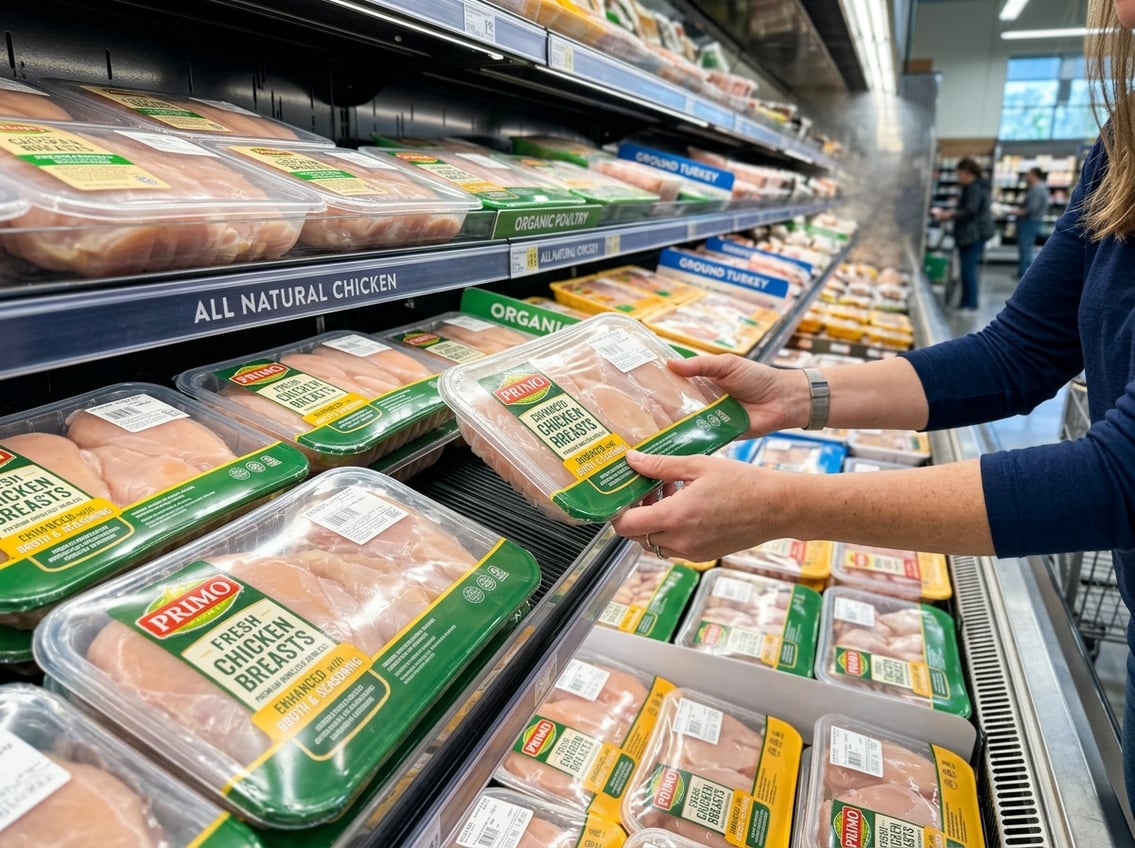
You can spot enhanced meat by reading the front label, the fine print, and the nutrition panel. A few quick checks can tell you whether the package is plain chicken or injected chicken.
If you want less sodium and more control over flavor, label reading matters more than the brand name.
Label Terms That Signal Injection
Look for phrases such as enhanced, contains up to x% solution, retained water, basted, or brined. These terms often mean the chicken has been treated with added liquid.
If the package lists a flavored solution or broth, that is another sign the chicken is not plain. The USDA has pushed for clearer naming because simple package names can hide the processing, as noted in NPR’s report on enhanced meat.
Ingredient List Red Flags to Check
Check the ingredient list for water, salt, broth, sodium phosphate, and seasonings. If those appear on a raw chicken package, the product is likely not just plain chicken breast.
You can also compare the sodium number on the nutrition label. A higher sodium count is often the clearest sign that processors used chicken plumping or another enhancement step.
Why Air-Chilled Chicken Is Often Different
Processors handle air-chilled chicken without using the water absorption methods found in some enhanced products.
This process results in less retained water and a more natural meat texture.
Air-chilled chicken may cost more, and the label alone does not guarantee quality.
If you want to avoid injected chicken, air-chilled options are often easier to trust than packages that mention added solution.


