
How Long Can Chicken Breast Cooked Stay in Fridge? Storage Guide
If you are asking how long cooked chicken breast can stay in the fridge, the safest general answer is 3 to 4 days when you store it properly in a refrigerator set at 40°F or below.
That rule gives you a reliable window for both food safety and best quality.
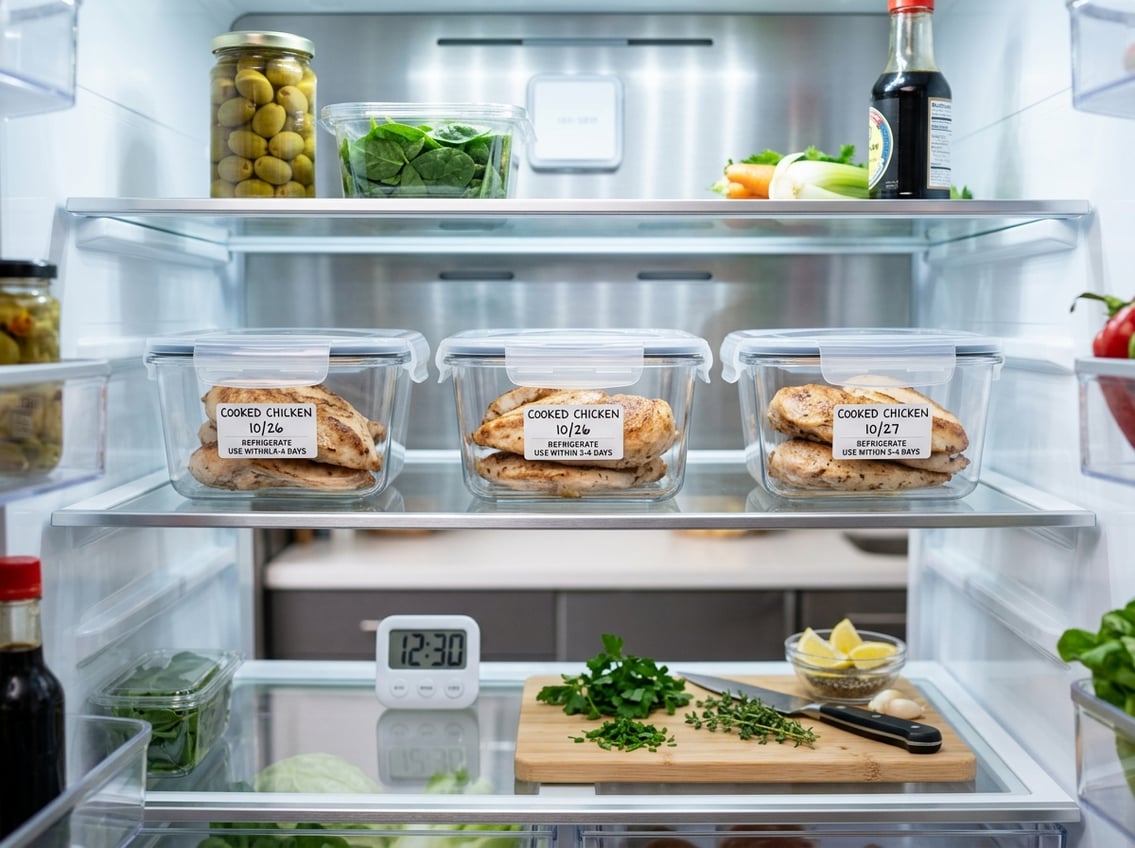
Cooked chicken breast works well for quick lunches, salads, wraps, and meal prep.
How long cooked chicken lasts depends on temperature, storage method, and how quickly you chilled it after cooking.
Food safety guidance from Martha Stewart’s review of cooked chicken storage notes that colder, well-managed refrigeration can sometimes extend leftover life, but the shorter window is the smarter choice if you are unsure about your fridge.
Safe Fridge Timeline for Leftover Chicken Breast
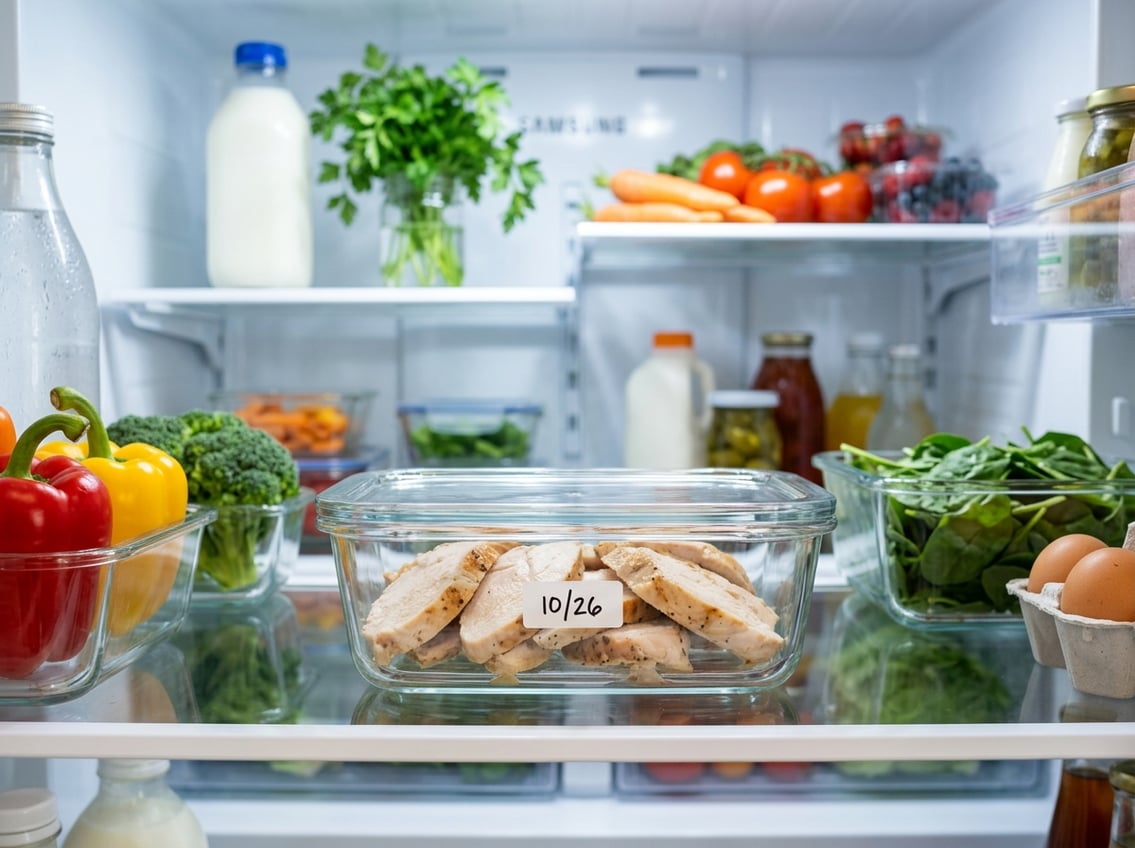
In most home kitchens, cooked chicken breast stays safe for a short, predictable period.
If you store cooked chicken the right way and keep your fridge cold, you can plan meals around a simple timeline.
The Standard 3-to-4-Day Window
3 to 4 days in the fridge is the best rule to follow for home storage.
If you cooked the chicken on Monday, plan to eat it by Thursday or Friday.
Keep it sealed, chilled, and away from raw meat juices.
When Day 5 Is Too Late
Day 5 is often too late for regular leftovers, even if the chicken still looks fine.
Food can spoil before it looks obviously bad, and quality drops as time passes.
If you are unsure how cold your fridge really is, do not push it.
What Changes the Safe Storage Window
Several things affect how long cooked chicken lasts in the fridge.
The biggest factor is temperature, since your refrigerator should stay at 40°F or below.
How you handled the chicken also matters.
If it sat out too long after cooking, was packed in a warm container, or was repeatedly opened and closed, the safe window gets shorter.
How to Store It Correctly From the Start
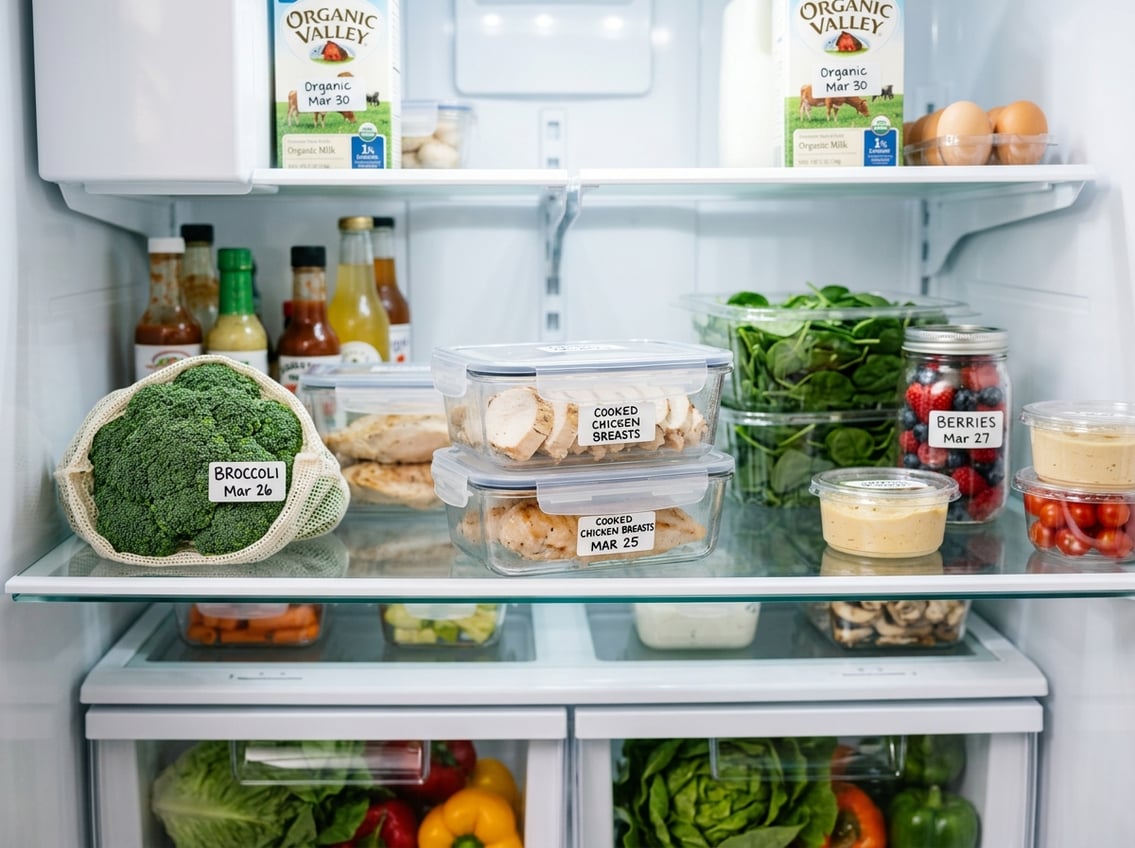
Good chicken breast storage starts right after cooking.
The faster you chill it and the better you seal it, the longer it stays usable and the lower the chance of contamination.
Refrigerate Within 2 Hours
Refrigerate cooked chicken within 2 hours of cooking, or within 1 hour if the room is very hot.
Sitting out longer raises food safety risk, even if the chicken still seems fine.
Let the chicken cool briefly if needed, then put it in the fridge.
Do not leave large pieces on the counter while you “get to it later.”
How to Store Cooked Chicken Breast in Airtight Containers
Store cooked chicken breast in a clean, airtight container.
Tight storage helps prevent drying and keeps odors from other foods out, as noted in this storage guide for cooked chicken breast.
If you do not have a container, wrap the pieces tightly in foil or plastic wrap first, then place them in a sealed bag or box.
Store portions in smaller amounts so you only open what you need.
Where to Place It in the Fridge and Why
Place cooked chicken on a higher shelf or in a cold main section of the fridge, not in the door.
The door warms up more often, which makes temperatures less stable.
Keep it above raw meat, poultry, or seafood so drips cannot contaminate it.
This simple step helps you store cooked chicken more safely from the start.
How to Tell When It Should Be Thrown Out
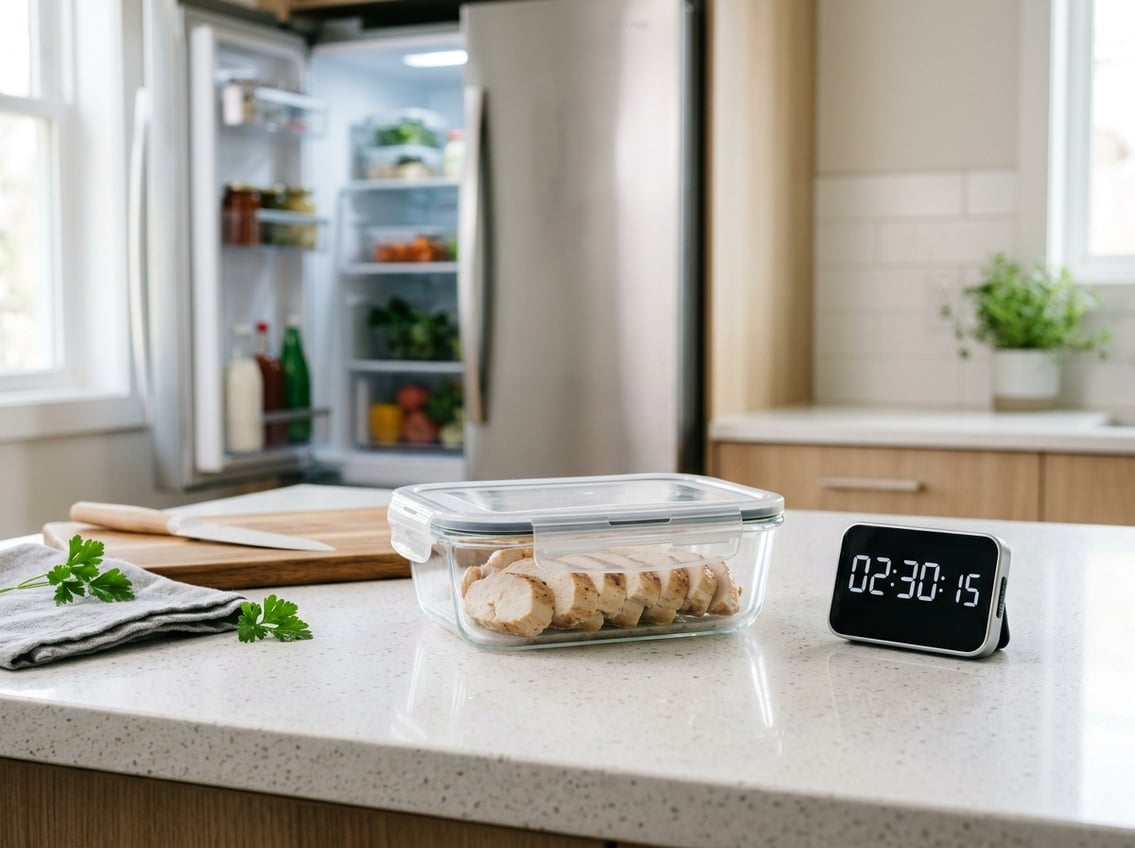
Even within the fridge timeline, check the chicken before eating it.
Spoilage can show up in smell, texture, and color, and once those signs appear, the safest choice is to throw it out.
Spoilage Signs in Smell, Texture, and Color
If cooked chicken smells sour, sharp, or simply off, do not eat it.
A slimy feel or sticky surface is another warning sign.
Color changes can help too.
Dull gray tones, unusual patches, or a faded look are signs that the chicken may be past its safe point, as described in Martha Stewart’s guide on how long cooked chicken lasts.
Why Reheating Does Not Fix Spoiled Chicken
Reheating can make chicken hot, but it does not make spoiled chicken safe again.
Some bacteria and toxins are not removed just because the meat is warmed up.
If the chicken is already bad, cooking it more is not a fix.
At that point, the risk is not worth it.
When to Play It Safe and Discard It
Throw it out if you do not know how long it has been in the fridge, if it sat out too long, or if your fridge has not stayed cold enough.
The same is true if it smells or looks questionable in any way.
When in doubt, discard it.
That is the safest call for cooked chicken breast and for any leftover poultry.
Freezing and Reheating for Later Use
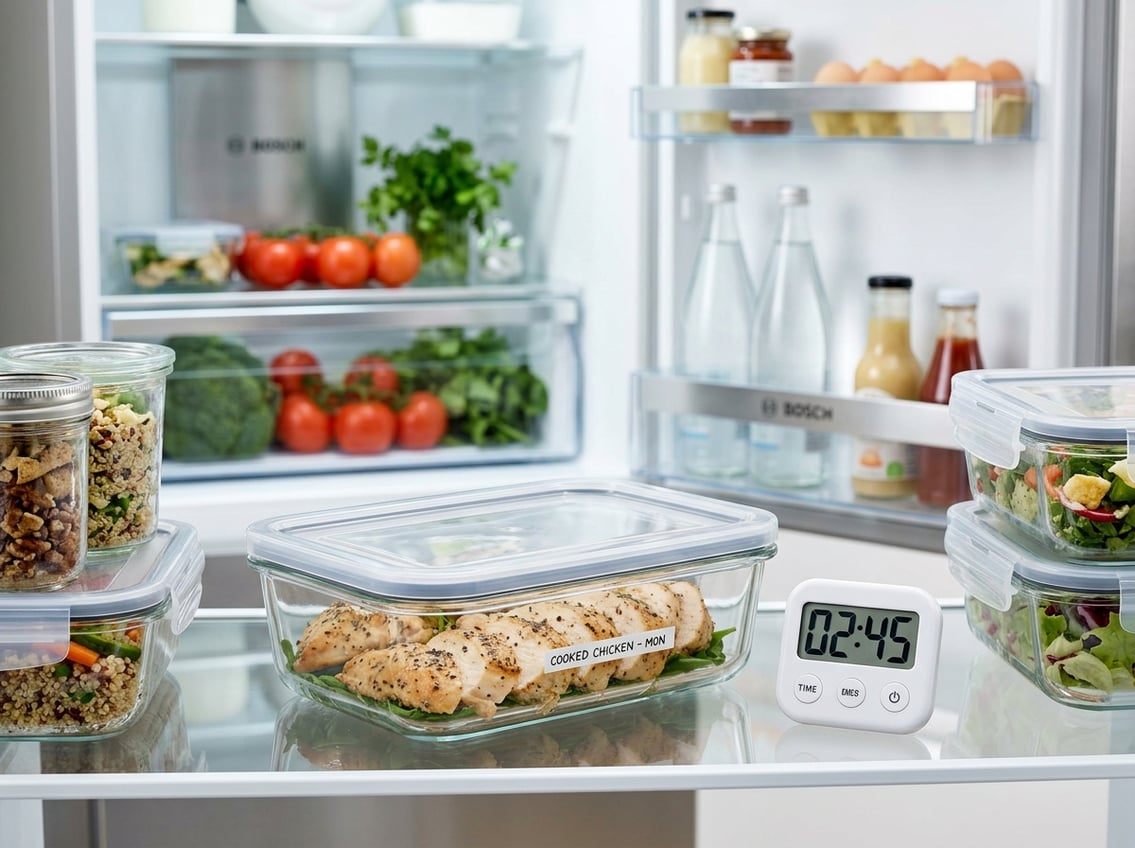
If you know you will not eat the chicken within a few days, freezing is the better option.
It helps you avoid waste and gives you more time without pushing the fridge limit.
When to Freeze Cooked Chicken Instead of Refrigerating
Freeze cooked chicken if you do not plan to eat it within 3 to 4 days.
That advice matches Martha Stewart’s food safety guidance, which recommends freezing when leftovers will not be used soon.
Freezing is also useful for meal prep.
You can store cooked chicken in portions, then thaw only what you need.
Best Ways to Freeze and Thaw Portions
Pack chicken in freezer-safe containers or tight freezer bags.
Press out extra air before sealing to reduce freezer burn.
Label each package with the date, then freeze it as soon as possible.
Thaw it in the fridge for the safest results, since slow thawing keeps the chicken out of the temperature danger zone.
Reheating Chicken Safely Without Drying It Out
Heat cooked chicken to 165°F for safety, especially for pregnant people, older adults, and anyone with a weaker immune system.
Add a splash of water or broth and cover the chicken while reheating to keep it moist.
If you use the microwave to thaw chicken, cook or eat it right away.
Do not let chicken sit at room temperature after thawing.


