
What Does It Mean When Chicken Breast Have Rib Meat? Explained
When chicken breast has rib meat, the breast meat still has a small strip of meat from the rib area attached. In many U.S. grocery packages, this label tells you that you are buying chicken breast with rib meat included, not plain breast meat alone.
The meat may taste a little richer, stay a little juicier, and carry a bit more fat than a fully trimmed breast. It does not mean the chicken is processed in a strange way or that the meat is lower quality.
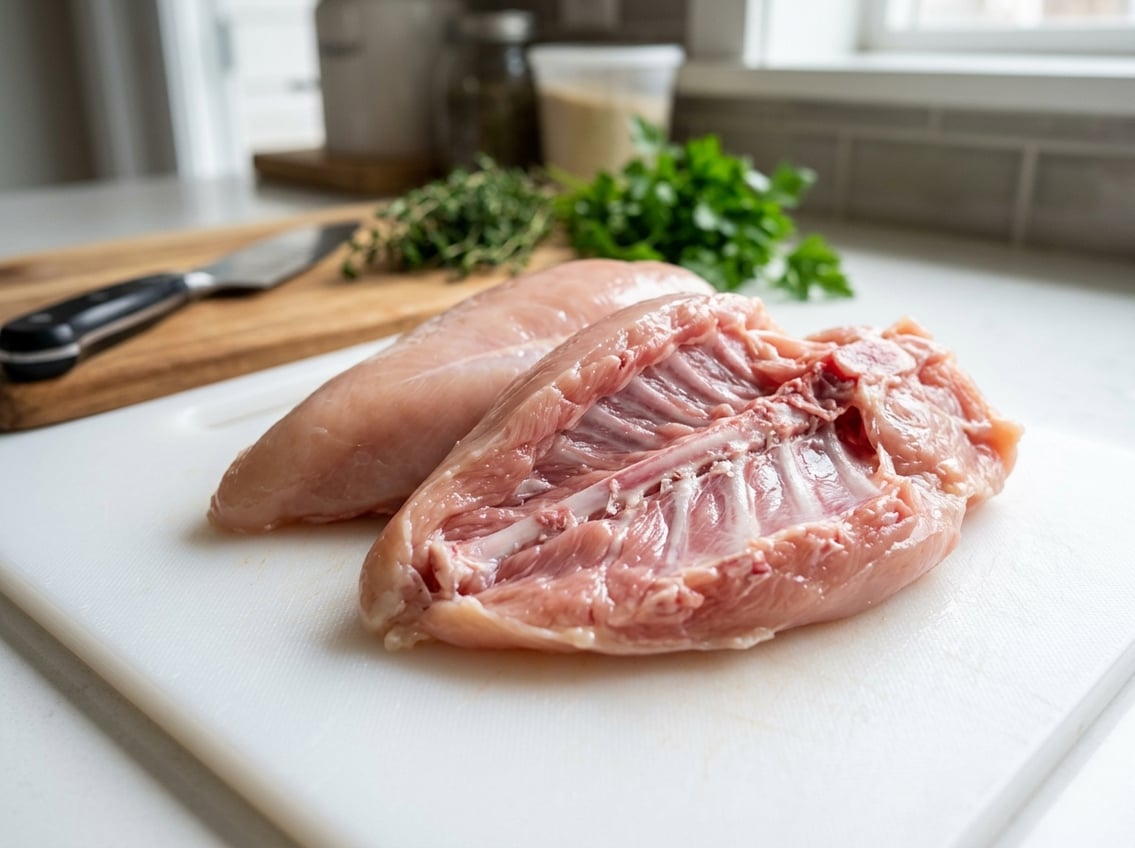
You can find this phrase on fresh packages, frozen items, or processed chicken products. Once you know what rib meat is, reading the label at the store and factoring it into your cooking becomes easier.
What the Label Is Telling You
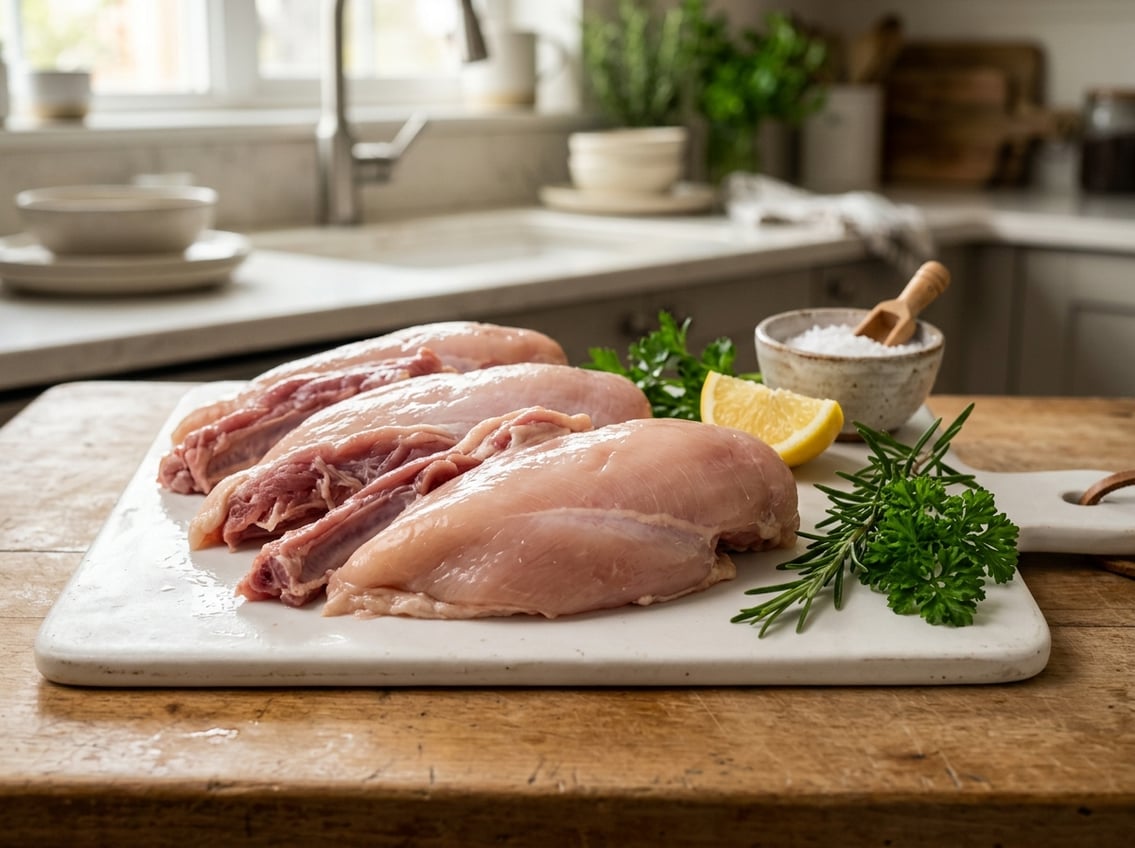
A package marked with rib meat tells you that the breast is not completely trimmed. The smaller piece attached near the breast bone area can add flavor and moisture.
The wording is mostly about anatomy and trimming, not a warning. Knowing where the extra meat comes from helps you compare it with plain chicken breast or other cuts.
What Counts as Rib Meat on a Chicken Breast
Rib meat is the small amount of meat left attached near the ribs or breast bone. It is often part of the breast package because the breast was not trimmed all the way down to a perfectly uniform shape.
This is not the same thing as mechanically separated chicken or scraps. Chicken breast with rib meat means you are still buying breast meat, just with a small attached section from the rib area.
Where This Meat Comes From on the Bird
The meat comes from the side of the bird near the rib cage and breastbone. It stays attached when the breast is processed less aggressively.
The package contains breast meat plus a little extra meat from the same general area. That extra piece can change the shape, moisture, and fat level slightly.
Why Some Packages Say With Rib Meat
Manufacturers use this label because it accurately describes the cut. It lets them sell a breast that is not fully trimmed while still identifying it as chicken breast.
You may also see this wording on products made for price, texture, or moisture. A package with rib meat included can be less expensive than a fully trimmed breast, and some brands use it to improve eating quality while staying with breast meat.
How It Changes Taste, Texture, and Nutrition
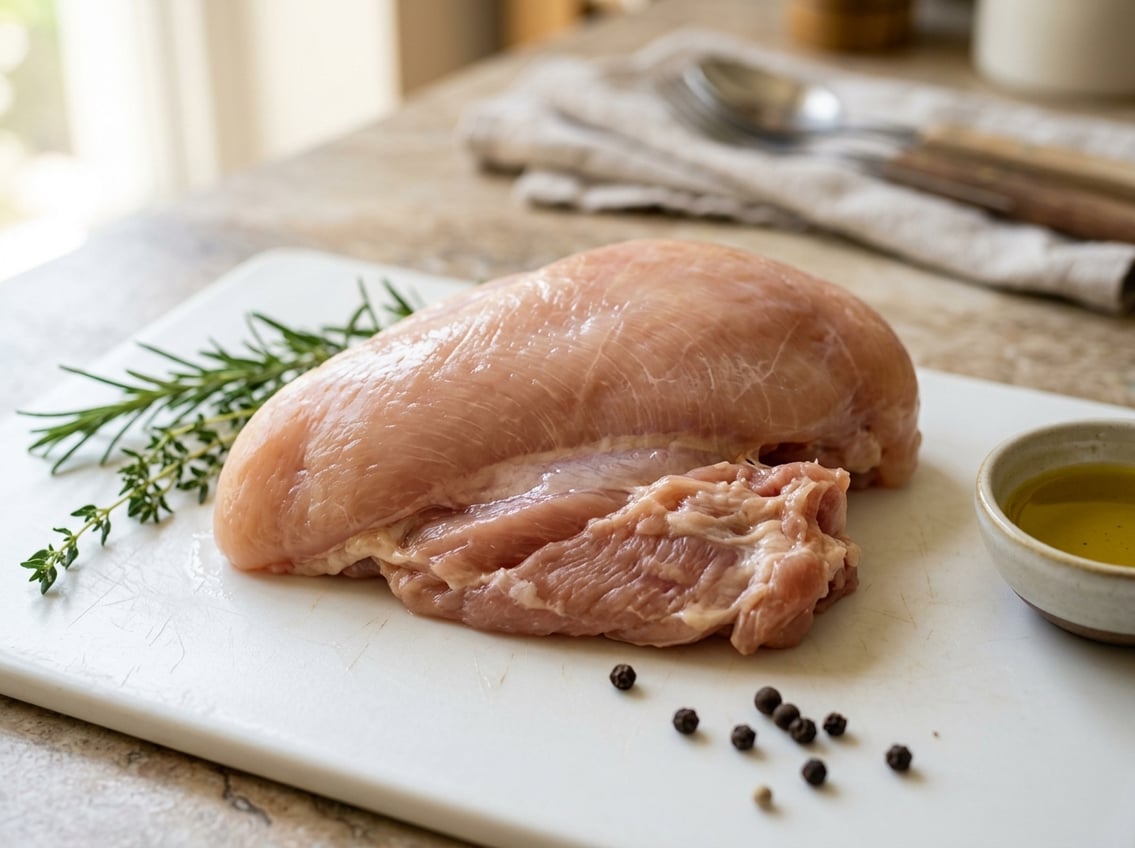
Rib meat can make the breast taste a little fuller and feel less dry after cooking. It also changes the fat and calorie profile a bit, since the extra tissue near the ribs is usually richer than a fully trimmed breast.
The changes are usually small. They can matter if you want very lean chicken or if you care about juiciness and flavor.
Flavor and Moisture Differences
Chicken rib meat often adds a slightly more savory taste. Because it sits near more connective tissue and fat, it can help the meat stay moist during cooking.
That extra moisture can be helpful if you roast, grill, or pan-cook chicken breast. Rib meat can make a small difference if you have ever eaten a breast that seemed drier than expected.
Appearance and Texture You May Notice
You may see a pale, uneven strip attached to one side of the breast. It can look less smooth than a fully trimmed boneless breast.
Texture can also feel slightly less uniform. The rib meat area may be softer or a little chewier than the main breast muscle, especially if you cook it fast at high heat.
Rib Meat Fat Content Compared With Plain Breast
Rib meat generally has more fat than plain chicken breast. That means it can carry a few more calories, while still giving you a solid amount of protein.
If you are tracking lean protein closely, plain trimmed breast is the better fit. If you want a little more flavor and moisture, the difference may be worth it.
Buying and Cooking Considerations
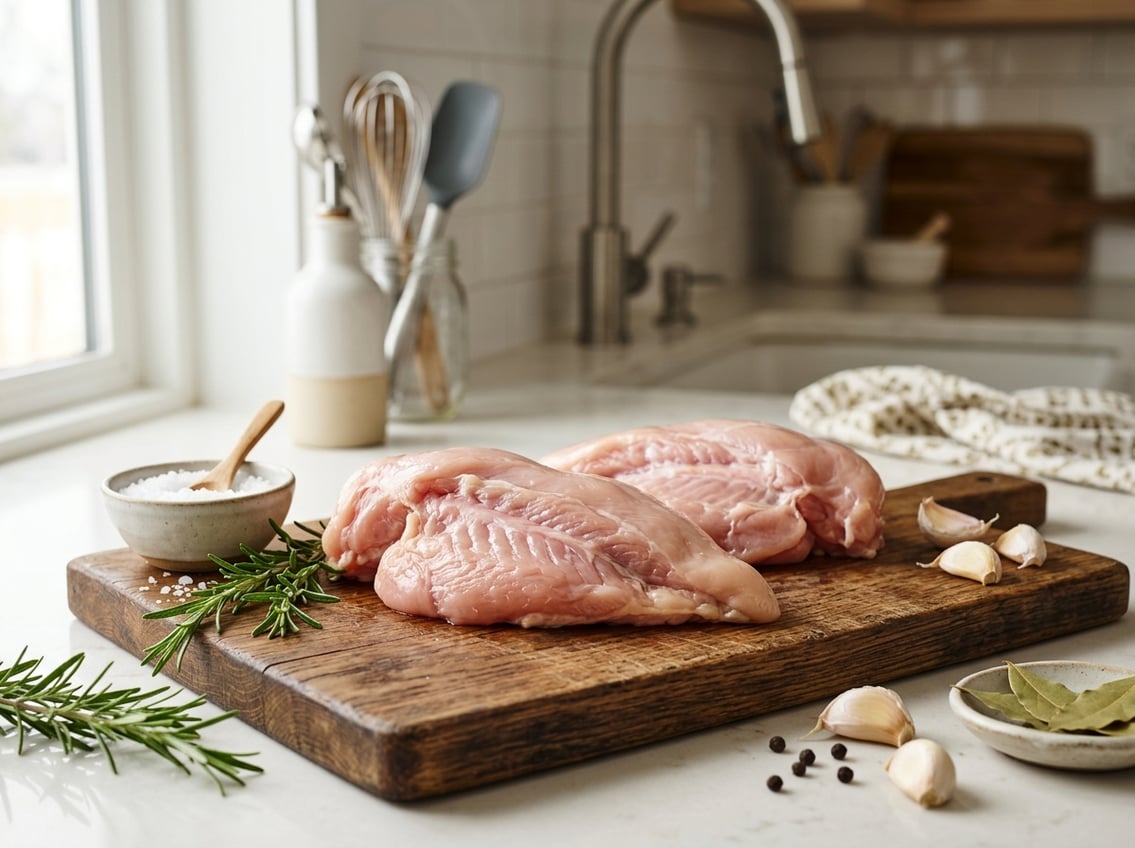
Chicken breast with rib meat fits between very lean breast meat and richer chicken cuts like thigh or drumstick. It can be a practical choice if you want a breast cut that is still familiar but not as dry as a fully trimmed piece.
Your best choice depends on price, recipe, and the texture you want. Cooking method matters too.
How It Compares With Other Chicken Cuts
Compared with thighs, rib meat included in breast is still leaner and milder. Compared with plain breast, it usually has a bit more flavor and moisture.
If you like the taste of white meat but want a slightly richer bite, it can be a good middle ground. For stews, casseroles, and shredded chicken, the extra moisture can help the final dish.
When It Is a Good Value at the Store
This cut can be a good value if the price is lower than fully trimmed breast. You may get a little more flavor for less money, which can make sense for weeknight meals.
It is also useful when you do not plan to trim the chicken yourself. If you are buying in bulk, the savings can add up, especially for family meals or meal prep.
Whether You Need to Trim or Cook It Differently
You do not need special tools or special handling. If you want a very even look, you can trim off any loose pieces before cooking.
Cooking is mostly the same as regular breast, though gentle heat helps. Because rib meat can add moisture, it may be a little more forgiving than very lean breast, but you still need to avoid overcooking. A food thermometer is the best way to check doneness.
Where Else You Will See Rib Meat Used

You will see rib meat most often in products where texture and moisture matter, especially items that are breaded, shaped, or pre-cooked. It shows up in both fresh meat labels and processed chicken products.
The exact wording can change depending on the product type, so the ingredient panel matters. Fresh items and prepared foods are not labeled the same way.
Why It Appears in Processed Chicken Products
Chicken rib meat helps keep nuggets, patties, sandwiches, and similar foods juicy. It also works well when chicken is ground, chopped, or blended into a uniform shape.
Manufacturers often use it to improve flavor and moisture in processed foods. That is why you may see it in nuggets or ready-to-cook items more often than in plain fresh chicken.
How Labels Differ Between Fresh and Prepared Items
Fresh chicken packages may say with rib meat right on the front. Prepared products may list chicken rib meat in the ingredient list instead.
The front label tells you about the cut, while the ingredient list tells you what was mixed into a finished product. A nugget package may contain rib meat even if the front label does not mention it.
What to Check on Ingredient and Nutrition Panels
Check the ingredient list first. Then review the nutrition panel.
The ingredient list tells you if rib meat is present. The nutrition panel shows the amount of fat, sodium, and protein in the product.
If you want leaner chicken, compare brands carefully. Products with rib meat may be a little richer than fully trimmed breasts, especially in processed chicken products.


