
Chicken Breast Versus Turkey Breast for Nutrition and Meals
Chicken breast and turkey breast are both lean protein choices that fit well into many US meal plans. Choose the one that fits your budget, taste, and recipe better, because the nutrition gap is usually small.
Pick the bird that matches your goal, then cook it in a way that keeps it moist and easy to eat. Turkey breast often has a slight edge for lower calories and fat, while chicken breast is often easier to find and brings a few more micronutrients.
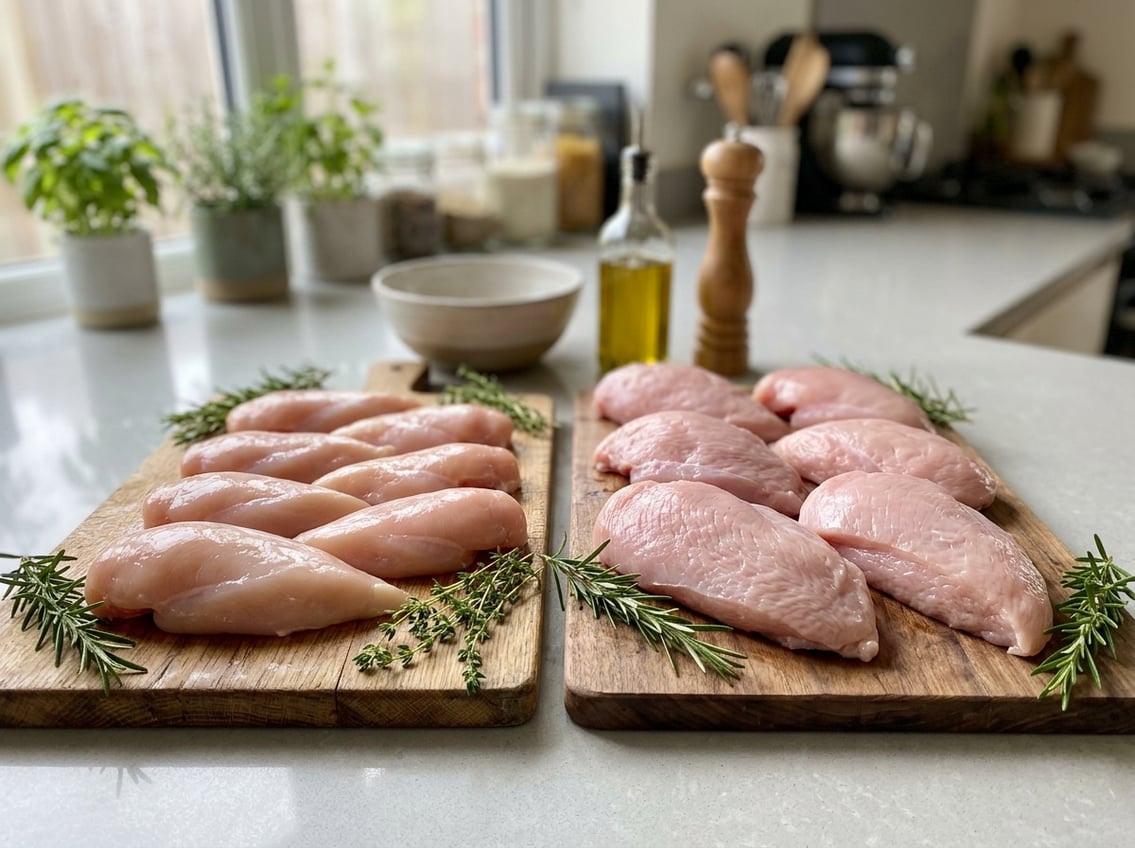
Nutrition Snapshot and Best Choice by Goal
Chicken breast and turkey breast have a few practical differences in protein per serving, calories, fat, and how you plan to use them. Both are strong lean protein options, so your best choice often depends on your goal and the rest of your diet.
Protein Per Serving and Overall Leanness
Turkey breast contains a little more protein by weight. In one comparison of cooked portions, turkey breast provided about 33.4 grams of protein versus 21.9 grams for chicken breast, along with fewer calories and less fat in that dataset from FoodStruct’s chicken breast vs turkey breast comparison.
Cooking method and cut matter a lot. Skinless, boneless chicken breast and turkey breast are both lean protein staples, and both work well when you want a high-protein meal without much carb content.
Calories, Fat, and Cholesterol Differences
Turkey breast usually has lower calories and fat. A separate comparison reported about 120 calories and 3 grams of fat for a 3-ounce serving of cooked turkey breast, versus about 140 calories and 4 grams of fat for cooked chicken breast in a turkey versus chicken breast nutrition review.
Chicken breast can still be very lean, especially if you cook it without extra oil. Turkey breast also contains less cholesterol, while chicken breast brings a bit more niacin and some other nutrients.
Which Option Fits Weight Loss, Muscle Gain, or Everyday Eating
For weight loss, turkey breast often fits best when you want the fewest calories for a high-protein meal. For muscle gain, both work well because the protein is high and the fat stays moderate to low.
For everyday eating, pick the one you can prepare often without getting bored. If you like chicken more, you are more likely to stick with your plan.
Micronutrients and Health Tradeoffs
Chicken breast and turkey breast both support a high-protein diet, yet each one brings a few different vitamins and minerals. The tradeoff is not dramatic, so your best choice depends on which nutrients matter more to you and how you prepare the meat.
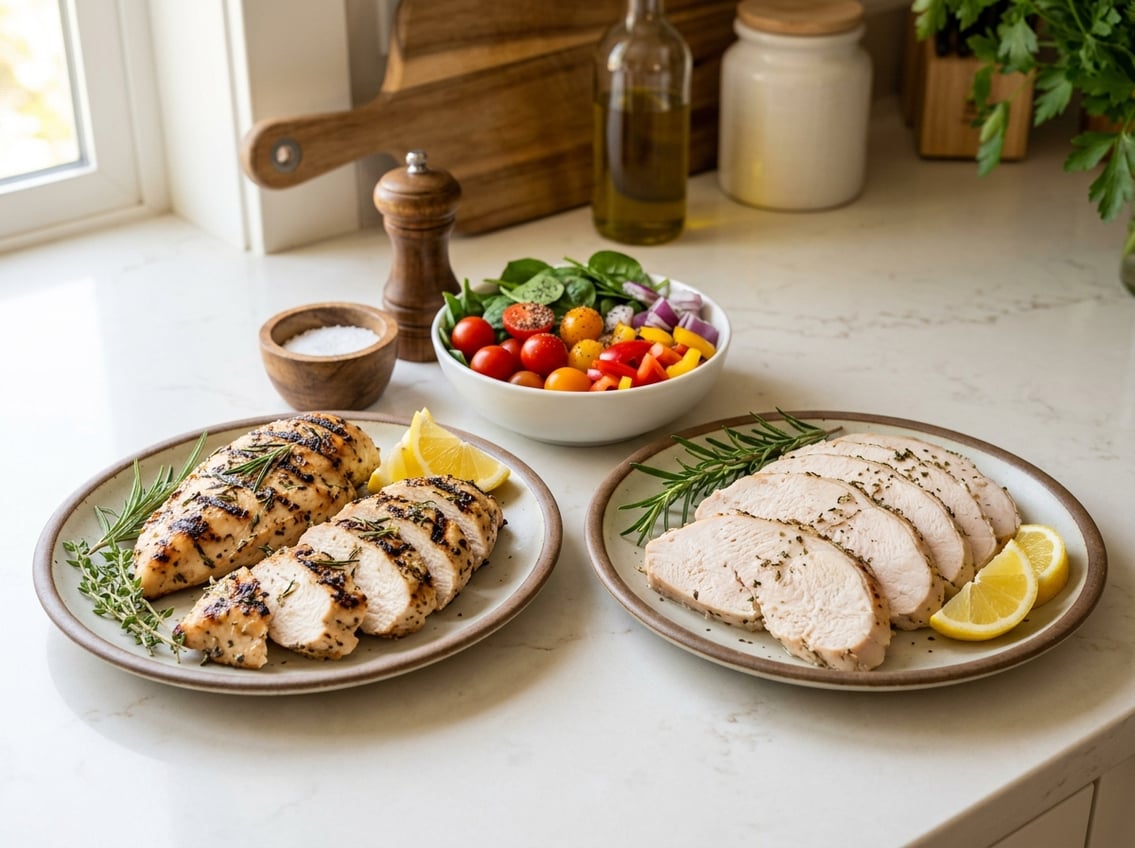
Where Chicken Breast Has the Edge
Chicken breast provides more vitamin B3, vitamin B6, phosphorus, vitamin B5, and selenium in the comparison from FoodStruct’s nutrition breakdown. These nutrients support energy use, nerve function, and normal cell processes.
If you want a poultry option with more of those micronutrients, choose chicken breast. It also has a familiar taste and texture, which can make it easier to include often.
Where Turkey Breast Has the Edge
Turkey breast contains less cholesterol and has slightly more unsaturated fat, including monounsaturated and polyunsaturated fat. It also provides a bit more choline and vitamin B12.
If your goal is a lean protein with a slightly different fat profile, turkey breast is a practical option. It can be a good swap when you want variety.
How Preparation Affects Nutrition
Preparation changes the final numbers more than many people expect. Breading, frying, heavy sauces, and added butter can push up calories and fat fast.
Simple methods like baking, grilling, poaching, or air frying help keep both meats close to their lean protein profile. If you season well and avoid overcooking, you keep the nutrition strong and the texture better.
Taste, Texture, and Cooking Performance
Chicken breast and turkey breast also differ in the kitchen, not just on a nutrition label. The two meats cook a little differently, which affects juiciness, flavor, and how well they swap in recipes.
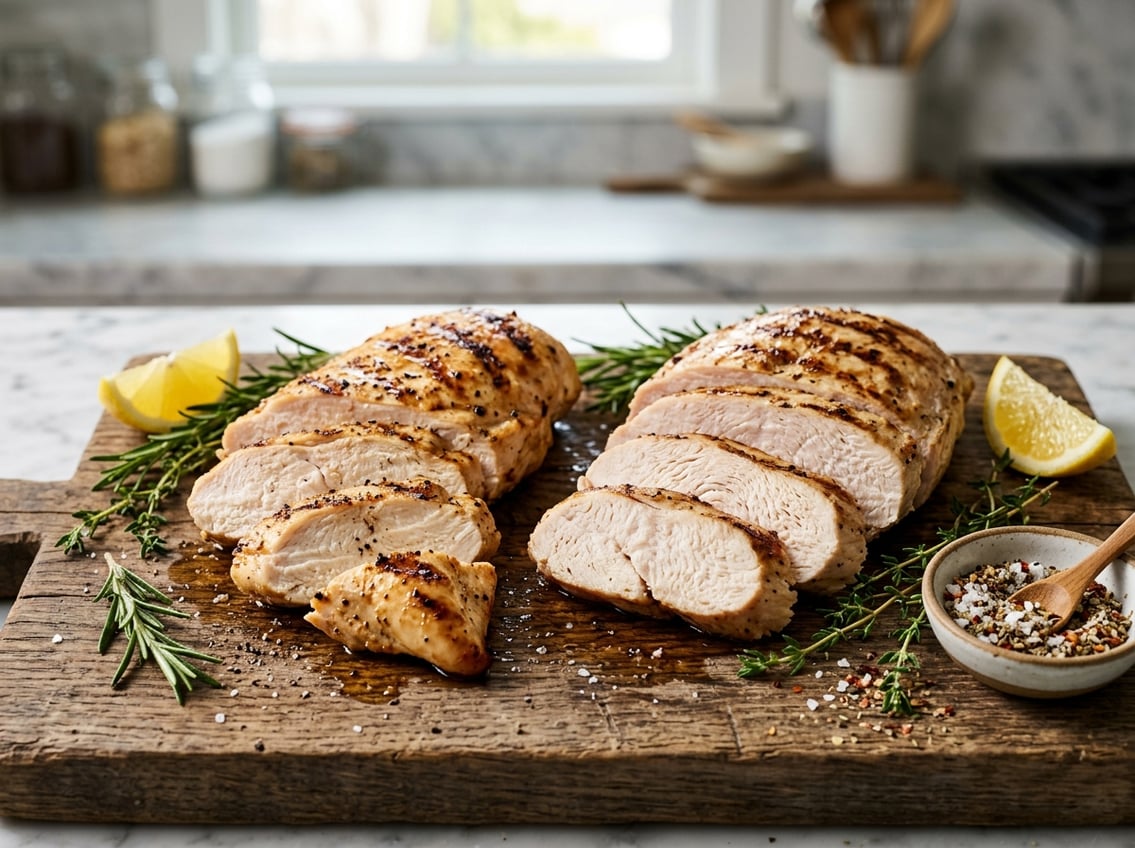
Flavor and Mouthfeel Differences
Chicken breast usually tastes milder and feels softer. Turkey breast is often a bit firmer and slightly chewier, which some people like because it gives more bite.
Turkey breast can seem a little drier if it is cooked too long, while chicken breast can feel more forgiving in quick weeknight meals. Brining turkey can improve moisture and tenderness.
Best Cooking Methods for Juiciness
Use even heat and careful timing for the best results. Brining, marinating, and cooking to the right internal temperature help prevent dryness.
Chicken breast works well in baking, pan-searing, grilling, and shredding. Turkey breast also does well in the same methods, and it can benefit from brining when you want a softer texture and more moisture.
When One Works Better as a Recipe Swap
Chicken breast is usually the easier swap in recipes that already depend on mild flavor and a tender texture. Turkey breast can replace chicken in many dishes, especially salads, grain bowls, wraps, and sliced sandwich fillings.
Turkey breast is a strong option when you want a slightly leaner result or a holiday-style flavor. Chicken breast is often better when you want the most familiar taste and the least adjustment in seasoning or cook time.
Buying, Budget, and Meal Planning Considerations
For most US shoppers, price and availability make a big difference in the chicken breast versus turkey breast choice. Both are versatile meats, yet one may be easier to buy in the exact form you want.

Price, Availability, and Convenience
Chicken breast is usually easier to find in standard grocery stores, and it often comes in more package sizes. Turkey breast can be less common as a standalone cut, and boneless turkey breast may cost more per pound, such as in a comparison of turkey and chicken pricing.
Sales can change the equation. If turkey breast is discounted, it can become the better value, especially if you buy in bulk and portion it yourself.
Portion Planning and Protein Targets
If you track protein per serving, both meats make it easy to reach your target. A 4-ounce cooked portion of either breast can give you a strong protein base for a meal, so you can build the rest of your plate around vegetables, grains, or healthy fats.
For simple meal planning, think in terms of cooked portions and use a kitchen scale when needed. That keeps your protein intake more consistent from day to day.
Best Uses in Weekly Meal Prep
Chicken breast works well for plain baked portions and shredded chicken. You can also use it in stir-fries and as a soup add-in.
Turkey breast fits well for sliced lunches and wraps. It also works in rice bowls and lower-fat protein plates.
If you cook for several days at once, pick the meat that stays moist after reheating. Rotating both meats during the week gives you variety and keeps your meals high in lean protein.


