
What Does It Mean When Chicken Breast Is Tough? Causes
When you ask what it means when chicken breast is tough, the answer usually points to how you cooked it, not just the cut itself.
Chicken breast is lean, so it can go from tender to tough quickly if the heat is too high, the timing is off, or the meat starts out uneven.
A tough chicken breast usually means the proteins tightened too much, or the meat did not retain enough moisture during cooking.
You can fix most common causes with better temperature control, even thickness, and a few simple prep steps.
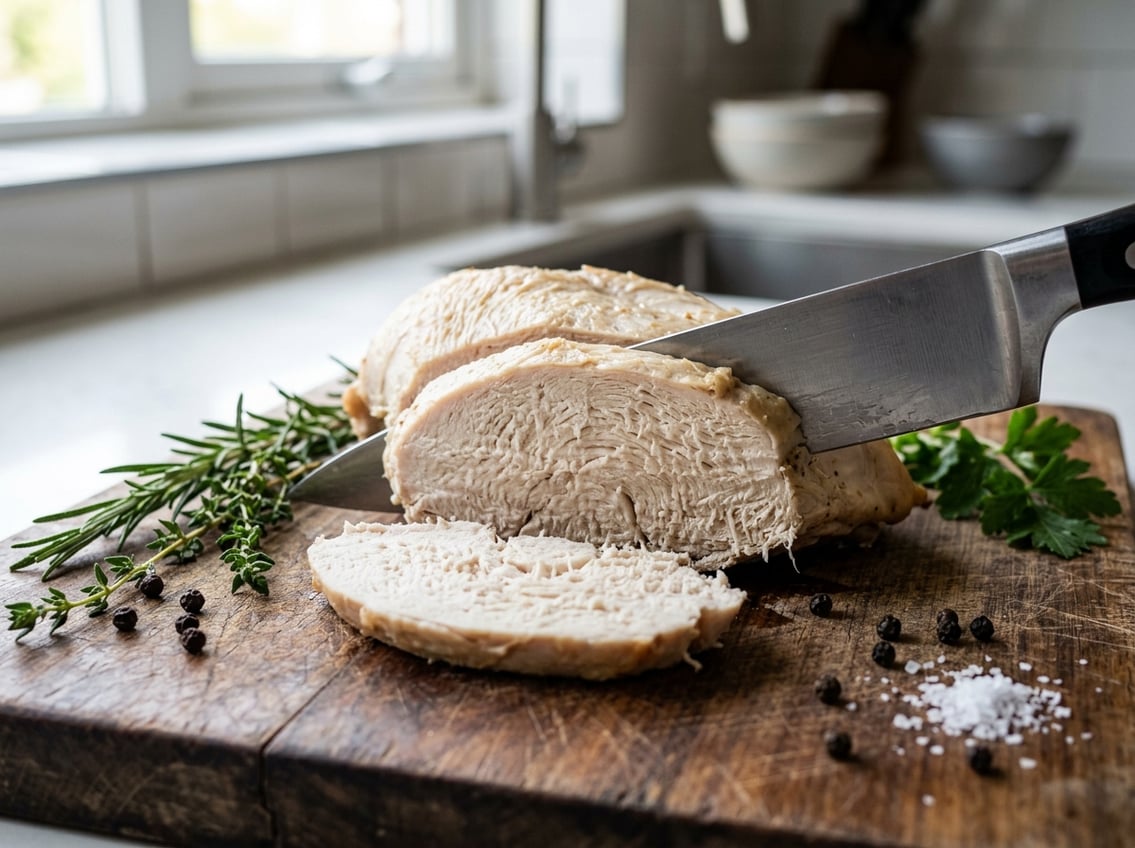
If your chicken breast feels dry, stringy, or rubbery, the texture gives you clues about what went wrong.
Knowing the difference helps you correct the problem the next time and get a more juicy chicken breast at home.
What Tough Texture Usually Signals
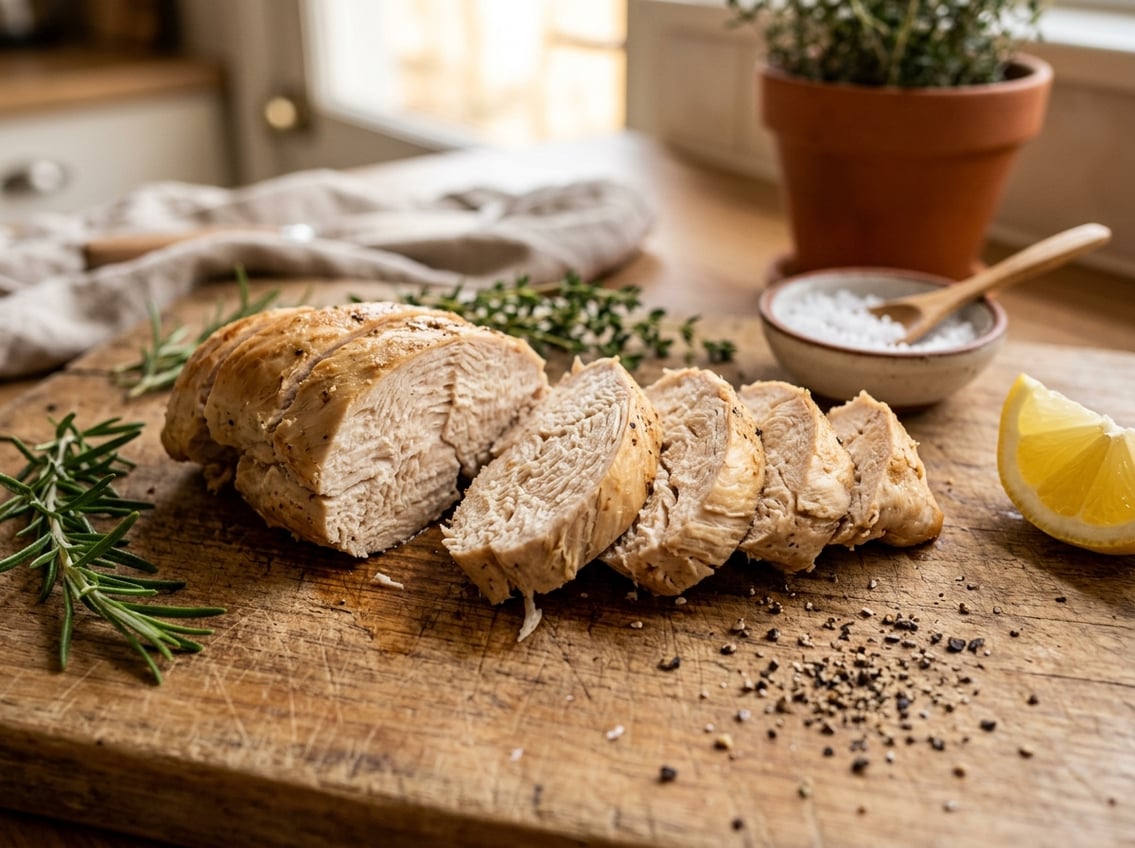
Tough chicken usually signals a cooking problem, though the exact cause can vary.
A meat thermometer and the final texture together tell you whether you overcooked, undercooked, or simply dried out the breast with too much heat.
How Overcooked Chicken Changes Texture
Overcooking chicken breast is the most common reason for a tough bite.
When the internal temperature climbs too high, the muscle proteins tighten and push out moisture, which leaves the meat dry and firm.
For chicken breast, the target cooking temperature is 165°F in the thickest part.
A breast that goes far past that point often turns from tender chicken breast into something stringy and dry.
How Undercooked Chicken Can Feel Rubbery
Undercooked chicken can feel soft in the middle, yet rubbery on the outside.
That texture happens when you heat the breast enough to firm the surface, but not enough to finish cooking evenly through the center.
If the center stays pale and the juices look thin and pink, the breast needs more time.
The goal is safe doneness at 165°F, which gives you both food safety and a more even, tender result.
Why Dry and Stringy Is Different From Juicy
Dry and stringy chicken breast usually points to moisture loss from cooking too long or at too high a heat.
Juicy chicken keeps a bit of spring when you slice it, and the fibers separate cleanly instead of pulling apart in long strands.
The Main Reasons It Happens
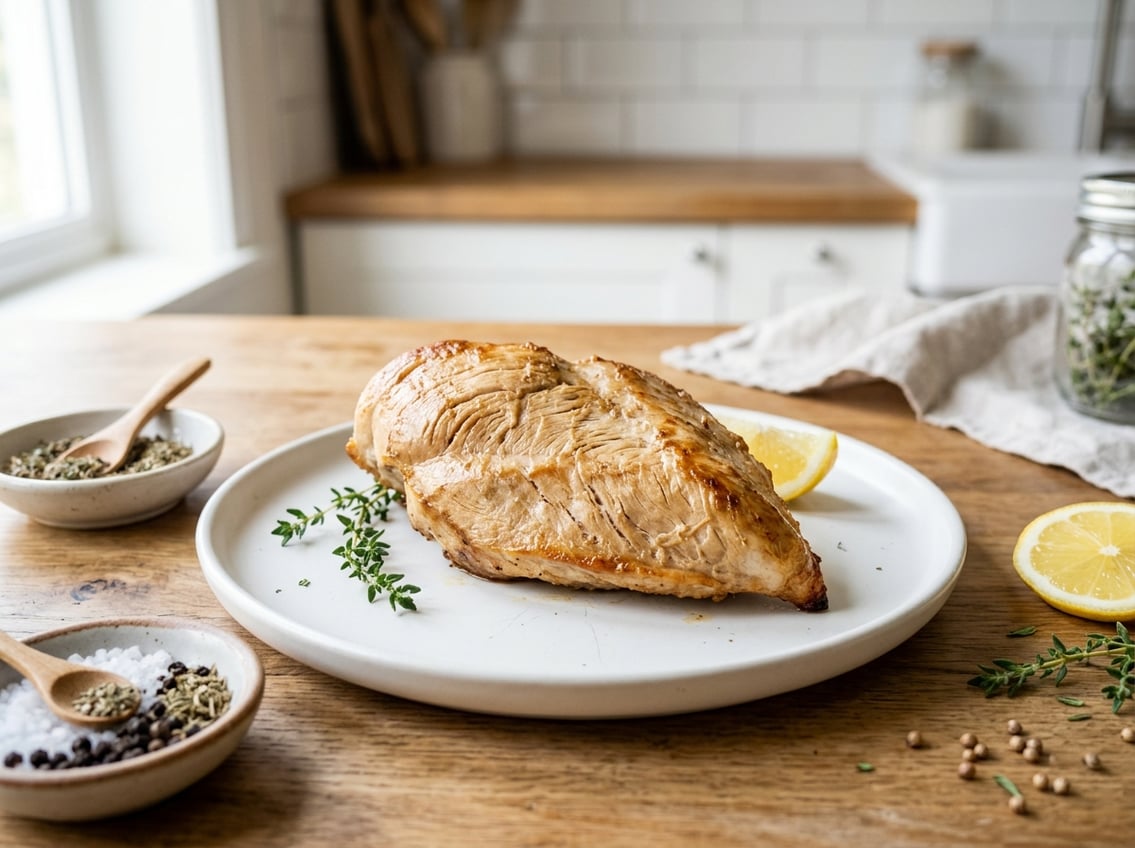
Most toughness comes from how you shape the chicken breast, how much heat you use, and how the meat was raised and processed.
Poor-quality chicken, very large breasts, and uneven thickness can all make a normal cook turn into a tough one.
Uneven Thickness and Thick Center Problems
A chicken breast often cooks unevenly because one end is thin and the other is much thicker.
The thin side reaches doneness first, while the thick center may still need time.
If you keep cooking for the center, the thinner part can overcook and become tough.
This is why thick-center breasts often need trimming or pounding before cooking.
Heat That Is Too High for the Cut
Chicken breast is lean, so it does not tolerate aggressive heat very well.
A hot pan, grill, or oven can push the surface past the point where it stays tender before the middle is done.
A lower, steadier cooking temperature often works better than using high heat.
Gentle cooking gives the breast time to cook through without squeezing out too much moisture.
Poor Meat Quality and Oversized Breasts
Not all chicken breast behaves the same.
Some poor quality chicken is less tender from the start, and very large breasts can cook unevenly because the outside and center finish at different speeds.
Air-chilled chicken often holds its texture well because it is processed differently, while lower-quality meat may be more prone to toughness.
Size also matters, since oversized chicken breasts can look easy to cook yet still end up dry before they are fully done.
How to Keep Chicken Breast Tender
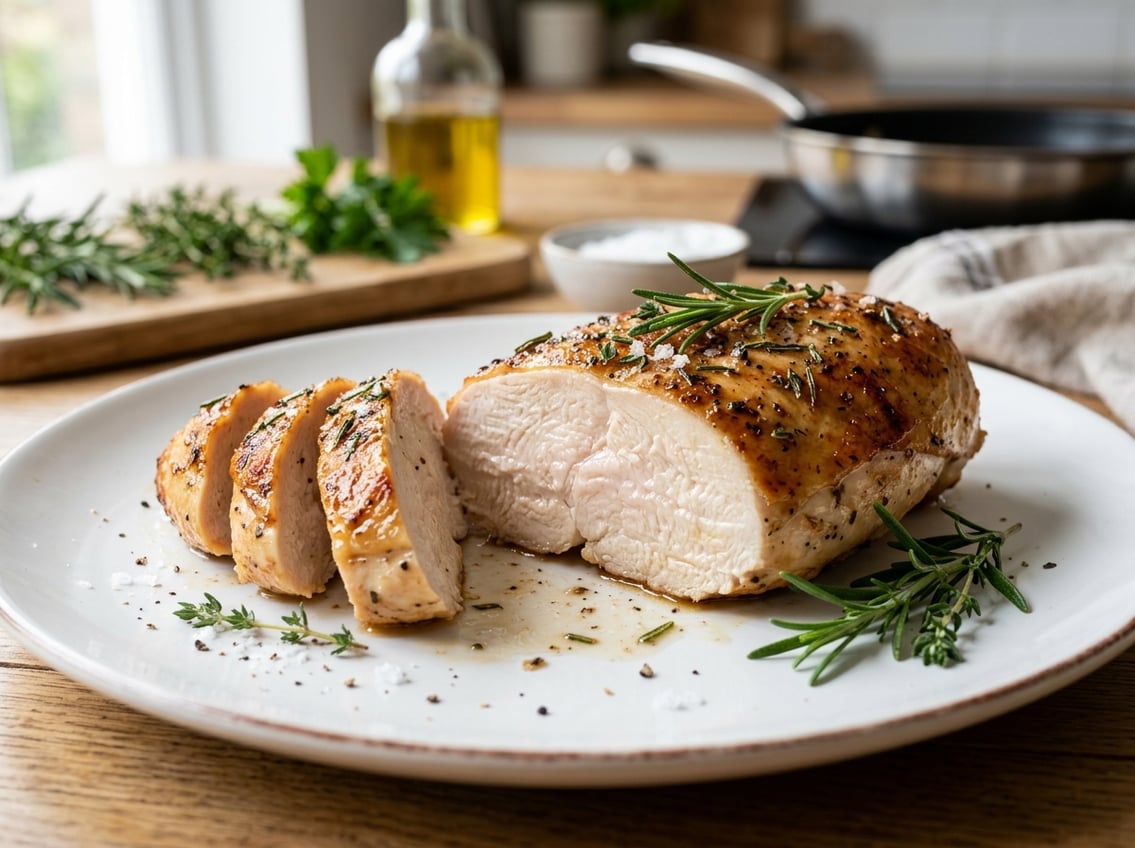
You can keep chicken breast tender by controlling doneness, seasoning ahead of time, and making the meat cook more evenly.
A few simple habits make a noticeable difference in moisture and texture.
Using a Meat Thermometer the Right Way
A meat thermometer is the most reliable tool for avoiding tough chicken breast.
Insert it into the thickest part of the breast, away from the pan or bone, and stop cooking when the center reaches 165°F.
That reading helps you avoid guessing based on color alone.
It also reduces the chance of drying out the breast by leaving it on the heat too long.
Dry Brining and Marinating Before Cooking
Dry brining means salting the chicken and letting it rest before cooking.
The salt helps the meat hold onto moisture better, which supports a juicier result.
Marinating chicken breast can also help, especially when the marinade includes salt, acid, or dairy.
It adds flavor and can soften the surface of the meat before it hits the heat.
Pounding for Even Cooking and Better Results
Pounding chicken breast to an even thickness helps the whole piece cook at the same rate.
That means the thin end does not dry out while the thick center catches up.
Use light, even pressure so the meat stays intact.
You want a more uniform shape, not a shredded surface.
Resting and Carryover Cooking After Heat
Carryover cooking continues after you remove the chicken from the heat.
The internal temperature rises a few degrees as the juices settle back into the meat.
Let the breast rest for several minutes before slicing.
That short wait helps keep the juices in the meat and gives you a better chance of a tender chicken breast.


