
How Long Can Chicken Breast Stay Frozen in the Freezer? Safe Storage Guide
If you wonder how long chicken breast can stay frozen in the freezer, you can keep it for up to 12 months for best safety and quality at 0°F (–18°C) or below, according to USDA guidance cited by FlavoryCooking.
You might keep it longer, but texture, flavor, and moisture usually decline over time.
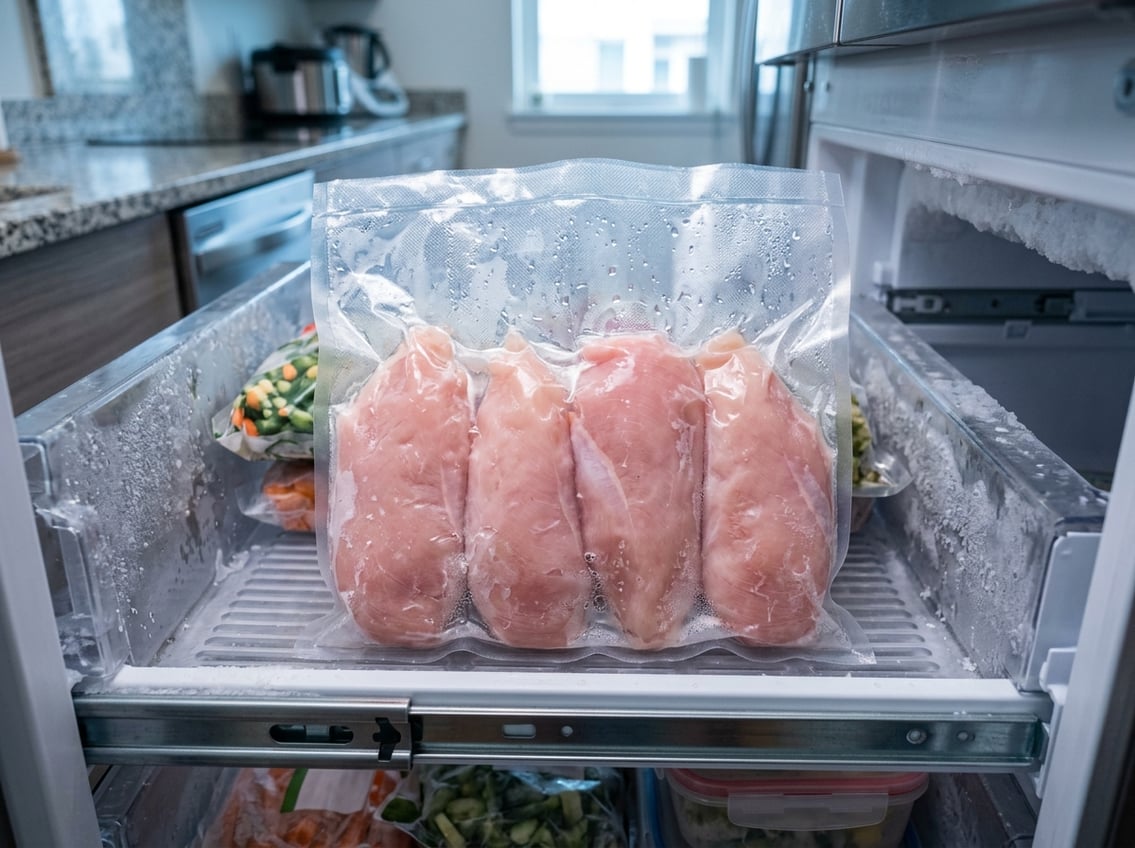
Frozen chicken breast stays safe as long as it remains fully frozen, stored at a steady 0°F or below, and protected from air exposure.
Quality is best during the first 9 to 12 months.
The main question is not only safety, but also how good the chicken will taste and feel after thawing.
If you freeze raw chicken the right way, you can stretch its shelf life and reduce waste.
Proper wrapping, clear dating, and safe thawing give the best results.
Recommended Freezer Time for Chicken Breast
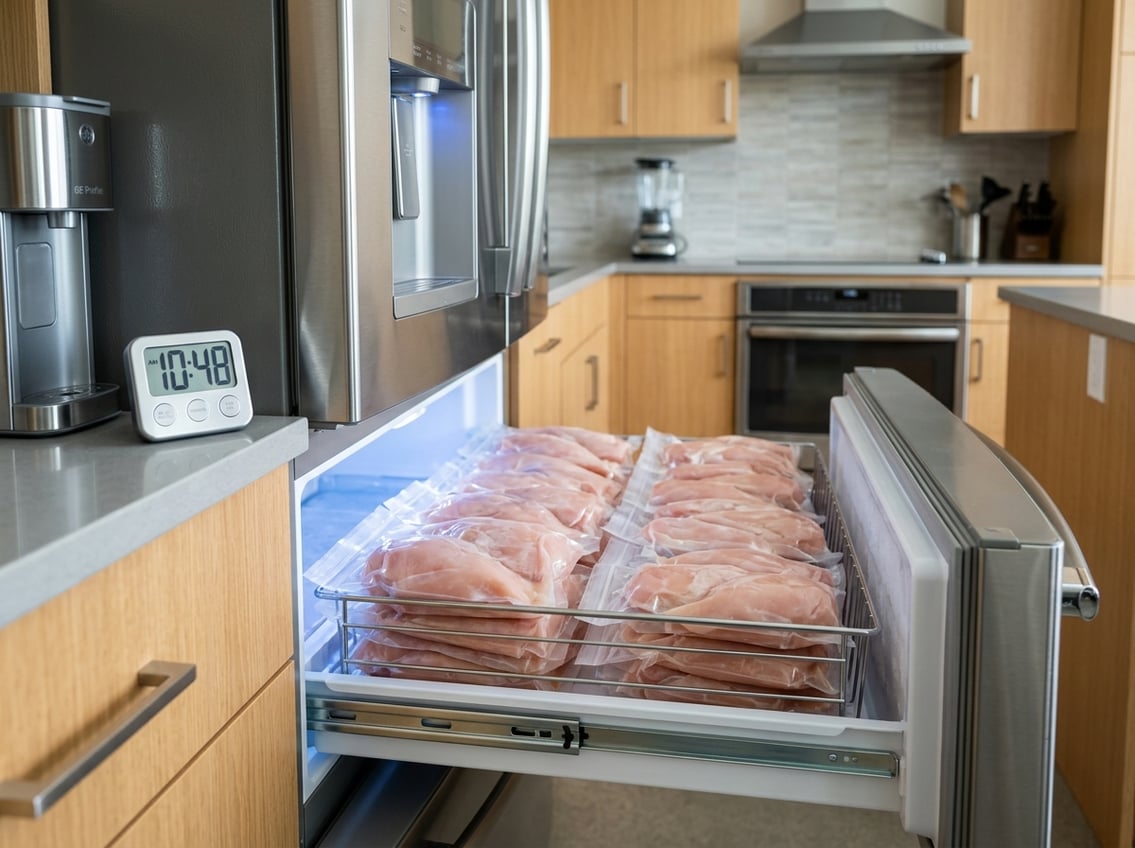
Chicken breast can stay frozen for a long time, but the quality window matters more than the safety limit.
Once you know the difference, planning meals and avoiding disappointing texture becomes easier.
Best-Quality Window for Raw Chicken Breast
For raw chicken breast, the best-quality window is usually 9 to 12 months in a freezer kept at 0°F (–18°C) or below.
That is the range most food safety guidance uses for top quality, matching the USDA-based advice from FlavoryCooking.
After that point, chicken may still be safe if it has stayed frozen, but the meat can dry out more after thawing and cooking.
You may notice more toughness, less juiciness, and weaker flavor.
How Safety Differs From Texture and Flavor
Safety and quality are not the same.
Freezing stops bacteria from growing, but it does not kill bacteria already present.
Properly frozen chicken can stay safe for a long time, while eating quality slowly drops.
If someone handled chicken badly before freezing, frozen storage will not fix that problem.
How Chicken Breast Compares With Whole and Cooked Chicken
Chicken breast often loses quality faster than a whole bird because it has less protection from drying out.
Boneless, skinless pieces are especially sensitive to freezer burn and moisture loss.
Cooked chicken usually has a shorter freezer life than raw chicken breast, about 4 to 6 months, as noted by FlavoryCooking.
Whole chicken can last a similar length of time as parts, though packaging and fat content can affect how well it holds up.
What Affects Quality While Frozen
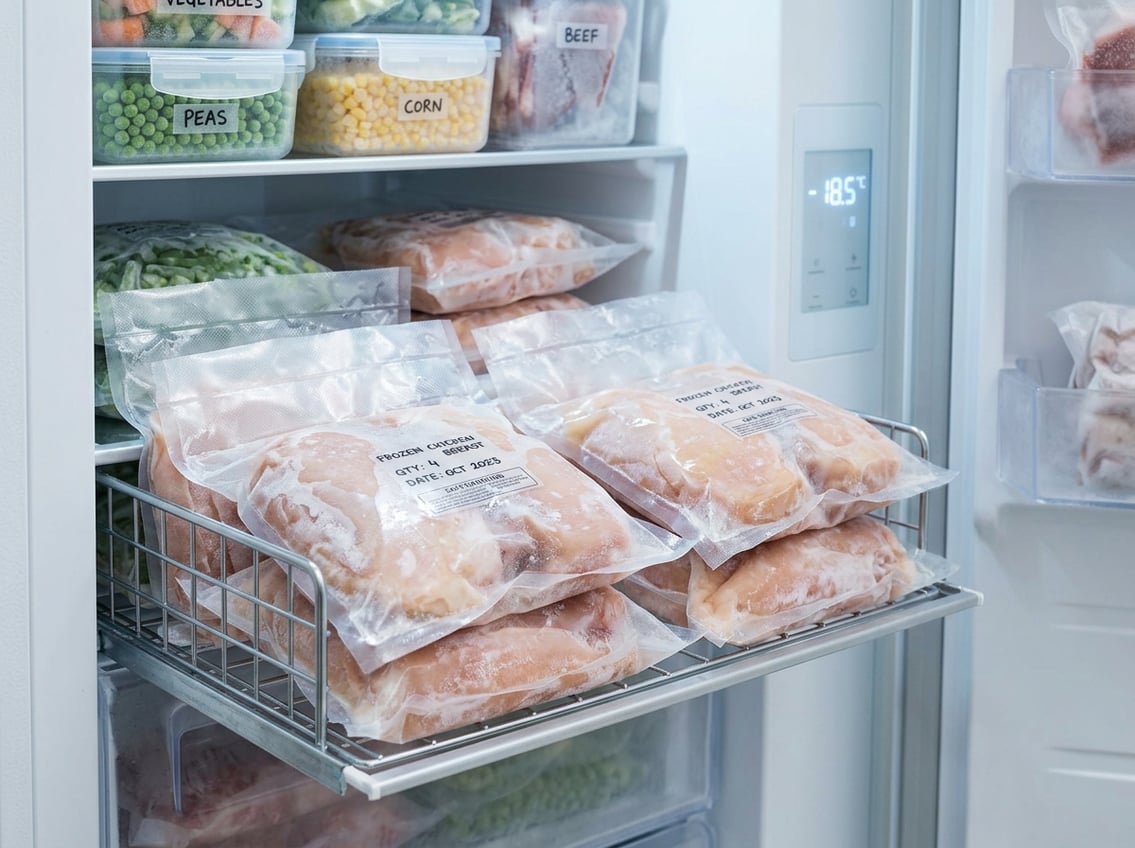
Frozen chicken quality depends on more than the date on the package.
Packaging, temperature stability, and air exposure all shape how well the meat holds up.
Packaging, Air Exposure, and Freezer Temperature
The best way to freeze chicken is to limit air and moisture loss.
Airtight, moisture-proof packaging helps keep the meat from drying out, which is one of the biggest causes of poor texture later.
A freezer should stay at 0°F (–18°C) or below.
If the temperature rises often, chicken can suffer quality loss faster, even if it still looks frozen.
This is why FlavoryCooking stresses both temperature and packaging.
How to Prevent Freezer Burn
To prevent freezer burn, wrap chicken tightly and remove as much air as possible.
Plastic wrap, freezer paper, or a freezer bag with the air pressed out can all help.
You can also portion chicken before freezing so you only thaw what you need.
Smaller packages freeze faster and often keep better quality than one large package that gets opened and closed repeatedly.
Signs Frozen Chicken Breast Should Be Discarded
Discard frozen chicken breast if the package was torn open and the meat was exposed for a long time, or if the freezer temperature rose high enough to partially thaw it.
Large amounts of icy crystals, heavy gray drying, or a strong off odor after thawing are warning signs.
If chicken ever sat above refrigerator temperature for more than two hours, or one hour in hot conditions, do not use it.
When in doubt, throw it out.
How to Freeze and Thaw It the Right Way
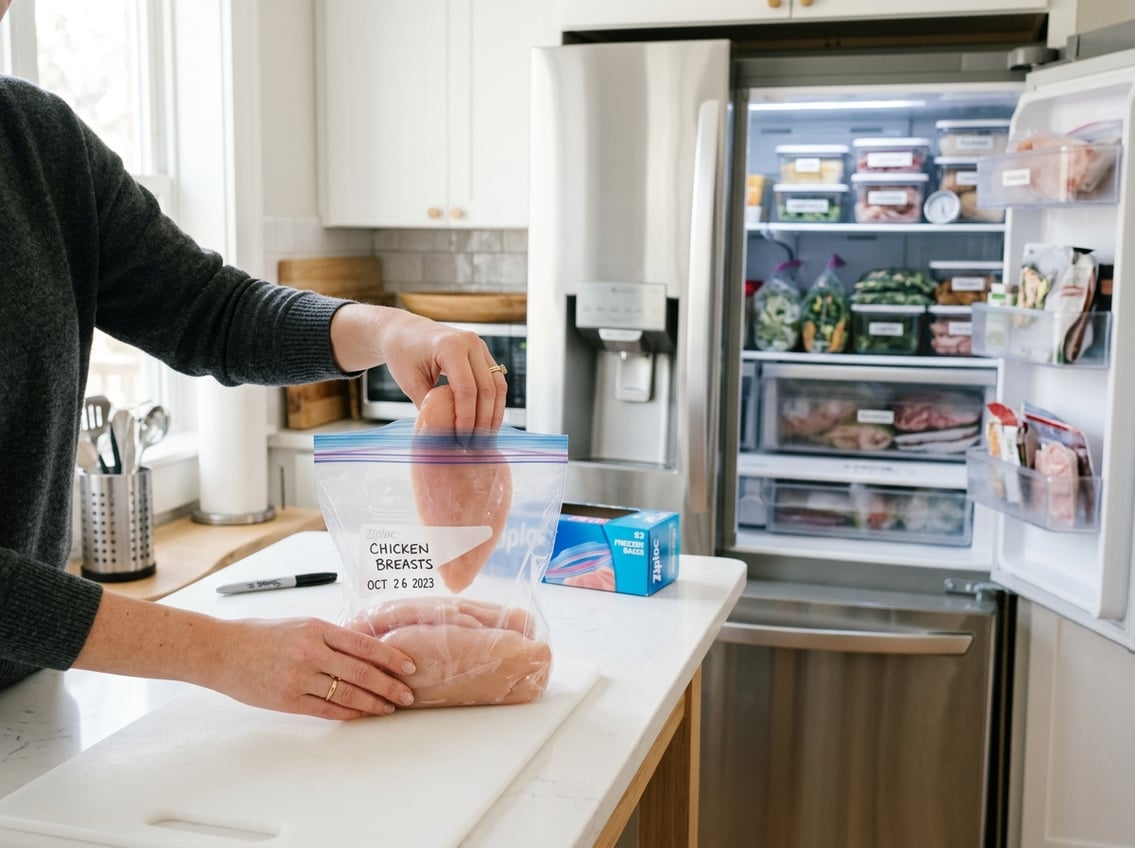
Good freezing habits make a big difference.
Freeze raw chicken quickly, keep it sealed, and thaw it in a way that keeps it out of the danger zone.
Best Way to Portion and Wrap Chicken Breast
Split chicken into meal-sized portions first.
Wrap each breast tightly, then place it in a freezer bag or airtight container.
Label each package with the date and contents before it goes into the freezer.
Wrap it first, press out the air, and store it flat so it freezes evenly.
This matches the storage advice in FlavoryCooking.
Safe Thawing Methods
The safest thawing methods are:
- Refrigerator thawing, which takes the longest but keeps the chicken cold the whole time
- Cold water thawing, if the chicken stays sealed in a leak-proof bag and the water is changed every 30 minutes
- Microwave thawing, if you plan to cook it right away
Never thaw chicken on the counter.
That raises the surface temperature too fast and can let bacteria grow.
When You Can Refreeze Chicken
You can refreeze chicken if you thawed it in the refrigerator and kept it cold the whole time.
Quality may drop a little each time, so repeated freezing is not ideal.
If you thawed it in cold water or the microwave, cook it first before freezing again.
Cooking the chicken before refreezing keeps it safe and gives you a better final result.


