
Chicken Breast Versus Chicken Tenderloin: Key Differences
Chicken breast and chicken tenderloin are both lean, mild cuts that work well in many meals. Each cut fits a different kind of cooking, so your choice depends on the texture, cook time, and nutrition you want.
Chicken breast is the larger, firmer, and more versatile white meat cut. Chicken tenderloin is the smaller, softer strip that cooks faster and stays more delicate.
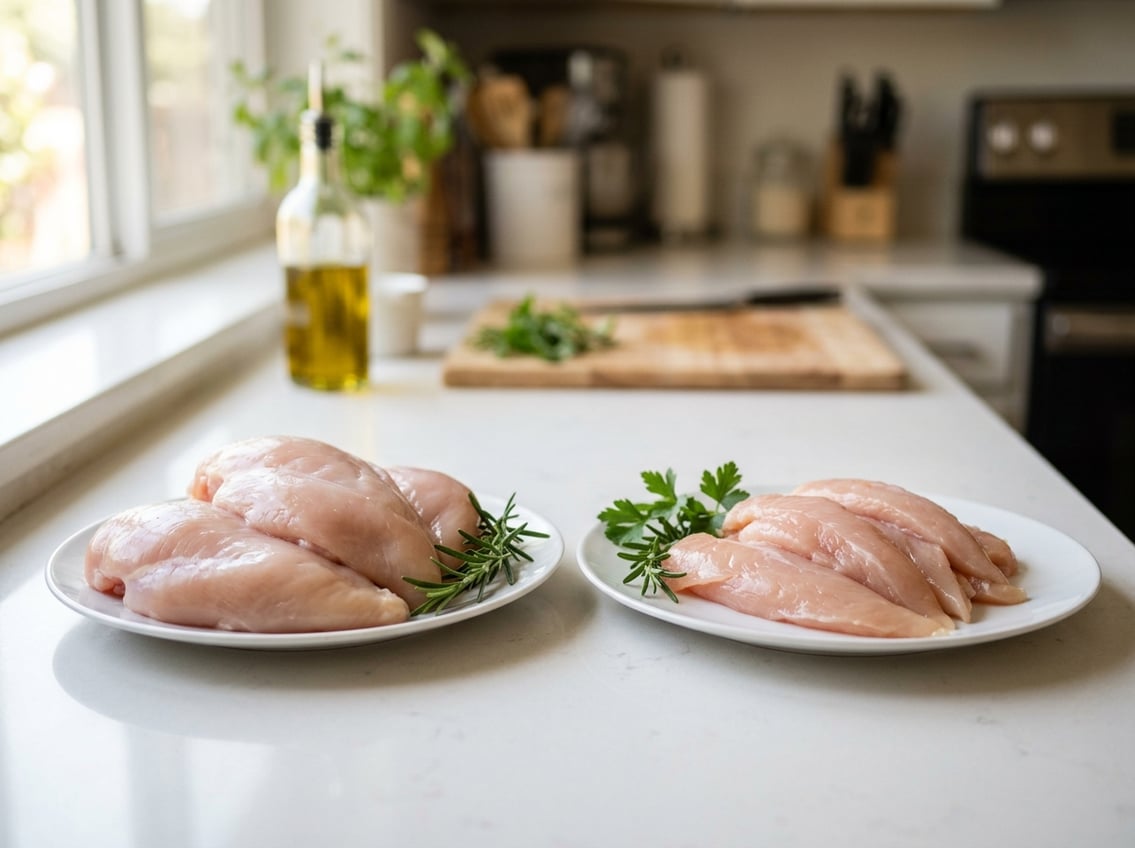
If you are choosing between them for a weeknight dinner or a high-protein meal, the details matter. The best option changes depending on whether you want a bigger serving, a quicker cook, or a softer bite.
What Each Cut Actually Is
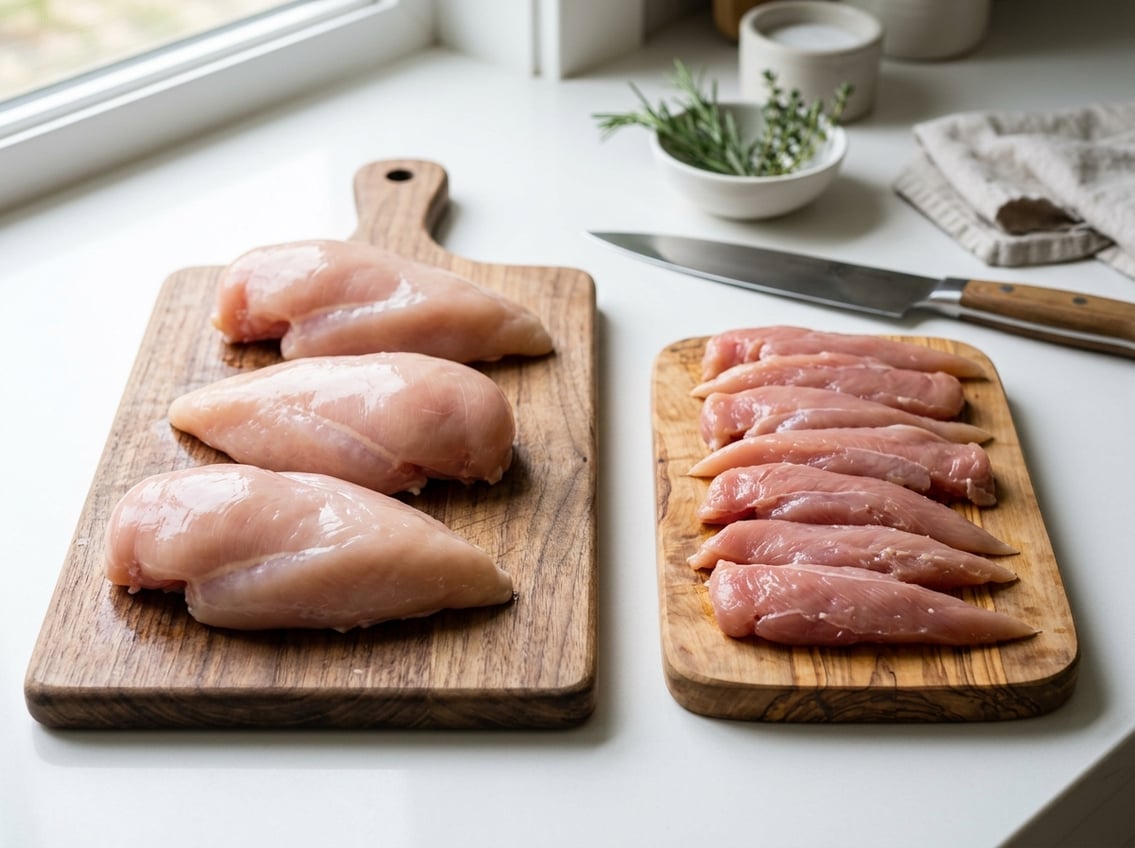
Chicken breast and chicken tenderloin both come from the same area on the bird, but from different muscles. The breast is the larger muscle, while the tenderloin is a smaller strip tucked underneath it.
That difference in location explains most of the differences you notice in the kitchen.
Where Chicken Breast and Tenderloin Come From
The chicken breast is the pectoralis major, the main chest muscle. Grocery stores usually sell it boneless and skinless.
Chicken tenderloin, sometimes called a chicken tender, is the pectoralis minor. It sits under the breast and is naturally smaller and thinner.
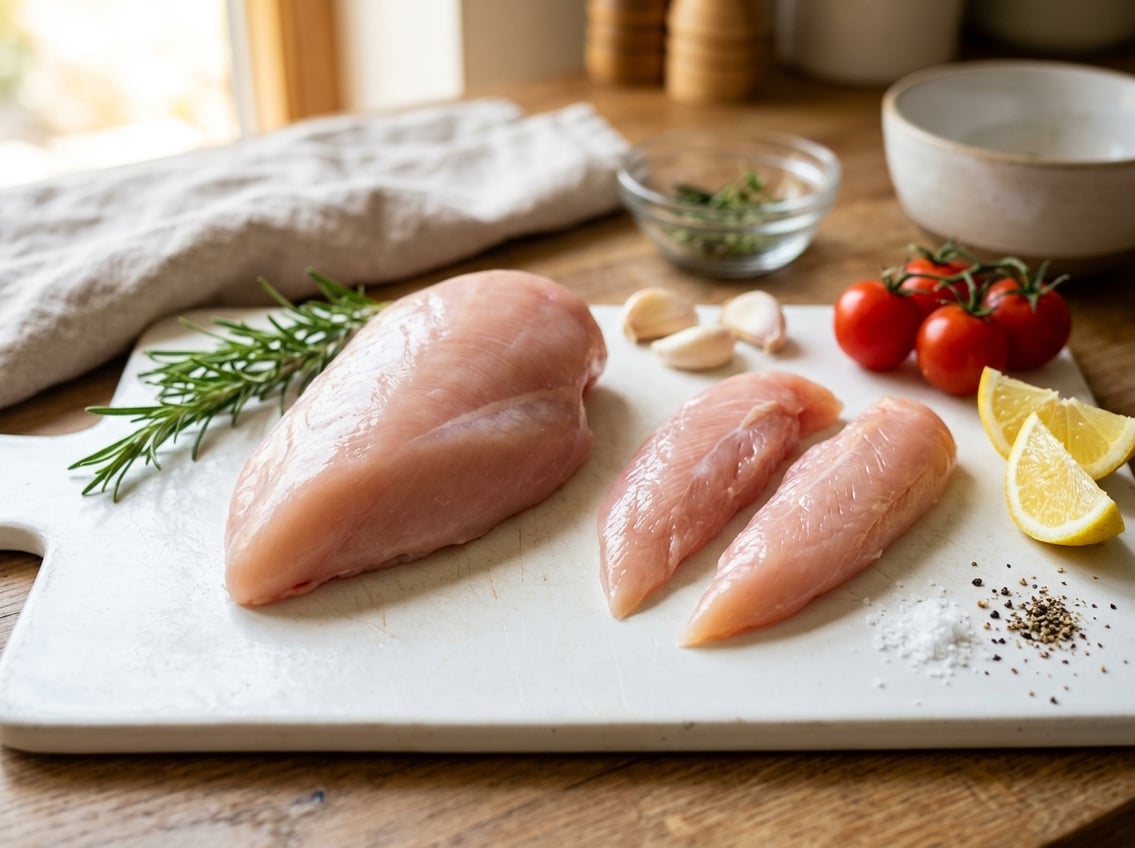
If you remove tenderloins from chicken breast at home, you find them attached along the underside of the breast by a thin strip of connective tissue. They separate easily once you locate that line.
Size, Shape, and Texture Differences
Chicken breast is larger, thicker, and more uniform. You can slice, pound, or portion it into cutlets.
Chicken tenderloins are long, narrow, and smaller. Their shape makes them a natural fit for chicken strips and quick sautés.
They also feel softer when cooked, which is why many people prefer them for fast meals.
Why Tenderloin Is More Tender
The pectoral muscle under the breast does less work, so tenderloin stays more tender. A muscle that moves less tends to have a softer texture.
Chicken breast can still be tender when you cook it carefully. It just has a firmer bite and dries out more easily if you overcook it.
Nutrition and Health Trade-Offs
Both cuts are lean protein. Nutrition differences are small, but they can matter if you track calories, protein, or sodium.
Chicken Breast Nutrition Compared With Tenderloin Nutrition
Chicken breast has slightly more protein and slightly less sodium per 100 grams. Tenderloin has fewer calories.
The breast is a little more protein-dense, while the tenderloin has fewer calories.
Chicken breast is often the first choice for meal prep because it gives you a lot of protein in a compact serving.
Chicken tenderloin still offers strong nutrition, and the softer texture can make it easier to eat in simple recipes.
Protein, Calories, Fat, and Sodium at a Glance
Here is a side-by-side view:
| Cut | Calories | Protein | Sodium |
|---|---|---|---|
| Chicken breast | 165 per 100 g | 31 g per 100 g | 74 mg per 100 g |
| Chicken tenderloin | 144 per 100 g | 26 g per 100 g | 109 mg per 100 g |
Chicken breast gives you more protein for the calories. Tenderloin gives you a little less protein and a little fewer calories.
Which Cut Makes More Sense for Different Goals
If you want high protein with a low-fat meal, chicken breast is usually the stronger pick. It also works when you want a larger serving for the same calories.
If you want fast cooking and a softer texture, chicken tenderloin makes more sense. For salt-sensitive eating, chicken breast may fit better because it tends to have less sodium.
Cooking Performance and Best Uses
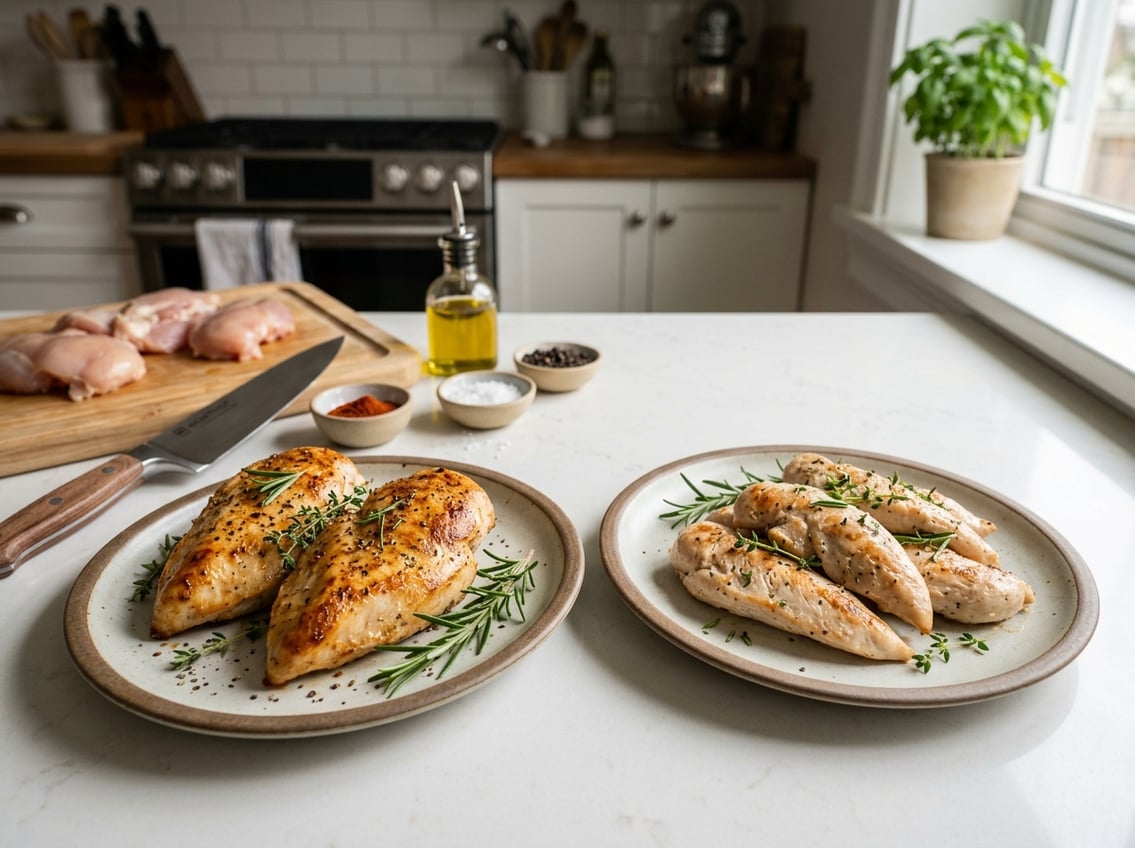
Chicken breast and chicken tenderloin work differently in the pan, oven, and on the grill. Breast gives you more flexibility for larger recipes, while tenderloin shines when you need speed and tenderness.
Cooking Chicken Breast Without Drying It Out
To cook chicken breast well, control the heat and timing. Because the cut is thick, it can go from juicy to dry if you cook it too long.
Use even thickness when possible, and avoid high heat for too long. Grilled and baked chicken both work well if you season it first and pull it as soon as it reaches a safe internal temperature.
Best Methods for Tenderloins and Quick Meals
Chicken tenderloin is ideal for fast cooking. It works well in stir-fries, skillet meals, and simple oven bakes because it cooks quickly and stays soft.
It is a strong match for easy chicken tenderloin recipes when you want dinner on the table with little prep. If you are making chicken fingers, chicken strips, or chicken tenders, tenderloin is often the most natural choice.
When to Grill, Bake, or Marinate Each Cut
Chicken breast is a good match for grilling and baking when you want a full portion in one piece. It also handles marinating well, which helps add flavor and moisture.
Tenderloins also benefit from marinating, especially when you want to boost flavor in a short cooking window. Because they are smaller, they pick up seasoning fast and cook before they lose much moisture.
Best Recipe Matches for Breast, Tenders, and Strips
Choose chicken breast for thicker recipes like stuffed breasts and sliced salads.
Try it in baked casseroles or grilled mains. Its size works well when you want a centerpiece protein.
Use chicken tenderloin for recipes that need quick cooking and a soft bite.
It works especially well for breaded tenders, skillet dinners, and fast weeknight meals where speed matters more than shape.


