
Which Is Better for You Chicken Breast or Chicken Thighs? Key Differences
You may wonder which is better for you, chicken breast or chicken thighs, when you are trying to eat well, lose weight, or build a simple high-protein meal plan.
Chicken breast is usually the better pick if you want fewer calories and more protein per calorie. Chicken thighs are often the better choice if you want more flavor, juiciness, and staying power.
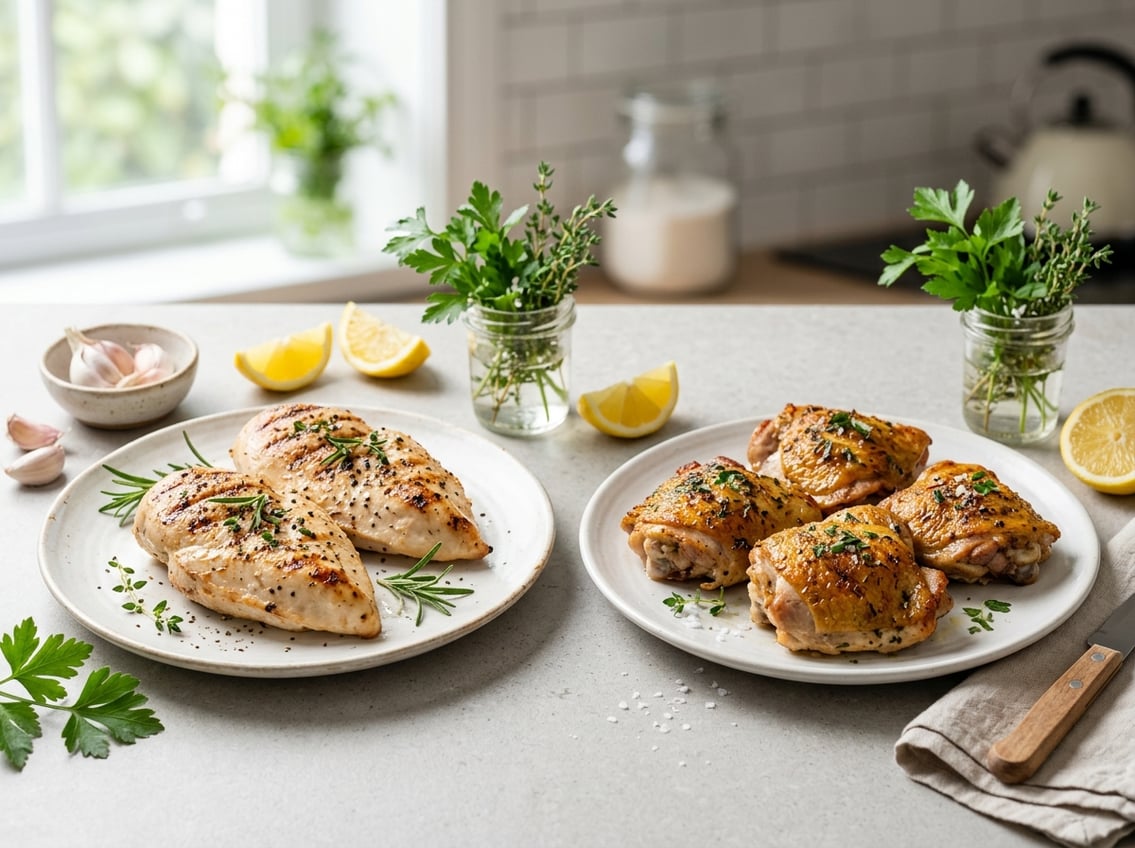
Both chicken breast and chicken thigh fit into a healthy diet and can give you quality protein.
The better choice changes based on your nutrition needs, taste preferences, and whether you want a leaner or richer meal.
Quick Verdict by Health Goal
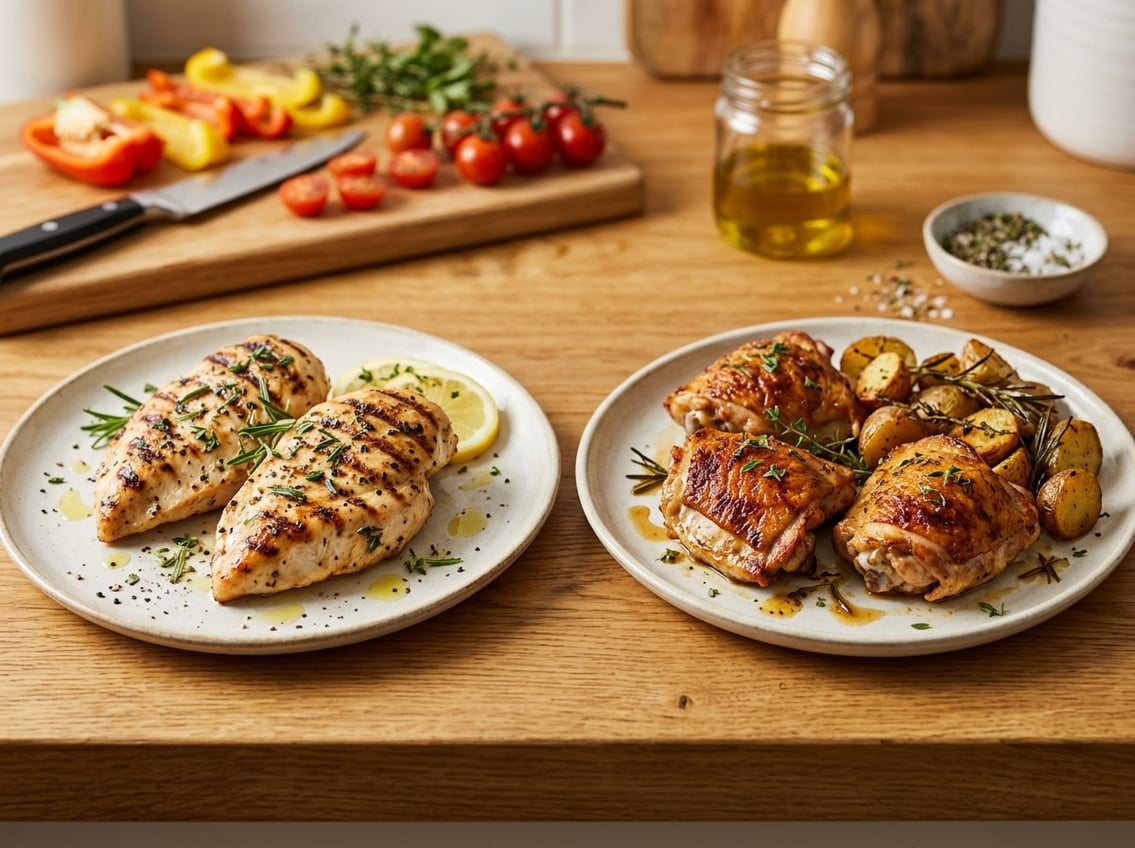
Chicken breast gives you more protein per calorie. Chicken thighs usually give you more flavor and more satiety.
If you care most about weight loss, protein intake, or keeping calories lower, breast is usually the better fit. If you care more about juiciness and a meal that feels more filling, thighs often work better.
Best Pick for Weight Loss and Protein Per Calorie
Chicken breast is the better choice when you want the highest protein per calorie.
According to Prevention’s dietitian review, 100 grams of boneless, skinless chicken breast has about 106 calories and 22.5 grams of protein. The same amount of boneless, skinless chicken thighs has about 144 calories and 18.6 grams of protein.
That difference makes breast easier to fit into a lower-calorie plan. It is also the more predictable choice when you are tracking protein content and trying to keep fat content lower.
Best Pick for Flavor, Juiciness, and Satiety
Chicken thighs usually win for taste.
Their higher fat content gives them more flavor, more juiciness, and a richer texture, which often leads to better satiety after a meal.
If you get hungry soon after eating lean meat, a thigh-based meal may help you feel more satisfied. Thighs are especially helpful if your day already includes plenty of protein and you want food that feels more substantial.
When Both Cuts Fit a Healthy Diet
Both cuts can fit well if you portion them sensibly and match them with vegetables, grains, beans, or other healthy sides.
If you already eat enough protein and need meals that are enjoyable and easy to stick with, rotating between white meat and dark meat is often the most practical choice.
Breast is useful for lean meals, and thighs are useful when you want more flavor without complicated cooking.
Nutrition Differences That Matter Most
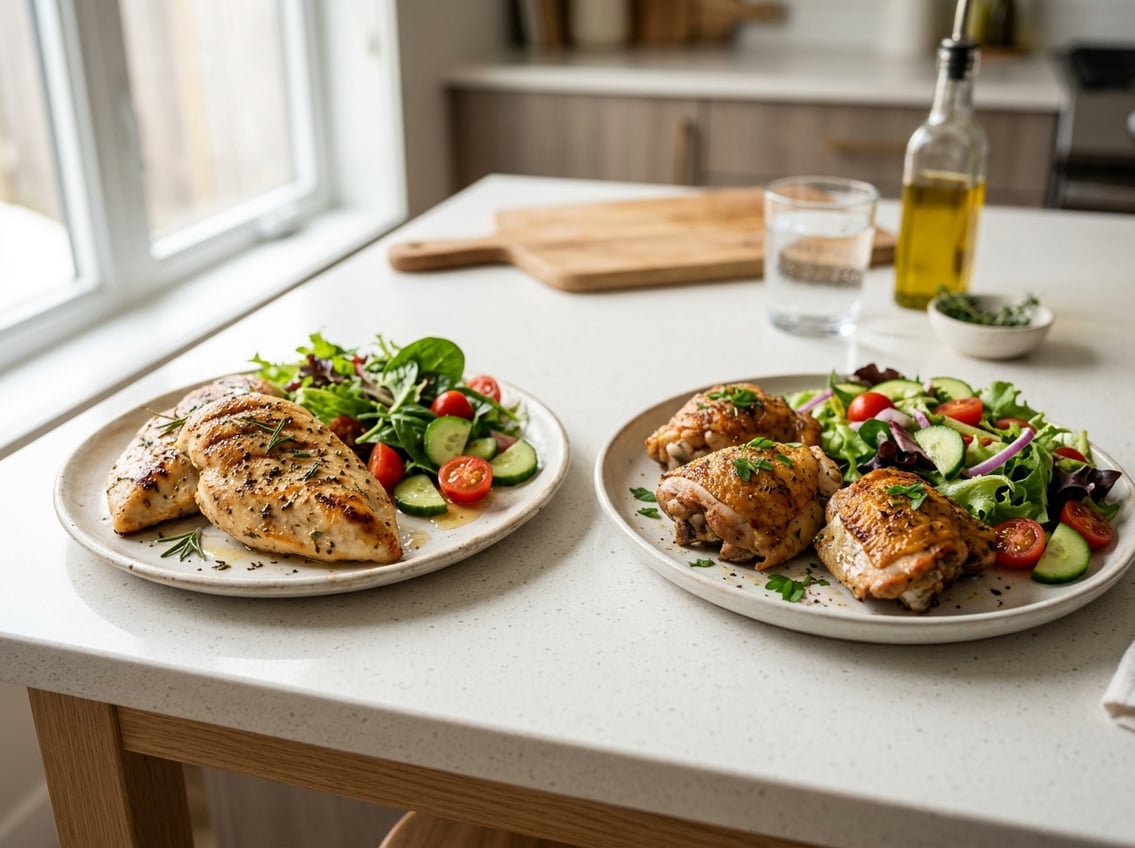
The biggest nutrition gap is not dramatic, yet it matters if you count calories or follow a specific plan.
Chicken breast usually gives you more protein with less fat. Chicken thighs give you more calories, more fat, and a few key micronutrients in slightly higher amounts.
Calories, Protein, and Fat Compared
A skinless chicken breast is leaner than a skinless chicken thigh.
The breast is lower in calories and lower in total fat, which is why it is so common in weight-focused meal plans.
A skinless chicken thigh serving still gives you a solid amount of protein, just with more fat and calories.
That extra fat can make the meal taste better and stay satisfying longer, which is useful if you struggle with hunger between meals.
Micronutrients in Breast and Thigh Meat
Chicken breast is often higher in vitamin B6, vitamin B12, choline, and selenium.
Chicken thighs tend to provide more iron and zinc, partly because dark meat contains more myoglobin and related muscle proteins.
If you eat chicken often, changing between breast and thigh can help you get a broader mix of micronutrients.
For a deeper nutrition comparison, you can check a raw chicken breast vs. thigh nutrient comparison, which shows how some nutrients differ by cut.
How Skin Changes the Numbers
Skin changes everything.
A skin-on chicken thigh has more calories, more fat, and more saturated fat than the same thigh without skin, and that can raise your total intake fast.
If you want a leaner meal, choose skinless chicken breast or skinless chicken thigh.
If you keep the skin on, the chicken becomes richer and less lean, though it may taste better and stay moister during cooking.
The fat in chicken also includes some polyunsaturated fat, but the skin still adds more total fat and more sodium if the cut is seasoned or processed.
Why They Cook and Taste So Differently

Chicken breast and chicken thighs behave differently in the pan, oven, or grill because they are built differently.
One is lean and mild, while the other has more fat, more color, and more structure from working muscles.
Myoglobin, Dark Meat, and White Meat
Thigh meat is dark meat because it contains more myoglobin, the oxygen-storing protein in muscle.
Breast meat is white meat, which is lighter in color and milder in flavor.
That color difference affects taste, moisture, and how the meat feels when you chew it.
Fat, Collagen, and Connective Tissue
Chicken thighs have more connective tissue and collagen than breast meat.
That makes them better suited to longer cooking methods because the tissue breaks down and becomes tender.
The higher fat content in thighs also helps with flavor.
As the fat warms and melts, it carries seasoning into the meat and helps it stay juicy.
Why Breast Dries Out Faster Than Thighs
Chicken breast has less fat and less connective tissue, so it can turn dry if you overcook it by even a little.
Chicken thighs are more forgiving, which is why many home cooks find them easier to prepare.
If you want a cleaner, leaner taste, breast works well.
If you want richer flavor and less risk of dry meat, thighs are usually easier to cook well.
Best Uses in Everyday Cooking

Your best cut often depends on the recipe.
Some cooking methods work better for breast, while others work better for thighs, especially when you want good texture after storing, reheating, or batch cooking.
Healthier Cooking Methods for Each Cut
Chicken breast works well for grilling, baking, and roasting when you keep added fat low.
A little olive oil and simple seasoning are often enough.
Chicken thighs fit well in braising, slow cooking, and even frying when you want a richer result.
They also hold up well in bold dishes like curries and tacos, where the sauce and spices matter as much as the meat.
Meal Prep, Reheating, and Leftovers
Chicken breast is popular for meal prep because it is easy to portion and easy to pair with many sides.
It can dry out when you reheat it, so adding a little sauce, broth, or oil helps.
Thighs are often better for leftovers because they stay moist longer.
They also work well as marinated chicken, since the extra fat and stronger flavor hold up to seasoning.
Best Recipes for Breast and Thigh Meat
Use grilled chicken or baked chicken breast when you want a light protein for salads, rice bowls, or sandwiches.
Choose thighs for sheet-pan meals, stews, or saucy dishes when you want a more forgiving cut.
Pick breast for lean, fast meals. Try thighs for richer, more flexible cooking.


