
How to Prevent Chicken Breasts From Drying Out Fast
You can prevent chicken breasts from drying out by cooking to the right internal temperature, shaping them for even cooking, and using prep steps that help hold moisture.
Chicken breast is lean, so small mistakes, like overcooking or uneven thickness, can turn juicy chicken into dry, stringy meat fast.
The best way to keep chicken moist is to use temperature, even thickness, and a short rest before slicing.
Those three steps do more than any guesswork about minutes on a timer.
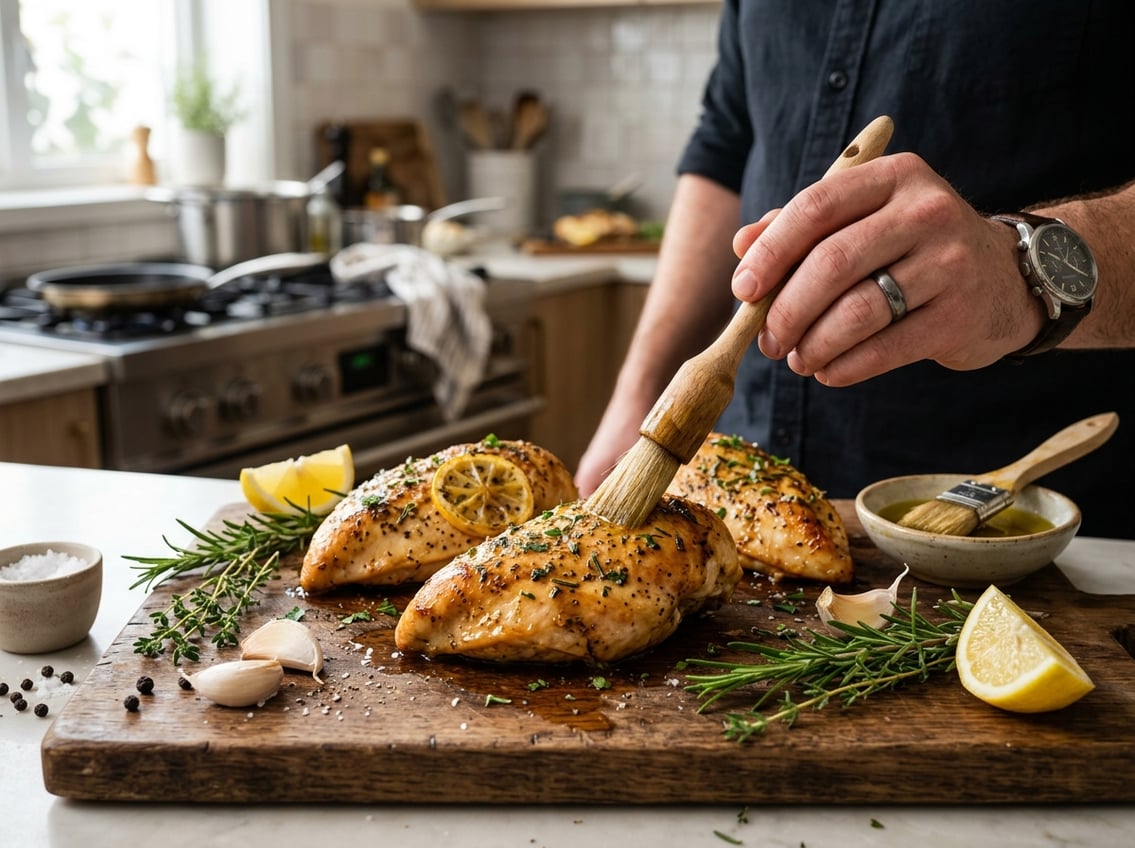
A few simple habits make a big difference.
You do not need complicated tools or advanced skills, just a meat thermometer, steady heat, and a little patience.
Cook to Temperature, Not Time

Time only gives a rough guide.
Internal temperature tells you when chicken breast is done, since size, thickness, and cooking method all affect timing.
Why Internal Temperature Matters More Than Minutes
Minutes on a recipe do not account for stove strength, oven hot spots, or the starting temperature of the meat.
That is why two chicken breasts cooked for the same amount of time can turn out very differently.
Chicken dries out when the muscle fibers tighten too much from heat.
To keep chicken moist and get tender chicken, stop cooking at the right point, not by guessing based on the clock.
The USDA recommends cooking poultry to 165°F, and you can use that as your safety target while avoiding extra time on the heat.
How to Use a Meat Thermometer Correctly
Insert the meat thermometer into the thickest part of the chicken breast, not near the edge.
Avoid touching the pan, bone, or tray, since that can give a false reading.
Check early, especially near the end of cooking.
If you wait until the last minute, you may overshoot the mark and lose the chance to keep chicken moist.
When to Pull Chicken Breast Off the Heat
Pull the chicken a few degrees before the final target if you know it will keep cooking from residual heat.
For many home cooks, removing it around 160°F and letting carryover cooking finish the job works well.
According to The MeatStick’s grilling guide, temperature control matters more than high heat alone.
Set Up Chicken Breasts for Even Cooking
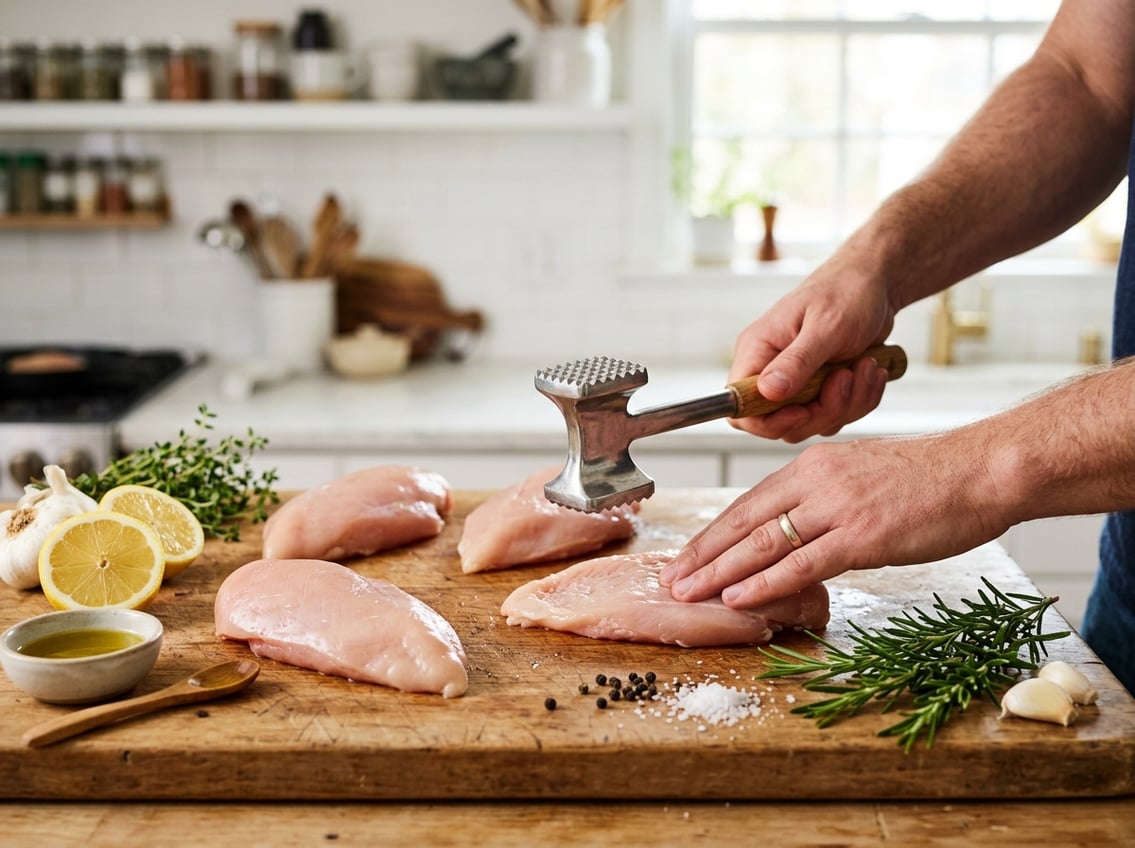
Even cooking starts before the chicken hits the pan or oven.
When the breast has a thick end and a thin end, one part finishes before the other, which makes it harder to prevent chicken from drying out.
Pound Thick Parts for Even Thickness
Place chicken breasts between plastic wrap or inside a zip-top bag, then gently pound the thick end until the whole piece is close to the same thickness.
You do not need to flatten it thin, just even it out.
This helps the whole breast cook at the same speed.
It also improves the texture of the finished meat, since tender chicken is easier to get when one section is not overdone before the rest is ready.
Choose the Best Heat Level for Moist Results
High heat can brown the outside fast, which is useful, yet it can also punish thin areas.
Medium heat is usually safer for chicken breasts because it gives the inside time to catch up.
In the oven, moderate heat works well for even cooking.
In a skillet, start hot enough for color, then reduce the heat so the center finishes without losing moisture.
Rest Before Slicing to Hold Juices
Let cooked chicken rest for 5 to 10 minutes before you cut it.
During that time, residual heat finishes the center and the juices settle back into the meat.
If you slice too soon, the liquid runs onto the cutting board instead of staying in the chicken breast.
That is a common reason juicy chicken turns dry at the table.
Use Prep Methods That Lock In Moisture
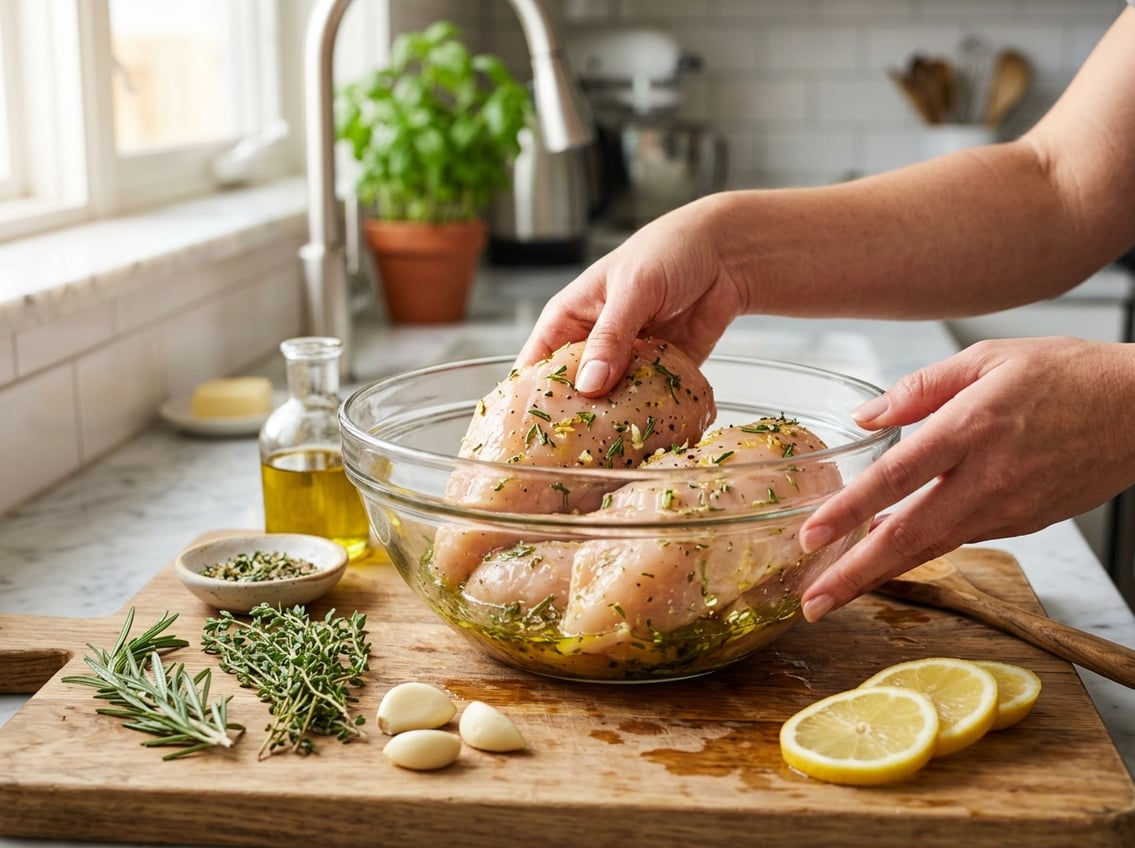
Prep work can help chicken breast stay moist before cooking even starts.
Brining chicken or marinating chicken adds seasoning and can improve the way the meat holds water during cooking.
When to Brine Chicken for Better Juiciness
A short brine works well when you want extra insurance against dryness.
Salt helps the meat hold onto moisture and seasons it deeper than surface seasoning alone.
A simple brine can be enough for chicken breast, especially before grilling or baking.
A recent guide from My Kitchen Gallery on juicy chicken breast explains that brining can improve both flavor and moisture.
Dry Brining Versus Wet Brining
Wet brining uses water and salt.
Dry brining uses salt rubbed directly onto the chicken and left to rest in the fridge.
Wet brining adds moisture from the outside, while dry brining helps season the meat evenly and can improve texture.
Either method can help keep chicken moist, so the better choice depends on your schedule and the flavor you want.
How Marinating Chicken Helps With Flavor and Texture
Marinating chicken adds flavor and can also help the surface stay more forgiving during cooking.
A marinade usually includes oil, salt, acid, and seasonings.
The oil helps coat the meat, while the acid can soften the surface slightly.
That makes marinating chicken a useful step when you want juicy chicken breast with more flavor and a little extra protection from heat.
Pick the Right Cut and Cooking Method
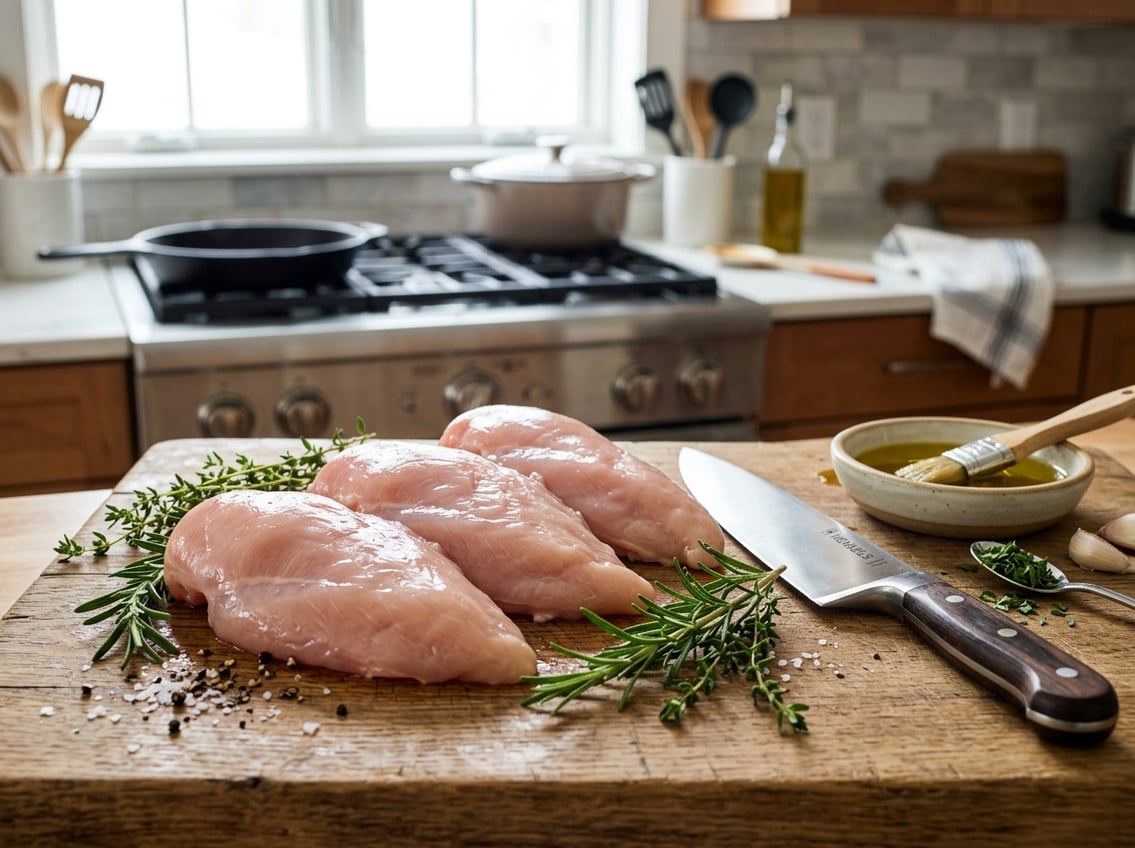
Not every chicken cut behaves the same way.
Chicken breasts are lean and fast-cooking, so they need more care than richer cuts like chicken thighs.
Best Methods for Baking, Grilling, and Pan Cooking
Baking works well when you want steady heat and less hands-on time.
Grilling gives good flavor, though it needs careful temperature control so the outside does not overcook before the center is done.
Pan cooking can be a strong choice for chicken breast when you want a quick sear and a lower finish temperature.
For all three methods, even cooking matters more than speed if you want moist chicken.
When Chicken Thighs Are a Better Choice
Chicken thighs are a better choice when you want more forgiveness.
They have more fat, so they stay moist more easily and are less likely to dry out if you cook them a little longer.
If you are cooking for a crowd or making a meal that sits for a while, thighs can be easier to manage than breast meat.
How Different Chicken Cuts Affect Moisture
Different chicken cuts vary in fat content and thickness.
Chicken breast is the leanest common cut. It has the smallest margin for error.
Bone-in, skin-on chicken pieces usually keep more moisture than boneless, skinless breast meat.
Careful heat control, prep, and rest time help prevent chicken breast from drying out.


