
Is It Safe to Eat Woody Chicken Breast? What to Know
You may wonder if it is safe to eat woody chicken breast when the meat feels hard, dry, or rubbery. Woody chicken breast is usually a quality problem, not a food safety problem, as long as you handle, store, and cook the chicken correctly.
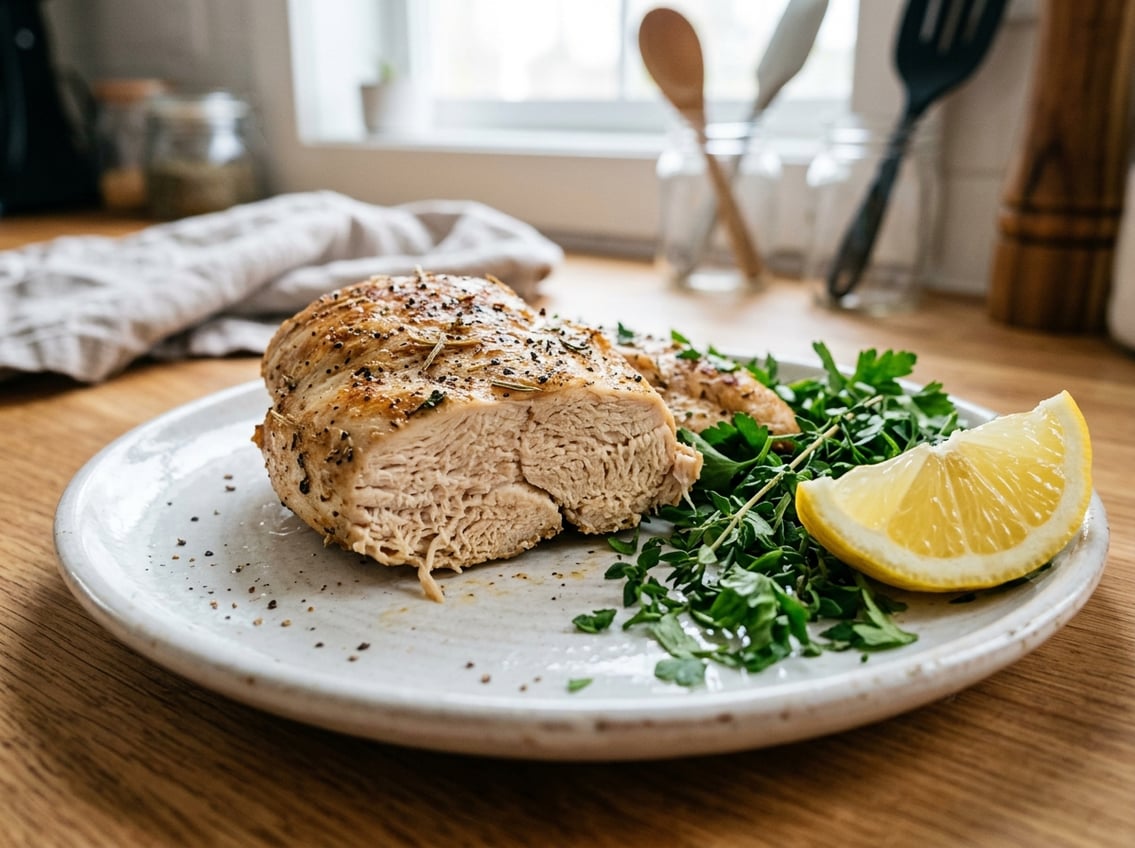
You should skip any chicken breast that smells off, looks spoiled, or was left in unsafe temperature conditions. Texture issues and spoilage are not the same thing.
Woody breast, woody chicken, woody chicken breast, woody breast syndrome, wooden breast, and woody breast condition all point to the same general issue. This means a tough, firm, unusual texture in chicken breast meat.
It can be frustrating to cook and eat. It can also be a sign that the fillet is lower quality than you expected.
Safety, Texture, and When to Skip It
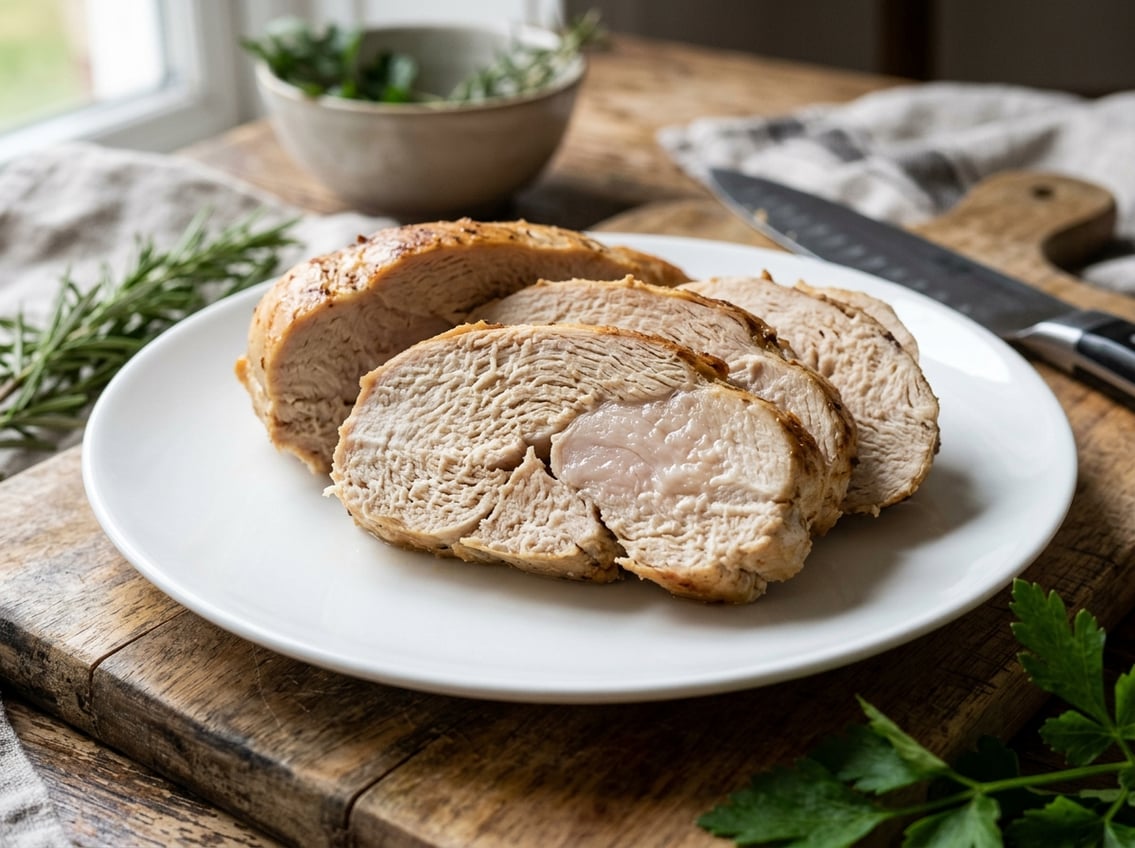
Woody chicken breast can be unpleasant, yet the texture alone does not usually mean the meat is unsafe. The main issue is firmness, dryness, and a stringy bite.
What Experts Mean by a Quality Defect
When food experts call woody breast syndrome a quality defect, they mean the muscle structure has changed in a way that hurts eating quality. Reports from poultry-focused coverage describe woody chicken breast as safe to eat in many cases, while still being tough and low in eating quality, according to this overview of woody chicken breast safety.
Your decision is often about preference and texture, not just safety. If the meat is simply hard to chew, you may still use it in soups, shredded dishes, or slow-cooked recipes.
Why Texture Changes Do Not Usually Mean a Food Safety Risk
Muscle changes in the bird cause wooden breast, not bacteria. A firm, dense texture does not automatically mean the chicken is spoiled or contaminated.
You still need to watch for normal food safety signs, such as sour smell, slimy surface, gray or green color, or an expired use-by date. Those signs matter more than texture when you decide whether to cook or discard the meat.
When Proper Cooking and Storage Still Matter
Safe handling still matters with woody chicken breasts. Refrigerate raw chicken promptly, keep it cold, and cook it to 165°F as measured with a food thermometer.
If you leave the chicken out too long, thaw it badly, or store it above safe temperatures, you should not rely on texture alone. In that case, the safer choice is to throw it out.
What Causes the Breast Meat to Turn Tough
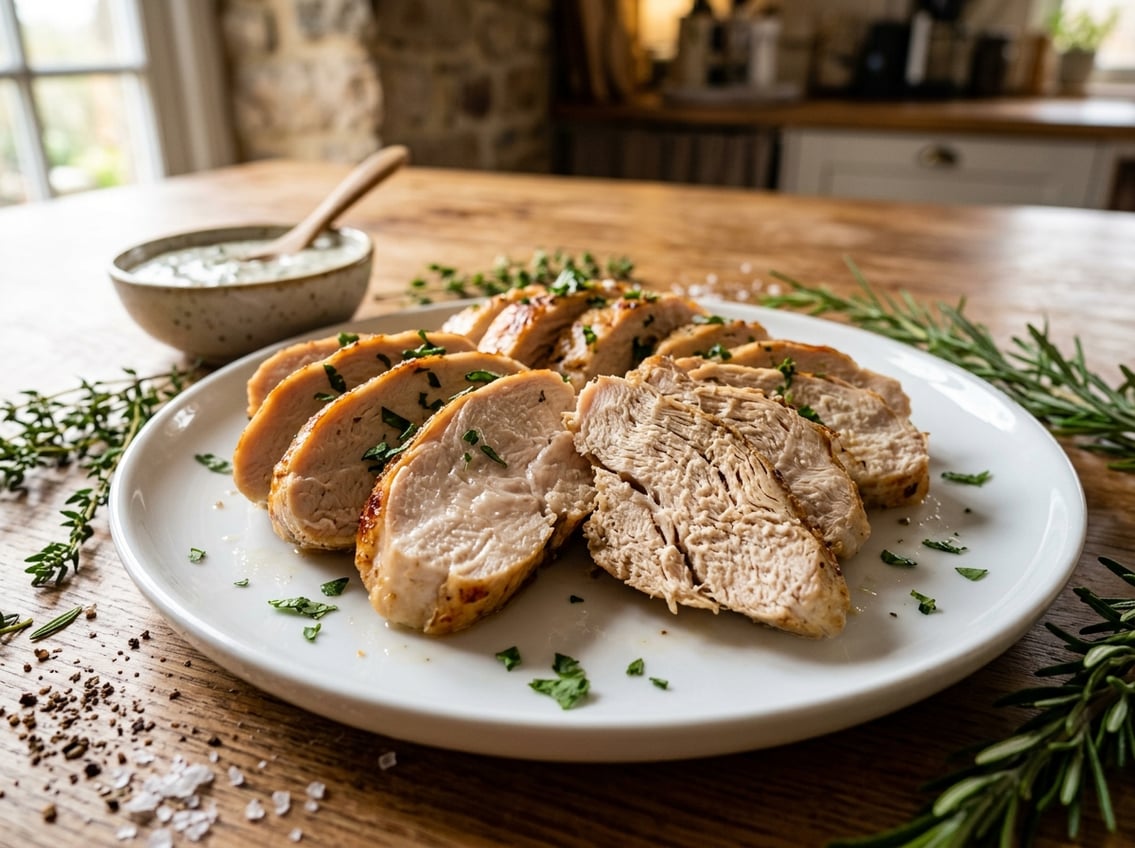
How the bird grows and how the muscle develops can cause woody chicken breast. Poultry scientists have connected the condition to rapid growth, stress on the breast muscle, and changes inside the fillet.
How Fast Growth Affects Broiler Chickens
Breeders select broiler chickens to grow quickly. Fast-growing broilers can develop breast meat that outpaces normal muscle support.
That rapid growth is one reason the broiler industry keeps studying the issue. Coverage from Marketplace notes that woody chicken has become costly for the poultry industry.
The growth pattern is not the same as spoilage. It is a production defect.
What Happens in the Pectoralis Major
The pectoralis major is the main breast muscle in a chicken. In woody breast condition, that muscle can become harder, denser, and less flexible because its fibers do not develop in the usual way.
This is why the meat can feel rigid when raw and chewy after cooking. The problem starts in the muscle itself, so normal cooking does not always fix the texture.
Links to White Striping and Spaghetti Meat
Woody breast often appears with white striping and spaghetti meat. White striping shows up as visible white lines on the surface of the meat, while spaghetti meat makes the muscle look loose and stringy.
These conditions are related because they all point to muscle quality problems in the breast fillet. If you see one, the chance of seeing another can be higher.
What Poultry Science and Poultry Research Suggest So Far
Poultry science and poultry research have not settled on one single cause. Genetics, feed, rapid growth, and farm management are all part of the discussion.
The wider poultry industry keeps looking for ways to reduce the problem through breeding, management changes, and better sorting methods. The condition remains a major focus because it affects both quality and value.
How to Identify It Before and After Cooking
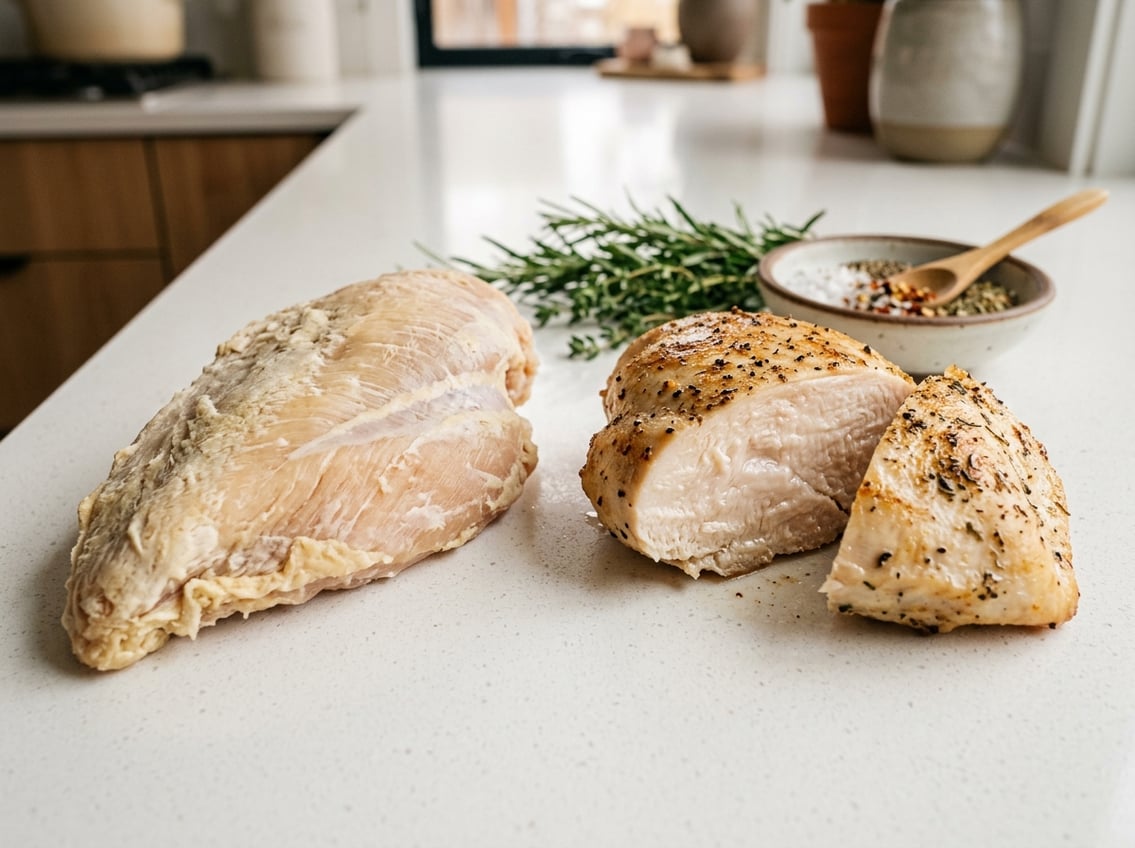
You can identify woody chicken by looking for unusual shape, color, and firmness before cooking. After cooking, the meat often stays dense, hard to slice, and dry in the center.
Signs Shoppers Can Look for in Raw Chicken
When you shop, look for breasts that seem very large, unusually hard, or pale with visible white striping. Some woody chicken breasts also feel firmer than normal when you press them through the package.
It helps to compare the cut with other chicken breasts in the same package. A piece that looks thick, stiff, and unusually smooth may deserve a closer look.
How to Identify Woody Chicken by Feel and Appearance
To identify woody chicken by touch, press the meat gently through the packaging if the store allows it. A normal breast should feel springy, while woody chicken often feels dense and rigid.
After cooking, the texture may still feel rubbery or fibrous. If you slice it and the knife meets resistance instead of a tender cut, wooden breast may be part of the reason.
Why Smaller Chicken Breasts and Organic Chicken Breasts May Be Mentioned
Shoppers often mention smaller chicken breasts and organic chicken breasts because they believe these are less likely to have texture problems. Size can matter because very large breasts are more likely to come from fast-growing birds.
That does not mean smaller or organic breasts are always free of woody breast. It simply means shoppers often use size and production style as rough clues when trying to identify woody chicken before buying.
What It Means for Shoppers and the Poultry Supply Chain

Woody breast syndrome affects more than your dinner plate. It also affects poultry producers, processors, and buyers across the supply chain because affected fillets can lose value fast.
Why Poultry Producers Care About the Condition
Woody breast lowers product quality and can lead to customer complaints and waste. When meat is hard to sell as a premium fillet, the economic impact spreads through the whole production line.
The issue also matters for consistency. If shoppers do not know what they are getting, trust in chicken products can drop.
How the Poultry Industry Tries to Reduce Affected Fillets
The poultry industry uses breeding choices, feeding changes, better processing checks, and sorting tools to reduce the number of affected breasts. Research groups also keep testing ways to spot the condition earlier.
As noted by Chicken Check In, researchers are still working to identify causes and possible solutions. Industry funding has supported multiple projects.
Smart Buying and Cooking Choices for Consumers
You can lower your risk of disappointment by choosing chicken that looks even in color. Make sure it does not feel overly rigid.
Buy from stores with strong cold-chain practices. Check the use-by date.
If you end up with a woody chicken breast, shred it for soup, tacos, or casseroles. Do not cook or eat chicken that smells bad or shows signs of spoilage; discard it instead.


