
Is It Healthy to Eat Chicken Breast Everyday? Pros and Risks
If you wonder if it is healthy to eat chicken breast every day, the answer is that it can fit into a healthy pattern, especially when you choose skinless chicken breast and prepare it simply.
The main issue is whether your overall diet stays varied enough to cover fiber, healthy fats, and other key nutrients.
Chicken breast can support your protein goals, but it works best as part of a balanced diet that includes vegetables, whole grains, beans, fish, and other protein foods.
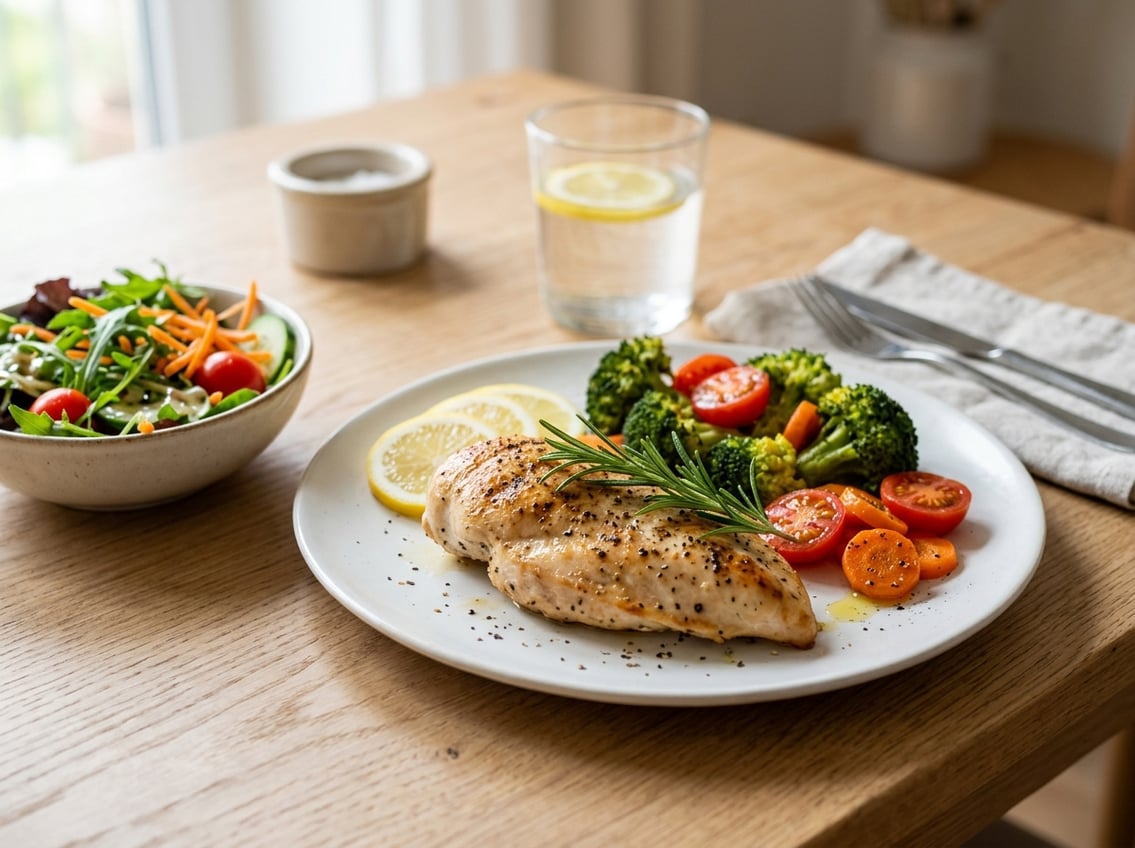
Chicken breast is popular because it is easy to cook, relatively affordable, and high in protein.
It can help if you want a simple meal that keeps you full and supports muscle repair.
At the same time, eating chicken breast every day can crowd out other foods your body needs.
That is where balance matters most.
What Daily Chicken Breast Does Well
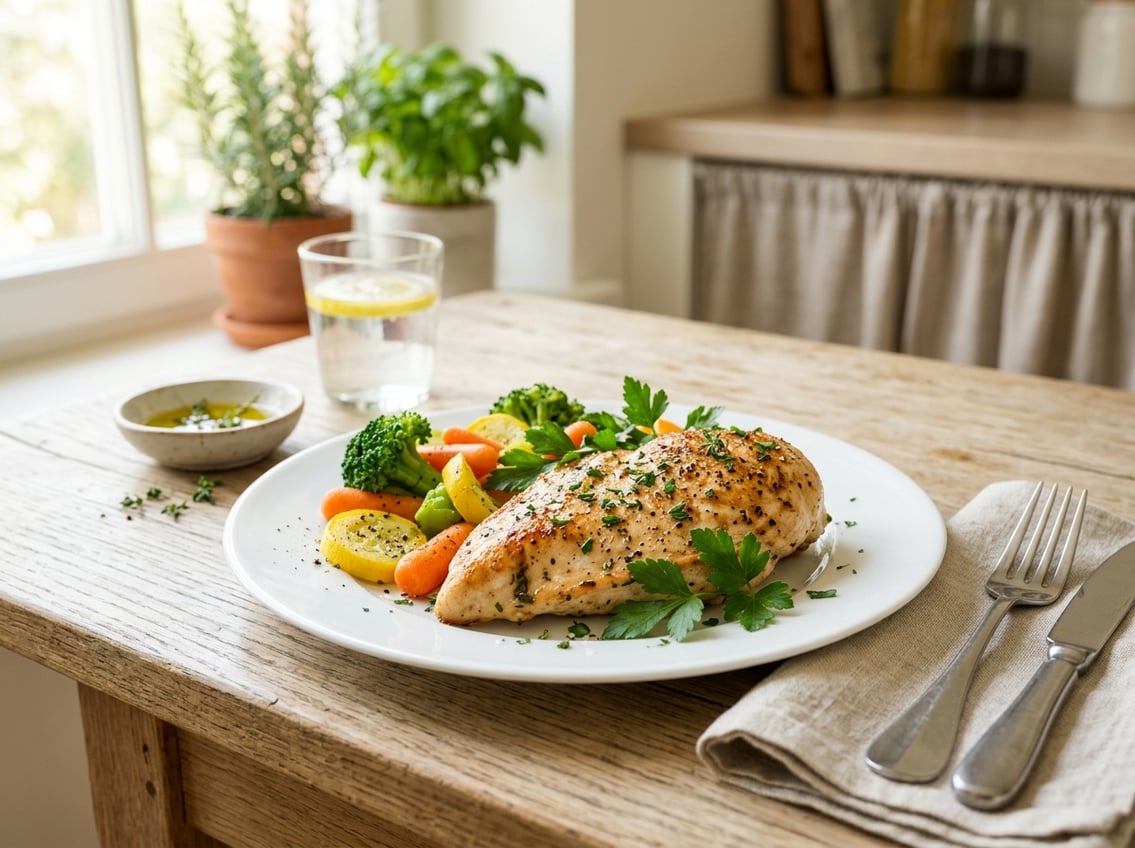
Daily chicken breast can be a strong fit for people who want a simple source of lean protein.
It supports protein intake without adding much saturated fat when you choose skinless chicken breast and use healthy cooking methods.
Why Skinless Chicken Breast Is a Lean Protein Staple
Skinless chicken breast is one of the leanest animal proteins you can eat.
A 4-ounce serving provides a large amount of protein with very little fat, which helps you meet protein requirements without adding many extra calories.
Chicken is a high-quality protein that contains all nine essential amino acids.
That makes it a complete protein, which supports recovery, strength, and steady meals.
How Protein Supports Satiety and Muscle Repair
Protein helps repair muscles after exercise and daily wear and tear.
It also helps with satiety, so you may feel full for longer after eating.
If you follow a high-protein diet, chicken breast can help you hit your target.
Eating enough protein at meals may help you avoid frequent snacking and support weight goals.
Key Nutrients in Chicken, Including Niacin and Vitamin B6
Chicken breast provides B vitamins, including niacin and vitamin B6, which help your body use energy and support metabolism.
These B vitamins are important because your body does not store them well, so you need them regularly from food.
Chicken breast can be a useful part of that intake, especially if your meals also include other nutrient-rich foods.
When Eating It Every Day Can Become a Problem

Eating chicken every day is not automatically a problem, but it can create gaps if it replaces too many other foods.
The biggest concerns are diet variety, food safety, and how much of your plate comes from the same protein source.
Nutrient Gaps From Skipping Variety
A balanced diet gives you more than protein.
If chicken breast becomes your main or only protein, you may miss out on fiber from beans, lentils, whole grains, vegetables, and other plant foods.
You may also miss healthy fats, including omega-3 fatty acids, which you can get from salmon and some plant foods.
Variety matters because foods like eggs, shrimp, tofu, beans, lentils, pulses, peas, nuts, and seeds each bring different nutrients.
Food Safety Risks Like Campylobacter
Raw chicken can carry bacteria such as campylobacter, so safe handling matters every time you cook it.
Wash your hands, keep raw chicken away from ready-to-eat foods, and cook it to a safe internal temperature.
Frequent use means more chances to handle it improperly, so good kitchen habits matter as much as the food choice.
What to Know About Antibiotics in Chicken
People worry about antibiotics in chicken.
In the U.S., stores sell chicken that is regulated, and the main health focus is usually less about antibiotics and more about choosing a varied diet and safe cooking methods.
If you want to reduce reliance on one protein, rotate in fish, eggs, and plant proteins during the week.
That approach supports both nutrition and meal variety.
How to Make It a Healthy Habit
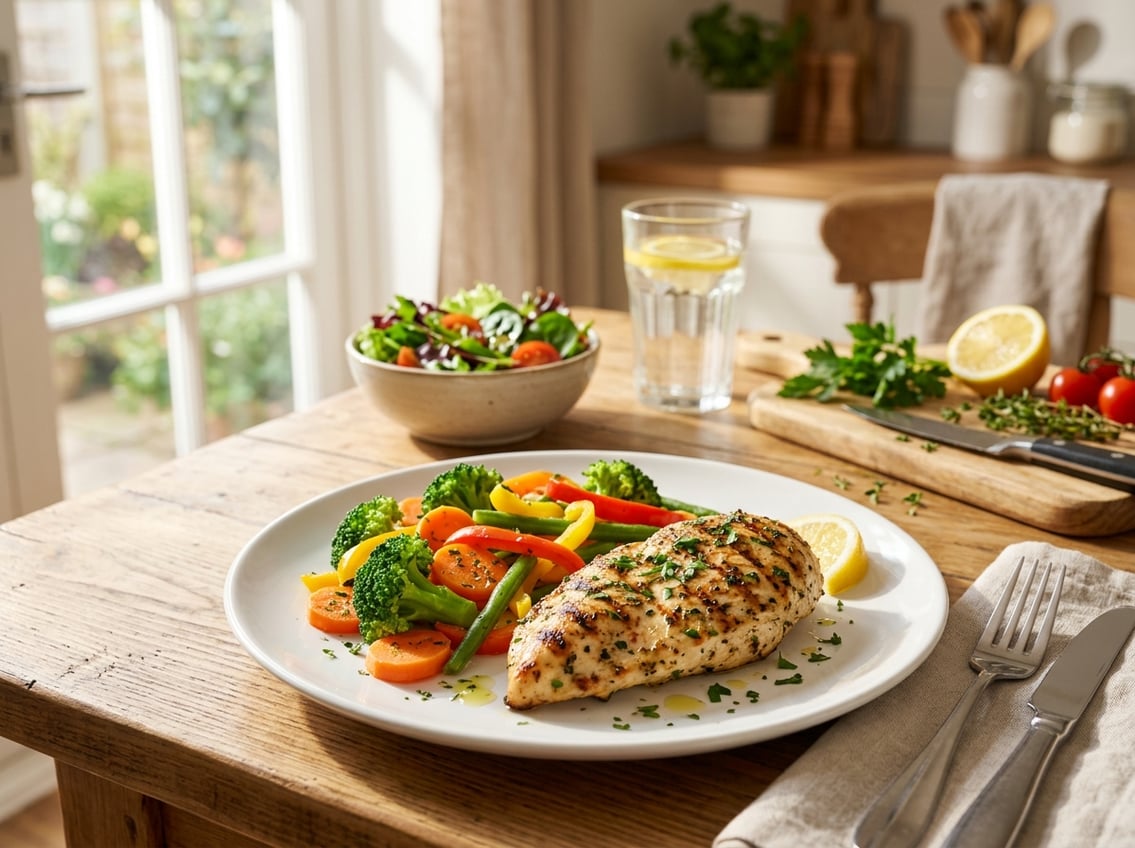
You can make daily chicken breast work well if you watch portion size and build the rest of the meal with fiber and healthy fats.
The goal is not just more protein, but a more complete plate.
A Smart Portion Size for Most Adults
For most adults, a portion around 3 to 4 ounces of cooked chicken breast is a practical starting point.
That amount gives you a strong protein boost without making the meal too narrow.
If your protein needs are higher because of training, age, or recovery, your ideal amount may be different.
Your total daily intake matters more than one meal alone.
Best Ways to Cook Chicken Without Adding Unnecessary Fat
Simple methods like grilling, baking, roasting, and slow cooking work best for chicken.
These healthy cooking methods keep the protein lean and avoid the extra fat that comes from frying.
You can marinate chicken breast with olive oil, lemon, garlic, and herbs and spices for flavor.
Pairing chicken with healthy fats like avocado or olive oil can help round out the meal.
How to Build a More Complete Plate Around It
Chicken breast works best when the rest of the plate adds fiber and color.
Try vegetables, whole grains, beans, and healthy fats at the same meal.
A simple formula is protein, produce, and a fiber-rich carb.
That can mean grilled chicken with brown rice and broccoli, or chicken with beans, roasted vegetables, and avocado.
Practical Ways to Add Variety Without Losing Protein
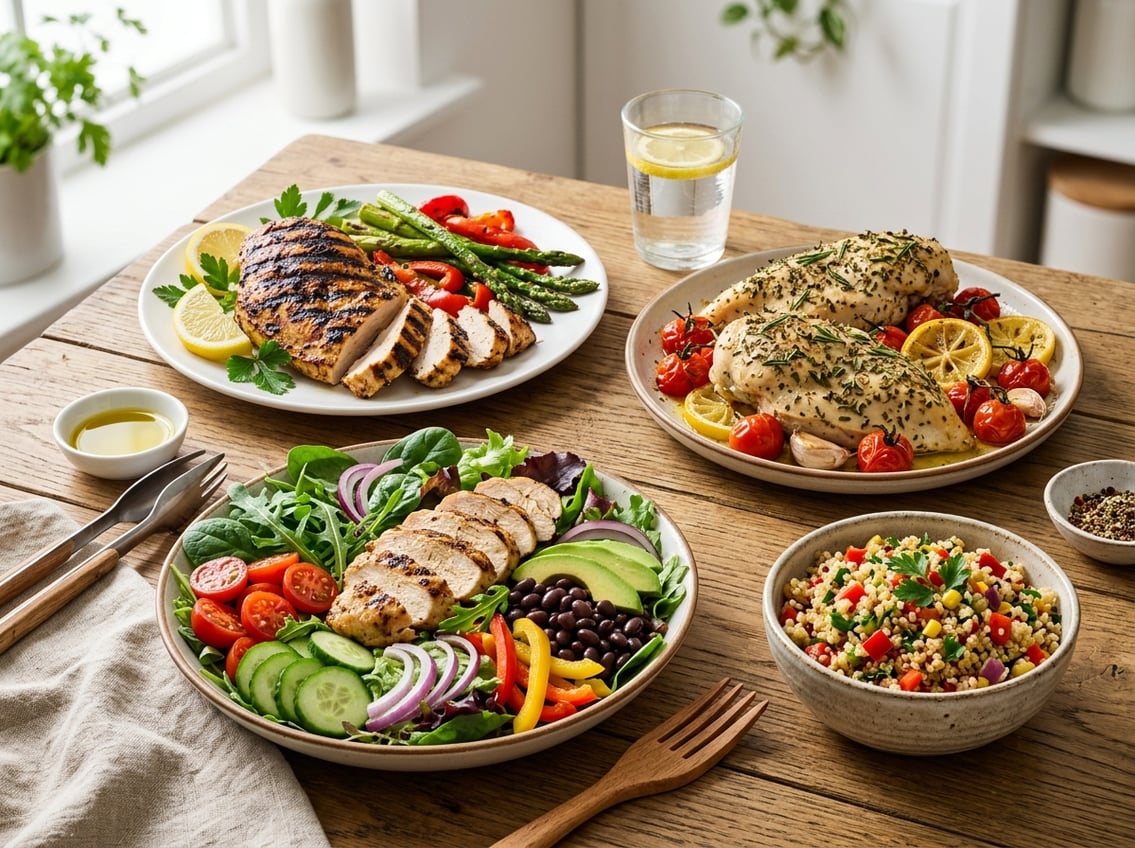
You do not need to give up chicken breast to get more variety.
You can rotate proteins, keep easy meals on repeat, and still meet your protein intake goals.
When to Rotate in Fish, Eggs, and Plant Proteins
A few meals each week can come from salmon for omega-3 fatty acids, eggs for convenience, or tofu, beans, lentils, pulses, peas, nuts, and seeds for more fiber and plant nutrients.
This mix gives your body more than one type of protein benefit.
If you eat chicken every day, rotating even one or two meals can improve balance.
It also helps keep meals from feeling repetitive.
Easy Meal Ideas Like Chicken Salad and Chicken Soup
Chicken salad and chicken soup are simple ways to use chicken breast without making the same meal every time.
You can add vegetables, beans, whole grains, and herbs to change the flavor and nutrition.
Leftover chicken breast also works in grain bowls, wraps, and soups.
That makes it easier to keep healthy eating realistic on busy days.
How to Keep Meals Sustainable Over Time
The best routine is the one you can keep.
If chicken breast helps you stay consistent, use it, but do not let it replace every other protein.
A sustainable pattern includes chicken breast, fish, eggs, tofu, and beans across the week.
This approach gives you protein variety and a broader nutrient mix without making meals complicated.


