
Is Chicken Breast High in Protein? Quick Nutrition Guide
You may be asking, is chicken breast high in protein because you want a simple food that helps you meet your nutrition goals.
The short answer is yes. Chicken breast is one of the most protein-rich common meats you can buy.
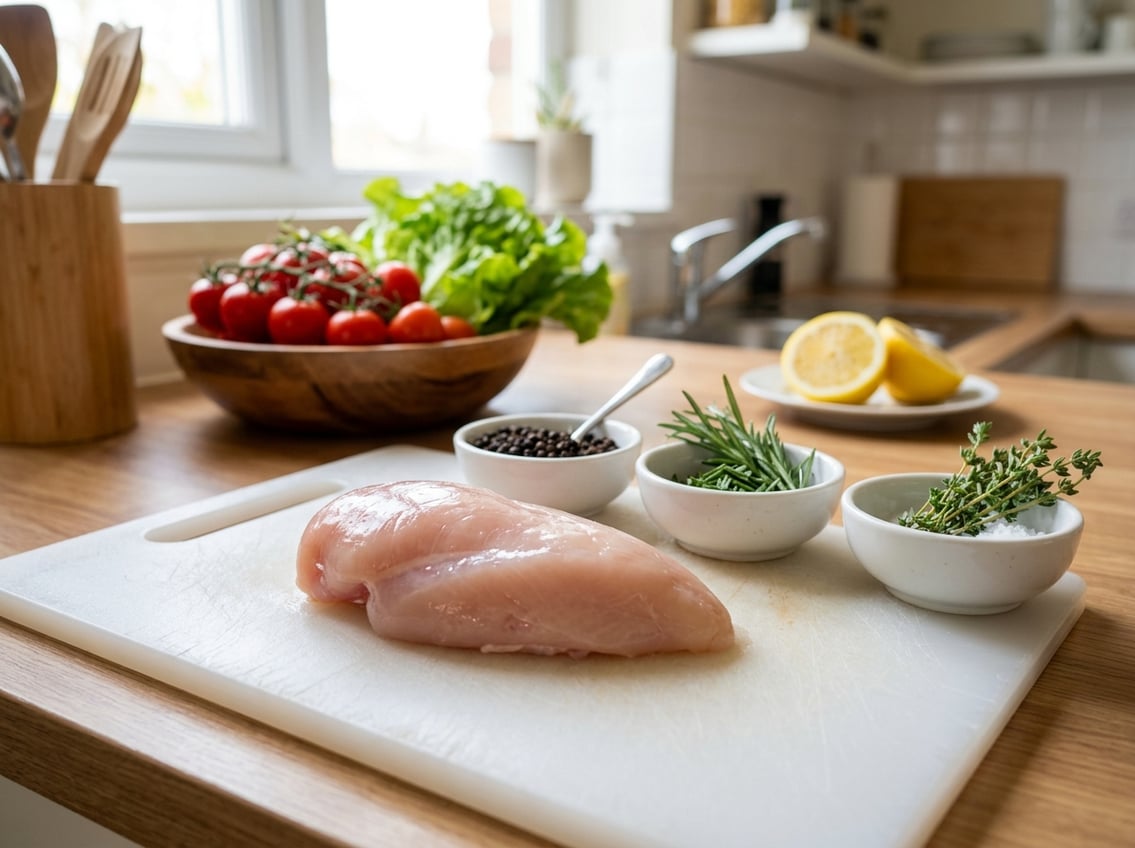
A skinless chicken breast gives you a lot of protein with relatively few calories and little fat.
That is why you see it so often in meal prep, weight loss plans, and muscle-building diets.
Protein Content at a Glance
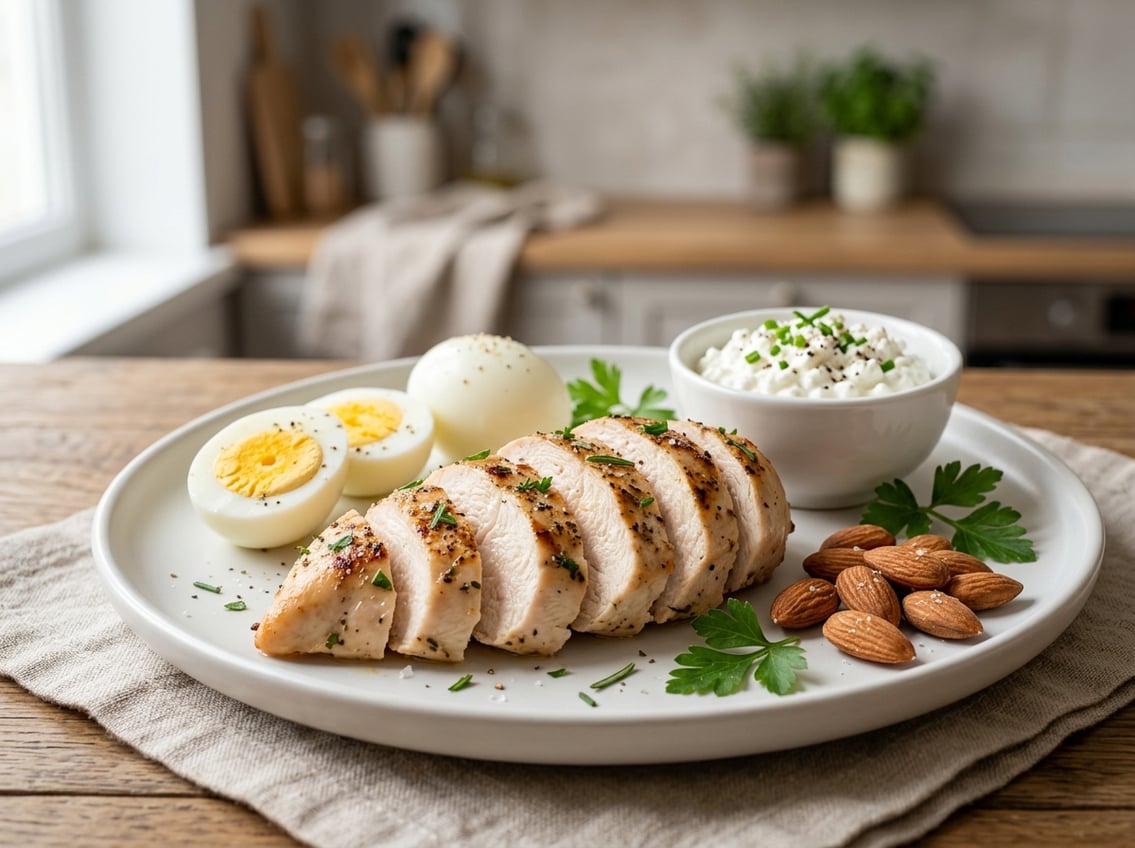
Chicken breast delivers a high amount of protein in a small serving.
The exact amount changes based on portion size, cooking method, and whether the skin is removed.
A skinless, cooked chicken breast is one of the most protein-dense cuts you can eat.
It is easy to track in meal plans.
How Much Protein Is in a 3-Ounce Serving
A 3-ounce serving of cooked chicken breast provides about 23.8 grams of protein, according to MSN’s nutrition roundup.
This serving size is often used in nutrition tracking because it is easy to picture.
Protein Per 100 Grams
Per 100 grams, cooked skinless chicken breast provides about 32 grams of protein, based on Healthline’s chicken protein guide.
This number helps when you compare chicken breast with other cuts or estimate macros in larger meals.
Why Cooked Portions Show Higher Protein Density
Cooking chicken removes water, so the protein becomes more concentrated by weight.
As a result, 100 grams of cooked chicken breast usually contains more protein than 100 grams of raw chicken breast.
This does not mean the chicken has gained protein, just that it has less water after cooking.
Why It Counts as a Lean Protein
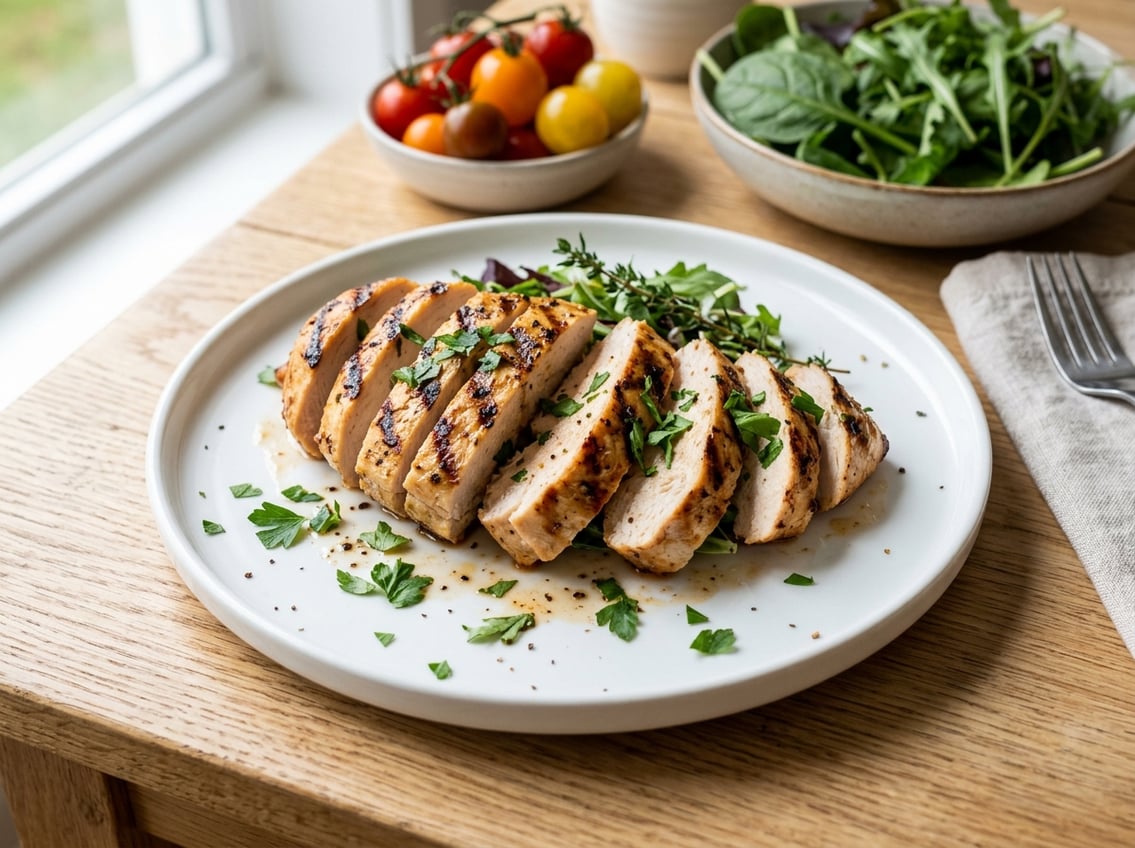
Chicken breast is called a lean protein because it gives you a lot of protein with little fat.
That makes it useful when you want to control calories while still getting enough amino acids.
Skinless chicken breast is especially common in high-protein meal plans because it is filling and easy to season.
Calories, Fat, and Protein Balance
A skinless, cooked chicken breast contains about 289 calories for a 174-gram portion, or about 166 calories per 100 grams, according to Healthline.
In that same serving, most of the calories come from protein, not fat.
That balance matters if you want to feel full without going too high on calories.
Skinless vs. Skin-On Nutrition Differences
Skinless chicken breast is leaner because the skin adds fat and calories.
If you leave the skin on, the meal becomes richer, but it is no longer as lean.
Skinless chicken breast is usually the better choice when you want a higher protein-to-calorie ratio.
Skin-on chicken can still fit your diet if you want more fat or a more filling meal.
When Chicken Breast Fits Weight Loss or Muscle Goals
Chicken breast works well if you are trying to lose weight, maintain muscle, or recover after training.
Its high protein content helps support fullness and muscle repair.
If your goal is muscle gain or weight gain, chicken breast still fits, though fattier cuts can help you raise calories more easily.
How It Compares With Other Chicken Cuts
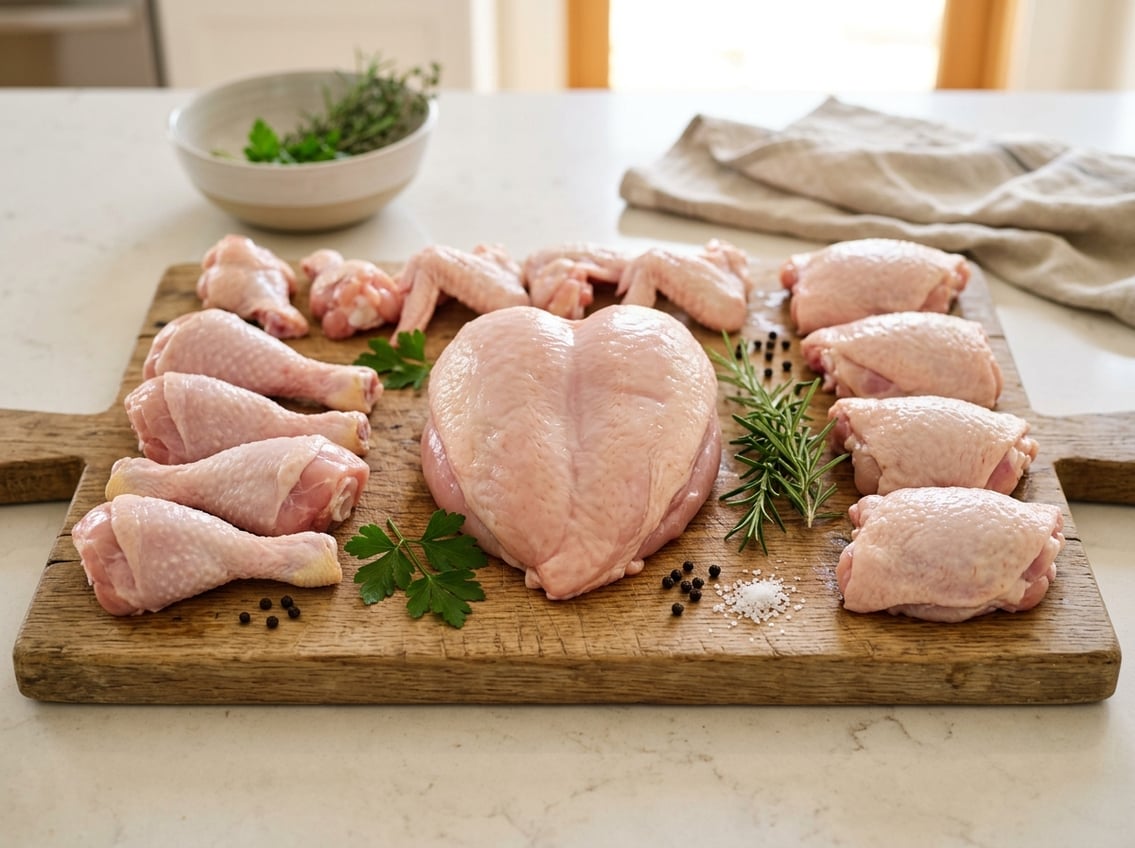
Chicken breast has the highest protein per gram among common chicken cuts.
Other cuts still provide plenty of protein, but they usually contain more fat and calories.
The best cut for you depends on whether you want the leanest option, more flavor, or a higher-calorie meal.
Chicken Breast vs. Thigh
Chicken thigh has slightly less protein and more calories than chicken breast.
A skinless cooked thigh has about 27 grams of protein and 195 calories, according to Healthline.
That makes thighs a good option if you want more flavor or a little more fat.
Chicken breast stays ahead when your main goal is the highest protein with fewer calories.
Chicken Breast vs. Drumstick and Wings
Drumsticks and wings also contain protein, but they are less protein-dense than breast meat.
Healthline reports about 23 grams of protein in a skinless drumstick and about 20 grams in a wing, with more calories from fat.
These cuts can still fit a balanced diet.
They are just not as efficient as chicken breast if you want the most protein for the fewest calories.
Best Choice Based on Your Nutrition Goal
If you want the leanest option, chicken breast is usually the best pick.
If you want more calories, more fat, or a richer taste, thighs, drumsticks, and wings may work better.
Best Ways to Use It in Meals
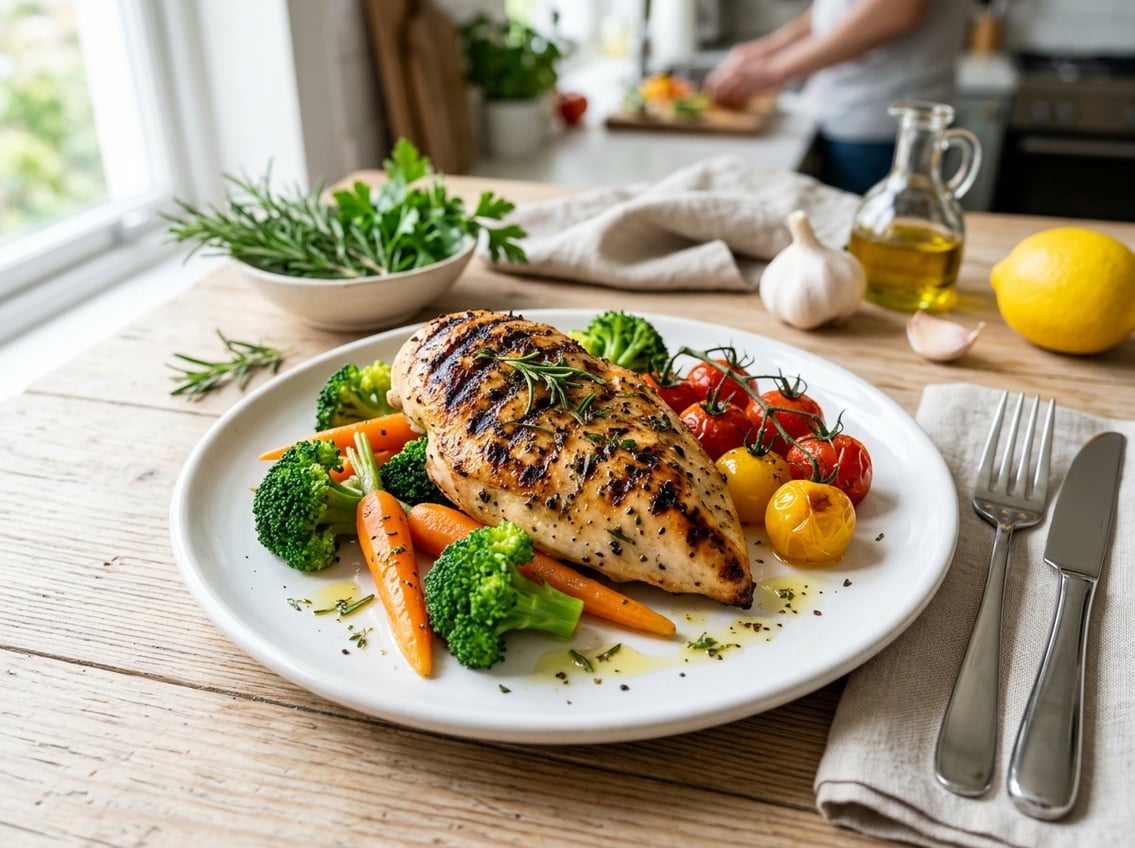
Chicken breast works well because it takes on flavor from sauces, spices, and marinades without adding much fat.
That makes it easy to use in simple meals, meal prep, and higher-protein recipes.
A good serving method helps you keep the nutrition profile close to your goal.
The cooking style and side dishes matter just as much as the chicken itself.
Grilled Chicken as a High-Protein Option
Grilling chicken breast is one of the easiest ways to keep the meal lean.
You get a solid amount of protein without adding much extra fat from cooking oil.
It also works in bowls, wraps, pasta dishes, and rice meals.
If you want a simple high-protein base, grilled chicken is a dependable option.
How Chicken Caesar Salad Changes the Nutrition Profile
Chicken Caesar salad can still be high in protein, but the dressing, croutons, and cheese can raise the calorie count fast.
The chicken breast adds lean protein, while the rest of the salad may add more fat and carbs.
If you want a lighter version, use a smaller amount of dressing and load up on greens.
That keeps the meal closer to your protein goal without making it too heavy.
Portioning Tips for Everyday Meals
Eat 3 to 4 ounces of cooked chicken breast per meal if you want a moderate protein boost.
Increase the portion if you have higher protein needs or train hard.
Pair chicken breast with vegetables, beans, rice, potatoes, or whole grains based on your goal.
This approach helps you build meals that are balanced and filling.


