
Should You Let Chicken Breast Rest Before Cutting?
Letting chicken breast rest helps keep the meat juicy and easier to slice. If you cut too soon, the juices run onto the board instead of staying in the meat.
A short rest after cooking gives the chicken time to relax and reabsorb moisture. This usually leads to better texture and flavor.
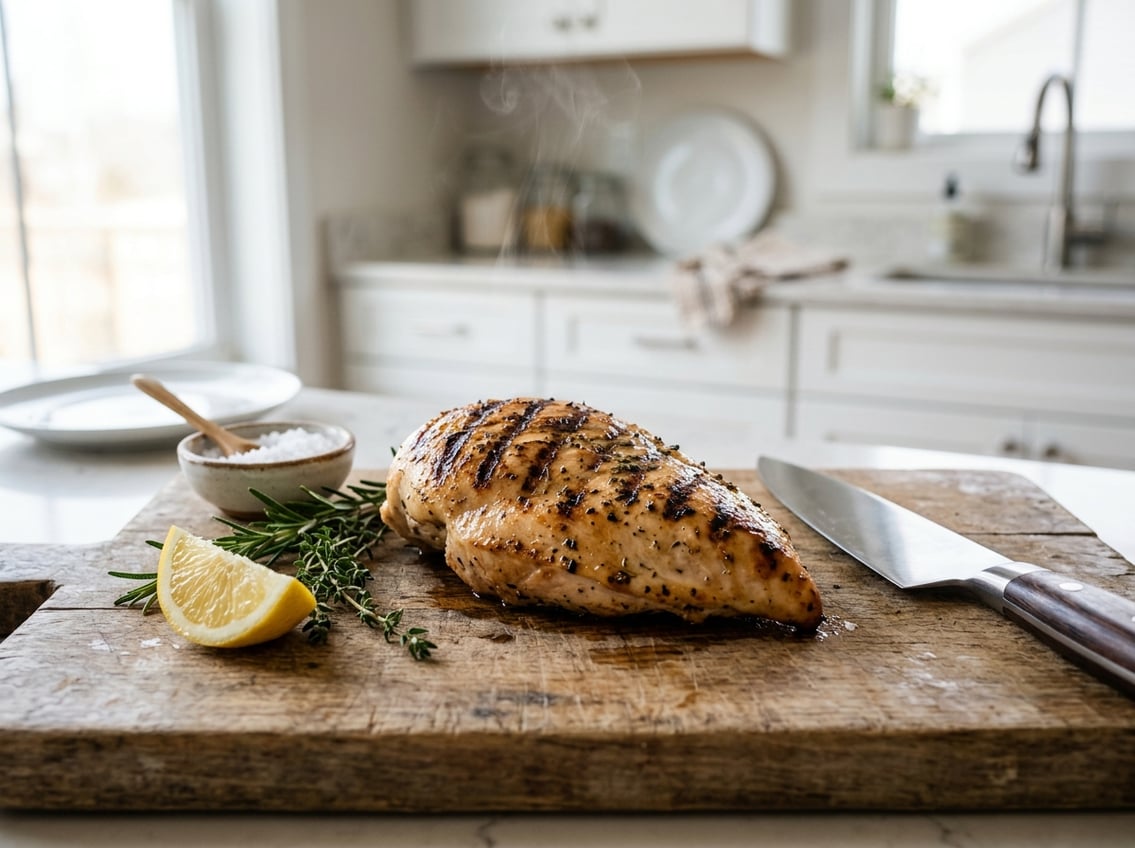
This matters most with lean cuts like chicken breast, which dry out faster than darker, fattier pieces. A few minutes of patience can make a clear difference in the final result.
What Resting Does for Chicken Breast
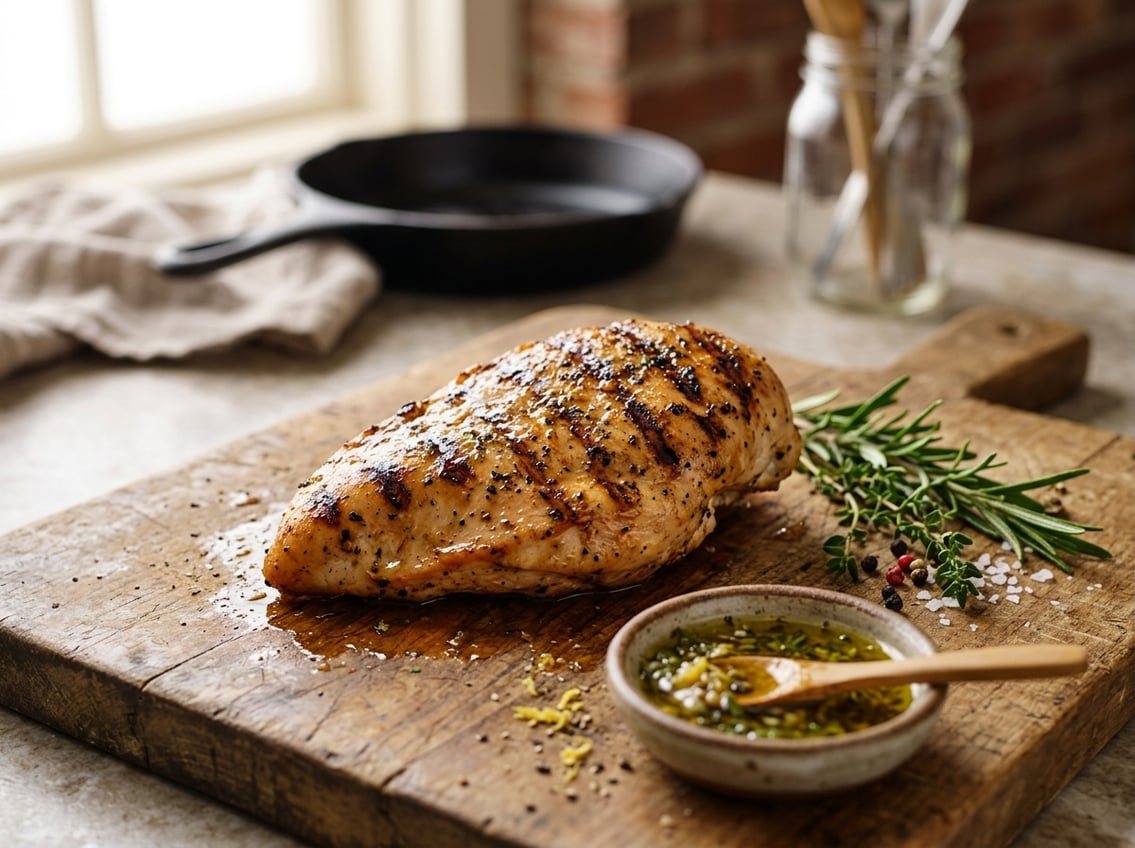
When you let chicken rest, the meat has time to settle after heat pushes moisture toward the surface. Carryover cooking can finish the job without driving out more juice, which is why resting chicken breast is a useful habit.
How Juices Redistribute After Cooking
As chicken cooks, the muscle fibers tighten and force moisture outward. During rest, those fibers begin to relax, and some of the moisture moves back through the meat instead of spilling out the moment you slice it.
The breast feels more tender, and the slices hold together better on the plate.
Why Cutting Too Soon Makes Meat Seem Drier
If you cut right away, the liquid near the surface escapes before the meat has time to settle. The chicken may still be fully cooked, yet it will seem drier because the juices have not had time to redistribute.
A breast sliced straight off the pan often looks less moist than one that rested for a few minutes. The difference is usually about where the juices end up, not just how long the chicken cooked.
How Carryover Cooking Affects Final Doneness
Carryover cooking continues after you remove the chicken from heat, so the internal temperature can rise a few degrees while the chicken rests. According to Tatnuck Meat & Seafood, this gentle rise helps chicken finish cooking without drying out the outer layers.
Many cooks remove chicken a little before the final target temperature. The rest period brings the temperature up safely while protecting texture.
How Long to Wait Before Slicing
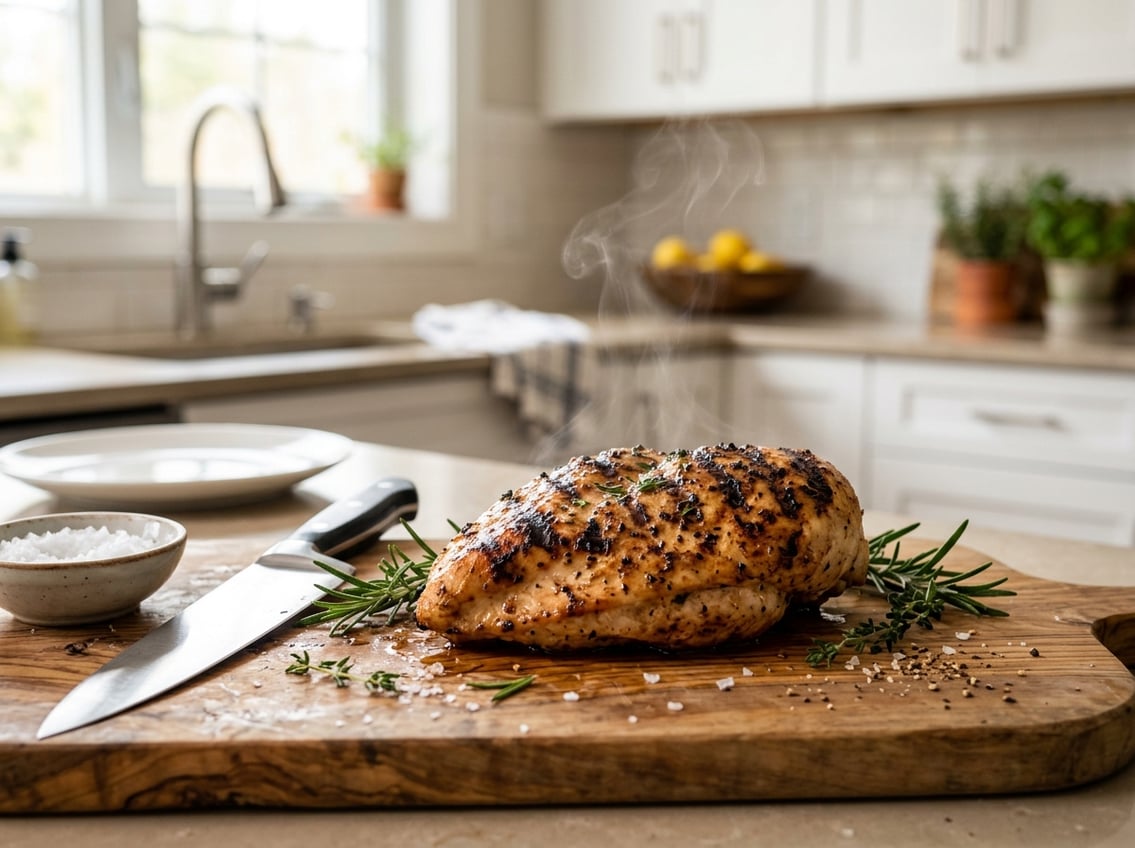
The right rest time depends on size, thickness, and cooking method. For most chicken breast pieces, a short wait is enough, while thicker or bone-in cuts need more time.
Typical Rest Time for Boneless Pieces
For boneless chicken breast, 5 to 10 minutes works well. Thin cutlets may only need the lower end, while thicker pieces do better with a full 10 minutes.
If you are asking how long you should let chicken rest before slicing, this is the most common answer for home cooking.
When Thick or Bone-In Breasts Need Longer
Thicker breasts hold more heat, so they keep cooking after you remove them from the pan or oven. Bone-in pieces also stay hot longer because the bone affects how heat moves through the meat.
These cuts often need closer to 10 to 15 minutes. If the breast is especially large, lean toward the longer end of that range.
How Cooking Method Changes the Timing
High-heat methods like grilling or broiling usually create more surface moisture loss, so resting matters more. Baking may need a little less time, while pan-seared chicken can sit comfortably in the middle of the range.
The right timing also depends on how much crust or skin you want to protect. A hot, crisp exterior benefits from a rest that is long enough to settle the juices, not so long that the texture fades.
How to Rest Chicken Without Losing Heat or Texture
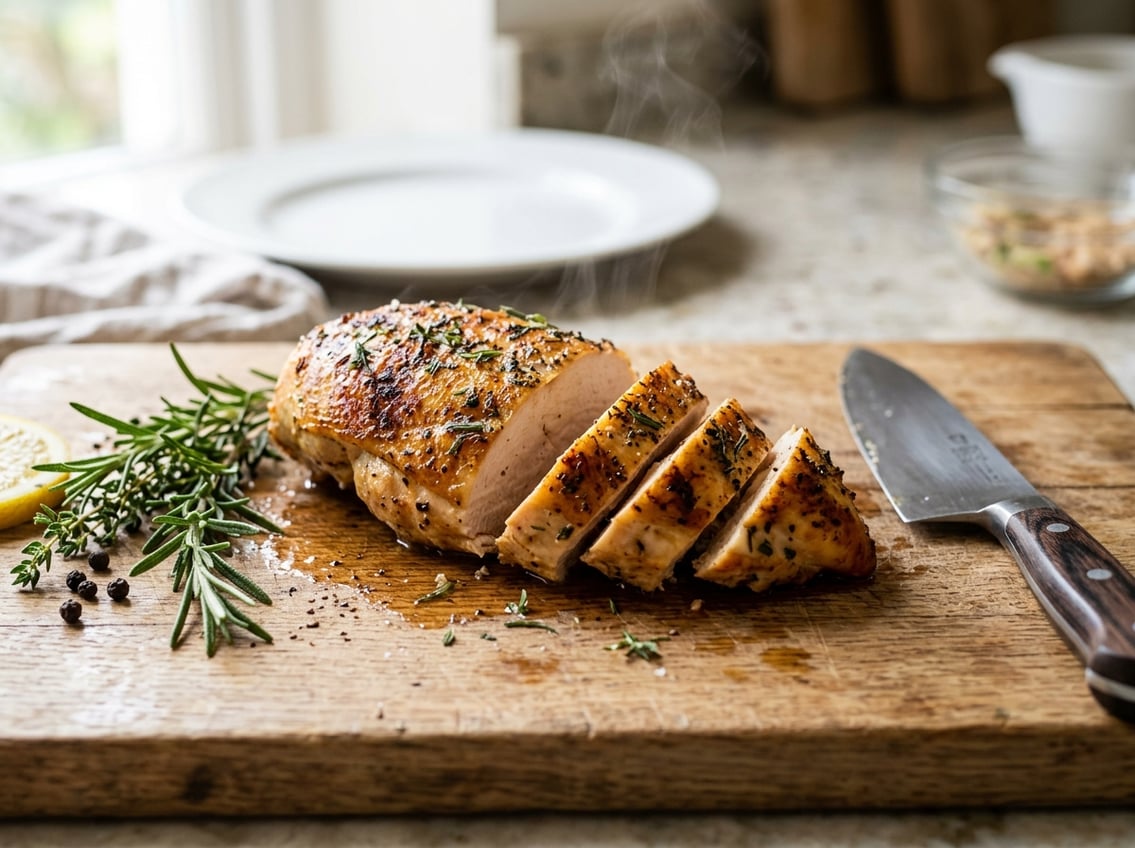
Let chicken rest while keeping it warm and pleasant to eat. Good practices protect the surface texture and limit steam buildup.
When to Use Tenting with Foil
Lightly tenting with foil can help hold in heat during the rest. Use it when you want the chicken to stay warm, especially after roasting or pan cooking.
Keep the foil loose. Tight wrapping traps steam, and that can soften browned skin or a crisp exterior.
Where to Place the Chicken While It Rests
Set the chicken on a cutting board, warm plate, or clean tray away from direct heat. A flat surface lets juices settle instead of pooling in a hot pan.
Do not stack pieces on top of each other unless you want them to steam. Space them out so the texture stays closer to what you cooked.
How to Keep Skin From Turning Soggy
If the chicken has skin, avoid sealing it in tightly with foil or placing it in a covered dish. Crisp skin needs some airflow to stay firm.
Use a loose cover and rest the meat where steam can escape. That balance keeps the chicken warm without washing out the texture.
Common Mistakes and Practical Exceptions
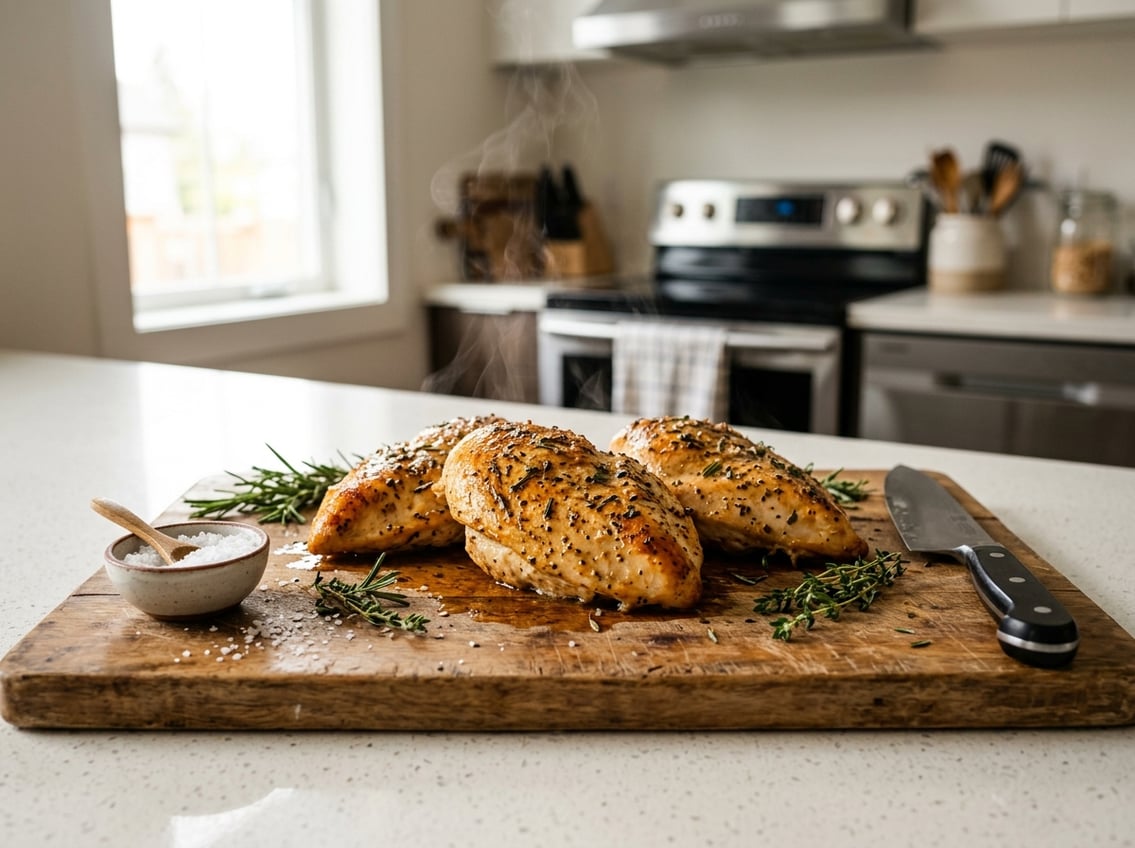
Simple resting practices work well, but a few common mistakes can undo the benefit. Some cuts need less attention, and a few quick checks help you know when resting is enough.
Signs You Rested Too Little or Too Long
If you slice too soon, juices flood the board and the meat can look dry by the first bite. If you wait too long, the chicken may still be fine, yet it can lose the warm, fresh texture you want at serving time.
A good rest keeps the breast warm, moist, and easy to slice. If it feels hot to the touch and the juices are not running freely, you likely waited long enough.
When Resting Matters Less for Thin or Shredded Meat
Thin cutlets cool quickly, so they need a shorter rest. Very thin slices or shredded chicken also matter less because the meat is already broken apart.
Even thin pieces benefit from a brief pause before cutting. A short rest can still improve juiciness without changing your serving time much.
Safe Temperature Checks Before Serving
Check the thickest part of the breast with a thermometer before serving. Chicken needs to reach an internal temperature of 165°F.
Carryover cooking can raise the temperature a bit after you remove it from the heat. For the best texture, remove the chicken slightly early and let it finish cooking as it rests.
This method gives you safer and juicier chicken.


