
What Is the Temperature of Chicken Breast? Safe Guide
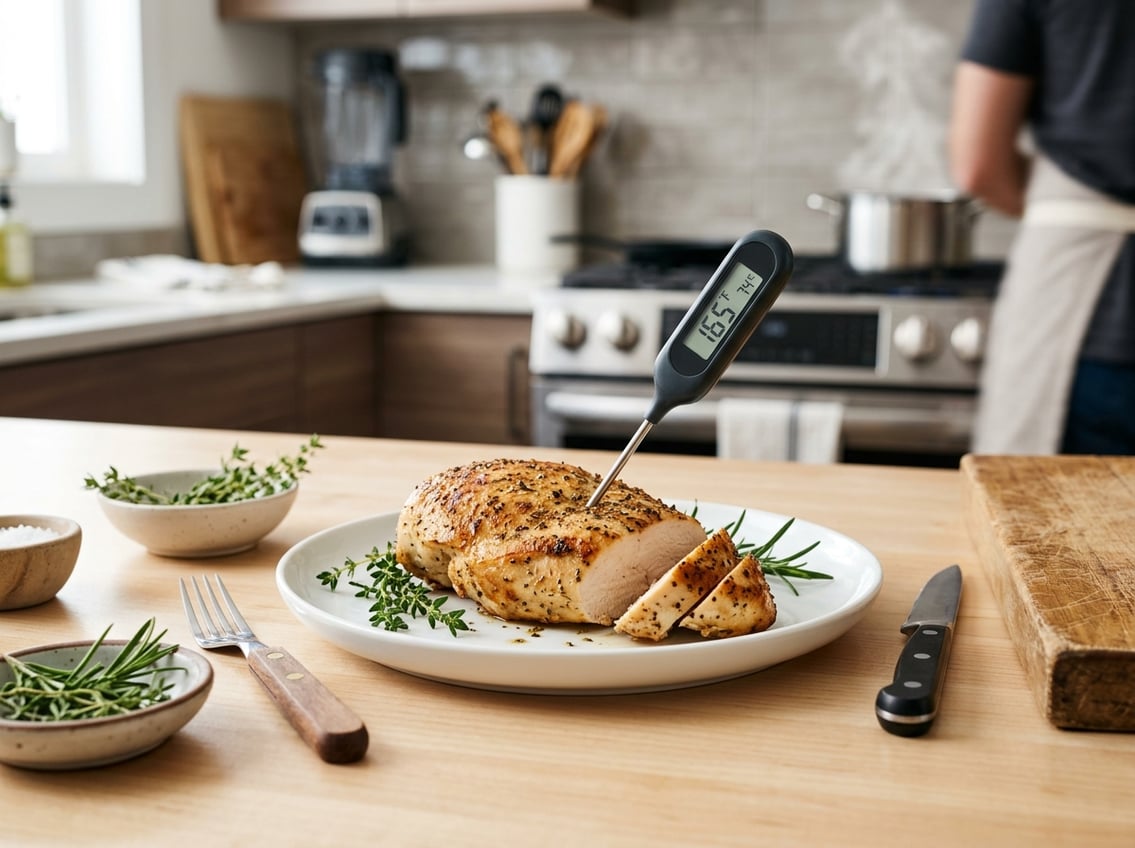
Getting the temperature of chicken breast right matters for both safety and texture. The safe minimum internal temperature of chicken is 165°F (74°C), and you should use this number when checking with a thermometer.
If you want juicy chicken breast, measure the internal temperature instead of guessing by color, time, or feel. A few degrees make a big difference because the cooking temperature affects both safety and how dry the meat turns out.
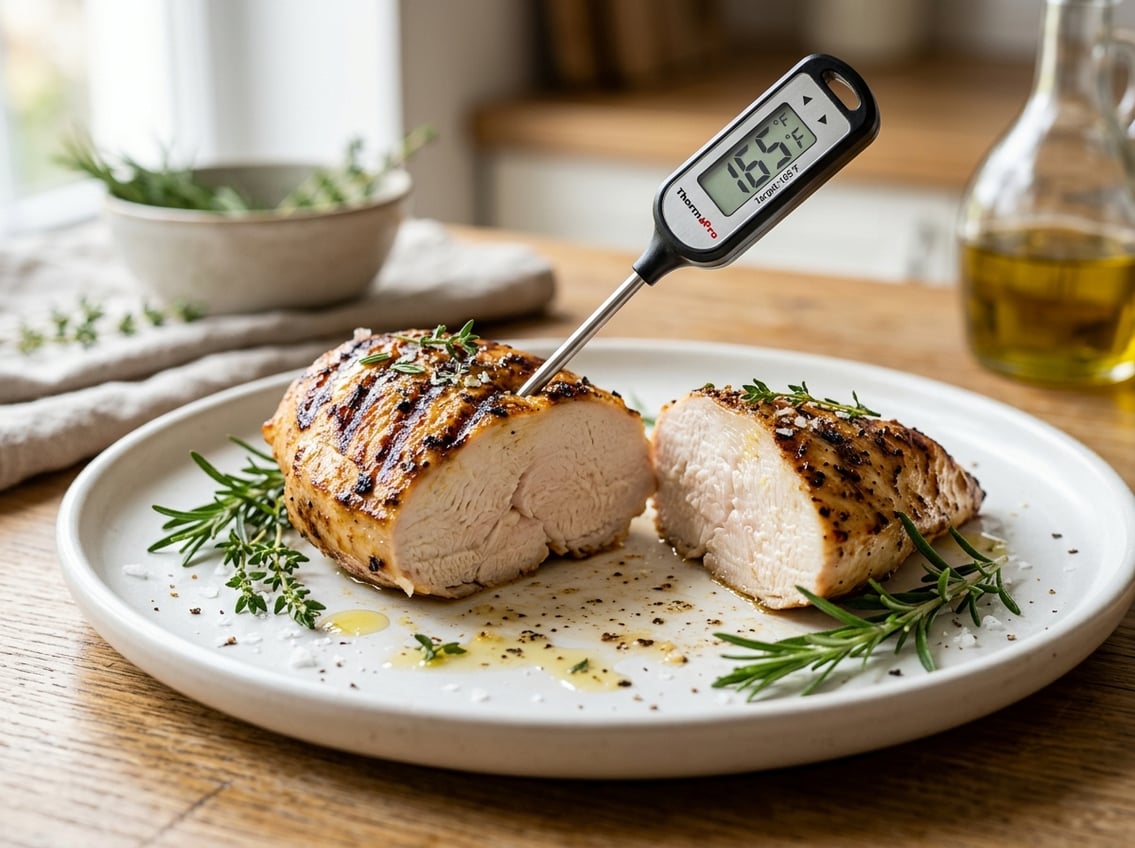
The target temperature is simple, but how you reach it matters. You can avoid overcooking chicken and check doneness accurately if you know when to pull it off the heat and how to let carryover cooking finish the job.
The Exact Safe Temperature for Chicken Breast
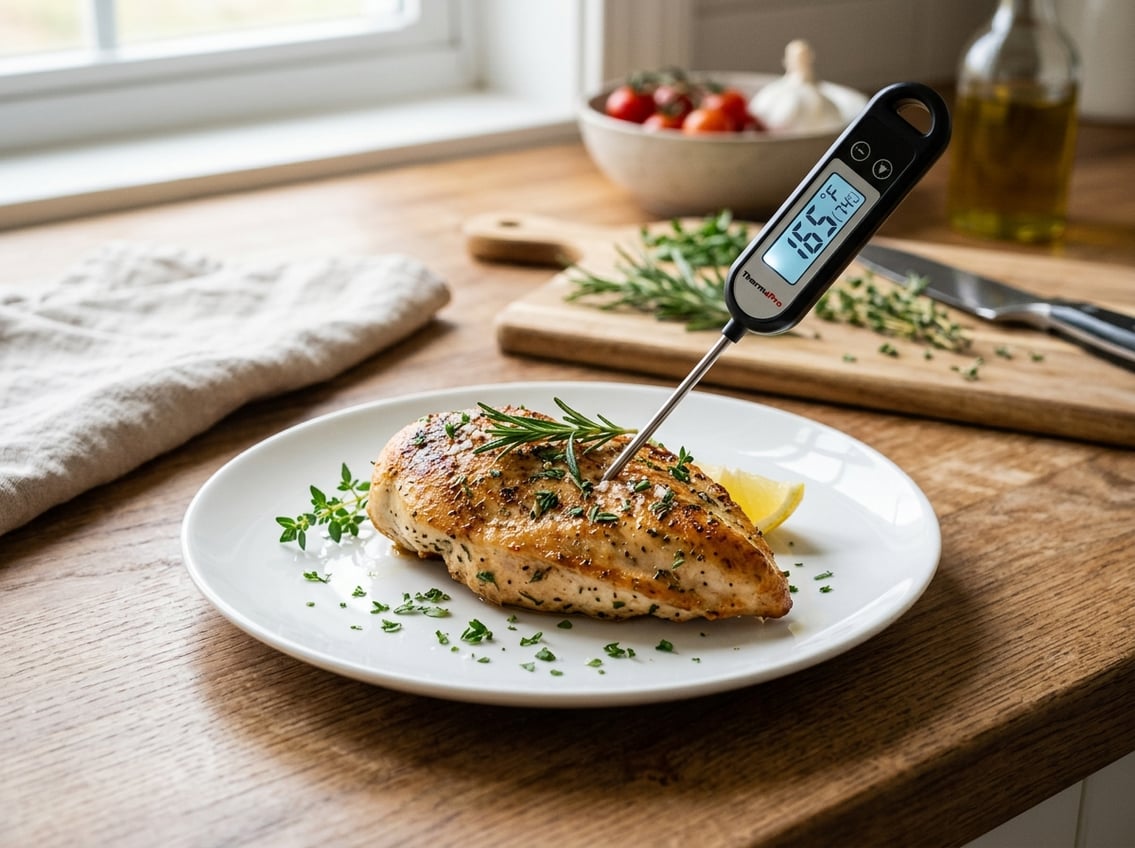
The safe minimum internal temperature for chicken breast is 165°F (74°C). This standard applies to boneless breasts, bone-in breasts, and other chicken cuts.
The USDA recommends reaching this temperature to reduce the risk of harmful bacteria. A recent guide from IQnection also notes that 165°F (74°C) is the ideal internal temperature for cooked chicken breast.
Why 165°F (74°C) Is the Safe Minimum
At 165°F (74°C), the chicken becomes safe to eat. This number is the standard in most home kitchens.
If you stop below that point, you risk serving undercooked chicken. If you go much higher, the meat can dry out fast because breast meat has little fat.
When to Pull Chicken Breast Off the Heat
You can remove chicken breast from the heat a few degrees before 165°F if it will rest. Carryover cooking can raise the temperature a little while the meat sits, so pulling it around 160°F to 163°F can still lead to a safe final result.
Check the thickest part with a thermometer, then let the chicken rest before slicing.
Why White Meat Dries Out So Easily
Chicken breast is lean, so it has less natural moisture than darker cuts. It also cooks unevenly because one end is often thicker than the other, which makes it easy to dry out the thinner part before the thicker part is done.
A juicy chicken breast depends on careful temperature control. If you rely only on time, the meat can move from tender to dry very quickly.
How to Check Doneness Accurately
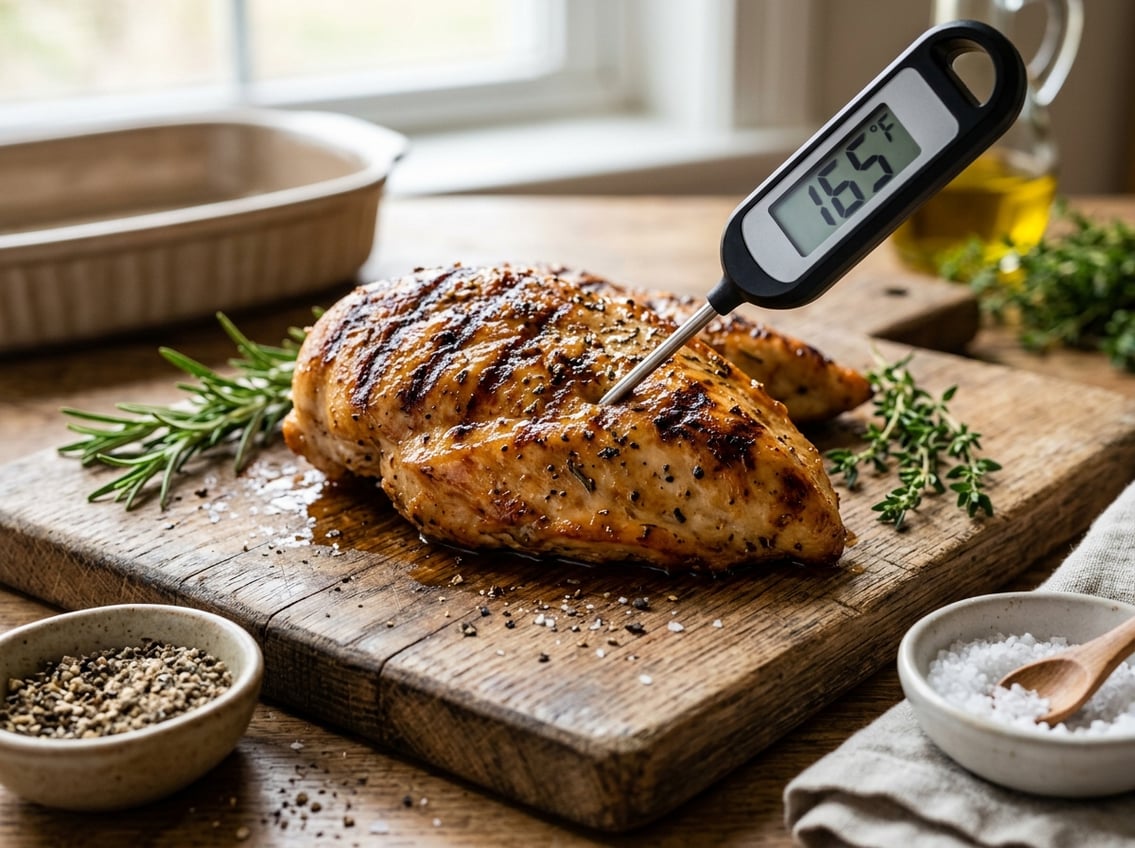
Use a meat thermometer as the most reliable tool for checking chicken internal temperature. Color and juices can help as clues, but they do not replace a true reading from an instant-read thermometer.
You only need a few seconds to confirm doneness if you use the tool correctly. Good thermometer placement matters as much as the thermometer itself.
How to Use a Meat Thermometer
Insert the thermometer into the thickest part of the breast and wait for the reading to settle. If the chicken is thin, make sure the tip stays in the center of the meat and not near the pan or baking dish.
A guide from Laura Fuentes notes that a meat thermometer is the most accurate device for checking the internal temperature of chicken.
Best Thermometer Placement in Chicken Breast
Place the thermometer in the thickest part of the breast, away from bone and away from the pan. Bone can give a false reading, and touching the cooking surface can make the number look higher than it really is.
If the breast is large or uneven, check more than one spot. That helps you avoid missing a cooler center.
Why an Instant-Read Thermometer Matters
An instant-read thermometer gives you a quick result without keeping the oven or skillet open for long. That short check helps hold heat in the pan or oven and keeps cooking more even.
It also lowers the chance of overcooking chicken while you wait for a guess to prove itself.
How to Keep Chicken Breast Juicy
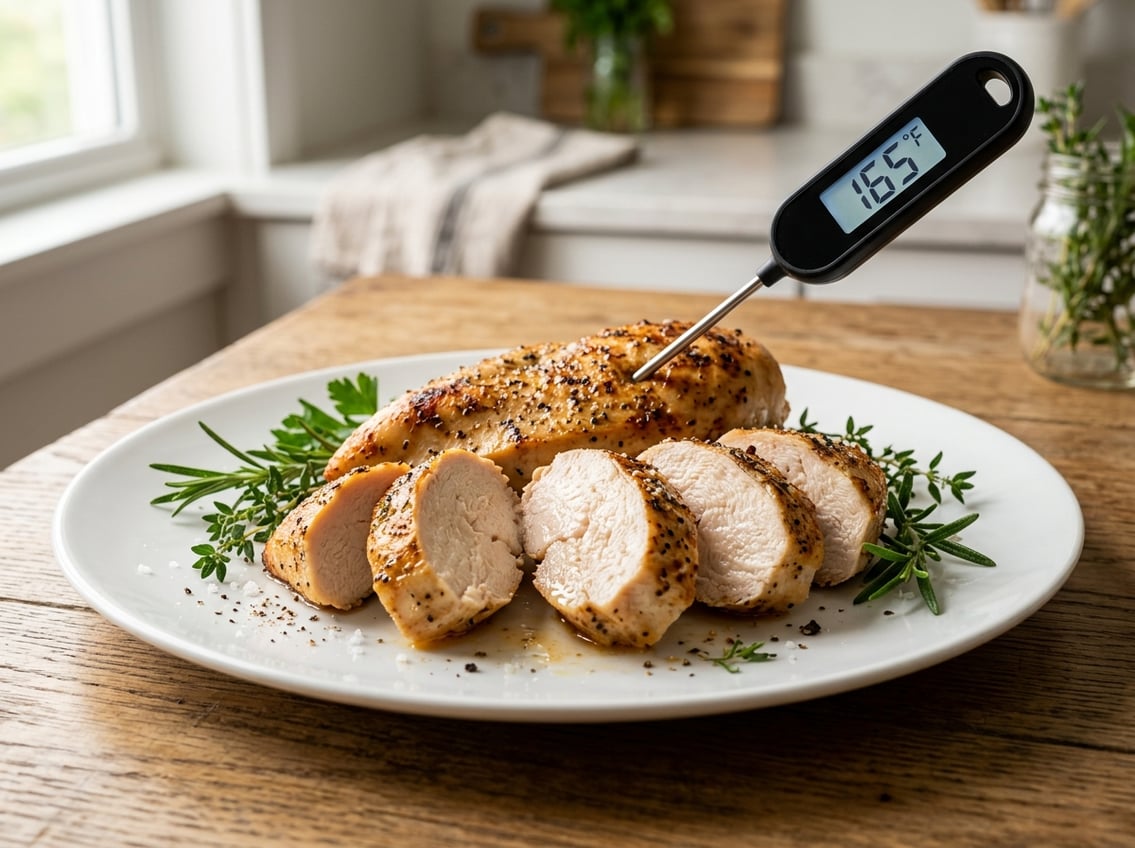
Timing, resting, and heat control help you keep chicken breast juicy. You need the chicken cooking temperature to reach a safe level, but you also want to avoid leaving it on the heat longer than needed.
Small changes can improve the result a lot. Pulling at the right moment and resting before slicing makes a clear difference.
How Carryover Cooking Helps
Carryover cooking means the chicken keeps cooking after you remove it from the heat. The center can rise a few degrees during the rest period, which is useful when you want to avoid overcooking chicken.
Many cooks pull chicken breast slightly before 165°F and let it finish naturally. The final internal temperature can then land right at the safe mark.
Resting Time Before Slicing
Let chicken breast rest for several minutes before cutting it. This gives the juices time to settle inside the meat instead of spilling onto the board.
If you slice too soon, the chicken can seem dry even when it was cooked well.
Oven and Stovetop Temperature Tips
In the oven, a higher temperature can brown the outside quickly, while a moderate temperature gives you more control. In a skillet, medium-high heat can work well if you watch the thermometer closely.
A recent Allrecipes guide recommends roasting chicken breasts at 450°F until they reach 165°F internally. Letting the breasts rest helps keep the juices locked in.
Common Mistakes That Lead to Dry or Unsafe Chicken
Most mistakes happen when home cooks trust the wrong signal. The problem is usually not the recipe, but the way the chicken is checked or handled.
A few small errors can create dry meat or unsafe meat. Each one is easy to fix.
Relying on Color Instead of Temperature
White meat can look done before it is actually safe. Juices may run clear before the center reaches 165°F, and some chicken stays slightly pink even when it is fully cooked.
Use a meat thermometer or instant-read thermometer instead of guessing. That is the only dependable way to confirm chicken internal temperature.
Checking the Wrong Part of the Breast
If you place the thermometer near the edge, you may read a hotter spot than the center. If you touch bone or the cooking pan, the reading can also be wrong.
Always target the thickest part of the breast for thermometer placement. That is the spot that takes the longest to cook and matters most for safety.
Leaving Chicken on the Heat Too Long
Chicken breast can go from safe to dry very fast.
If you wait for a big margin above 165°F, you may end up with tough meat.
Remove the chicken as soon as the center reaches the right temperature, then let it rest.
This keeps the texture better while still meeting the safe chicken cooking temperature.


