
Is It OK to Freeze Chicken Breast? Safety and Storage
Is it ok to freeze chicken breast? Yes, and in most home kitchens, freezing keeps chicken breast safe and ready for later use.
If you handle it correctly, you can keep quality high and lower the risk of spoilage.
The key is to freeze chicken breast before it goes bad and package it well. Thaw it safely for best results.
Frozen chicken breast stays safe for a long time. The taste and texture stay best when you store it properly and use it within the recommended quality window.
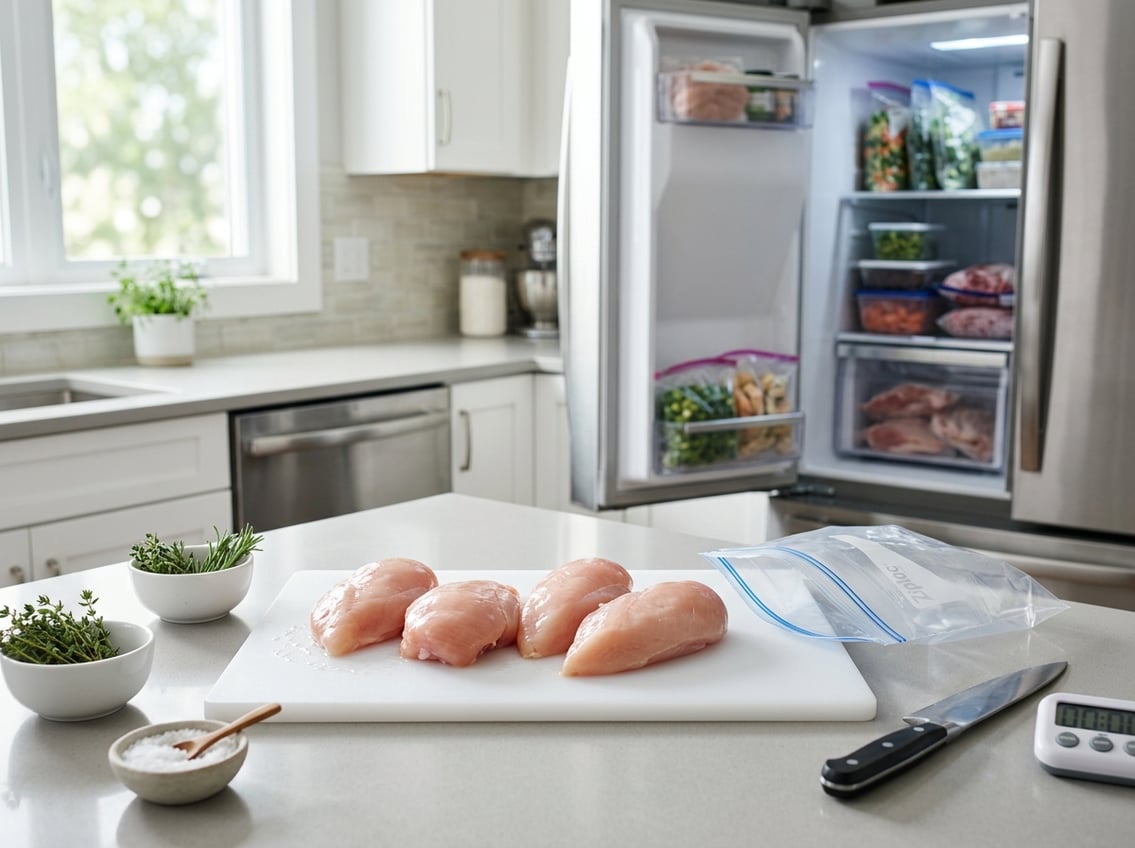
When Freezing Is Safe and What Changes in Quality
Freezing works well for both raw and cooked chicken breast when you start with fresh, safe food. Keep the freezer at 0°F (-18°C) for best results.
You need to know how long chicken breast can be frozen, what happens to texture and color, and how to spot spoilage after thawing.
How Long Chicken Breast Keeps at 0°F (-18°C)
Chicken breast stays safe for a long time if it remains frozen solid at 0°F (-18°C). For best quality, many food experts recommend using it within a few months.
America’s Test Kitchen says frozen chicken keeps well for up to two months without losing flavor or texture. Longer storage remains safe while quality slowly drops, according to How to Freeze Chicken.
Raw Versus Cooked Storage Timelines
You can freeze raw chicken or cooked chicken. Raw chicken breast usually holds quality better than cooked chicken breast, since cooking can make the meat drier after freezing and reheating.
Freeze cooked chicken promptly and keep it sealed well to reduce moisture loss.
What Freezer Burn Means for Texture and Color
Freezer burn affects quality, not safety. When moisture leaves the surface of the food, the chicken can look pale, gray, or dry in spots and develop a rough, leathery texture.
The meat may still be safe to eat, but the taste and texture often suffer.
Signs of Spoilage After Thawing
After you thaw frozen chicken, use your senses with care. A strong sour smell, slimy surface, sticky feel, or unusual color can point to spoilage.
If the chicken smells off or looks wrong, do not cook it.
How to Pack Chicken Breast for the Freezer
Limit air exposure and keep portions easy to use later to freeze chicken breast well. Good packaging helps prevent freezer burn and protects texture.
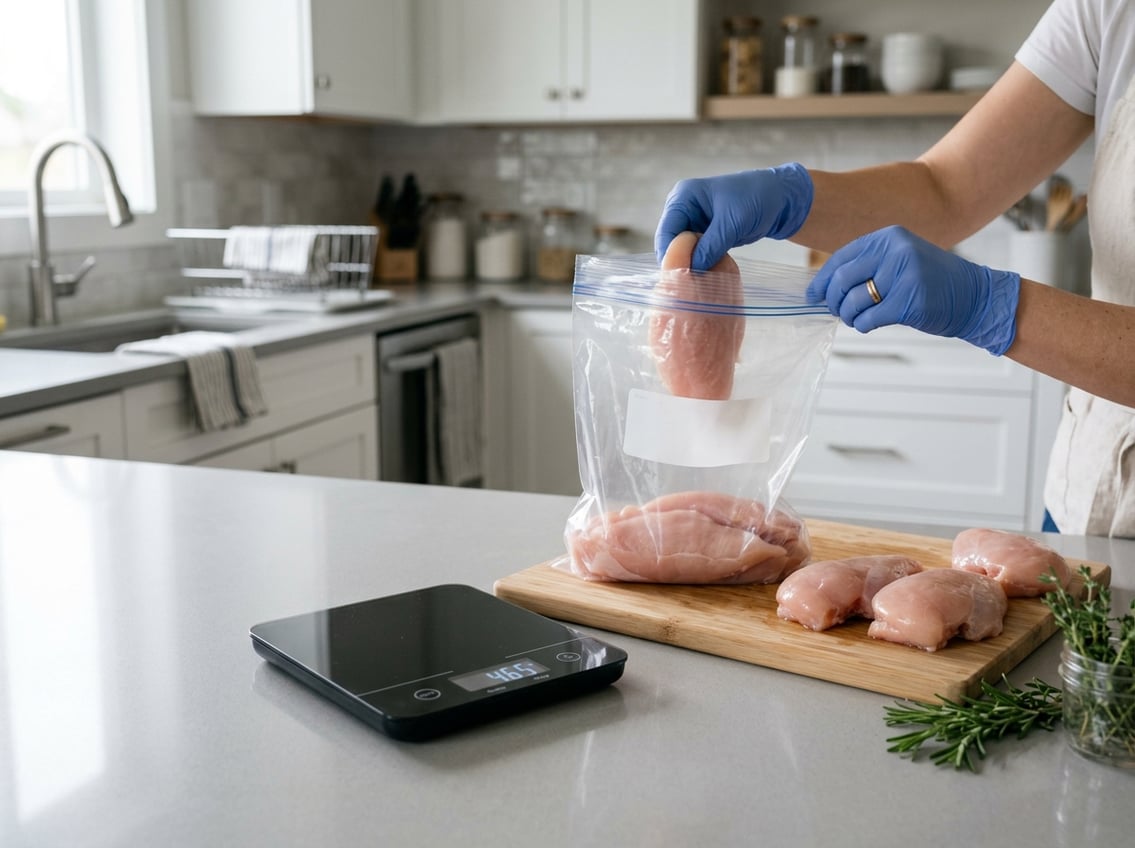
Best Way to Freeze Chicken Breast in Portions
Divide the chicken into meal-sized portions before freezing. Thaw only what you need to reduce waste and avoid repeated freezing and thawing.
If you are freezing raw chicken breast, pat it dry and wrap each piece tightly. For cooked chicken breast, let it cool before packing to avoid ice crystals inside the package.
Airtight Packaging Options and Vacuum Sealing
Use airtight containers, freezer bags, or a vacuum sealer. Tight wrapping and air removal matter most, since air creates freezer burn and dries out the meat.
According to America’s Test Kitchen’s chicken freezing guide, wrapping chicken tightly and storing it in a freezer bag or using a vacuum sealer protects better than supermarket packaging.
How to Prevent Freezer Burn Before Storage
Remove as much air as possible from the package to prevent freezer burn. Press freezer bags flat, seal them fully, and place the chicken in the coldest part of the freezer.
Avoid overpacking the freezer door area, since temperature changes happen there more often. Stable cold temperature helps your chicken breast keep better.
Labeling and Placement for Better Results
Write the date on each package so you know how long it has been frozen. Add whether it is raw or cooked to help you plan storage and thawing.
Place newer packages behind older ones to use the oldest chicken first. This step helps you stay within the best quality range.
How to Thaw Chicken Breast Safely
You have a few safe thawing methods. The right one depends on your schedule.
Refrigerator thawing gives you the best food safety margin. Cold water and microwave thawing work when you need chicken sooner.
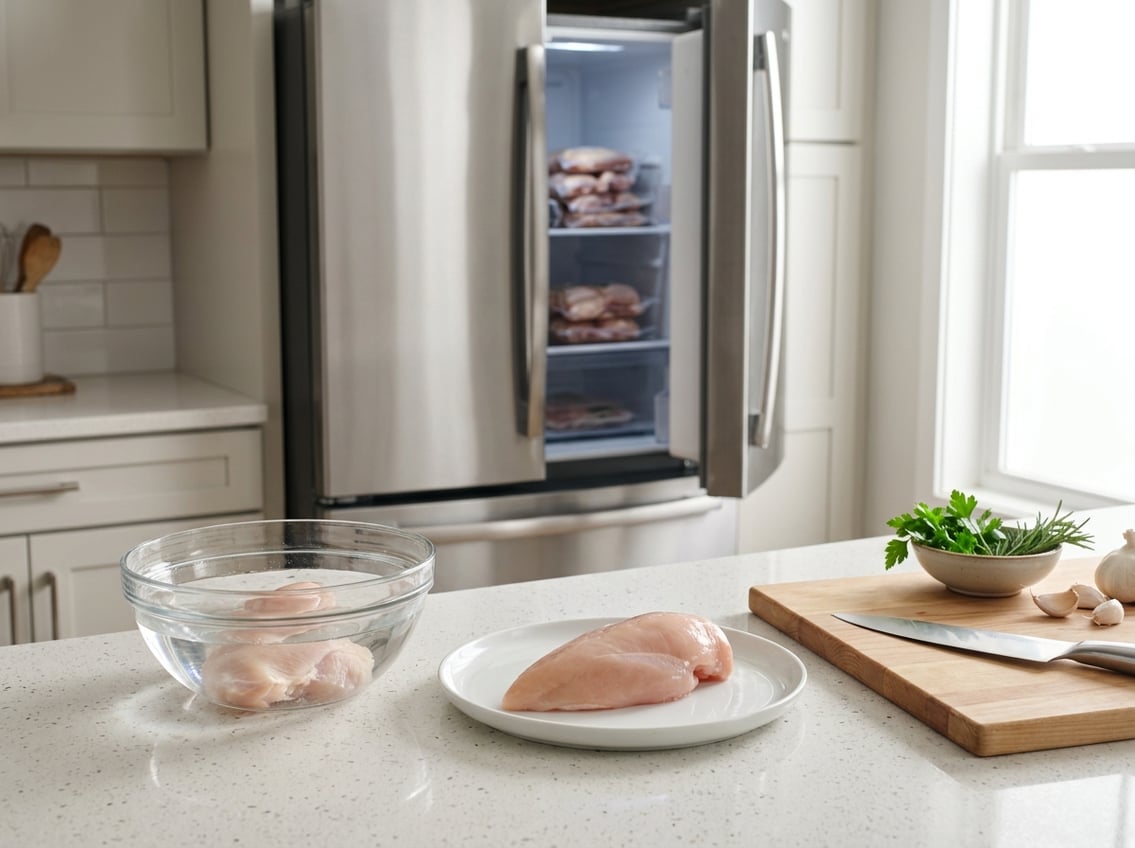
Refrigerator Thawing for Best Safety
Refrigerator thawing is the safest method. Place the chicken on a plate or in a shallow dish so juices do not drip onto other foods.
Chicken breasts often need about a day to thaw. This method provides steady temperature control, which is important for food safety.
Cold Water Thawing for Faster Defrosting
Cold water thawing is faster than fridge thawing. Seal the chicken in a leakproof bag, submerge it in cold water, and change the water every 30 minutes.
Cook the chicken right after it thaws. Leaving it out after cold water thawing raises the risk of unsafe bacteria growth.
Microwave Thawing and Immediate Cooking
Microwave thawing is the fastest option. Use the defrost setting and check often, since microwaves can start cooking the edges while the center stays frozen.
Cook the chicken immediately after thawing with this method. That is the safest way to handle uneven warming.
When You Can Refreeze Thawed Chicken
You can refreeze thawed chicken if you thawed it in the refrigerator and kept it cold the whole time.
The texture may suffer a little each time you thaw and refreeze it.
If you thawed chicken in cold water or the microwave, cook it before freezing again.
This keeps food safe and gives you better results later.


