
Is It Necessary to Marinate Chicken Breast? When It Helps
Is it necessary to marinate chicken breast? Not always.
You can cook chicken breast well without a marinade if you season it properly and avoid overcooking it.

Marinating helps when you want extra flavor, a better surface texture, or a little more protection against dryness, but it is not required for good chicken breast.
Chicken breast dries out faster than fattier cuts because it is lean.
A chicken marinade, brine, or dry rub each changes the result in a different way.
The best way to marinate chicken depends on your cooking method and your timeline.
When deciding how to marinate chicken, ask whether the extra step helps your specific recipe produce tender chicken.
When Marinating Helps Chicken Breast Most

Marinating chicken breast helps when the meat is thin, the cooking time is short, or the seasoning needs to carry across a simple dish.
It can improve flavor before baking, grilling, or pan-searing.
A wet marinade does not fix every problem, but it can make lean chicken taste more complete.
Flavor vs. Moisture: What a Marinade Actually Does
A marinade mainly adds flavor to the outside of the meat, with some movement inward over time.
Acid, oil, salt, and seasonings work together to season the surface and can help tenderize chicken slightly.
According to The Flex Kitchen’s guide on brine vs. marinate chicken breast, marinades are more about flavor infusion and surface texture than deep moisture gain.
If you want a strong flavor profile, marinating chicken breast helps more than plain seasoning alone.
If your recipe already includes a sauce or glaze, the marinade may matter less.
When Chicken Breast Does Not Need Marinating
Chicken breast does not need marinating when you use a simple salt-and-pepper seasoning, a seasoned sauce, or a cooking method that already adds flavor.
Thin cutlets, quick skillet meals, and dishes topped with salsa, pesto, or pan sauce often do fine without extra soaking.
A short rest with seasoning can be enough if you handle the heat carefully and cook the meat to the right temperature.
Best Cooking Situations for Marinated Chicken Breast
Marinated chicken breast works best when you want flavor to show up clearly in the finished dish.
That includes grilled chicken, baked chicken for salads or grain bowls, and meal prep recipes where the chicken is eaten plain or with simple sides.
It helps when you use a light, balanced marinade for a few hours before cooking.
For stronger flavors or more tenderizing, follow a solid how to marinate chicken method and keep the timing in range.
Choosing Between Marinade, Brine, and Dry Rub

A brine helps with juiciness, a dry rub builds surface flavor, and a wet marinade gives you both flavor and some tenderizing power.
Your choice should match the cut, the cooking style, and the result you want.
Wet Marinade vs. Dry Marinade
A wet marinade uses liquid, usually oil, acid, salt, and seasonings.
It coats the chicken and can help keep the surface from tasting flat.
A dry marinade, often called a dry rub, uses salt, sugar, herbs, and spices without liquid.
A dry rub is often better when you want a stronger crust, less mess, or faster prep.
A wet marinade is better when you want a more even flavor layer and a softer surface.
When a Brine Works Better Than a Marinade
A brine works better than a marinade when juiciness matters more than added flavor.
Salt water changes how the meat holds moisture, which helps lean chicken breast that can dry out during cooking.
Brine is a strong choice for plain grilled chicken, roasted chicken breast, and high-heat cooking.
If you want a deeper explanation of the difference, the Ultimate Guide to Juicy Chicken Breast explains how brining changes moisture more directly than marinating.
How Acidic Marinades Change Texture
An acidic marinade uses ingredients like lemon juice, vinegar, or yogurt.
These acidic marinades can help soften the surface, which is useful for thin or lightly cooked chicken breast.
Too much acid, or too much time, can make the outside feel soft or mushy.
If your marinade ingredients are very acidic, keep the soak shorter and cook the chicken soon after removing it.
How to Do It Right Without Ruining the Texture
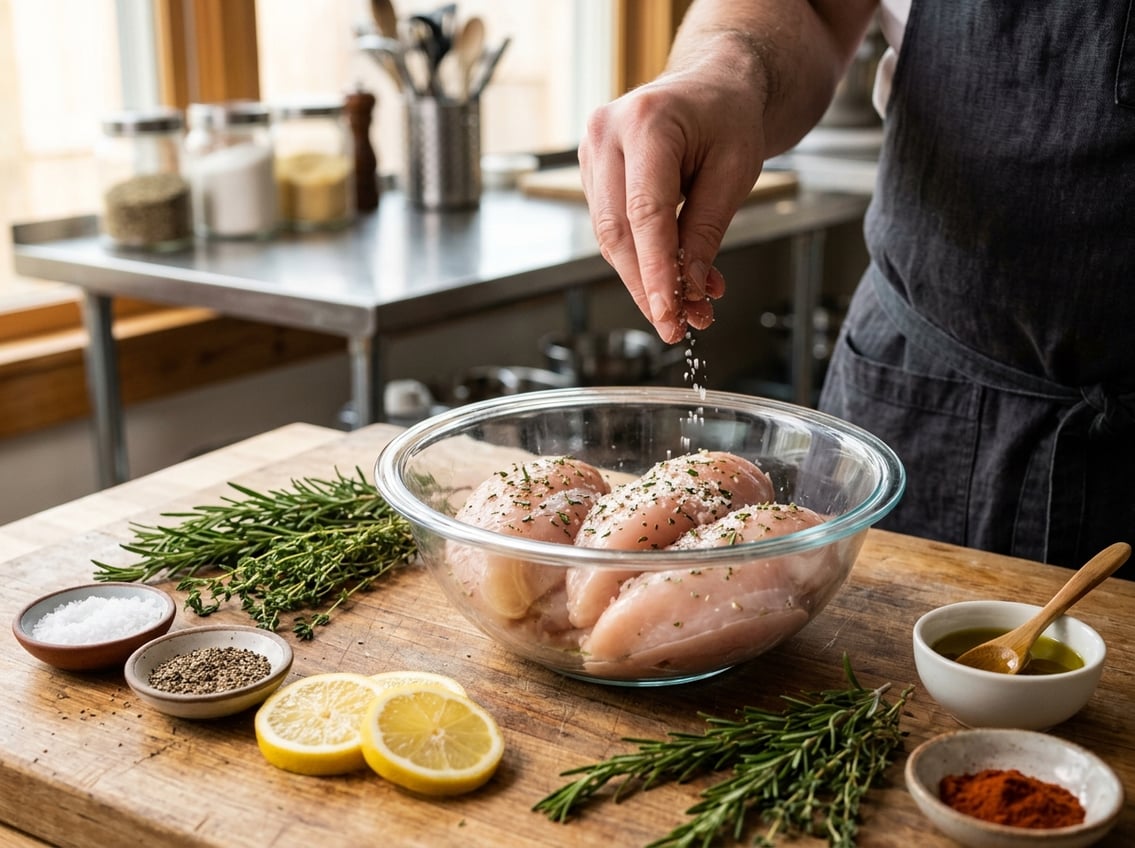
Good marinating is mostly about timing and balance.
Strong acids, too much salt, and long soaking times can hurt texture instead of helping it.
How Long to Marinate Chicken Breast
For most chicken breast recipes, how long to marinate chicken depends on the acid level.
A mild marinade can sit for several hours, while a sharp citrus or vinegar mix should stay much shorter.
A practical range is 30 minutes to 2 hours for strong acidic mixes and up to 8 to 12 hours for milder ones.
Going far beyond that can make the outside soft or uneven.
Common Marinade Ingredient Ratios and Mistakes
A simple starting point is about 2 parts oil to 1 part acid, with salt and seasonings added for flavor.
The oil helps carry flavor, while the acid adds brightness and a slight tenderizing effect.
Common mistakes include:
- Too much acid, which can damage texture
- Too little salt, which leaves the chicken bland
- Too many seasonings, which can crowd the flavor
- Sugar-heavy mixes that can brown too fast when cooking
The goal is not to hide the chicken.
It is to support the flavor and keep the texture balanced.
Reverse Marinade as a Last-Minute Option
A reverse marinade offers a fast option when you do not have much time. You season the chicken after cooking, or you use a small amount of strongly flavored liquid at the end so the flavor stays bright.
This method works well for weeknight chicken breast when marinating would take too long. It is not the same as a long soak, but it can still give you a clean, flavorful result without risking the texture.


