
Is It Important to Wash Chicken Breast Before Cooking?
You may think washing chicken breast before cooking makes it cleaner. The safer choice is to skip the rinse and cook it properly instead.
Raw chicken can carry germs. Rinsing it does not remove those germs in a reliable way.
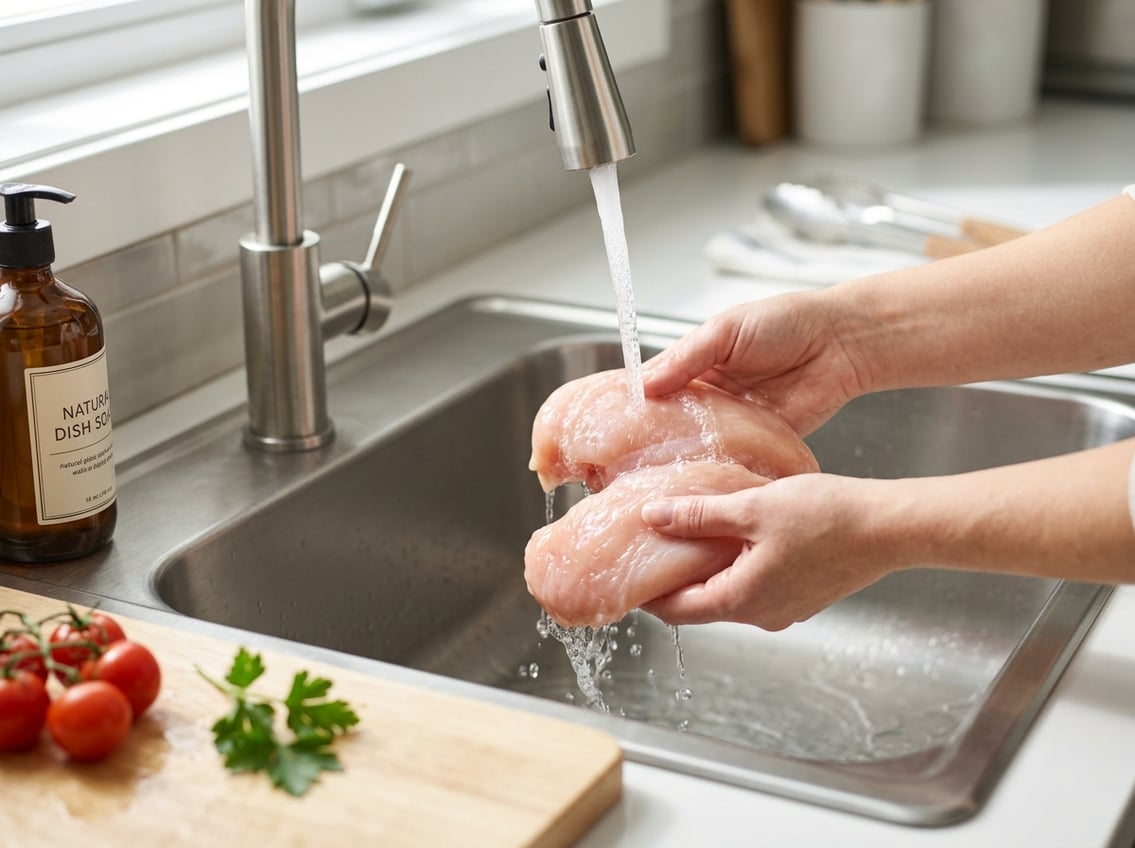
If you are asking whether it is important to wash chicken breast, the short answer is no. Washing raw chicken can spread bacteria around your sink, counters, and utensils, which raises your risk of foodborne illness.
Food safety groups, including the USDA, advise against washing raw poultry. Handle it carefully, keep it separate from other foods, and cook it to a safe internal temperature.
The Short Answer
Washing raw chicken breast does not make it safer. It can make your kitchen less safe.
Raw poultry may carry germs such as salmonella and campylobacter. Proper cooking kills those germs, not a quick rinse.
The USDA advises people not to wash raw poultry because water can splash germs onto nearby surfaces. To reduce risk, focus on clean hands, clean tools, and proper cooking.
Why Washing Raw Chicken Does Not Make It Safer
Rinsing chicken breast under running water does not remove bacteria deep enough to matter. Some germs cling to the surface, and most are not washed away.
You cannot see harmful bacteria. A piece of chicken can look clean and still be unsafe.
How Cooking Kills Bacteria More Effectively Than Rinsing
Heat destroys salmonella and campylobacter when chicken reaches a safe internal temperature. Cooking is the real safety step, not washing raw chicken.
A meat thermometer gives you a clear answer. Chicken breast is safe when the thickest part reaches 165°F.
Why Many Home Cooks Still Wash Chicken
Many people learned to wash chicken from family habits or older kitchen advice. Others want to remove packaging liquid or feel more confident about cleanliness.
Modern food safety guidance is more direct. Clean handling matters more than rinsing.
How Washing Spreads Germs Around the Kitchen
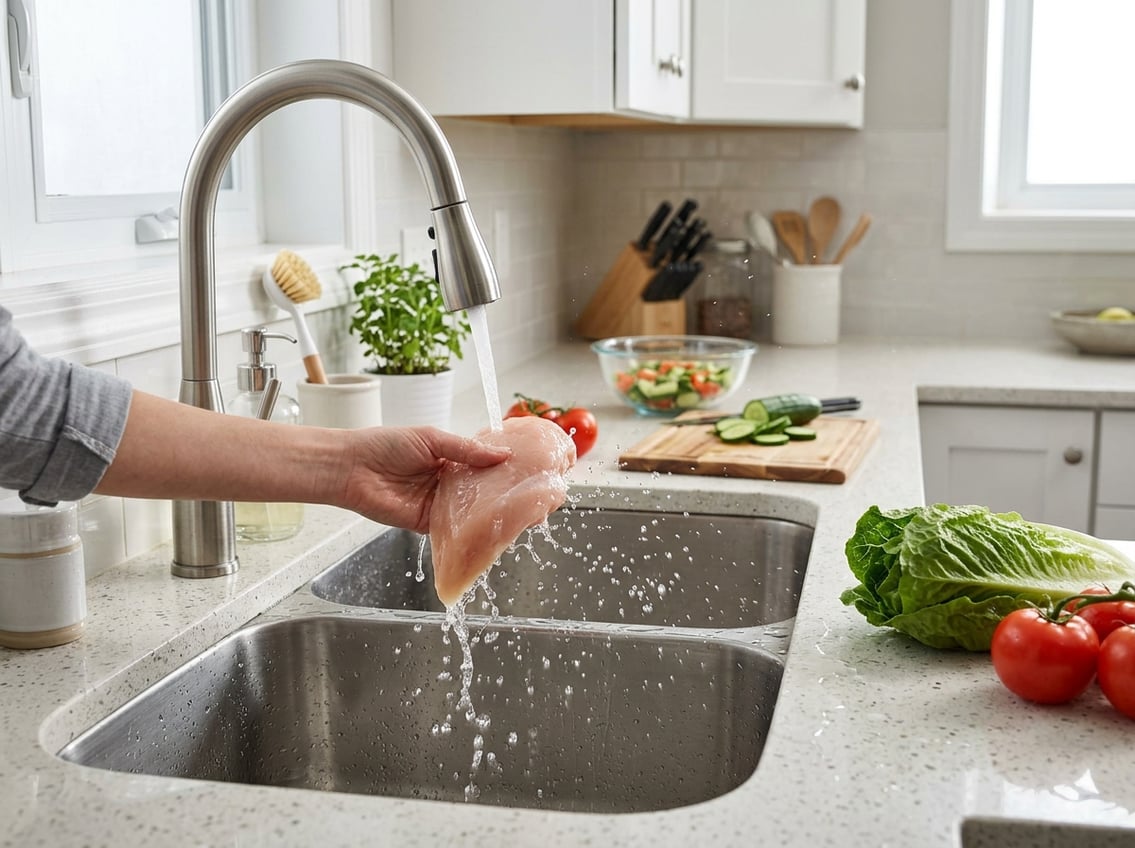
Washing raw chicken can create a bigger problem than you are trying to solve. The splash from the sink can spread bacteria to counters, faucets, towels, and nearby food.
Raw chicken, water droplets, and kitchen contact points can all carry germs during prep.
How Cross-Contamination Happens at the Sink
When you rinse raw poultry, water droplets can move germs out of the sink basin. Those droplets can land on your hands, apron, faucet handle, dish rack, or other prep areas.
A sink is not a closed space. Once splashing starts, it is hard to control where the water goes.
What Can Get Contaminated During Washing
Anything near the sink can pick up bacteria from splashes or touched surfaces. That includes vegetables waiting to be cut, clean plates, sponges, and paper towel holders.
Foodborne illness often starts with this kind of indirect transfer. The chicken itself may still need to be cooked, while the kitchen gets contaminated in the process.
How to Prevent Cross-Contamination During Prep
Keep raw poultry separate from ready-to-eat foods at every step. Use different utensils, different plates, and different cutting boards.
Clean the sink, counters, and faucet after handling raw chicken. Wash your hands with soap and warm water before and after touching raw poultry.
What to Do Instead Before Cooking
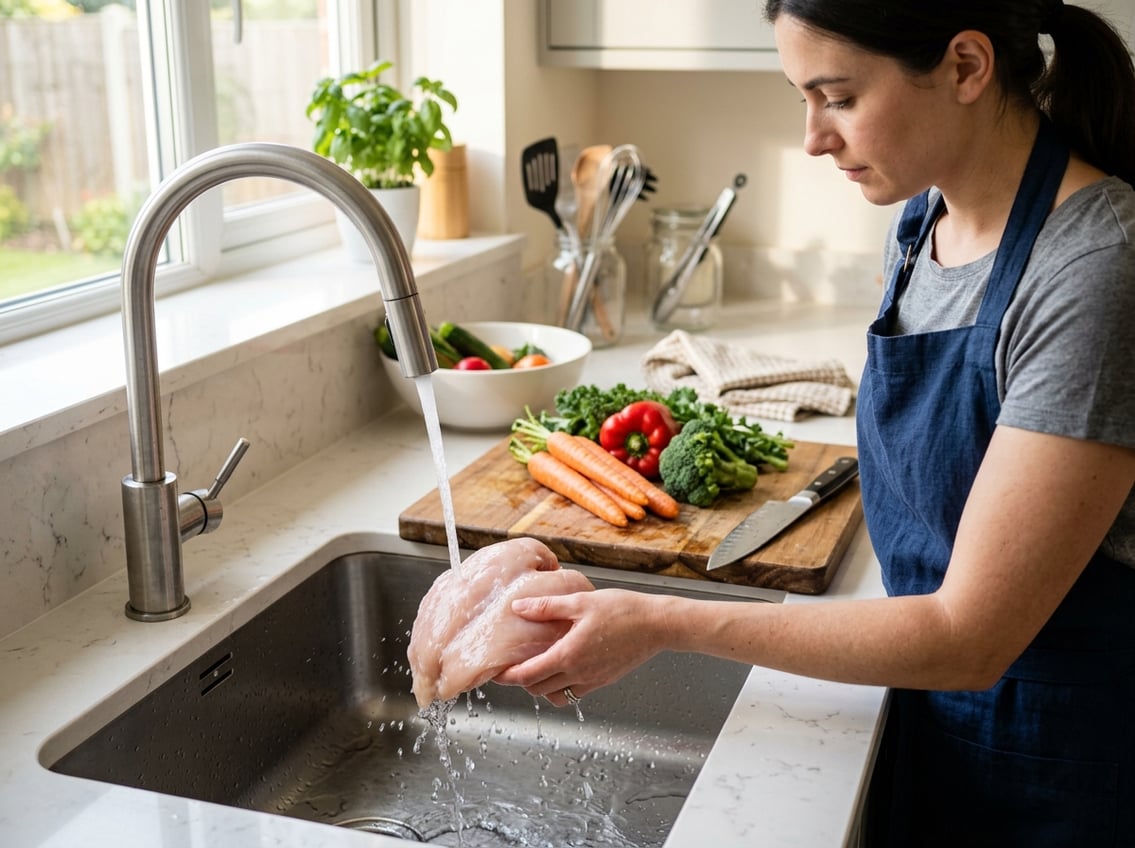
You do not need to wash chicken breast before cooking it. Handle it carefully, dry it if needed, and keep raw meat tools separate from the rest of your prep area.
These steps protect your kitchen and help you get a good result. They also support better browning and easier cleanup.
Pat Chicken Breast Dry With Paper Towels
If the chicken is damp from packaging, pat it dry with clean paper towels. This helps with searing and roasting, and it avoids the splash risk from rinsing.
Throw the paper towels away right away. Do not reuse them on counters or dishes.
Open Packaging Carefully and Discard Juices Safely
Open raw poultry packaging slowly so juices do not spill onto the counter. Keep the package over the sink or a tray if you want extra control.
Put the packaging and any absorbed pads in the trash right away. Then wash your hands and clean the area that touched the package.
Use Separate Cutting Boards for Raw Meat
Use separate cutting boards for raw meat and ready-to-eat foods. This is one of the easiest ways to prevent cross-contamination during prep.
If you only own one board, wash it with hot soapy water right after raw chicken touches it.
Safe Cooking and Handling Basics
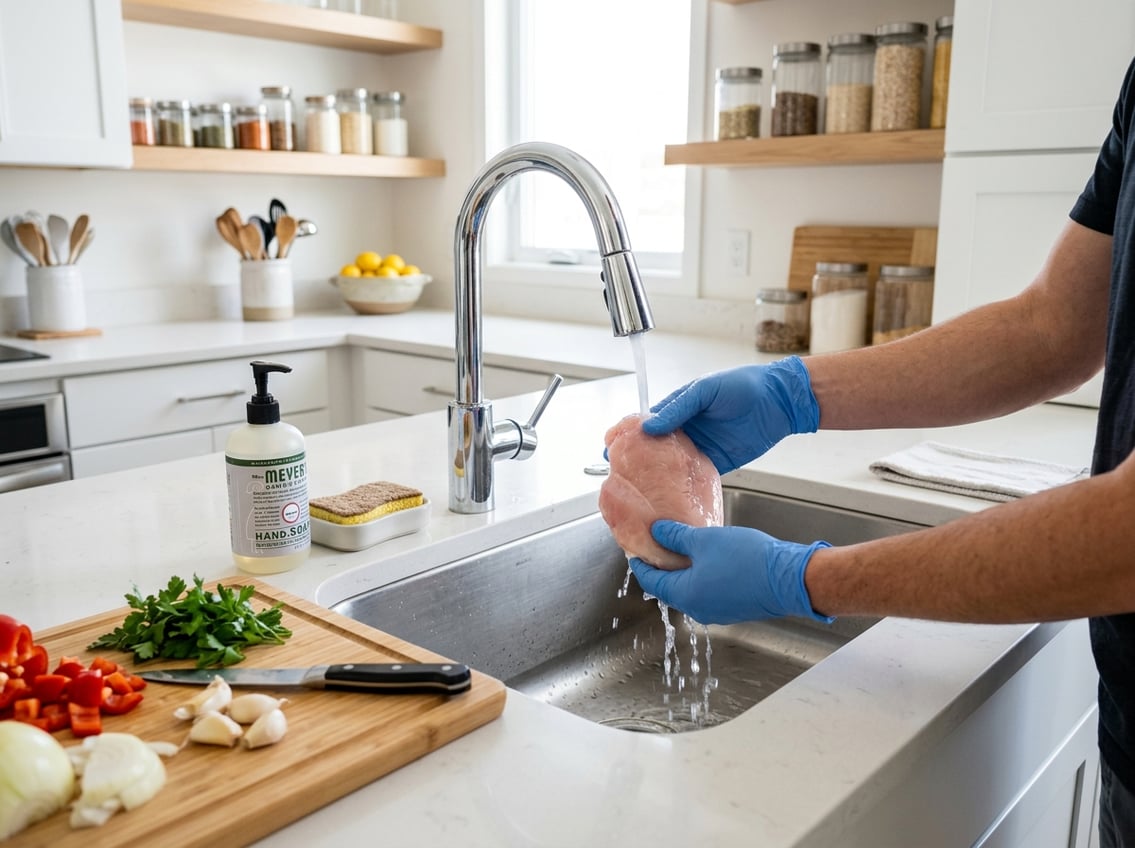
Safe chicken starts with safe handling, not washing. Good kitchen habits lower your risk of foodborne illness and make cleanup easier.
The main rules are simple, keep raw poultry separate, clean surfaces well, and cook to the right temperature.
Wash Hands and Clean Contact Surfaces Thoroughly
Wash your hands with soap and water for at least 20 seconds after touching raw chicken. Clean knives, boards, counters, and sink handles with hot soapy water.
Salmonella and campylobacter can move from one surface to another fast. Good cleaning breaks that chain.
Store Raw Poultry Away From Ready-to-Eat Foods
Keep raw chicken on the bottom shelf of your fridge. Store it in a sealed container or leak-proof bag so juices do not drip onto other foods.
This helps prevent cross-contamination before cooking even starts. It also protects produce, leftovers, and snacks that you eat without cooking.
Check Doneness With a Meat Thermometer
A meat thermometer gives you the most reliable way to know when chicken is safe. Check the thickest part of the breast, and make sure it reaches 165°F.
This step protects you from foodborne illness better than guessing by color or texture.
Clear temperature checks help you maintain dependable food safety habits.


