
Can You Cook Chicken Breast? Best Methods Explained
You can cook chicken breast in many reliable ways, and the right method depends on the texture and flavor you want.
Whether you are making a fast weeknight dinner or meal prep for the week, control heat, use enough seasoning, and stop cooking at the right time.
If you want a juicy result, start with even thickness, add a little fat or brine, and use an instant-read thermometer to avoid overcooking.
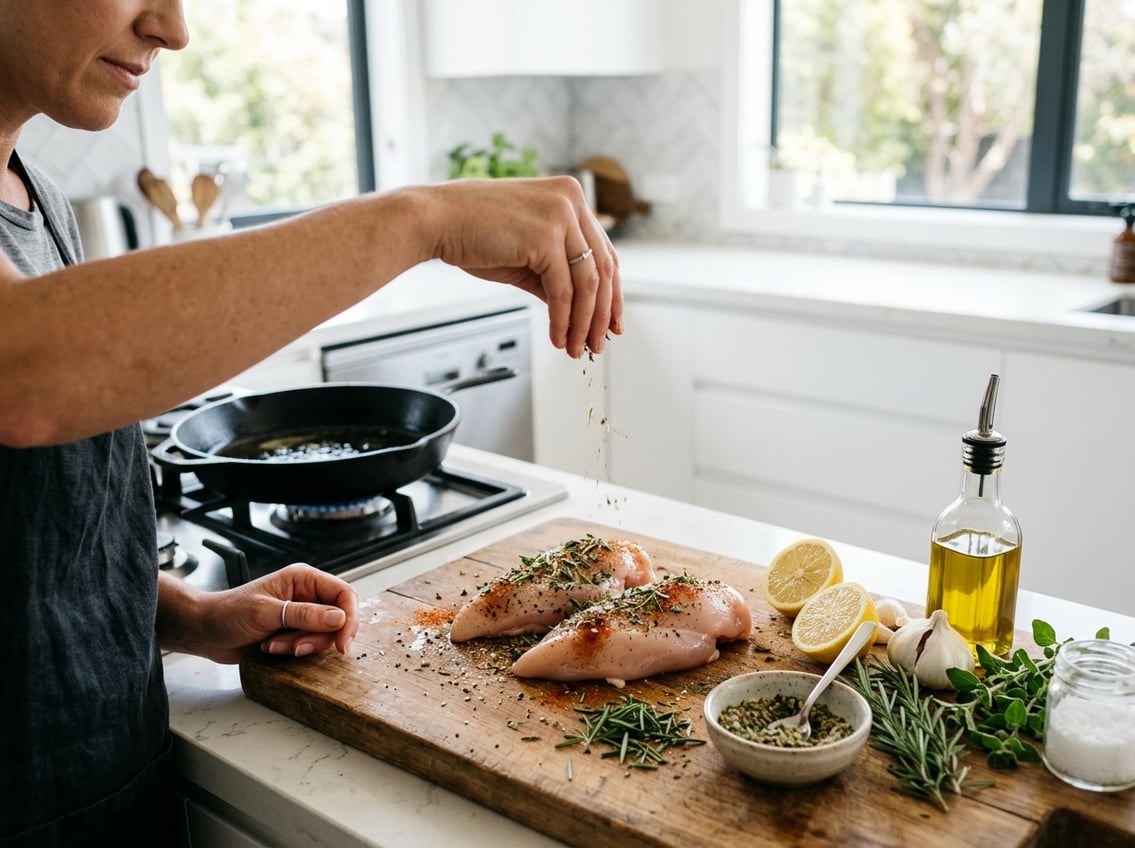
Chicken breast is lean, so it cooks fast and can dry out quickly.
That is why many chicken breast cooking methods focus on timing and temperature, not just flavor.
What Makes Chicken Breast Turn Out Juicy
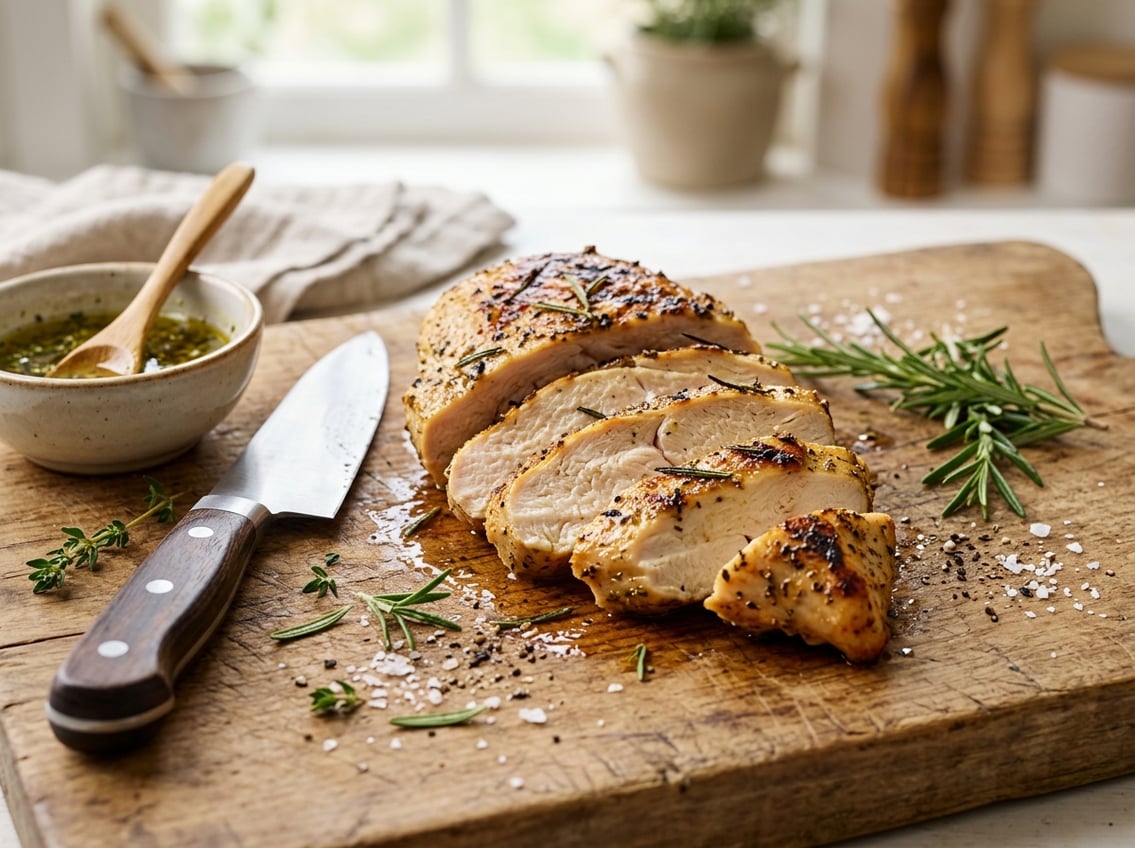
A juicy chicken breast starts before you use the pan, oven, or grill.
Your cut, prep, and final temperature all affect whether you end up with tender chicken breast or dry meat.
Choose Between Boneless and Bone-In Cuts
Boneless skinless chicken breast cooks quickly and is easy to slice for salads, bowls, and sandwiches.
Bone-in chicken breast takes longer, but the bone can help protect the meat from overcooking and add more flavor.
If speed matters, pick boneless chicken breast.
If you want more forgiveness, bone-in chicken breast can be a better choice.
Prep for Even Cooking and Better Texture
Pound thick boneless skinless chicken breasts to an even thickness so the thinner ends do not dry out before the center is done.
Pat the meat dry, then coat it lightly with olive oil and seasoning so the outside browns well.
A quick brine helps you avoid dry chicken by letting the meat hold onto moisture better during cooking.
Use Temperature and Resting to Avoid Dry Meat
Use a meat thermometer to remove guesswork.
Pull the chicken when the thickest part reaches 165 F, then let it rest for a few minutes so the juices settle.
Resting lets moisture stay in the meat instead of running onto the cutting board.
That small pause can make your chicken breast more tender and easier to slice.
Best Everyday Ways to Cook It
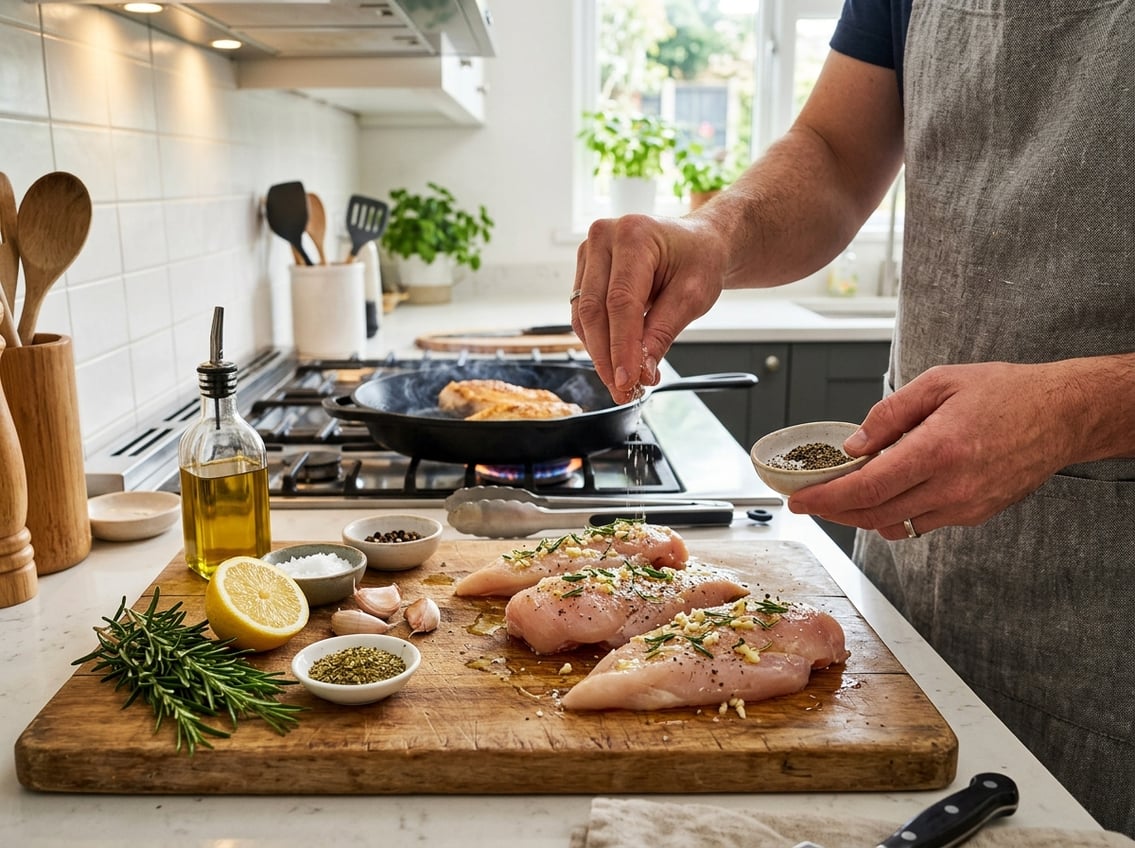
The most useful everyday methods are the ones you can repeat without much effort.
Baking, skillet cooking, and poaching each give you a different texture, so you can match the method to the meal.
Bake for Easy Weeknight Results
To bake chicken breast, heat the oven, season the meat, and place it on a baking sheet brushed with olive oil.
Baking gives you hands-off cooking and easy cleanup.
Aim for even pieces and watch the internal temperature closely.
Roasting at a higher heat can help chicken cook faster while still reaching 165 F.
Cook in a Skillet for Fast Browning
A skillet lets you cook chicken breast quickly on a busy night.
Warm olive oil in the pan, add seasoned skinless chicken breast, and cook until both sides are golden and the center is done.
This method works well when you want more color.
Add a small splash of chicken broth in the pan to loosen browned bits for a simple pan sauce.
Poach for Salads, Soups, and Shredding
If you want soft, gentle chicken, learn to poach it.
Simmer chicken breast in water or chicken broth until the meat is opaque and reaches a safe temperature.
Poached chicken breast works well for salads, soups, casseroles, and tacos.
It is not the best choice for browning, but it gives you moist meat that shreds easily.
High-Heat Methods for More Color and Flavor
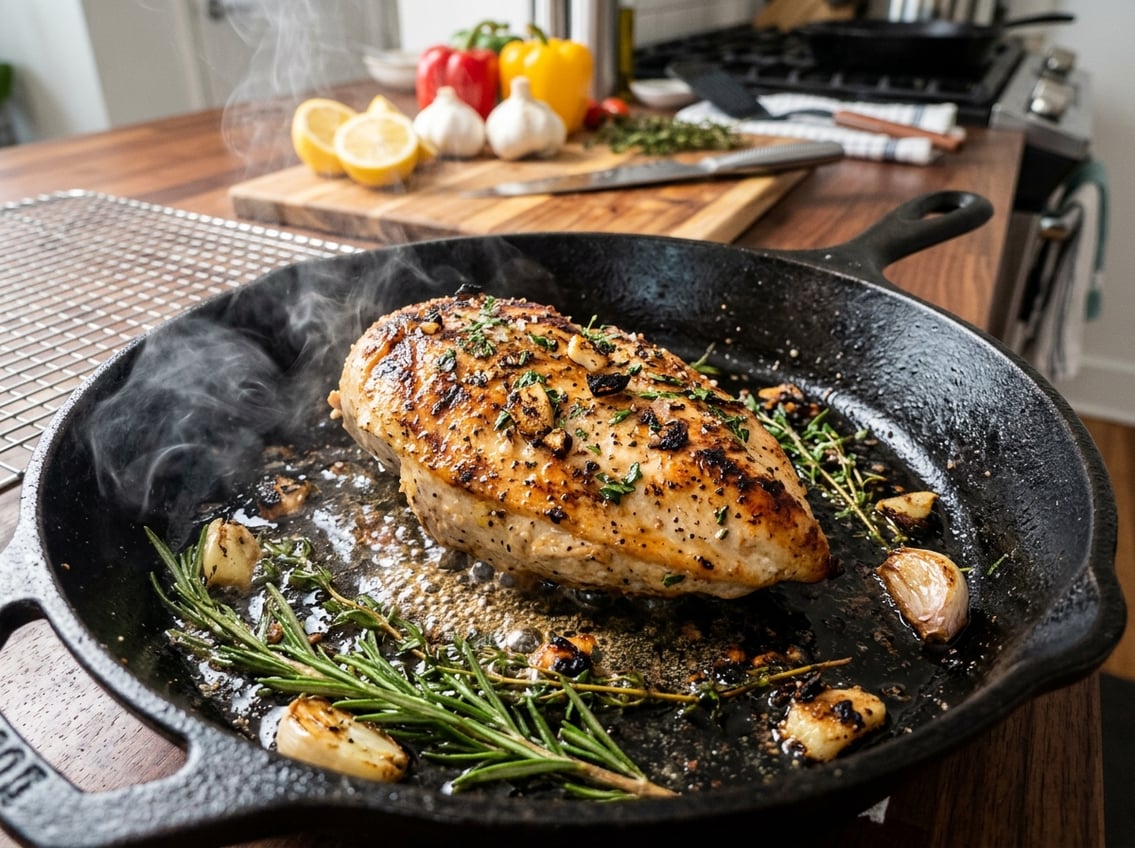
High heat gives you more browning and stronger flavor.
These methods work well when you want a faster finish and a more cooked-on exterior.
Grill for Smoky Char and Quick Cooking
Grill chicken breast for a smoky surface and clear grill marks.
Start with even thickness, oil the grate, and keep the heat at medium-high.
A short marinade with olive oil, herbs, and lemon helps the meat stay moist.
Turn the chicken only once or twice so the outside can brown without drying out.
Broil When You Want Oven Speed
Broil chicken breasts for fast browning without using the grill.
Place the chicken on a broiler pan so heat can move around the meat and fat can drip away.
Stay close to the oven and watch carefully.
Broil chicken breast only until the top browns and the center reaches a safe temperature.
Know When to Pull the Chicken
Use an instant-read thermometer or meat thermometer to avoid dry chicken.
Do not rely on color alone, since thick chicken can still look underdone in the middle.
Pull the chicken at 165 F and rest it before cutting.
That timing helps keep the meat juicy.
How to Use Cooked Chicken Breast in Meals
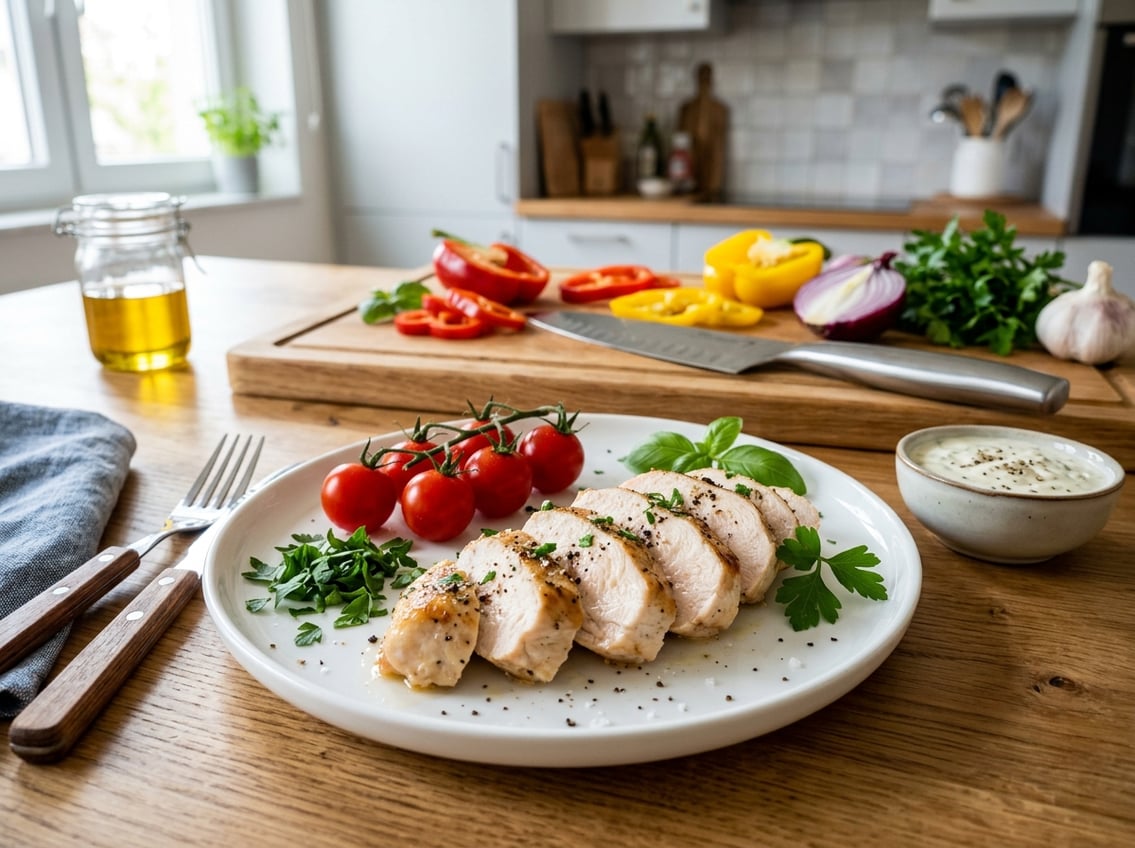
Cooked chicken breast is one of the easiest proteins to reuse.
A single batch can turn into lunch, dinner, or meal prep for several days.
Slice, Cube, or Shred Based on the Dish
Use sliced cooked chicken breast for grain bowls, salads, and sandwiches.
Cube it for pasta, wraps, and stir-ins, or shred it for enchiladas, tacos, and soups.
A juicy chicken breast holds together well for slicing.
A tender chicken breast that was poached or slow-cooked is often better for shredding.
Store and Reheat Without Losing Moisture
Store cooked chicken breast in an airtight container in the fridge and reheat it gently.
A little chicken broth can help keep slices moist when you warm them on the stove or in the microwave.
Reheat only until hot, not for too long.
That keeps the meat from turning tough.
Turn Basic Chicken Into More Than One Meal
You can turn a plain chicken breast recipe into several different meals with simple changes.
Use one batch in tacos one night. Add it to soup the next day.
Try it in a cold salad after that.
When you cook extra, you save time and reduce waste.
Cooked chicken breast is a practical base for busy weeks and simple meal planning.


