
What Causes Chicken Breast to Taste Rubbery? Key Reasons
If you wonder what causes chicken breast to taste rubbery, the short answer is usually heat, time, or meat quality.
Chicken breast can turn bouncy, chewy, or tough when it loses too much moisture, starts out with a tough texture, or is cooked past the point of doneness.
Rubbery chicken usually means the protein fibers tightened too much, or the meat was already low in quality before cooking.
You can often prevent the problem with better temperature control, a meat thermometer, and the right cut of chicken.
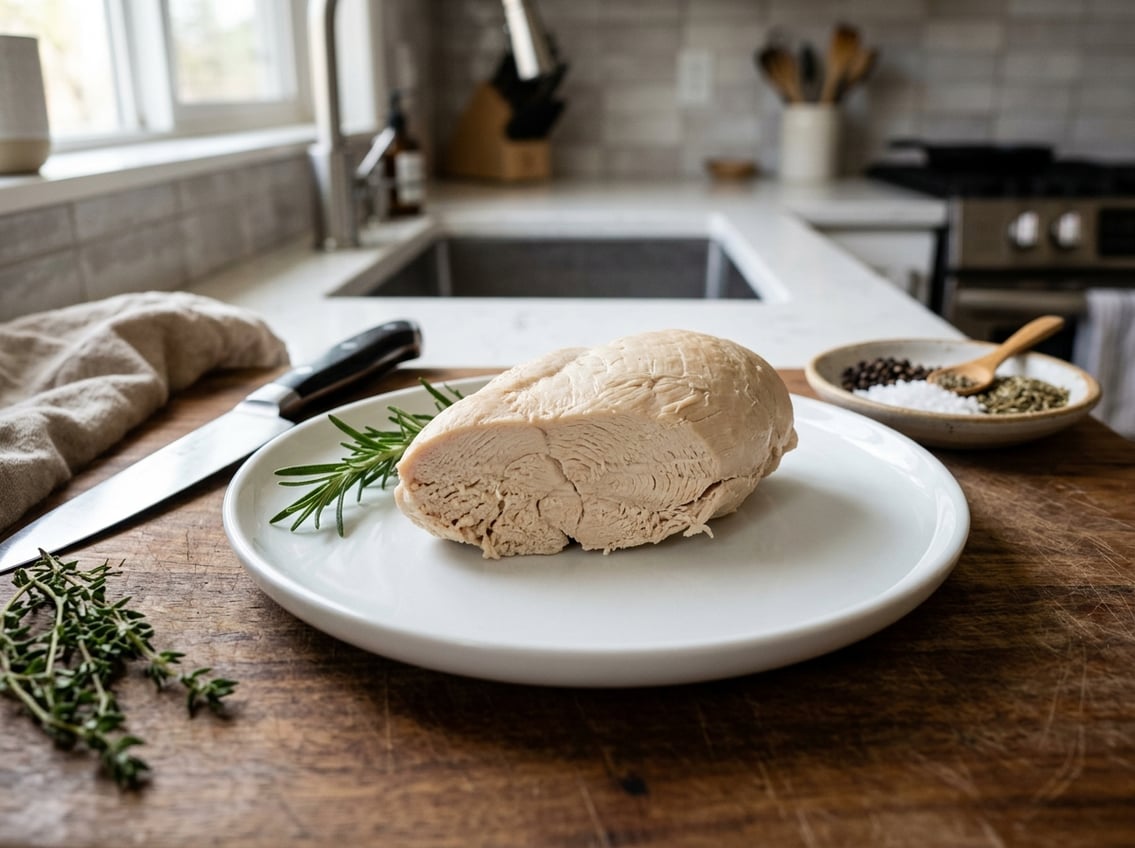
The Main Reasons Chicken Breast Turns Rubbery
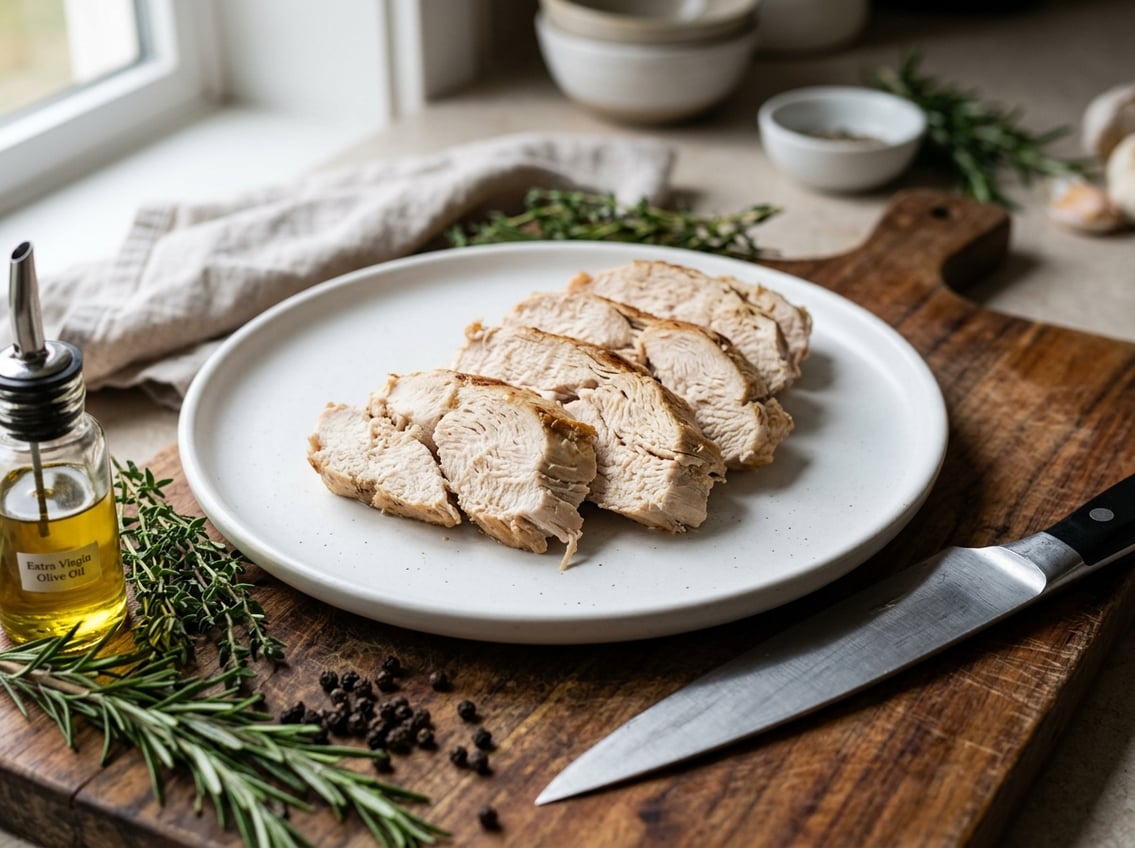
Three things usually cause rubbery chicken: overcooking, undercooking, or a texture problem already present in the breast.
The same dry, springy bite can show up in regular chicken, organic chicken, or more processed grocery store cuts.
Overcooking Dries Out the Protein Fibers
When you cook chicken breast too long, moisture leaves the meat and the protein fibers tighten.
That is why overcooked chicken often feels dry and springy instead of tender.
This can happen in a skillet, oven, grill, or air fryer.
Even a few extra minutes can change the texture, especially with thin or uneven pieces.
Undercooking Creates a Gelatinous, Chewy Texture
Undercooked chicken can feel rubbery, especially if the center is still soft, shiny, or jiggly.
The texture may seem slick or gelatin-like instead of firm.
Undercooked chicken can carry harmful bacteria, so it should never be eaten if it is not fully done.
Woody Breast and White Striping Affect Texture Before Cooking
Some chicken breast starts out tough because of poultry conditions like woody breast and white striping.
These issues are linked to faster-growing birds and can make the meat harder to chew before you even start cooking.
A woody chicken breast can feel firm, dense, or almost rigid when raw.
After cooking, woody chicken breasts may stay chewy and dry even if you cook them carefully.
Woody breast has more connective tissue than normal breast meat, which helps explain the tougher bite.
How to Tell Which Problem You Have
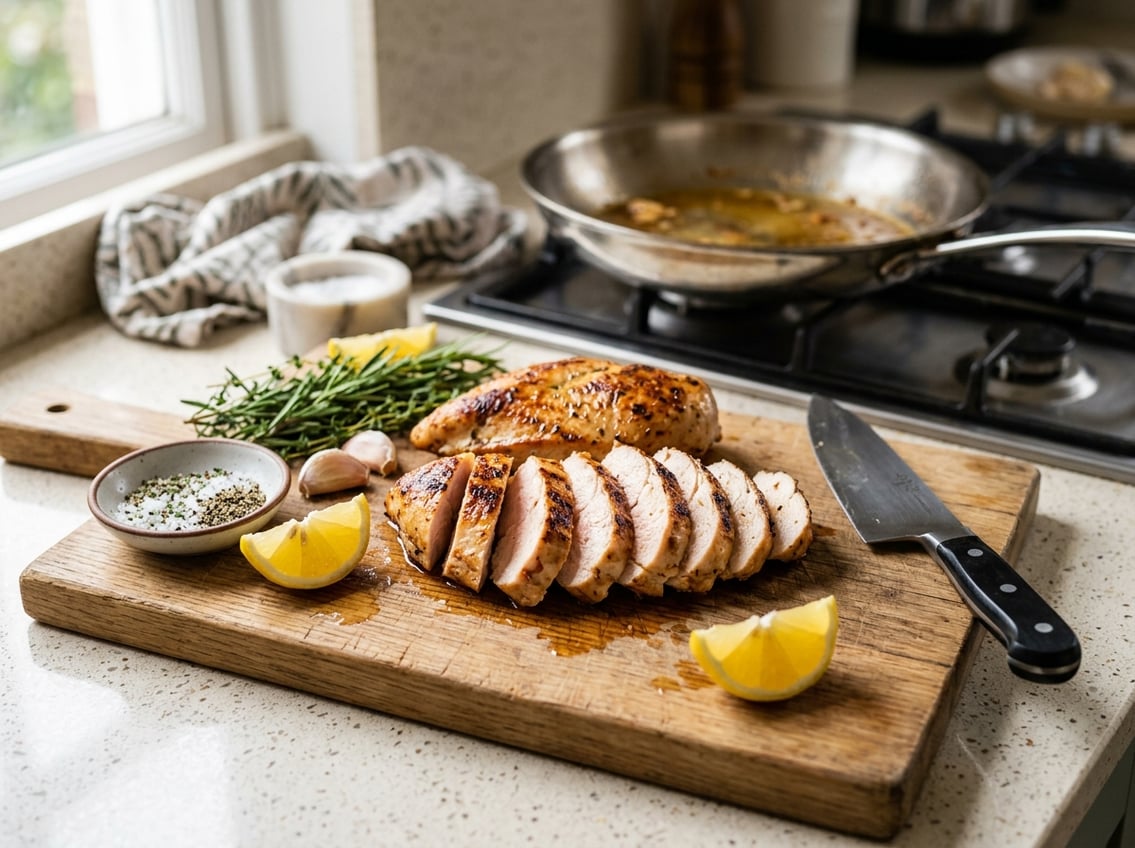
The way the chicken looks and feels gives you clues.
A meat thermometer helps confirm doneness, while the surface, color, and bite tell you whether the issue is heat, time, or meat quality.
Signs of Overdone Chicken on the Plate
Overcooked chicken usually looks dry, pale, and stringy.
When you cut into it, the juices may be gone, and the meat may pull apart in a fibrous way.
The texture often feels firm at first bite, then tough and chewy.
If the breast was cooked to a much higher temperature than needed, a meat thermometer would likely show it went past safe doneness.
How to Spot Unsafe Undercooked Meat
Undercooked chicken often looks glossy or translucent in the center.
It may still feel soft or jiggly when pressed.
A safe internal temperature matters more than color, so use a meat thermometer instead of guessing.
If the thickest part has not reached 165°F, the chicken is not done.
What Woody Chicken Feels Like Before and After Cooking
Woody chicken breast often feels unusually hard or dense when raw.
After cooking, it may stay tight and chewy even if you did not overcook it.
Woody chicken breasts can also look a little abnormal, with a more rigid shape or visible white lines.
The texture problem starts before cooking, so careful timing can help, yet it may not fully fix the bite.
How to Prevent a Tough, Chewy Texture
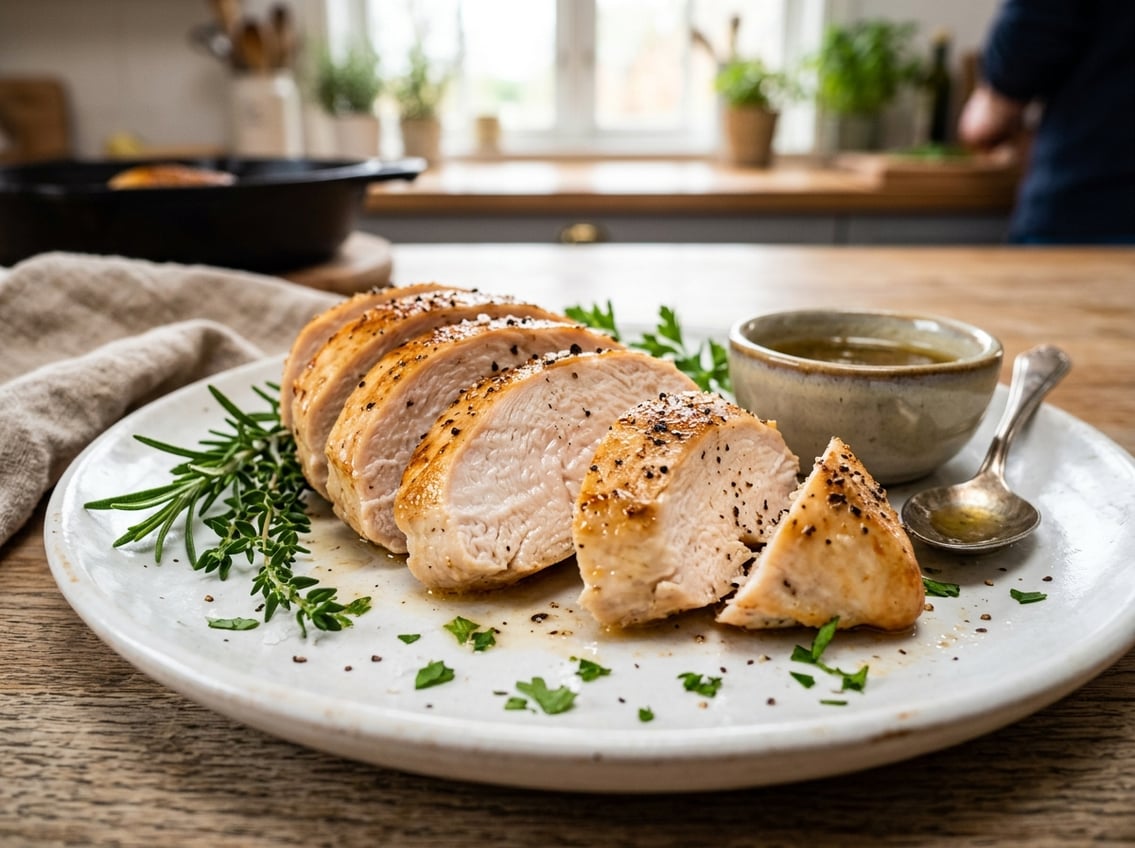
To prevent rubbery chicken, use accurate heat, even thickness, and keep enough moisture during cooking.
A few small changes can make a big difference in texture.
Use a Meat Thermometer for Accurate Doneness
A meat thermometer is the most reliable way to avoid overcooking chicken.
Cook the thickest part to 165°F, then stop heating as soon as it reaches that point.
This matters because chicken breast can go from juicy to dry very fast.
Checking temperature takes the guesswork out of it and helps prevent rubbery chicken.
Pound Thick Pieces Evenly With a Meat Tenderizer
If one end of the breast is much thicker than the other, the thin part can overcook before the thick part is done.
Pounding the breast to an even thickness helps it cook at the same rate.
A meat tenderizer can also soften the surface a bit, which helps with texture.
This is especially useful for large breasts or pieces that come from a woody chicken breast.
Choose Better Chicken and Cook With Moisture in Mind
If you often get tough meat, try a different brand or cut of chicken.
Some grocery-store breasts are more likely to be tough because of the bird’s growth pattern, while slower-growing or organic chicken may have a better texture.
Moist heat helps too.
Brining, marinating, braising, or using a covered pan can reduce the risk of overcooking chicken and help keep the meat tender.
What to Do With Rubbery Chicken
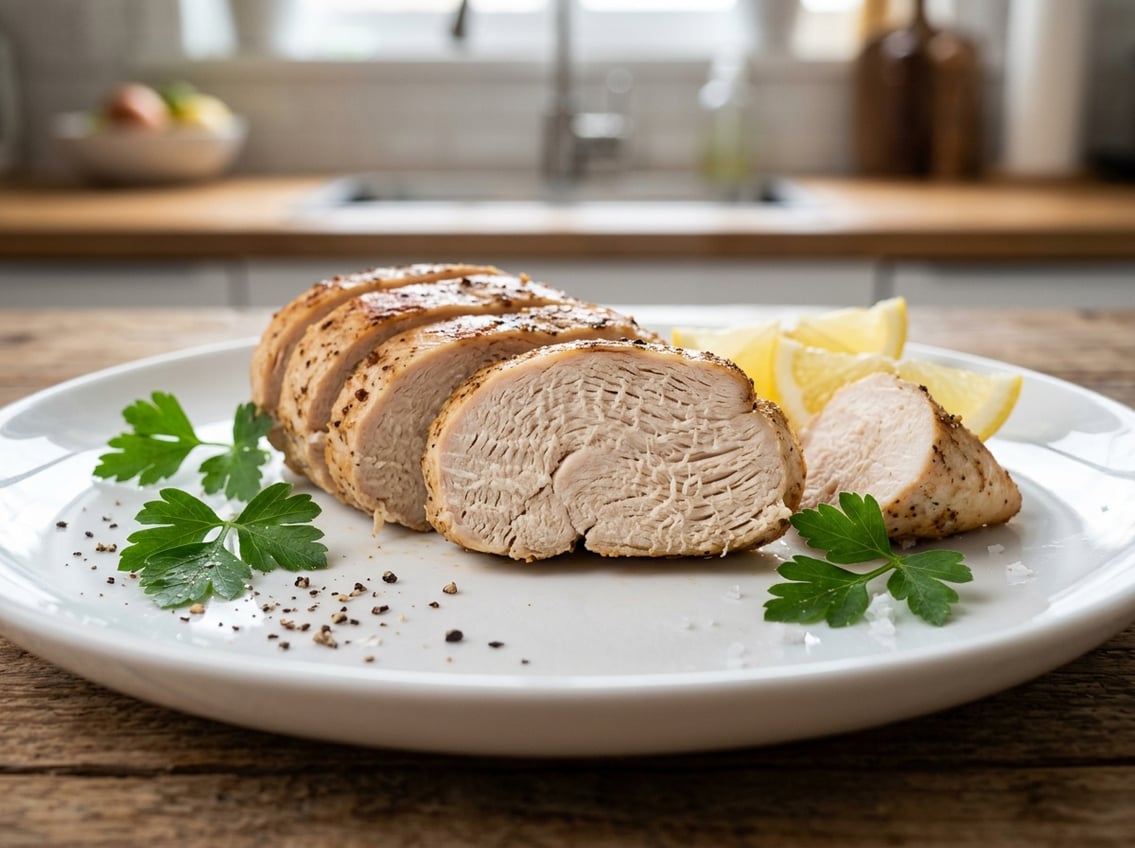
If the chicken is safe to eat, you can still make it work in the right recipe.
The key is to add moisture, sauce, or broth so the texture is less noticeable.
When It Can Be Salvaged Safely
You can usually salvage rubbery chicken if the texture came from overcooking and the meat is fully cooked.
It should reach 165°F and show no signs of raw or undercooked spots.
If the problem is undercooked chicken, do not try to eat it as-is.
Cook it longer until it is safe, or discard it if you cannot verify doneness.
Best Ways to Repurpose It in Saucy Dishes
Shredding is one of the easiest ways to use dry or rubbery meat.
Shredded chicken works well in chicken salad, chicken enchiladas, and chicken casserole because sauce helps soften the texture.
You can also chop it finely and add it to soups, pasta, or other chicken recipes with broth or cream-based sauces.
A moist filling hides toughness better than serving it plain.
When to Throw It Out Instead
Throw the chicken out if it smells off, has been left out too long, or is clearly undercooked and you cannot finish cooking it safely.
Food safety matters more than saving the meal.
If the texture is bad because the meat is woody or heavily overcooked, the chicken may still be safe, just unpleasant.
In that case, repurpose it if you want to avoid waste.


