
How Much Chicken Breast Per Meal: Portion Guide
The answer to how much chicken breast per meal depends on its role on your plate, your appetite, and your protein needs.
For many adults, a practical serving is 4 to 6 ounces of cooked chicken breast. This often looks like one medium boneless, skinless breast at dinner.
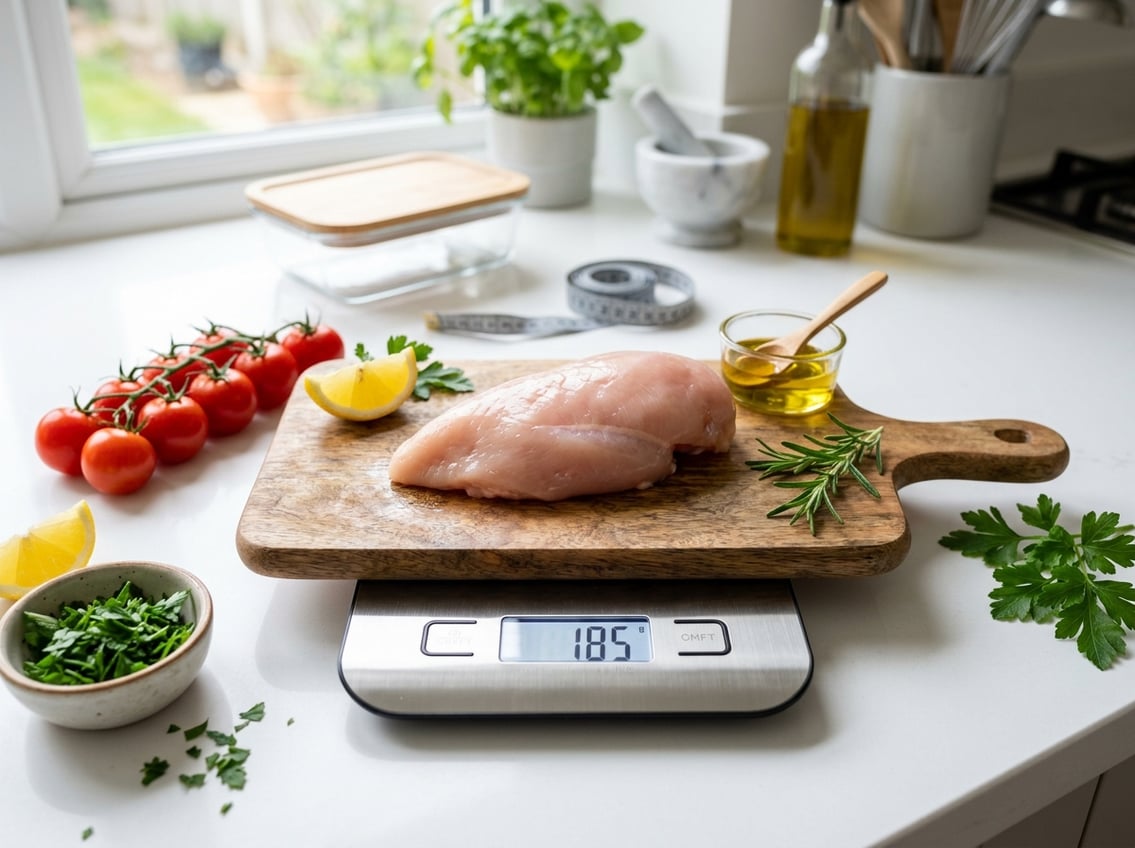
If chicken breast is the main protein in your meal, start with that range. If it is part of a larger dish, you may need less.
When planning for children, athletes, or meal prep, adjust the amount accordingly.
Chicken breasts vary a lot in weight. Some weigh close to 4 ounces raw, while others weigh 10 ounces or more.
A portion guide helps you buy the right amount, cook enough food, and avoid waste.
Standard Portion Ranges for One Meal
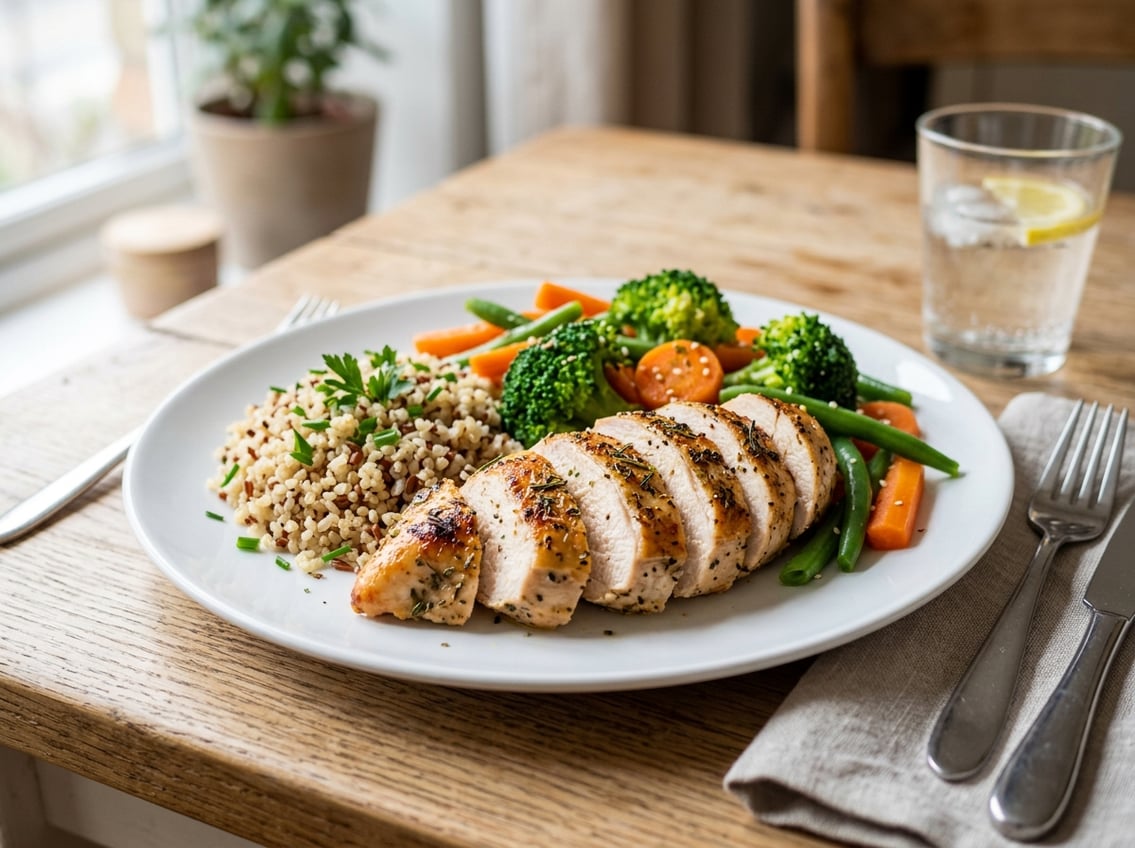
For most adults, a standard chicken breast serving is 4 to 6 ounces cooked. When chicken is the main source of protein, many home cooks plan for 6 to 8 ounces raw per adult.
That amount shrinks after cooking. This matches common meal planning advice from chicken portion guides and protein-per-meal recommendations.
A cooked portion of 3 to 4 ounces is close to a standard nutrition serving. At dinner, one whole boneless skinless chicken breast per person is common.
Cooked Serving Sizes for Adults
A cooked serving of 4 to 6 ounces gives you a practical amount of lean protein for most meals.
If you are serving several sides, the lower end may be enough. If chicken is the centerpiece, the higher end usually feels more satisfying.
A good visual cue is about the size of your palm for a smaller portion. A full breast on a dinner plate is often larger than that.
Raw vs Cooked Weight Differences
Raw chicken weighs more than cooked chicken because it loses water during cooking.
A 6-ounce raw breast may end up closer to 4 to 5 ounces cooked, depending on heat and cooking time.
This matters when you shop or use meal prep weights. If you weigh food before cooking, plan for shrinkage.
When One Chicken Breast Equals One Serving
One chicken breast often equals one serving when it is a medium boneless skinless chicken breast in the 6 to 8 ounce raw range.
That size is common in U.S. grocery stores, and it matches what many adults expect on a plate.
Very small breasts may only serve half a person for a main dish. Very large breasts can serve more than one person if the meal includes sides, soup, or a casserole.
What Changes the Right Amount
The right amount of chicken per person changes with meal style, appetite, and health goals.
A main dish needs a different amount than a mixed recipe, and adults need different portions than children.
Main Dish vs Mixed Dishes
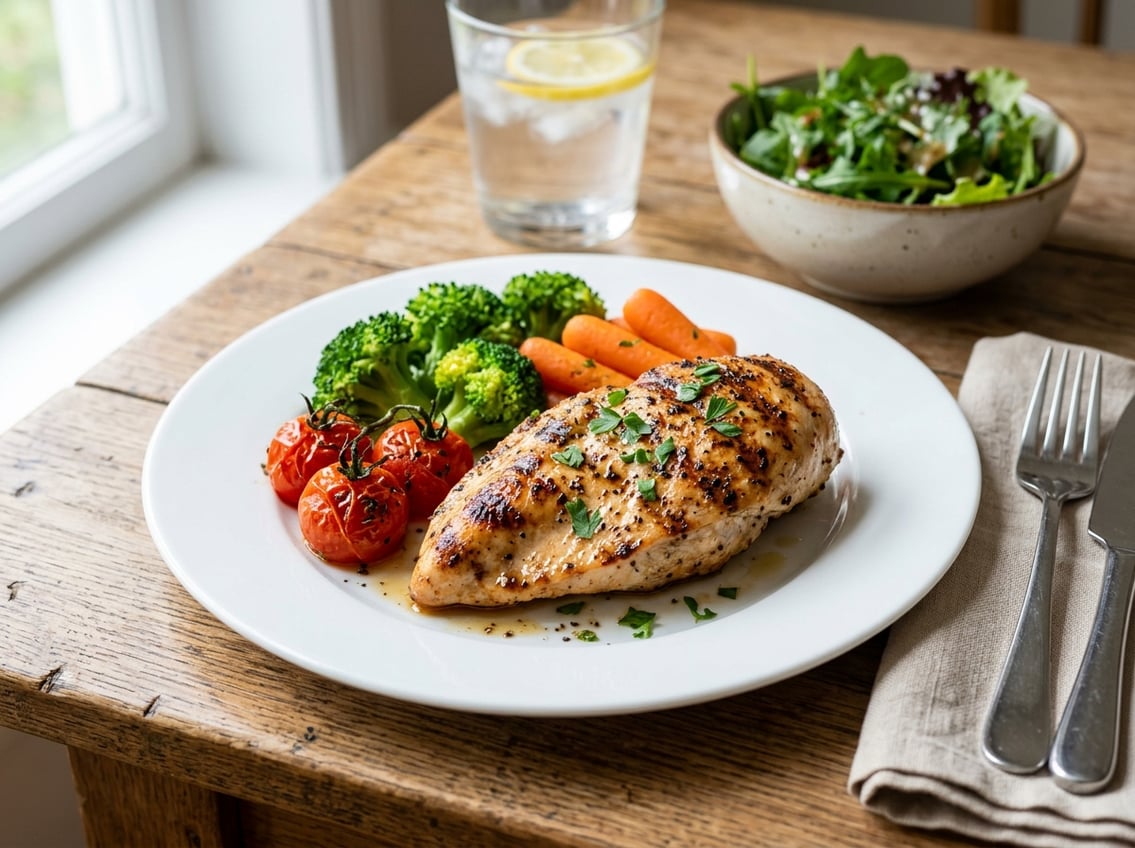
If chicken breast is the main item on the plate, plan on more. If it is part of pasta, salad, stir-fry, or soup, you can use less and still make the meal feel complete.
A dinner plate with rice and vegetables may need one full chicken breast per adult. A pasta dish or salad may need only 3 to 4 ounces cooked per person.
Appetite, Activity Level, and Muscle Goals
Your appetite matters. A person with a smaller appetite may feel satisfied with 4 ounces cooked.
Someone with higher energy needs may want 6 to 8 ounces or more.
Activity level also changes your protein intake needs. If you focus on muscle growth, recovery, or higher daily protein targets, chicken breast can be one of several protein sources to help you reach your goal.
For weight management, portion control can keep calories steady while still giving you a filling meal.
Adults, Children, and Group Planning
Adults usually need the full portion range, while children often need about half that amount.
Group planning works best when you estimate by age and appetite instead of counting only heads.
For mixed groups, estimate 1 chicken breast per adult and 1/2 breast per child. Add a little extra if the meal is the main event.
If you are planning a party, buying a small buffer helps cover larger appetites.
Choosing the Right Cut and Quantity
The cut you buy changes how much usable meat ends up on the plate.
Boneless skinless breasts are simple to portion, while bone-in split breasts need yield adjustments because bone and skin add weight.
Boneless Skinless Chicken Breast Buying Guide
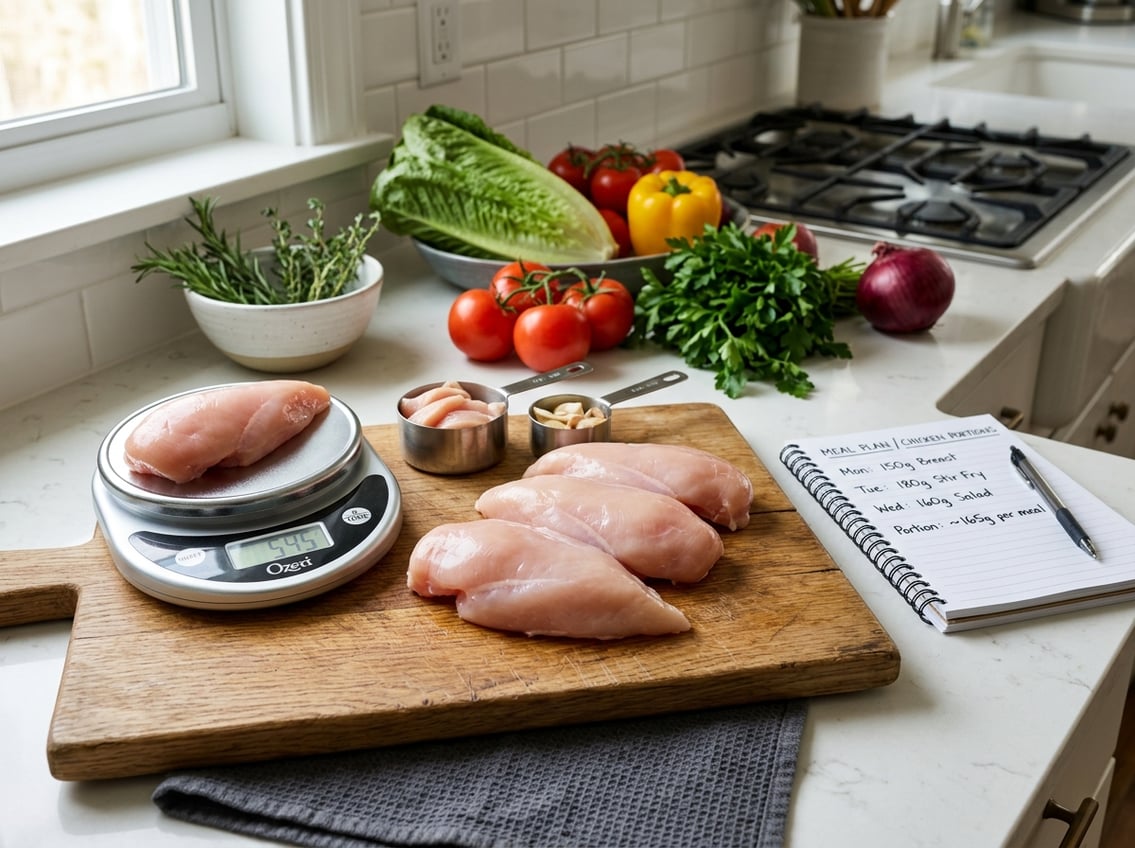
Boneless skinless chicken breast is the easiest cut for portion planning.
It cooks fast, trims little, and usually gives you the most meat for the weight you buy.
For adults, a typical grocery-store breast often falls in the 6 to 10 ounce raw range.
If you want a simple rule, plan 1 breast per adult for a main dish. Adjust up or down based on size.
Bone-In Split Breast Yield Adjustments
Bone-in split breast weighs more because it includes bone and skin. You do not get all of that weight as edible meat.
A split breast may need to be counted as more than 8 ounces raw per person for a main dish.
If you serve bone-in chicken, buy extra to account for yield loss and trimming.
Meal Prep and Bulk Cooking Estimates
For meal prep, think in total cooked portions, not just pieces.
If you want five lunches with chicken as the main protein, aim for 5 cooked portions of 4 to 6 ounces each.
Bulk cooking works best when you buy by total raw weight, then divide the chicken after cooking.
That gives you more control over portion sizes and makes it easier to match your balanced diet goals.
Nutrition Value and Practical Meal Balance
Chicken breast is a strong choice when you want lean protein with a simple nutrition profile.
It supports muscle growth, weight management, and steady protein intake. It also provides useful minerals and vitamins.
Protein Per Serving
Chicken breast is one of the most protein-dense protein sources you can buy.
A 3.5-ounce serving provides about 31 grams of protein and around 165 calories, according to the National Chicken Council data cited in a chicken breast portion guide.
A 6-ounce chicken breast can deliver a large share of your daily protein needs in one meal.
That makes it useful for athletes, active adults, and anyone trying to stay full longer.
Key Micronutrients in Chicken Breast
Chicken breast also gives you important nutrients like niacin, vitamin B6, phosphorus, and selenium.
These support energy use, nerve function, and normal body processes.
The exact amount varies by brand, size, and cooking method, yet the nutrient profile stays strong for a lean meat.
How to Build a Balanced Plate
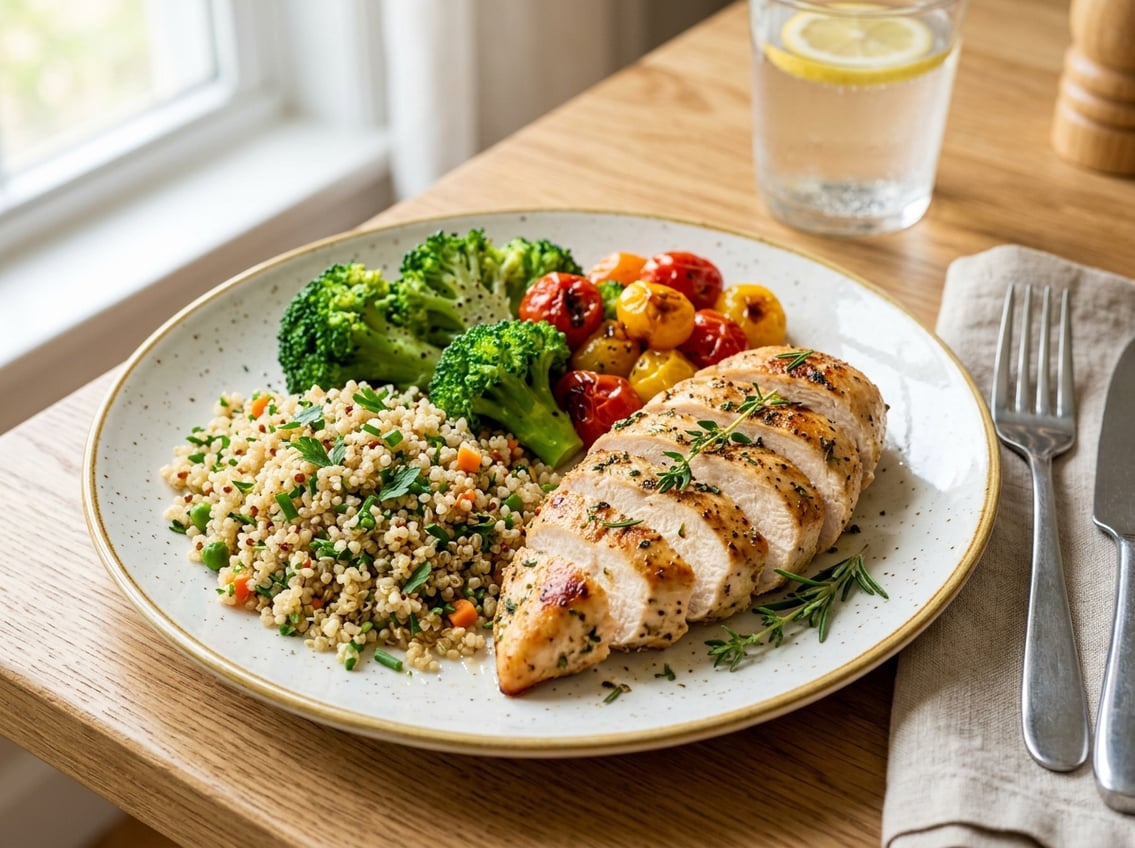
Start with portion control to create a balanced plate.
Pair chicken breast with vegetables and a whole grain or another high-fiber side.
A simple plate can look like this:
- 1 chicken breast or 4 to 6 ounces cooked
- 1 to 2 cups of vegetables
- A small serving of grains, potatoes, or beans
This combination helps you feel full and keeps calories in check.
You also get more variety from other protein sources throughout the day.


