
Is It Better to Cut Chicken Breast Before Cooking? When to Do It
Is it better to cut chicken breast before cooking? The answer depends on the meal you want, the cooking method, and how much control you need over doneness.
You usually cut chicken breast before cooking when you want faster, more even cooking. You leave it whole when you want the best chance of keeping it juicy.
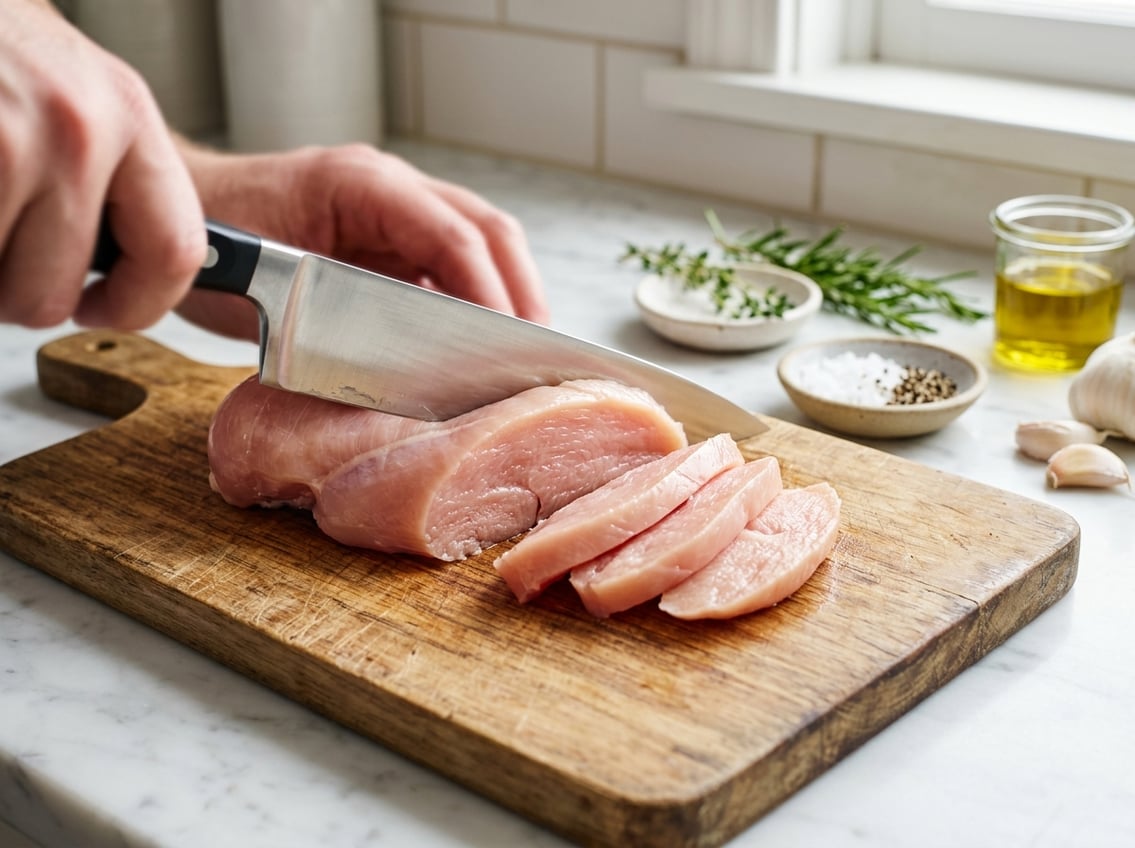
Raw chicken breast gives you more options than many other cuts. Cutting chicken before cooking helps with speed, marinades, and portioning.
Cutting chicken after cooking protects texture and makes slicing cleaner. The best choice depends on whether you care more about convenience, moisture, or presentation.
When Cutting First Makes More Sense
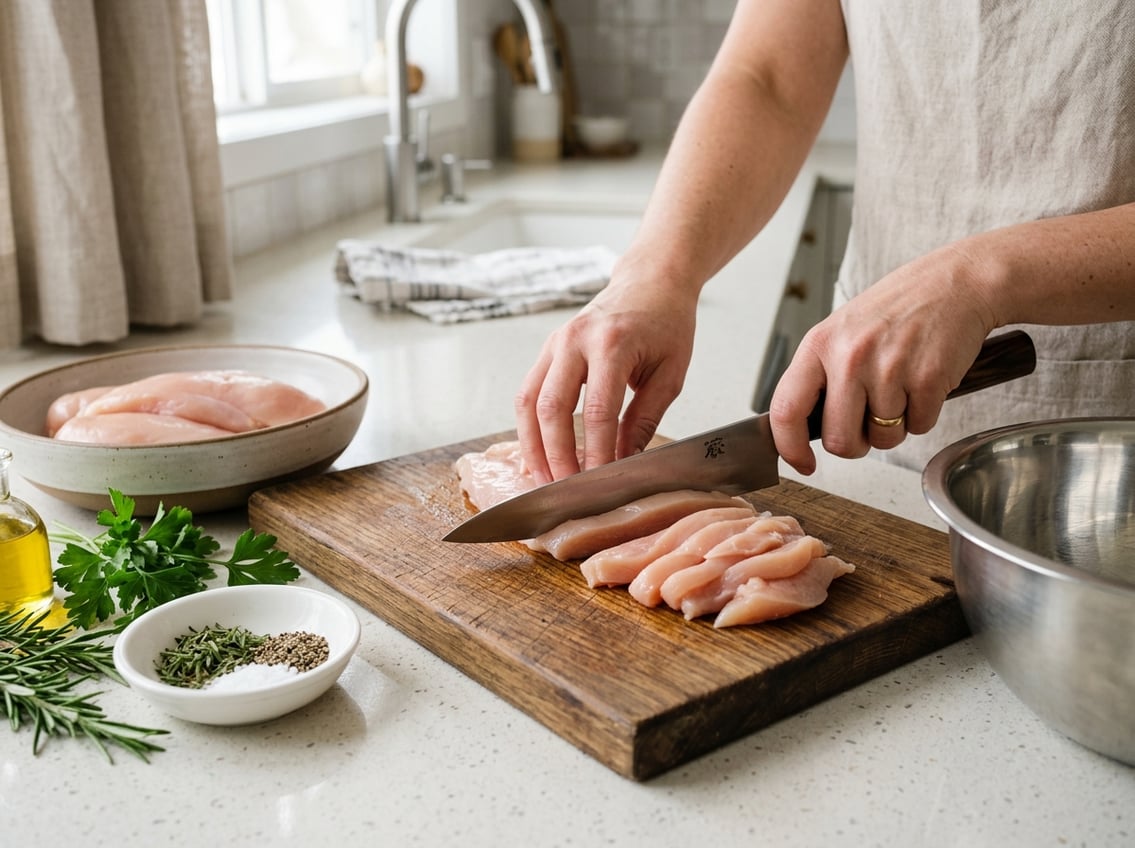
Cutting chicken breast before cooking makes sense when even cooking matters more than keeping the breast in one piece. It also helps when you need quick-cooking pieces for busy meals, sauces, and recipes with short cook times.
If you are deciding whether you should cut chicken breast, think about the final dish first. Smaller pieces work best when you need speed, surface area, or easy tossing in a pan.
Best Uses for Strips, Cubes, and Cutlets
Strips fit fajitas, stir-fries, wraps, and pasta dishes. Cubes work well for kebabs, soups, and skillet meals.
Cutlets are a good choice when you want thin, fast-cooking pieces for breading or pan searing.
Why Smaller Pieces Cook Faster and More Evenly
When you cut chicken breast before cooking, heat reaches the center sooner. That helps prevent one part from drying out while another part is still undercooked.
Smaller pieces are easier to time in a skillet or wok.
When to Cut Chicken Breast Before Cooking for Marinades
Cutting chicken breast before cooking helps marinades coat more surface area. The flavor clings better to strips or cubes than to a whole breast.
This works well when you want a fast, well-seasoned result rather than a long marinating time.
When Leaving It Whole Works Better
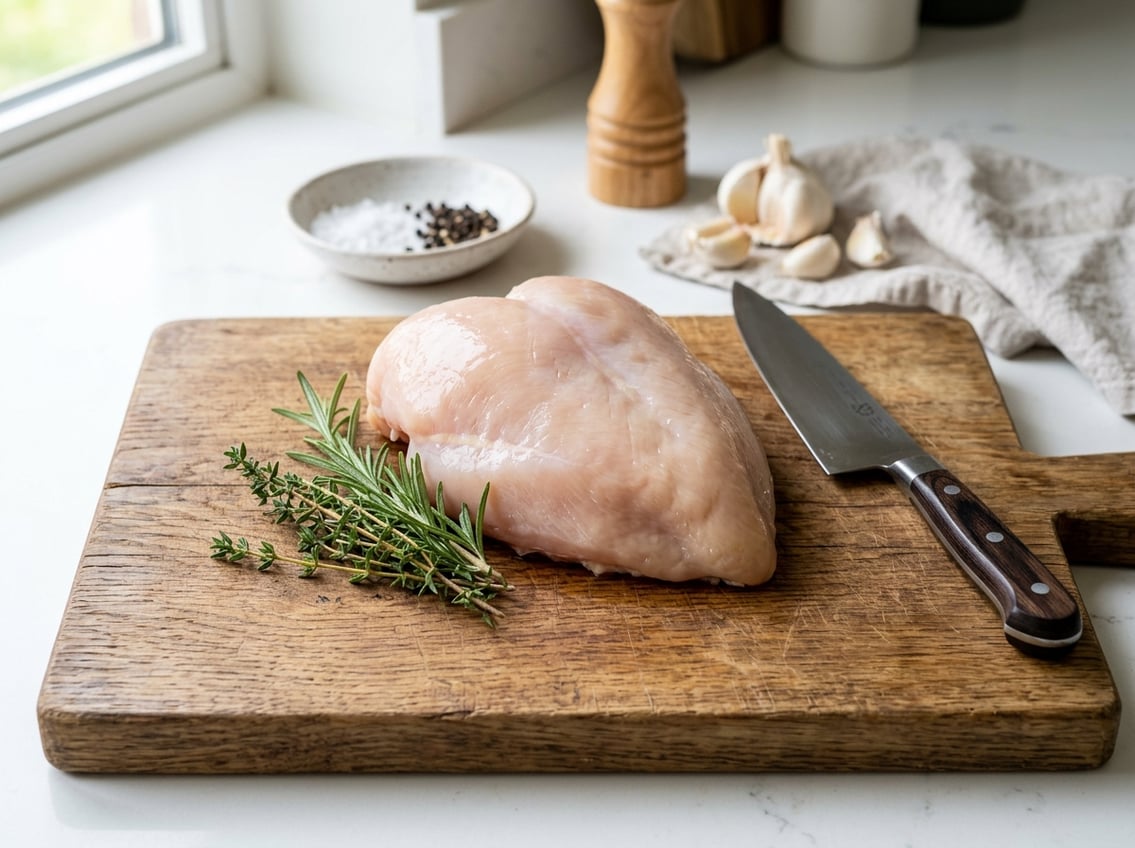
Leaving chicken breast whole often gives you more control over moisture and texture. It is a strong choice for roasting, grilling, or pan-searing thicker breasts, where the goal is a juicy center and a clean slice at the end.
If you are asking should you cut chicken breast for a simple dinner, whole is often the safer bet for tenderness. You can always slice it later.
Why Whole Breasts Usually Stay Juicier
A whole breast has less exposed surface area, so it loses moisture more slowly. That matters with lean meat like chicken breast, which can dry out fast if it is cut too early.
Cooking whole can help preserve juices.
Best Situations for Slicing After Resting
Slice after resting when you serve roasted chicken, grilled chicken for a platter, or pan-seared breasts for salads. Resting lets the juices settle, so they stay in the meat instead of running out onto the board.
This also makes it easier to get neat slices.
How Cutting Chicken After Cooking Affects Texture and Presentation
Cutting chicken after cooking gives you cleaner edges and a more finished look. It also lets you control the thickness of each slice.
If you need neat presentation, cutting chicken after cooking usually looks better than cutting raw pieces first.
How to Keep Chicken Breast Tender Either Way
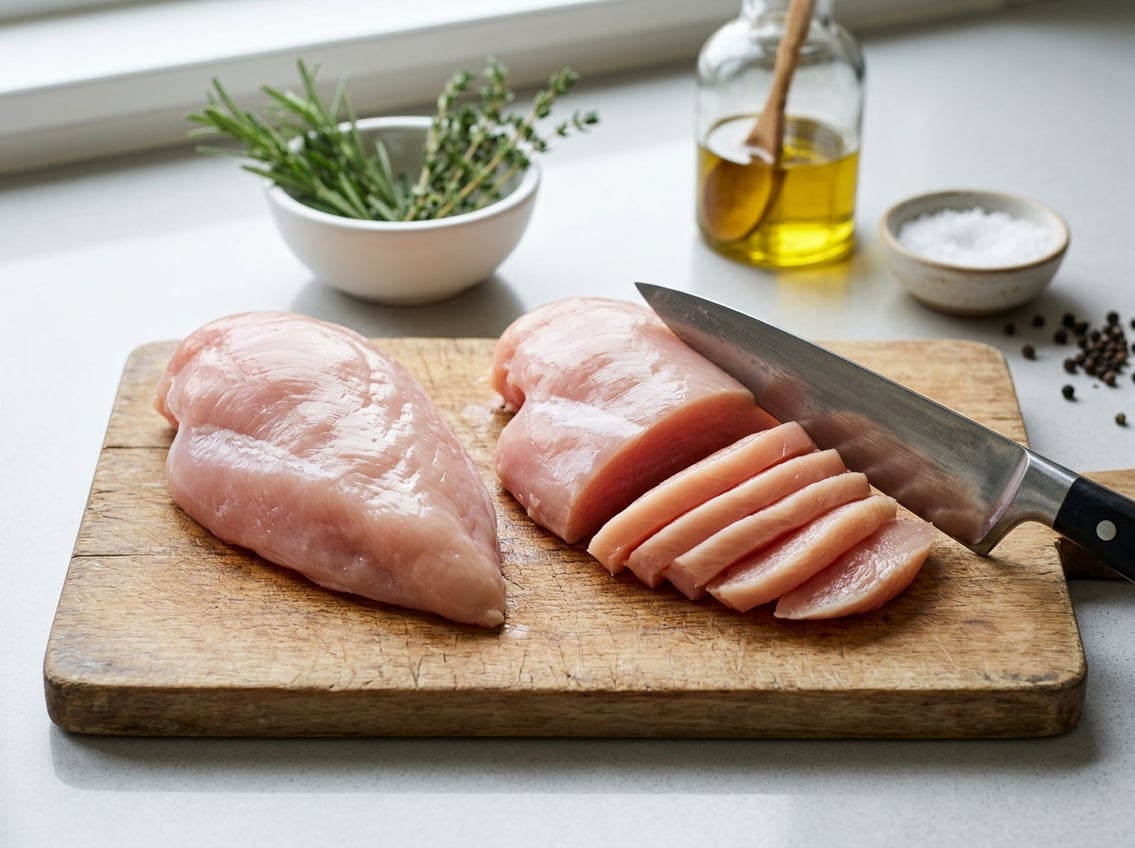
Tender chicken depends on more than whether you cut it before or after cooking. Knife direction, piece size, heat level, and resting time all affect the final bite.
The most useful habit is simple. Cut in a way that matches the grain and the cooking method.
How to Cut Against the Grain for Better Texture
Cutting against the grain means slicing across the direction of the muscle fibers. This shortens the fibers in each bite, so the chicken feels less chewy.
Use a sharp knife and look closely at the grain before you slice.
Why Cutting Against the Grain Matters More Than Many Cooks Realize
A chicken breast can feel tough even when it is cooked correctly if the slices follow the grain. The same breast can taste more tender with just a better slicing angle.
Thickness, Temperature, and Carryover Cooking
Thicker pieces need more time and a lower chance of drying out. If you cut chicken breast before cooking, keep the pieces even in size so they finish together.
If you cook whole breasts, take them off the heat at the right time and let carryover cooking finish the job.
Method-by-Method Recommendations
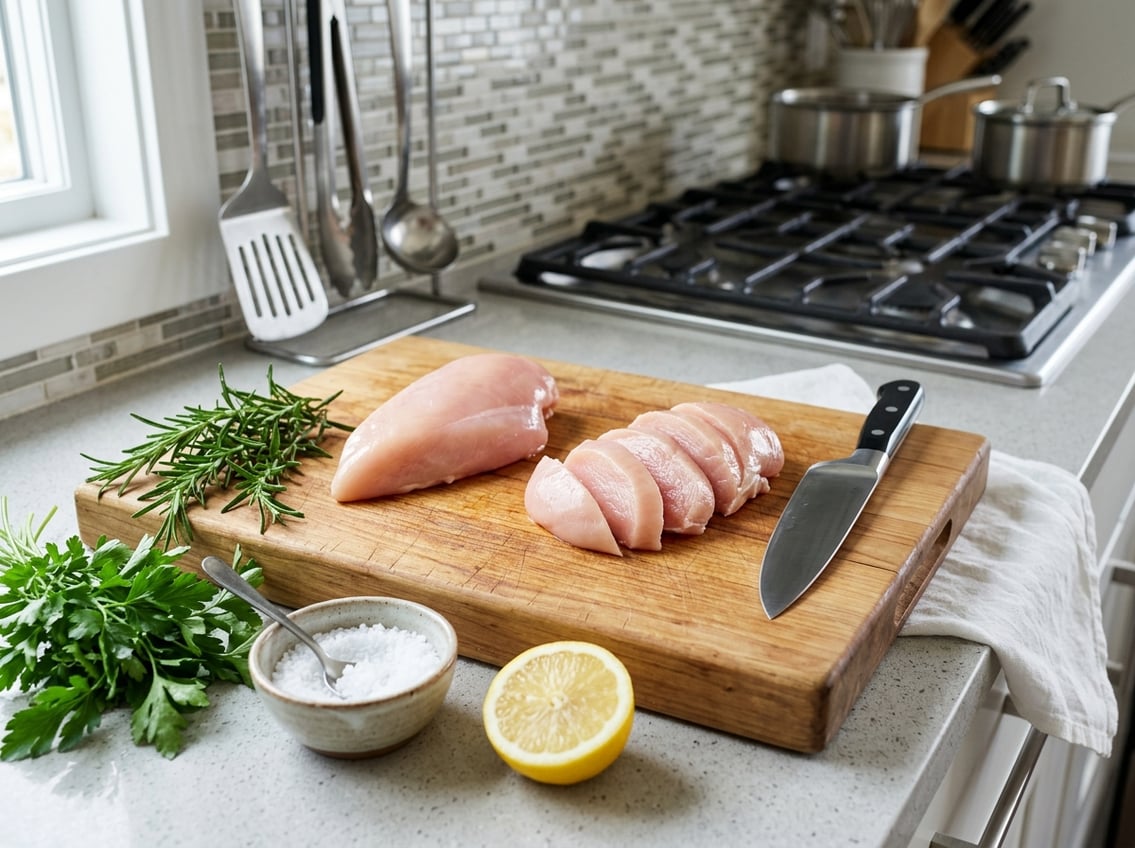
Your cooking method should decide the cut, not habit. Some dishes work better with raw pieces, while others need the breast kept whole until serving.
Use the method that best fits speed, moisture, and the way you plan to serve the meat.
Baking Thick Breasts: Split, Butterfly, or Leave Whole
For thick breasts, split or butterfly them to help the meat cook more evenly. That is useful when one end is much thicker than the other.
If the breast is already even in thickness, leaving it whole often gives you a juicier result.
Pan-Seared and Grilled Breast Decisions
For pan-searing and grilling, whole breasts usually work best if you want a moist center and a browned outside. Thin cutlets work when you need a fast dinner.
If you plan to slice for serving, cut after resting to get a better texture.
Stir-Fry, Skewers, Salads, and Meal Prep
Cut chicken breast before cooking for stir-fry and skewers. This way, the pieces finish quickly and cook through at the same pace.
For salads and meal prep, cook whole breasts, rest them, and slice later for cleaner portions. This approach also makes leftovers easier to use in wraps, bowls, and sandwiches.


