
What Does Chicken Breast With Rib Meat Mean?
You may see the label what does chicken breast with rib meat on a package and wonder whether it means a different cut, a lower-quality product, or a bone-in piece.
In U.S. grocery stores, the breast meat usually has a small amount of meat from the rib area attached, so the cut is not as fully trimmed as plain boneless breast.
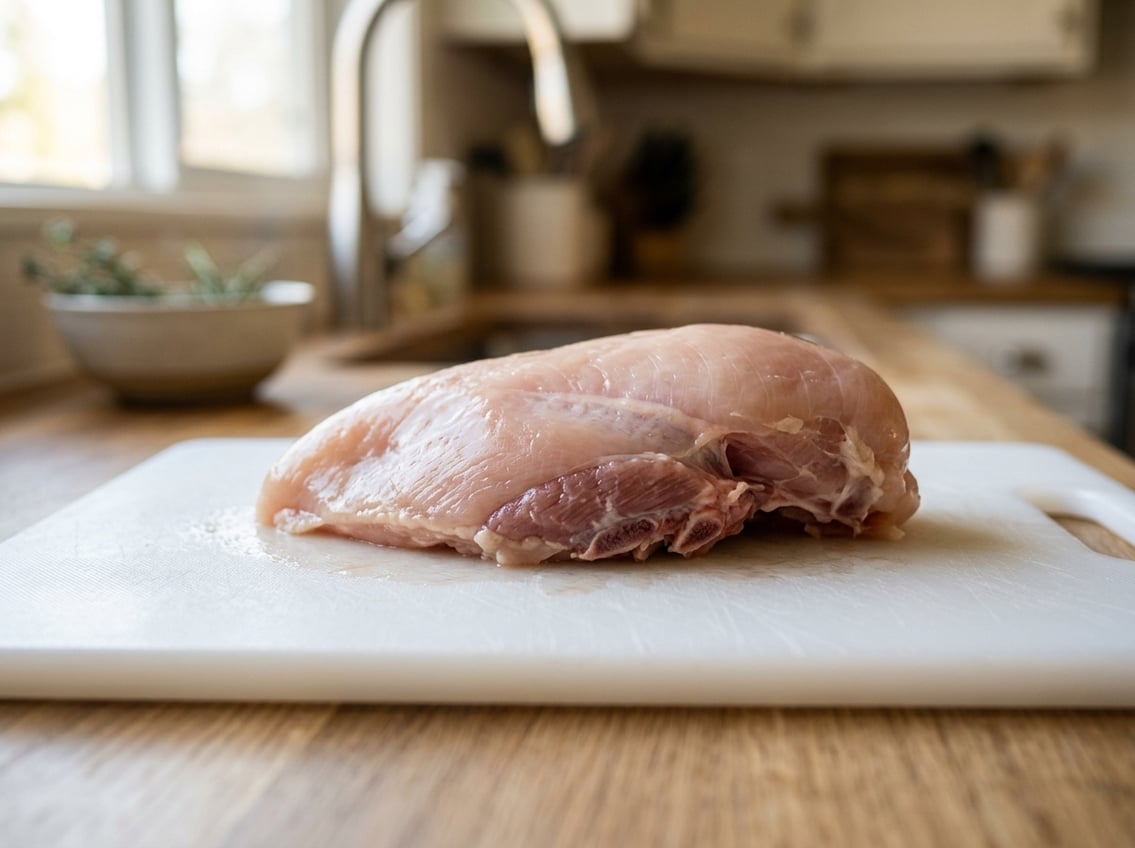
Chicken breast with rib meat is still chicken breast, just with a little extra meat left on from the rib side. This can change the shape, flavor, and cooking behavior.
That extra attached meat can make the piece look less uniform than a standard boneless, skinless chicken breast.
It can also add a little more moisture and flavor, which is why many shoppers choose it for everyday meals.
What the Label Means on the Package
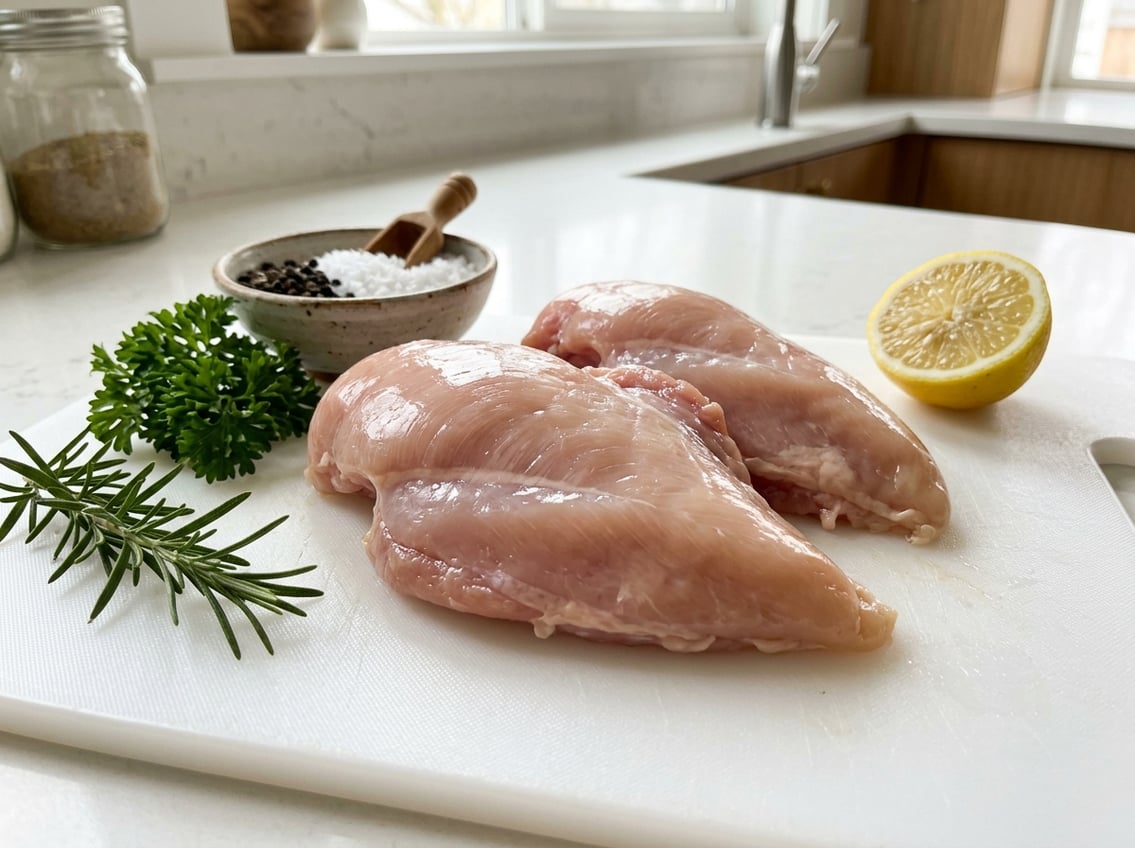
When you see what is chicken breast with rib meat on a label, the breast has not been trimmed all the way down to pure breast muscle.
Some rib meat remains attached near the side that faces the rib cage.
A package marked chicken breast with rib meat is still a boneless chicken breast in most retail settings.
It may also be sold as skinless chicken breast if the skin has been removed.
The processor left some chicken rib meat on the cut.
How This Cut Differs From Plain Breast Meat
A plain boneless breast is trimmed more tightly and has a smoother shape.
A breast with rib meat may look thicker on one side and less even in size.
The added meat can brown a little differently and may hold onto moisture better than a very lean, fully trimmed breast.
Where the Attached Meat Comes From
The attached meat comes from the area where the breast meets the ribs.
It is part of the front portion of the bird, close to the rib cage.
In processing, leaving that meat on saves trimming time and reduces waste.
It also keeps more usable meat in the package.
Why Processors Leave It On
Processors leave rib meat on because it helps produce a larger, fuller-looking piece.
It can also improve yield, which matters in retail and food service.
For shoppers, that often means a product that is a little less uniform and sometimes a little less expensive.
It remains easy to cook for most recipes.
How It Fits Into Chicken Anatomy and Cuts
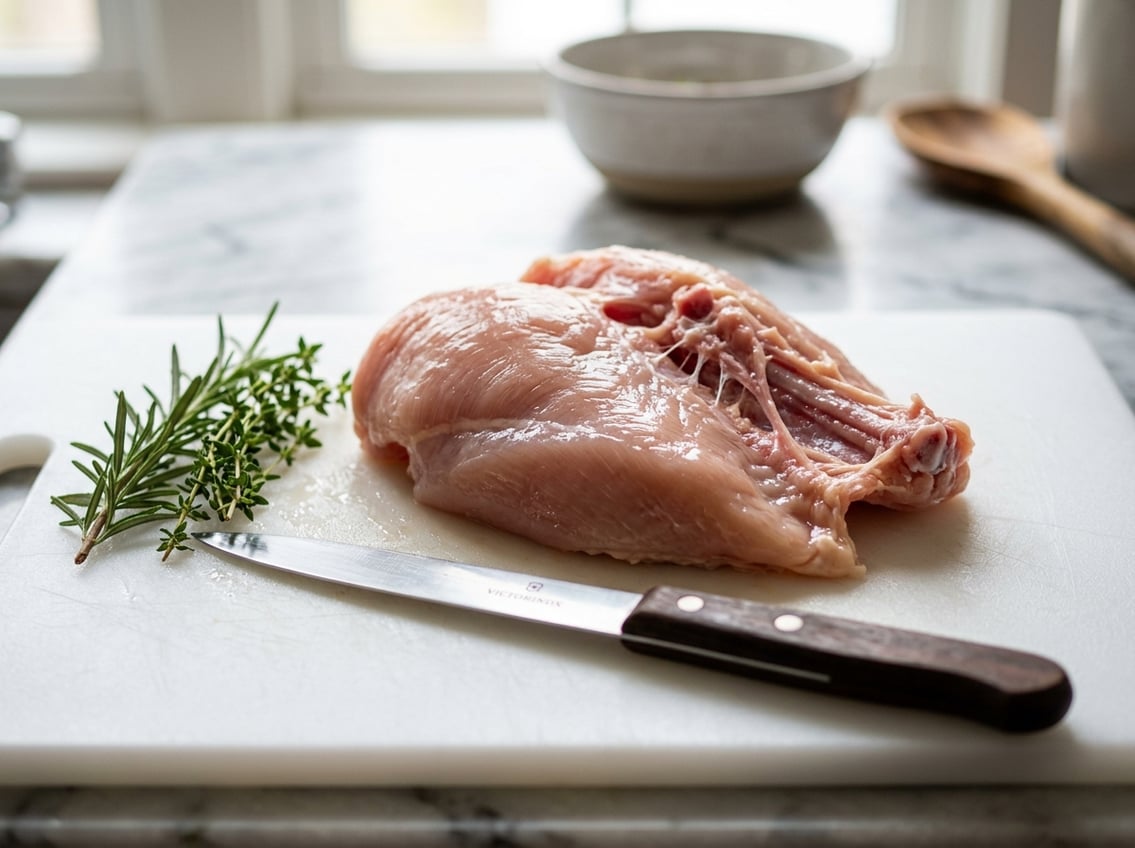
The breast sits on the front of the bird and contains the main white meat.
The largest breast muscle is the pectoralis major, which makes up most of what you buy as chicken breast.
Within common chicken cuts, rib meat marks the edge where the breast meets the rib cage.
That is why a breast with rib meat can look slightly different from a fully trimmed boneless chicken breast.
Breast Muscle and the Pectoralis Major
The pectoralis major is the main breast muscle you cook in a standard breast fillet.
It is lean, mild, and fairly uniform when fully trimmed.
When rib meat is attached, you still cook breast meat along with a small amount of meat from the rib side.
That extra bit changes the outline more than the basic identity of the cut.
How It Compares With Other Chicken Cuts
Compared with thighs or drumsticks, breast meat is still the leanest and mildest cut.
Rib meat adds a little more richness, so the cut sits between very lean breast and darker, fattier pieces.
It is a practical choice if you want white meat with a little more flavor without moving all the way to thighs.
That makes it useful for grilling, baking, and pan cooking.
What Shoppers Notice in Color and Texture
You may notice uneven edges, a slightly darker section near the side, or more visible connective tissue.
The texture can look a little less smooth than a standard breast.
That does not mean the product is lower quality.
It usually means processors trimmed it less aggressively during processing.
Nutrition, Flavor, and Value
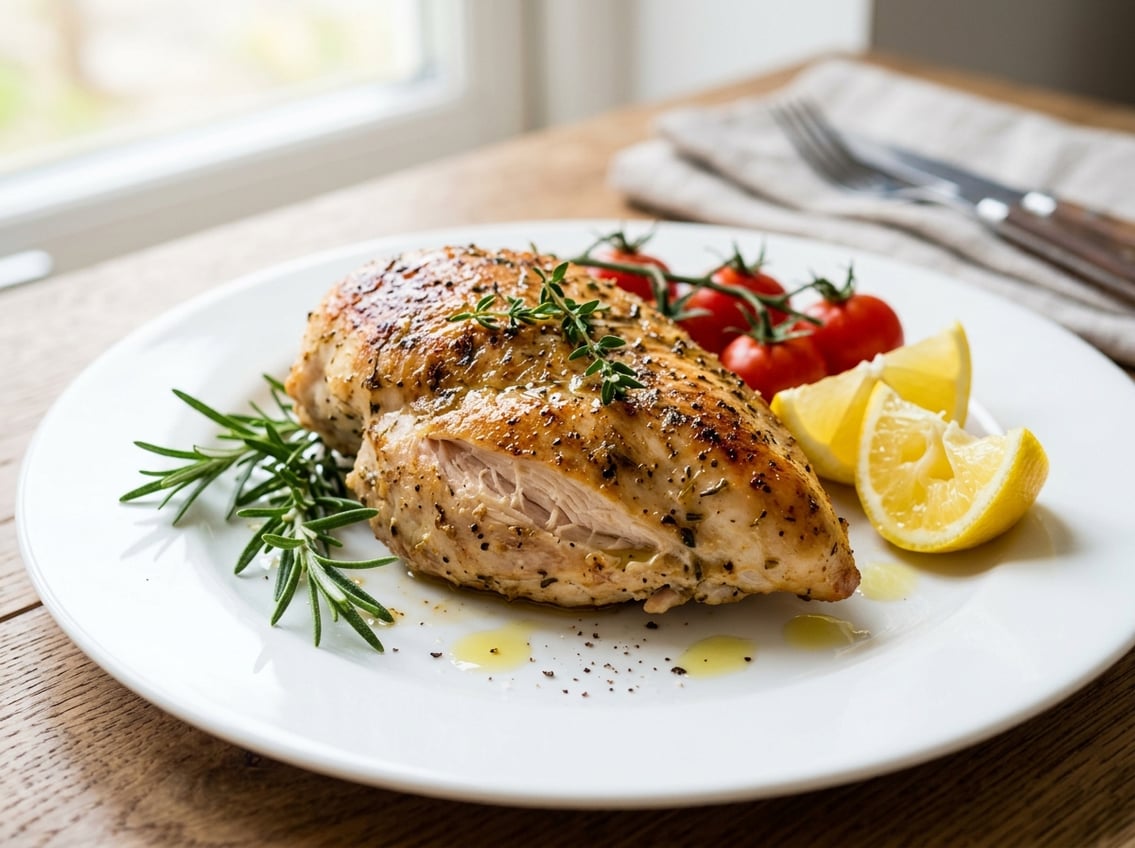
Rib meat changes the nutrition profile only a little, since the product is still mostly breast meat.
The main shift is a small rise in fat and calories, with protein staying high.
If you compare it with plain skinless chicken breast or fully trimmed boneless chicken breast, the differences are usually modest.
Protein, Fat, and Calories Compared
Chicken breast is known for high protein and low fat.
Adding rib meat usually brings a small amount of extra fat, which can raise calories slightly.
A typical retail product may be close to plain breast in protein, with a bit more fat from the attached meat.
For shoppers tracking macros, the package label is still the best guide.
Does Rib Meat Make Chicken More Flavorful
Yes, it often does.
The extra meat near the rib cage can taste a little richer and may stay juicier during cooking.
That added flavor is mild, not strong.
You should expect a small difference, not a dramatic change like the jump from breast to thigh.
Is It Better Value at the Store
It can be a better value if the price per pound is lower than fully trimmed breast.
You still get a convenient, mostly lean cut with a little extra attached meat.
If your priority is maximum uniformity, plain breast may be worth the higher price.
If your priority is cost and a bit more flavor, rib meat can make sense.
Cooking and Buying Tips
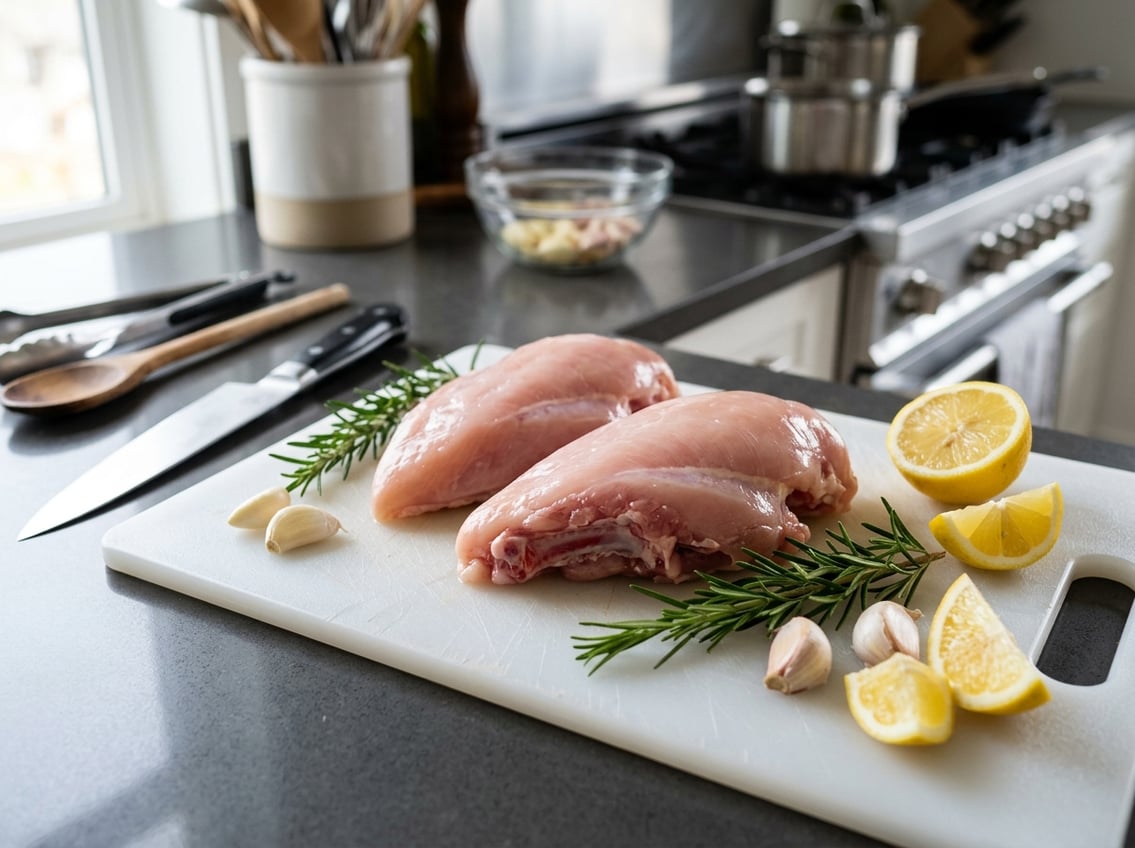
You can cook chicken breast with rib meat using the same basic methods you use for any breast cut.
The main difference is that the shape may be uneven, so you need to watch thickness and doneness carefully.
If you want to cook chicken breast with rib meat, grilling, baking, sautéing, and roasting all work well.
The extra rib meat can help the breast stay a little juicier.
How to Cook Chicken Breast With Rib Meat
Start by patting the chicken dry and seasoning it well.
If one side is much thicker, lightly pound it to even out the shape.
Use medium heat for most methods so the outside does not overcook before the center is done.
A meat thermometer should read 165°F in the thickest part.
Does It Change Cooking Time or Temperature
It can change cooking time a little because the piece may be thicker in spots.
The target temperature stays the same for safe chicken.
The uneven shape matters more than the rib meat itself.
Thin edges can cook faster, so check early and avoid overcooking.
When to Choose It Over Skinless Breast
Choose it when you want more flavor, a juicier result, or a lower price than fully trimmed breast.
It works well in baked dishes and quick skillet meals.
You can also use it in simple grilled recipes.
Pick plain skinless chicken breast if you want a uniform shape for stuffing or slicing.
It also helps with exact portion control.


